
What instrument ads are really selling
Someone buying a first instrument is buying a version of themselves: the person who plays at parties, the parent who strums at bedtime, the drummer who finally started. Their worry is just as personal. It will be too hard, and it will end up in a cupboard. Someone buying strings or a second instrument is in a different place. They already play, they know what they like and they mostly need reminding.
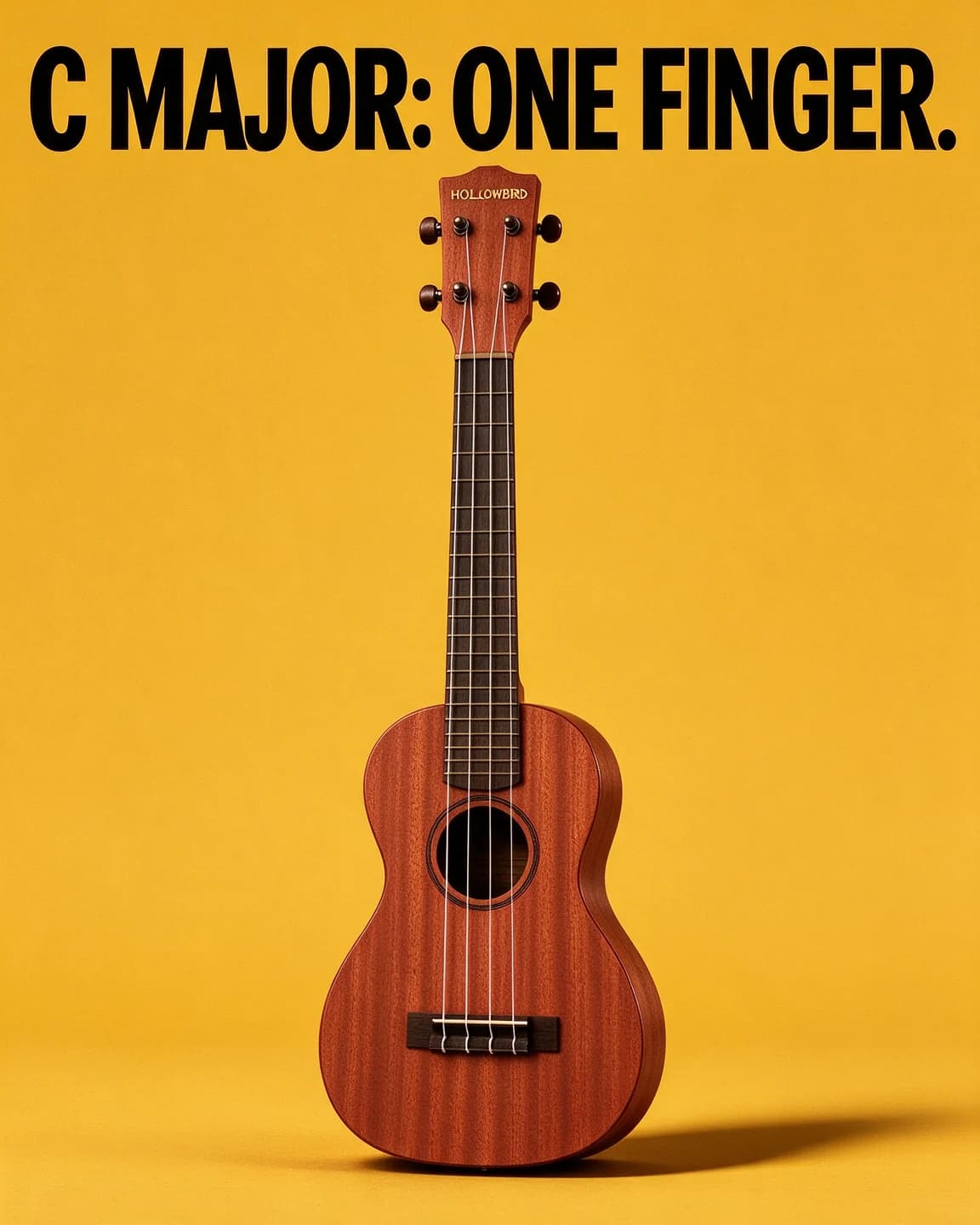
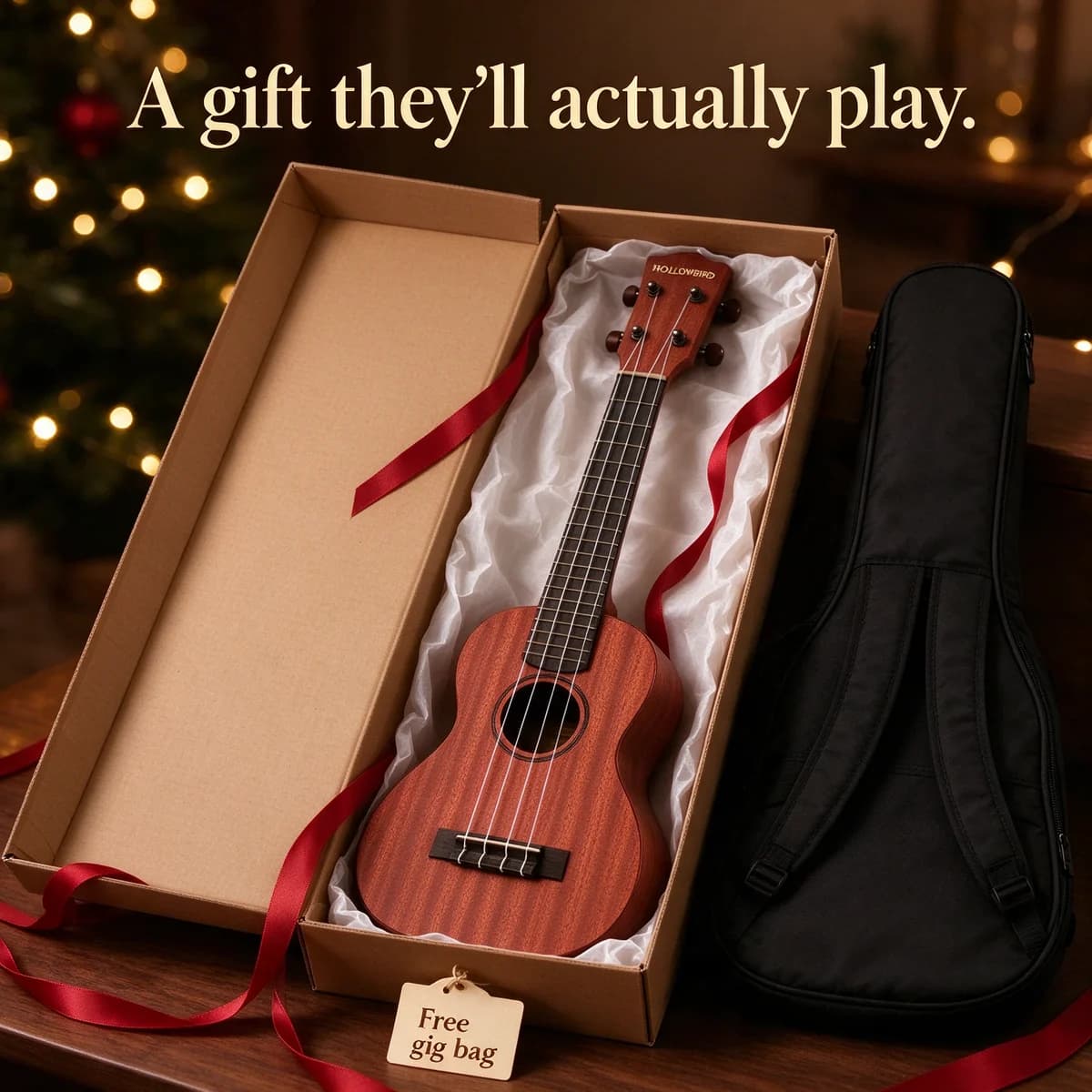
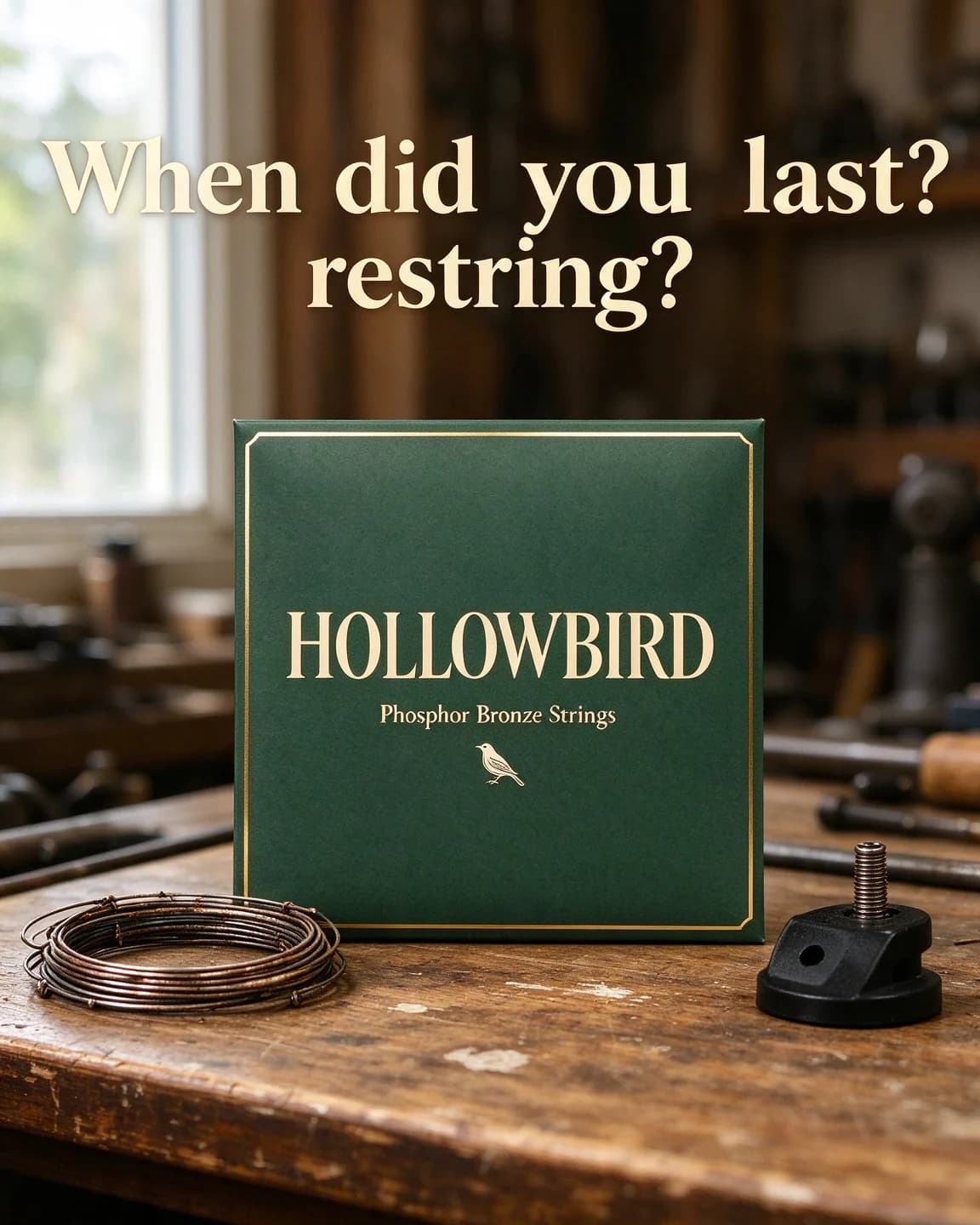
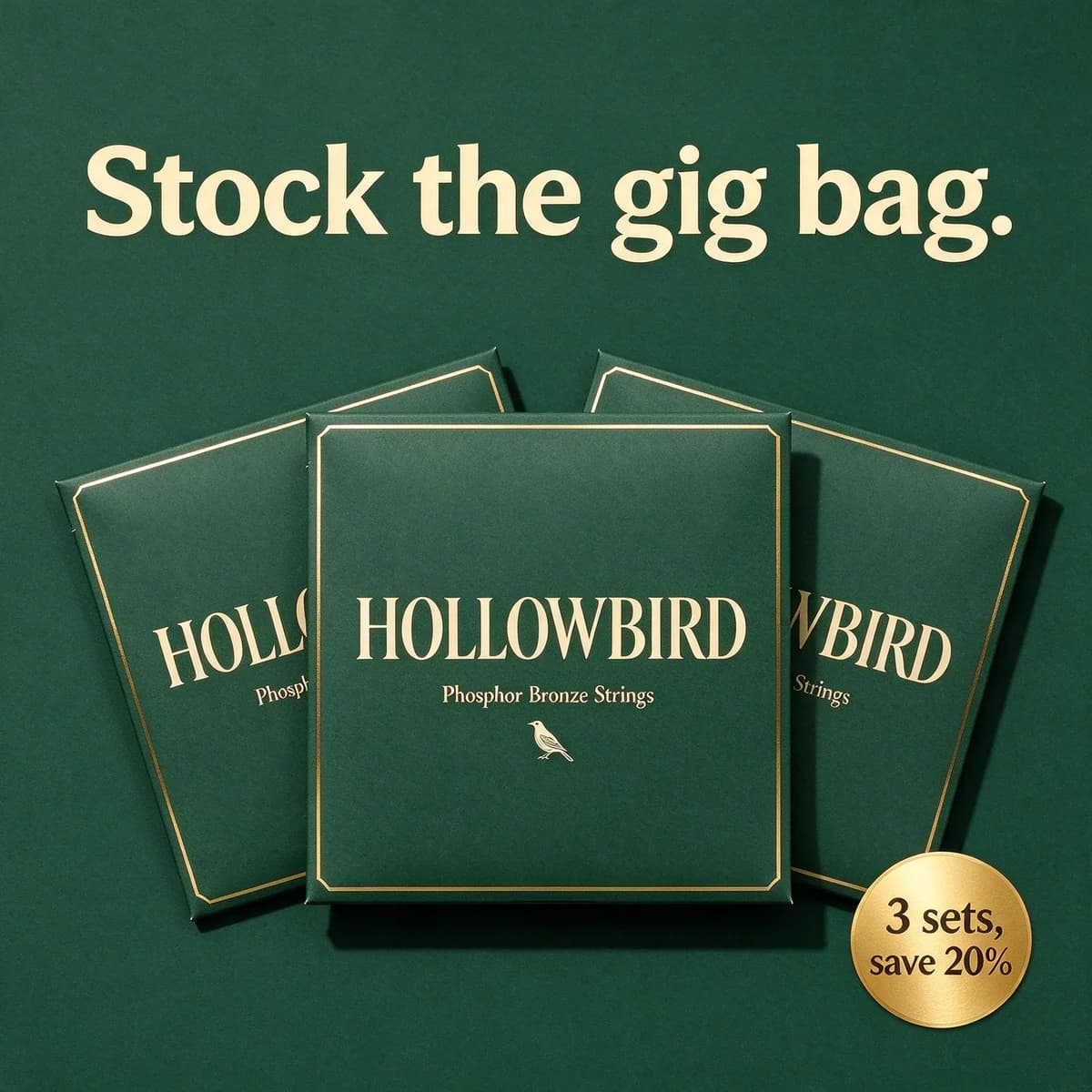
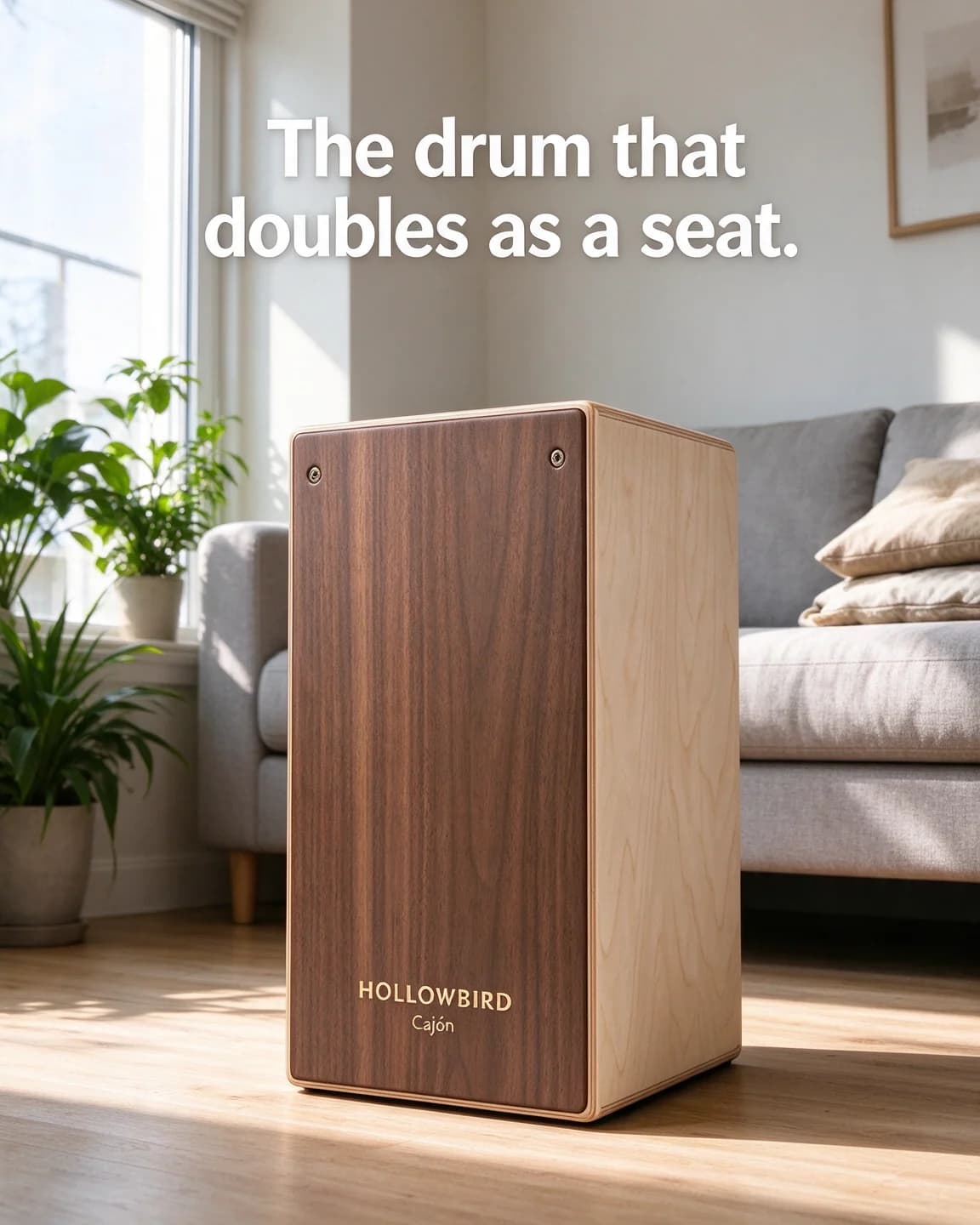
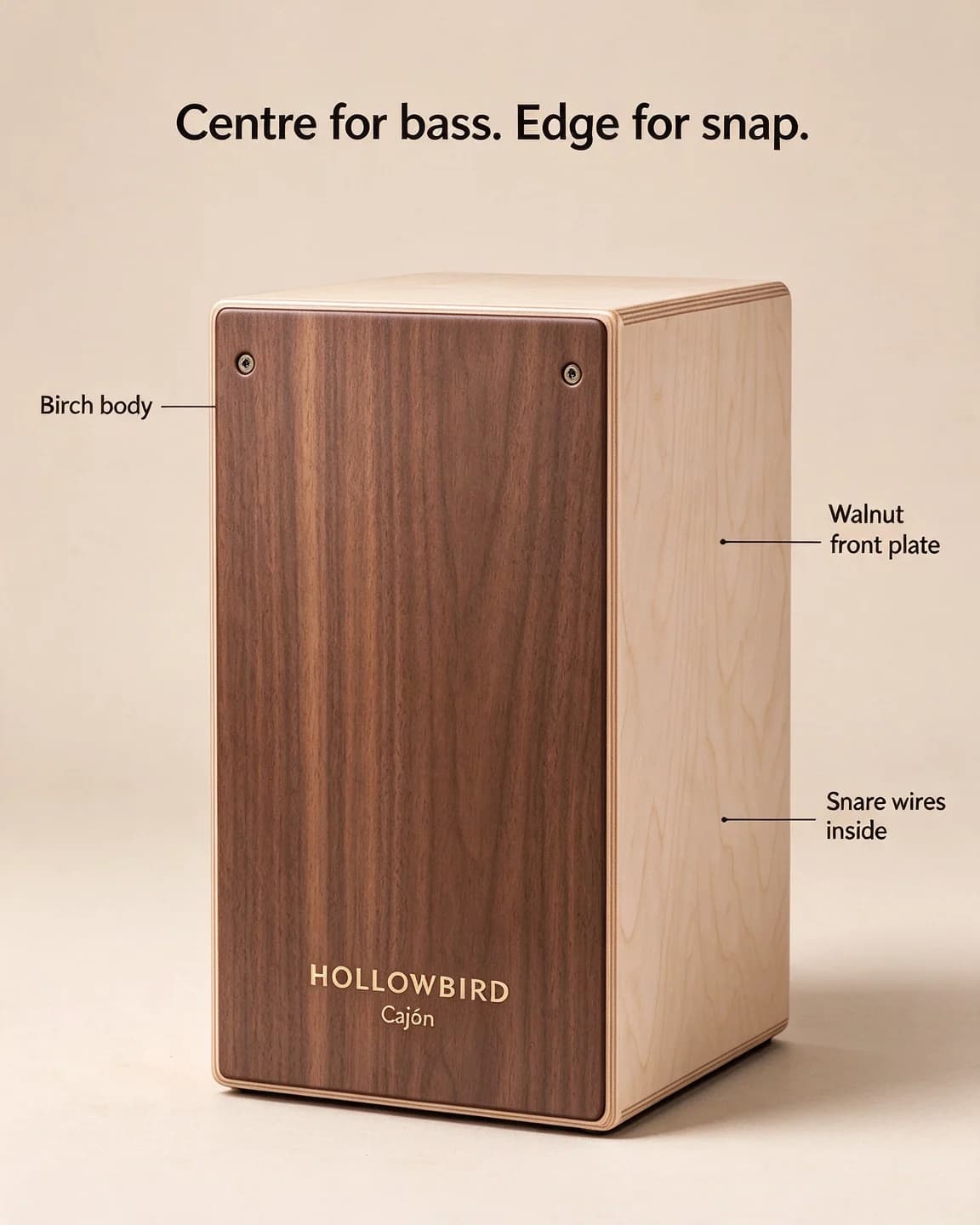
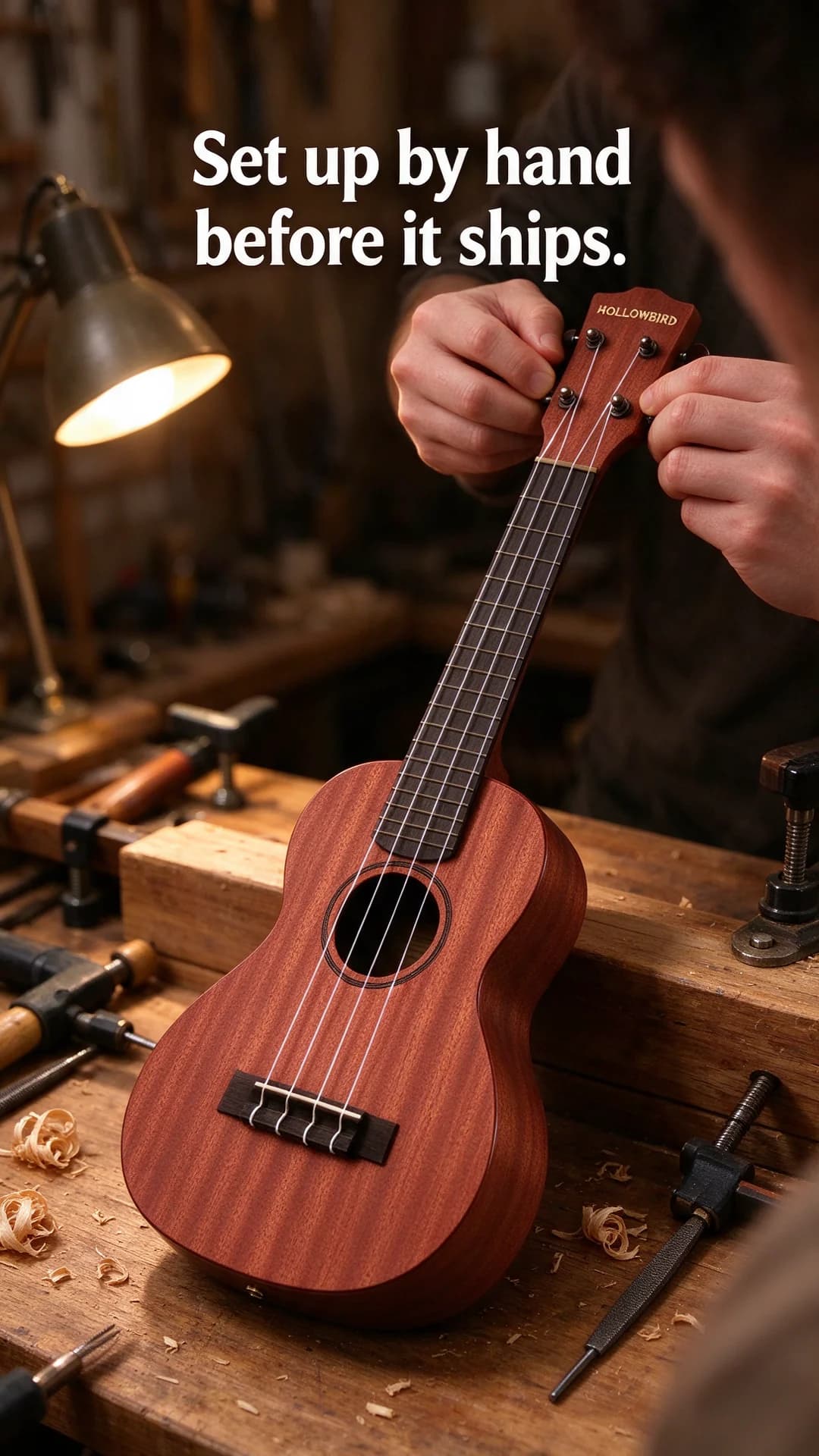
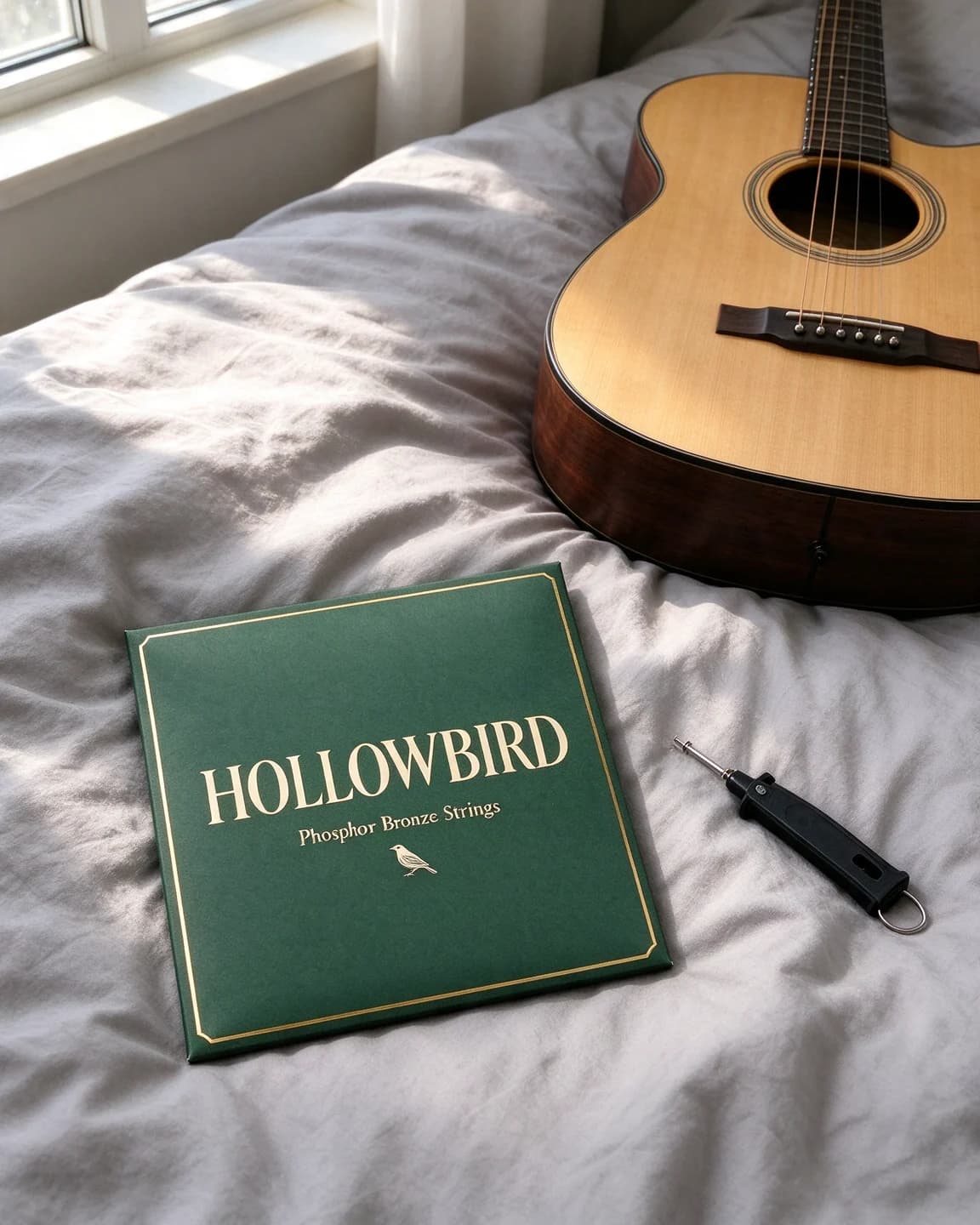
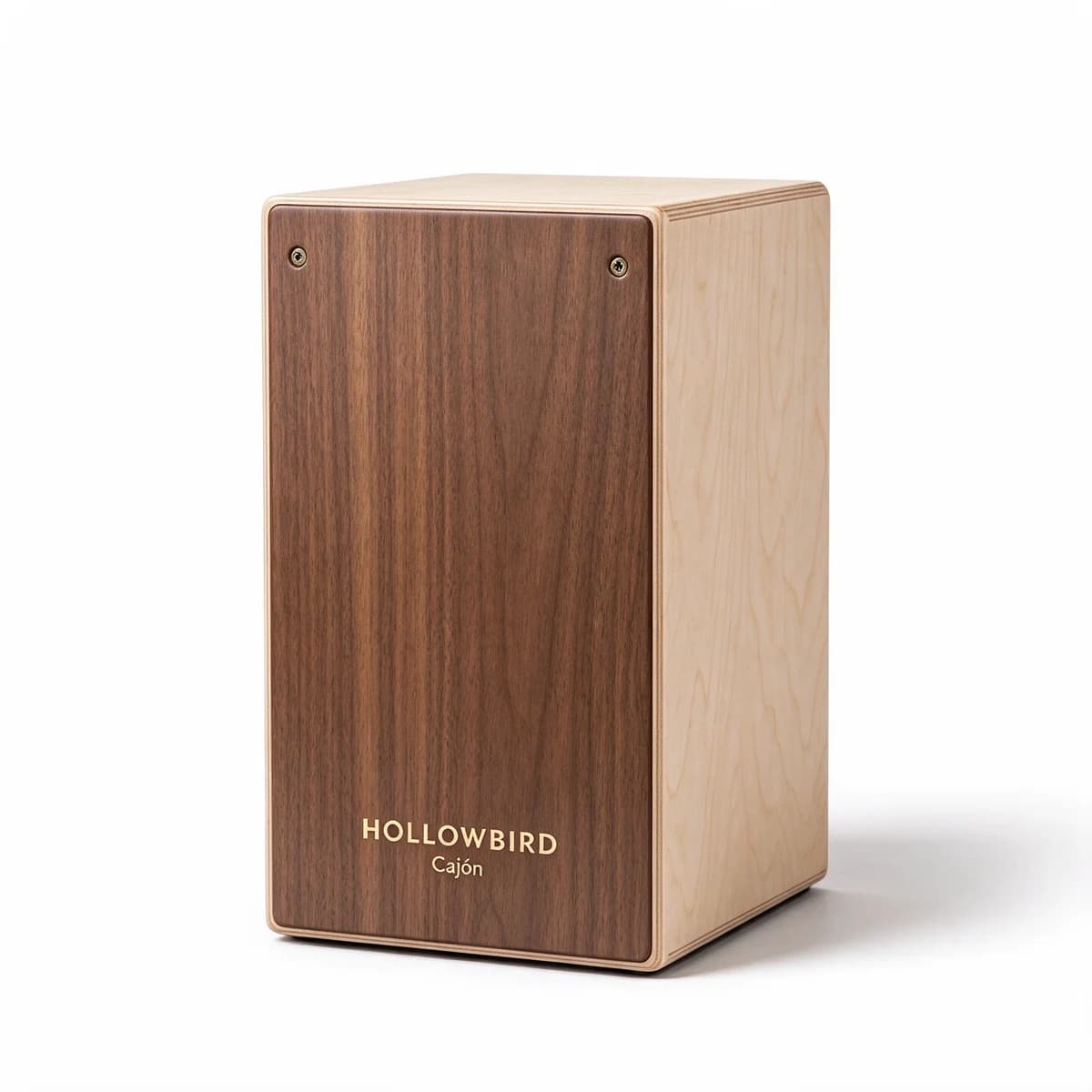
So an instrument shop needs two kinds of ad, and the eight above split that way. Five speak to beginners and gift buyers: the one-finger chord, the week-three caption, the gift box, the drum that fits a flat and the cajón callout that explains how it works. Three speak to people who already play: the restring reminder, the three-pack and the hand set-up. Mixing the two in one ad usually blurs both messages.
| Buyer | What they need to see | Example on this page |
|---|---|---|
| Adult beginner | That it's easy, and not too late | "C major: one finger." |
| Gift buyer | What's in the box, and that it'll get played | "A gift they'll actually play." |
| Parent | Size, a case, something a child can manage | The ukulele and the cajón |
| Working player | Freshness, materials, reliability | "When did you last restring?" |
Four shots every instrument shop needs
Four kinds of picture cover most instrument ads.
- The hero shot. The whole instrument at a three-quarter angle, headstock and logo readable, on a plain or single-colour background. It works for bold claims and offers.
- The detail shot. Wood grain, the rosette, the snare wires, a coil of fresh strings. Detail stands in for sound and craft.
- The place shot. Where the instrument lives: the sofa, the balcony, the practice corner. This is the one that makes beginners picture themselves playing.
- The bench shot. A workshop, clamps and shavings for makers who set up or build by hand. Use it only when it's true.
Hands are the hard part. A hand on a fretboard is where AI images most often go wrong, and players notice an impossible chord shape at once. Keep hands small, show them from behind or leave the instrument resting. If you need a real chord on screen, photograph a real player.
Say the size in plain words, too. Ukuleles come in soprano, concert, tenor and baritone sizes, and a gift buyer rarely knows the difference. "Concert size, a little roomier than the classic small uke" helps them more than the word "concert" alone, and it saves a return from someone who pictured a different instrument.
Sound is the missing sense
A still image can't play a note, and BulkAds video ads don't either. They are short, silent motion clips made from an image ad, like light moving across the wood or a slow push towards the sound hole, so they can show craft but not tone. For a true sound test, record a short clip on a phone, of your own playing or a track you have licensed, and run it from Meta Ads Manager, since BulkAds takes still images only. Launch the still and the silent clip from BulkAds at the same time, and the three side by side tell you whether hearing the instrument is what sells it.
Plenty of people scroll with the sound off, so put the key line on screen as text too. Our guide to captions for video ads covers how, and static vs video ads explains when each earns its place.
Two tracks to test: beginners and players
Run the beginner track and the player track as separate tests, so a winner in one doesn't hide a loser in the other.
For the beginner track, start with four angles in two or three versions each: the small win, the still-playing caption, the gift and the small-space fit. For the player track, three angles are enough: the reminder, the multipack and the hand set-up. That's roughly 14 to 21 ads, and our guide on how many ad creatives to test shows how to size each track.
A worked example for the multipack: if one set of strings sells for $4.65, three sets come to $14, and 20% off brings that to $11. Show the three packets and the sticker, and let the primary text say the saving in money, because "save $2.80" is easier to feel than a percentage for something people buy so often.
A first instrument is a bigger decision than a packet of strings, so expect beginners to look more than once before they buy. The gift, the small win and the still-playing caption each answer a different doubt, which is why they belong in the same test rather than one after another.
From one instrument photo to a batch in BulkAds
Instruments are glossy, curved and full of small parts, so the starting photo matters more than usual. Shoot the whole instrument in soft, even light so the finish doesn't flare, with every string and peg visible and nothing cut off at the edge of the frame. Our guide to product photos for AI ads covers reflective finishes.
From that one photo, BulkAds makes a batch of up to 12 ads, each built on its own angle, in 1:1, 4:5 or 9:16. Your brand kit supplies the colours, the voice and the proof points you can back up, such as a hand set-up or a real material spec, and the copy sticks to those. The pre-flight check compares every ad with your original photo and flags ones where the product drifted, which is meant to catch a ukulele that grew a fifth string. Still, count the strings and pegs yourself. Image ads use 2 credits each and videos 20 credits each, and you see the total before a batch starts.
Competitor ad research is useful in this category too. It shows which patterns other instrument sellers keep running the longest, and BulkAds rebuilds the pattern with your own instrument, never their images or words.
Where a winning instrument ad goes next
A winner in this category usually travels sideways, to the next instrument, before it travels forwards to a new format. The beginner's fear is the same whether the box holds a ukulele or a cajón, so a line that calms it once tends to work again. If "C major: one finger." sells the ukulele, the cajón version is "Your first beat: two hits." Keep the flat colour and the giant type, and change only the instrument and the promise.
Player-track winners move along the calendar instead. The restring question that worked in January can run again before World Music Day and again before wedding season, when people play more and strings wear faster. Captions move between places: the week-three caption that worked on a balcony can be tried on a dorm bed or a train platform, which tells you whether people responded to the words or to the sunset.
Format comes last. When a still has sold for a while, turn it into a short video ad, or pair it with a real playing clip run from Meta Ads Manager, and run both next to the original so you can see what the motion or the sound added.
Questions people ask
What should a musical instrument ad show?
The whole instrument, clearly and correctly, plus one idea: an easy first win, a place it lives, a gift, or a detail that hints at the sound. Beginners need reassurance, players need specifics, so make separate ads for each.
Can I use a popular song in my instrument ad?
Not without a licence. As of October 2026, Meta's Music Guidelines prohibit using music for commercial purposes without the appropriate licences, and a cover of a famous song is still someone else's composition. Play your own riffs, use a track you've licensed, or use Meta's Sound Collection within its terms.
Should instrument ads speak to beginners or experienced players?
Both, but never in the same ad. Beginners and gift buyers need to hear that it's easy and will get used. Players want materials, freshness and set-up. Test the two tracks separately.
Why do AI images of instruments look wrong?
Image models struggle with counts and hands: extra strings, extra pegs, wrong key patterns, fingers in impossible shapes. Start from a clean photo of your real instrument, keep hands small or out of frame, and check every image at full size.
Do BulkAds video ads include sound?
No. They are short, silent motion clips made from an image ad, so they show the wood, the strings and the set-up but not the tone. To let people hear the instrument, record your own playing on a phone and run that clip from Meta Ads Manager, next to the image and video ads BulkAds launches.
Is Hollowbird a real brand?
No. Hollowbird, its ukulele, its strings and its cajón are fictional, and every ad on this page was made with AI for illustration.
Keep going
- Features
AI video ads
Turn a winning still into a Reel
- Guides
Captions for video ads: how to write, style and add them
Burned-in or SRT, word for word or trimmed, where they go in a vertical frame: how to caption video ads that work with the sound off, with a timed line-by-line example.
- Guides
Product photography for ads: how to shoot it on a phone
A phone, a window and a sheet of white card are enough. How to shoot product photos that make good ads — and that AI tools can put in new scenes without mangling your label.
- Ad templates
UGC ad template
A phone-camera moment and one honest, first-person line
- Ad templates
Feature callout ad template
Your product in the middle, short labels pointing at what matters
- Ad examples
Electronics & gadgets ad examples
Headphone ads that turn specs into everyday moments
Every brand on this page is fictional and every ad was made with AI for illustration — they’re examples, not case studies.
BulkAds AI is an independent product and is not affiliated with, endorsed or sponsored by Meta Platforms, Inc. Facebook and Instagram are trademarks of Meta Platforms, Inc.