Why phone accessory ads start with the phone
Nobody buys a case, a power bank or a cable for its own sake. They buy it for a phone they already own, and the first question in their head is whether it fits. An ad that makes them hunt for that answer loses them, however good the photo. So the strongest accessory ads do two things in order: say which phones it's for, then show the product doing its job.
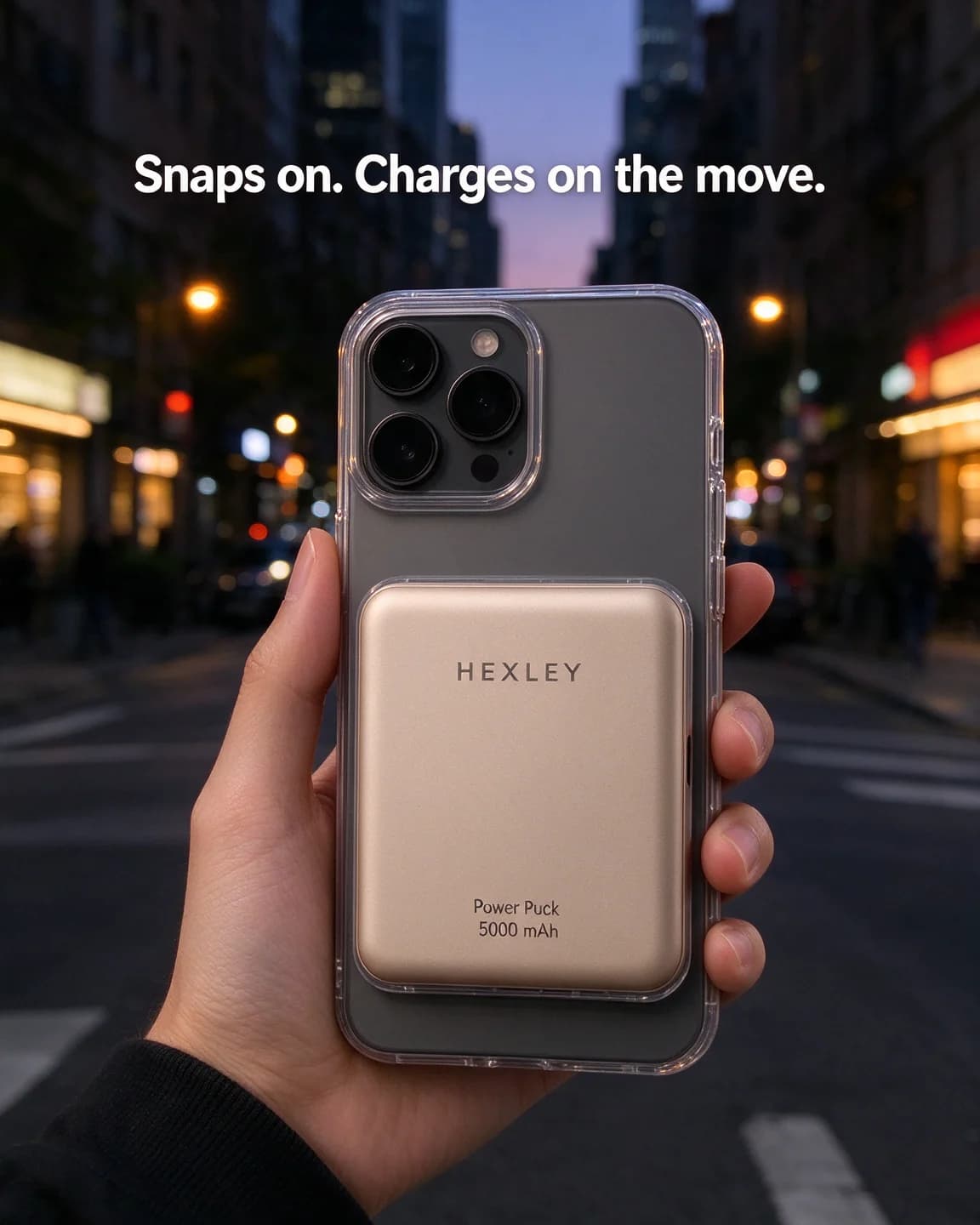
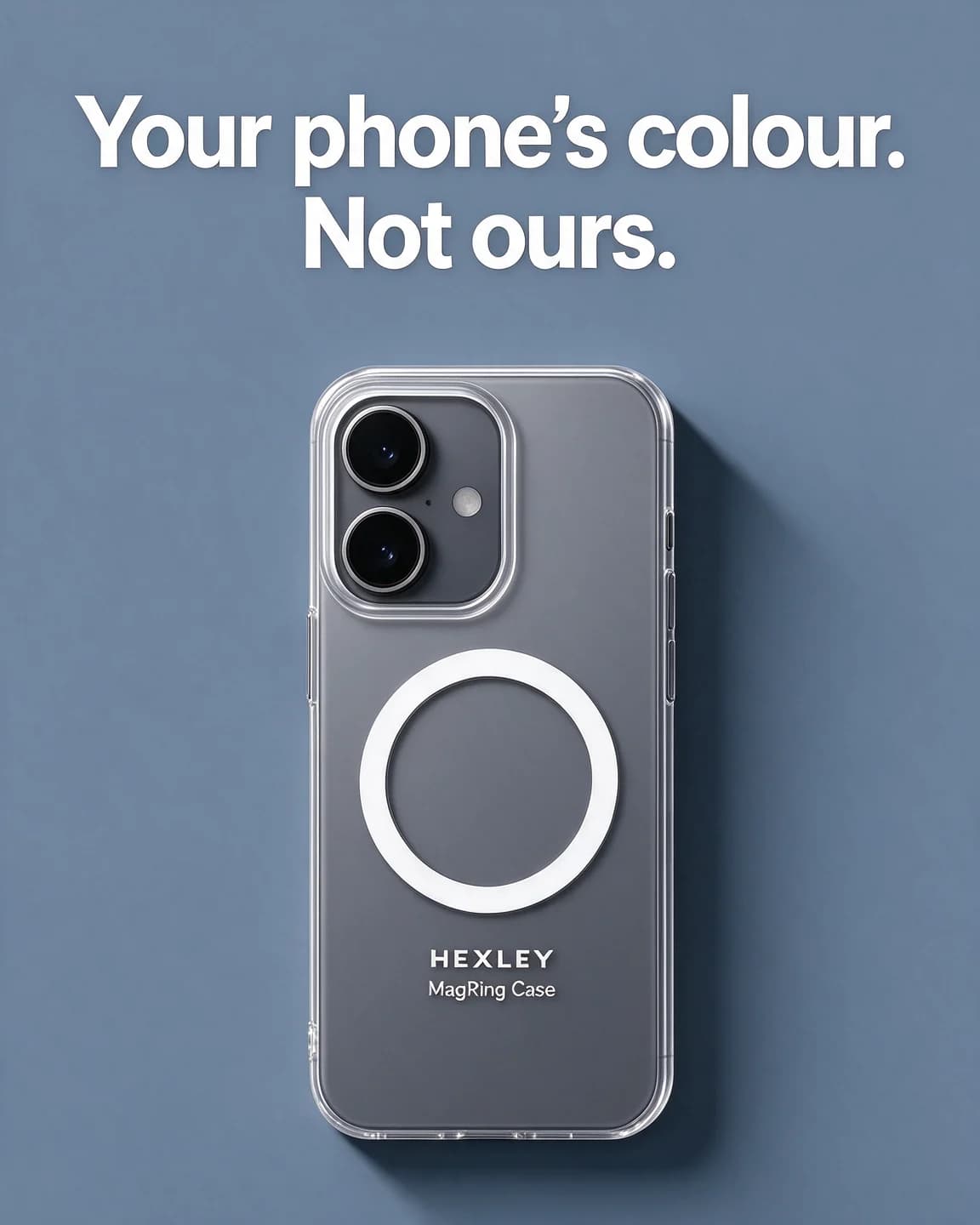
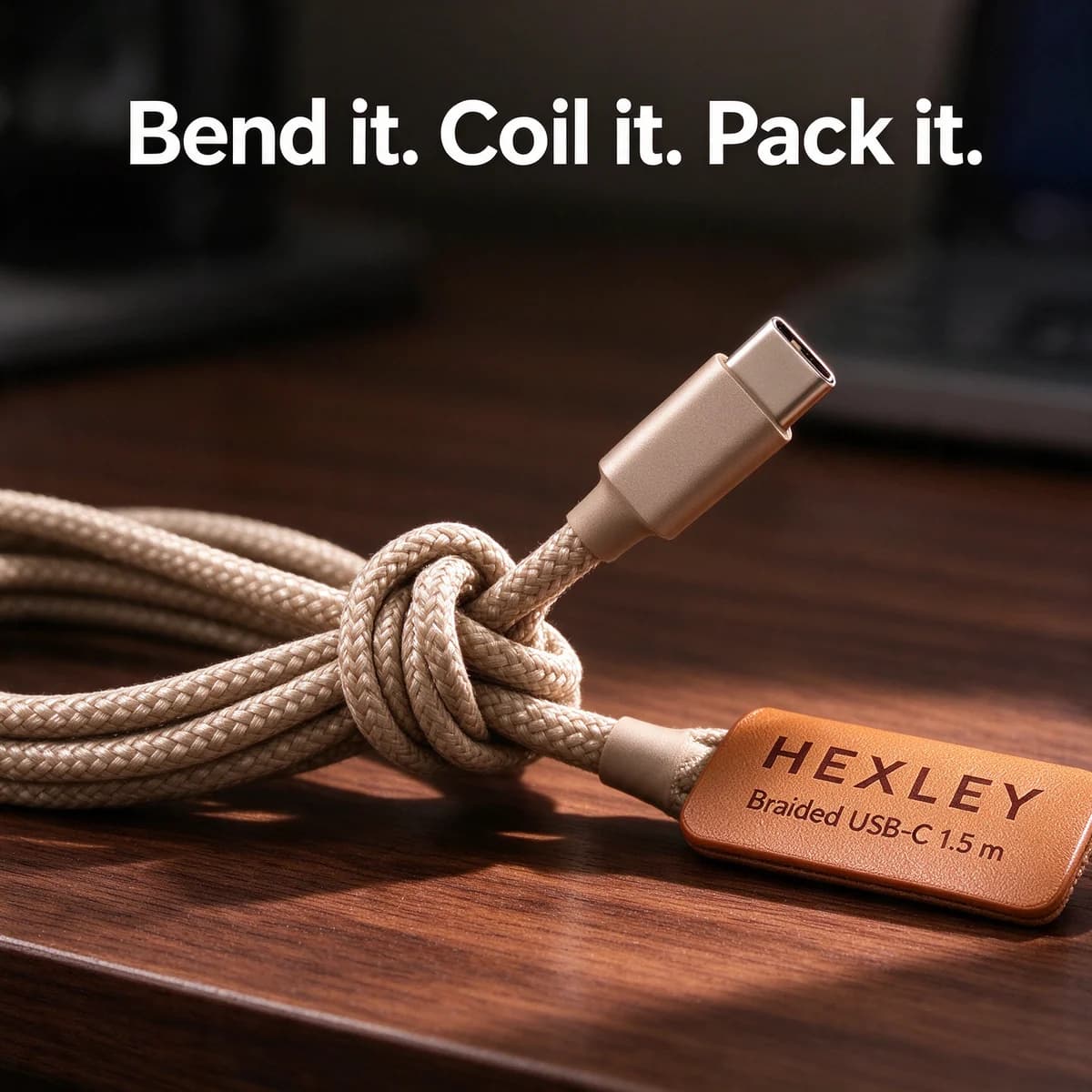
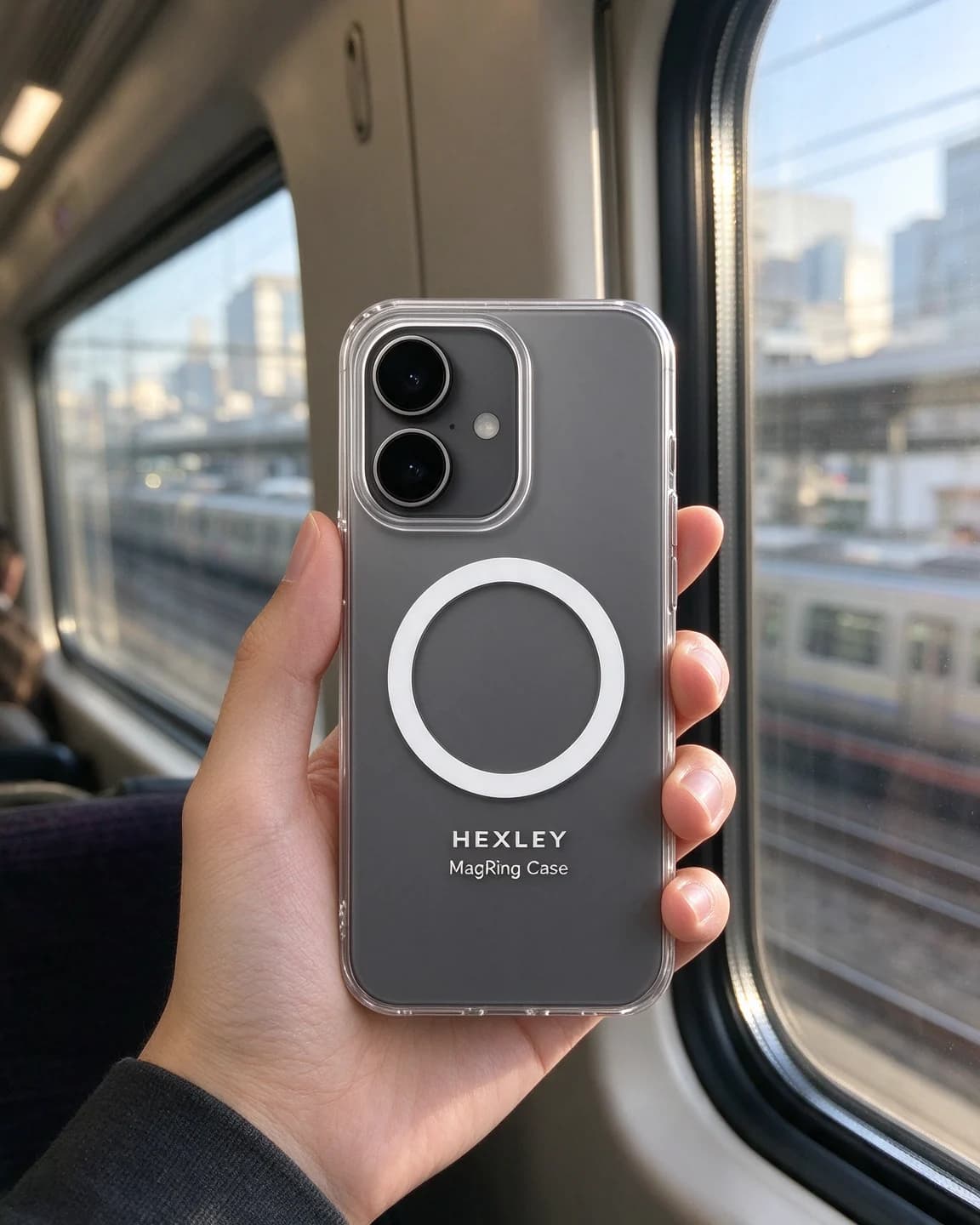
The job is usually physical and easy to film. Magnets snap a power bank onto a case. A braided cable bends at the connector without fraying. A clear case shows the phone's own colour through it. These are things a viewer can take in within a second, which is why the examples above lean on scenes and close-ups rather than spec sheets.
Lead with fit, then show it working
Put compatibility in the first line of the primary text, and on the image when the range is narrow: "for [phone model] and [phone model] Pro". When one product fits many phones, tell buyers where to check, such as a model list on the landing page. Then let the picture prove the product:
- Cases. On the phone from the back and from the side, with button covers and the camera ring in focus. A hand around it shows the thickness.
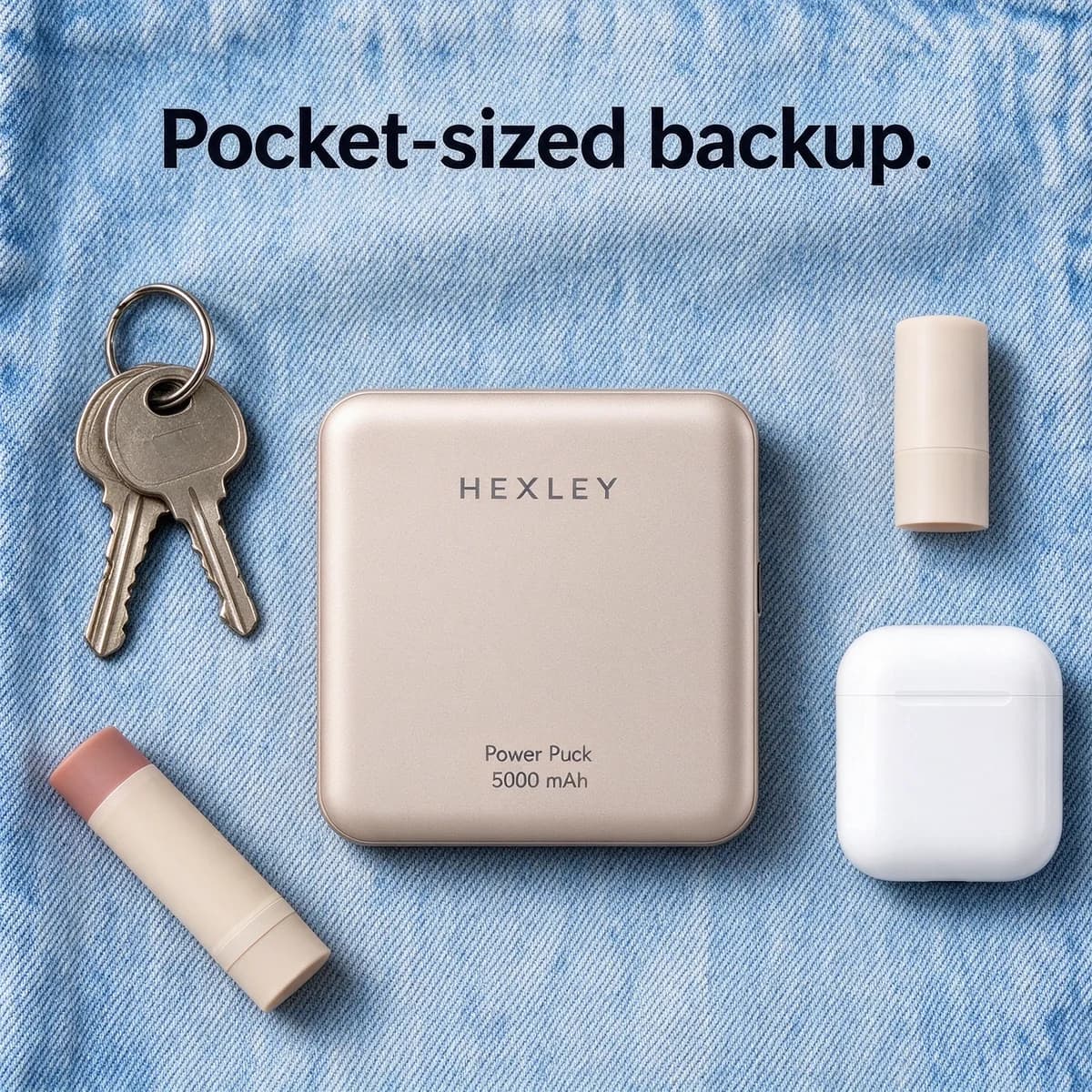
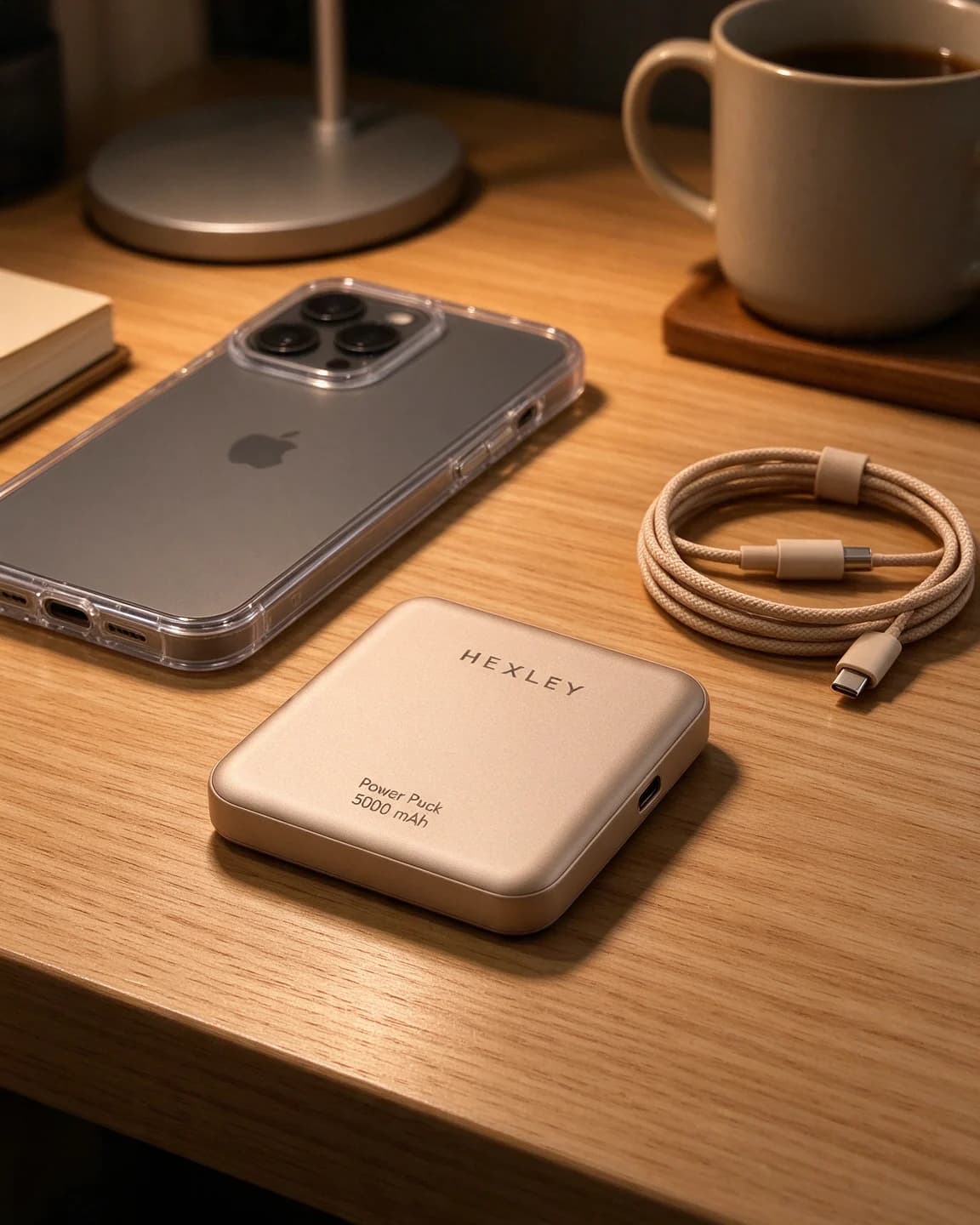
- Power banks. Attached to the phone in a real moment, and next to everyday objects for scale. Capacity goes in the copy, with its watt-hour rating.
- Cables. The braid and the connector in a macro, plus the tight bend that usually breaks cheap cables.
Most accessories are small, low-cost purchases, so one clear idea per ad beats a busy collage. Keep the label readable at thumbnail size and let the primary text carry the model list, the cable length and the charging speed. Charging speed in particular depends on the phone and the adapter, so write it as "up to" with the conditions.
Shots worth making for each product
A short shot list keeps a batch varied without changing the product:
- The mechanism. The snap, the click, the bend. It is the one shot that turns a commodity into a product with a reason to exist.
- Scale. A pocket flat lay with keys, earbuds and lip balm. Nothing on white tells the buyer how big a power bank really is.
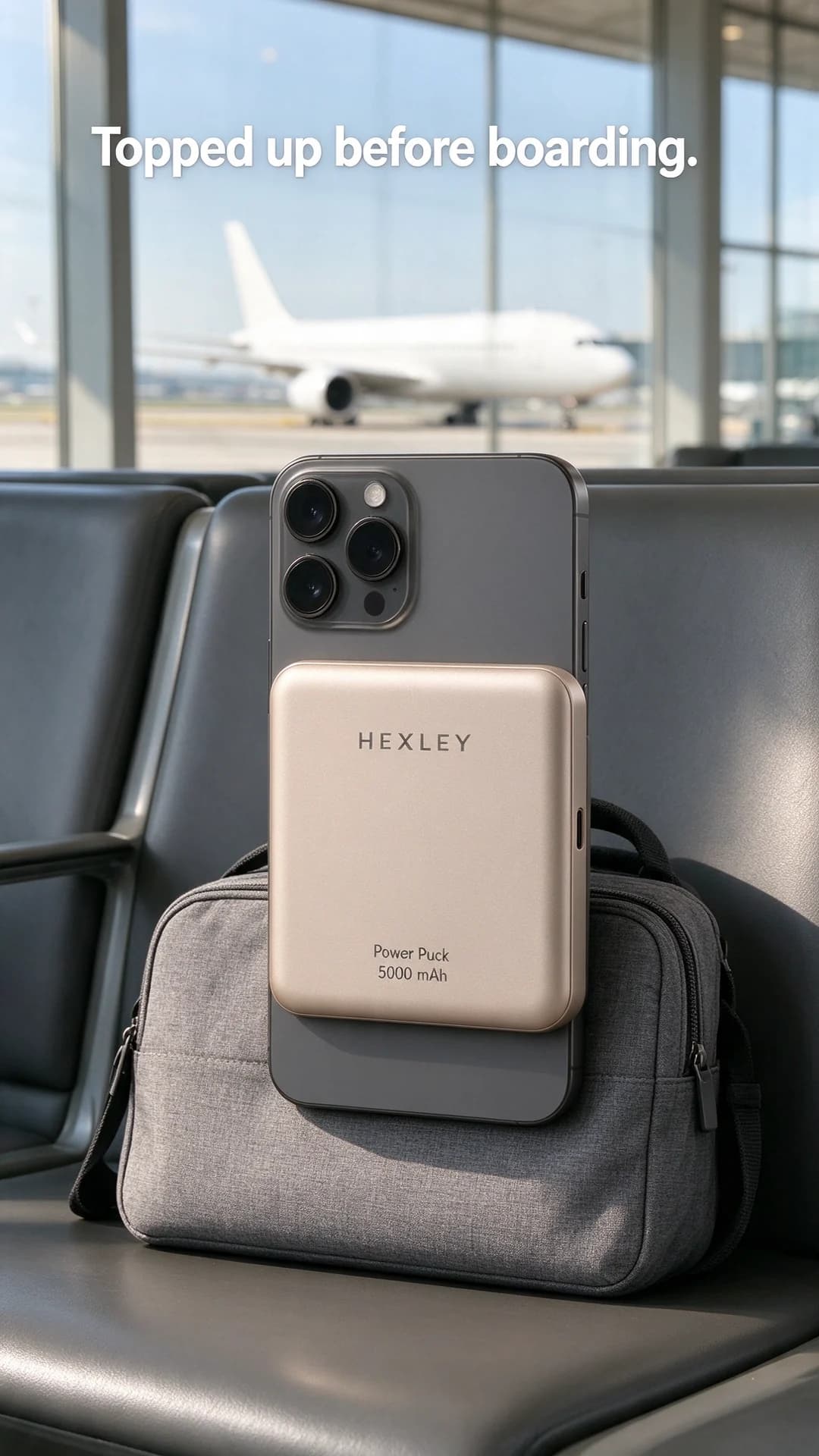
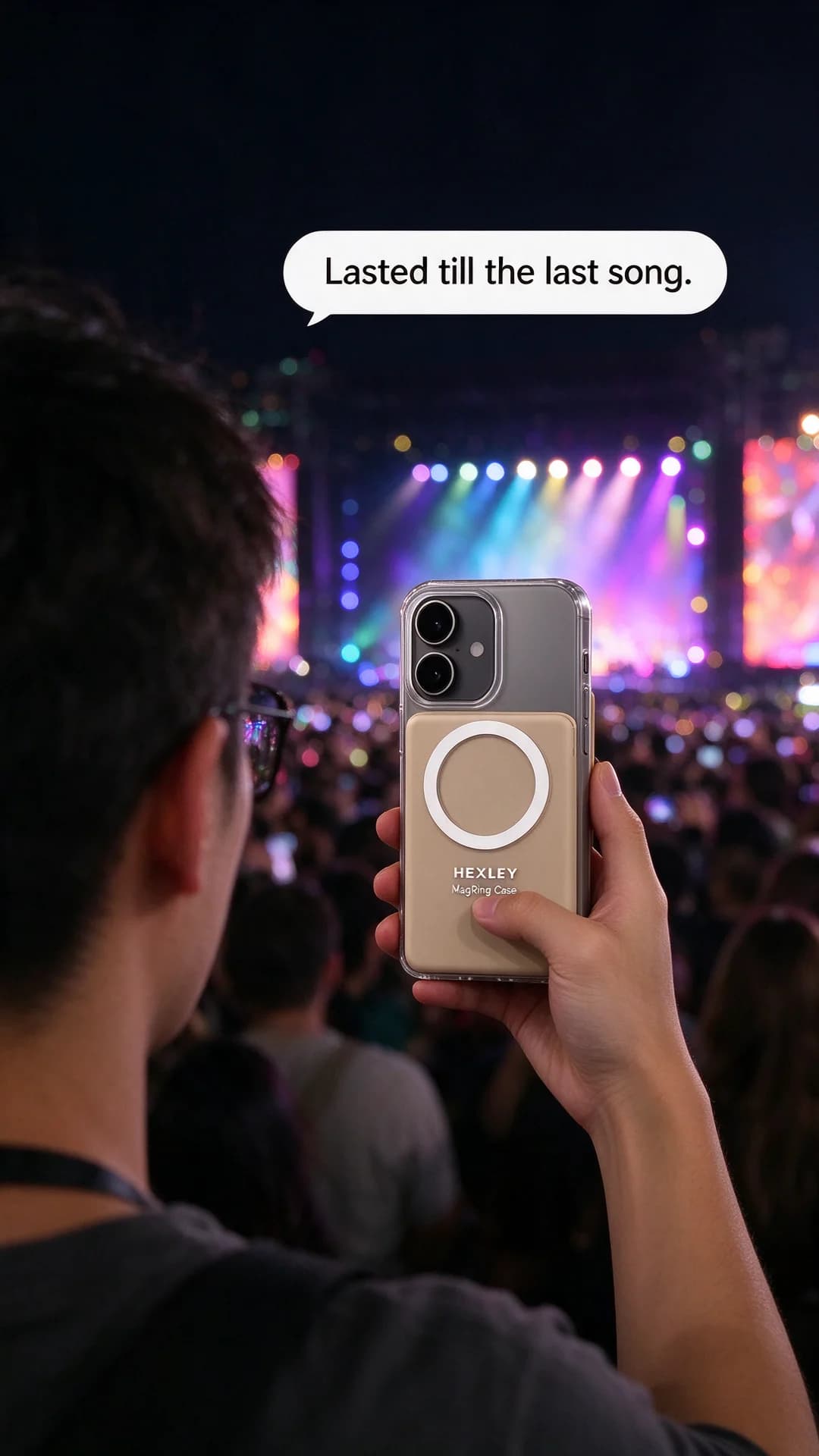
- The long day. A commute, a departure gate, a gig. Battery capacity only matters in a situation, so show the situation.
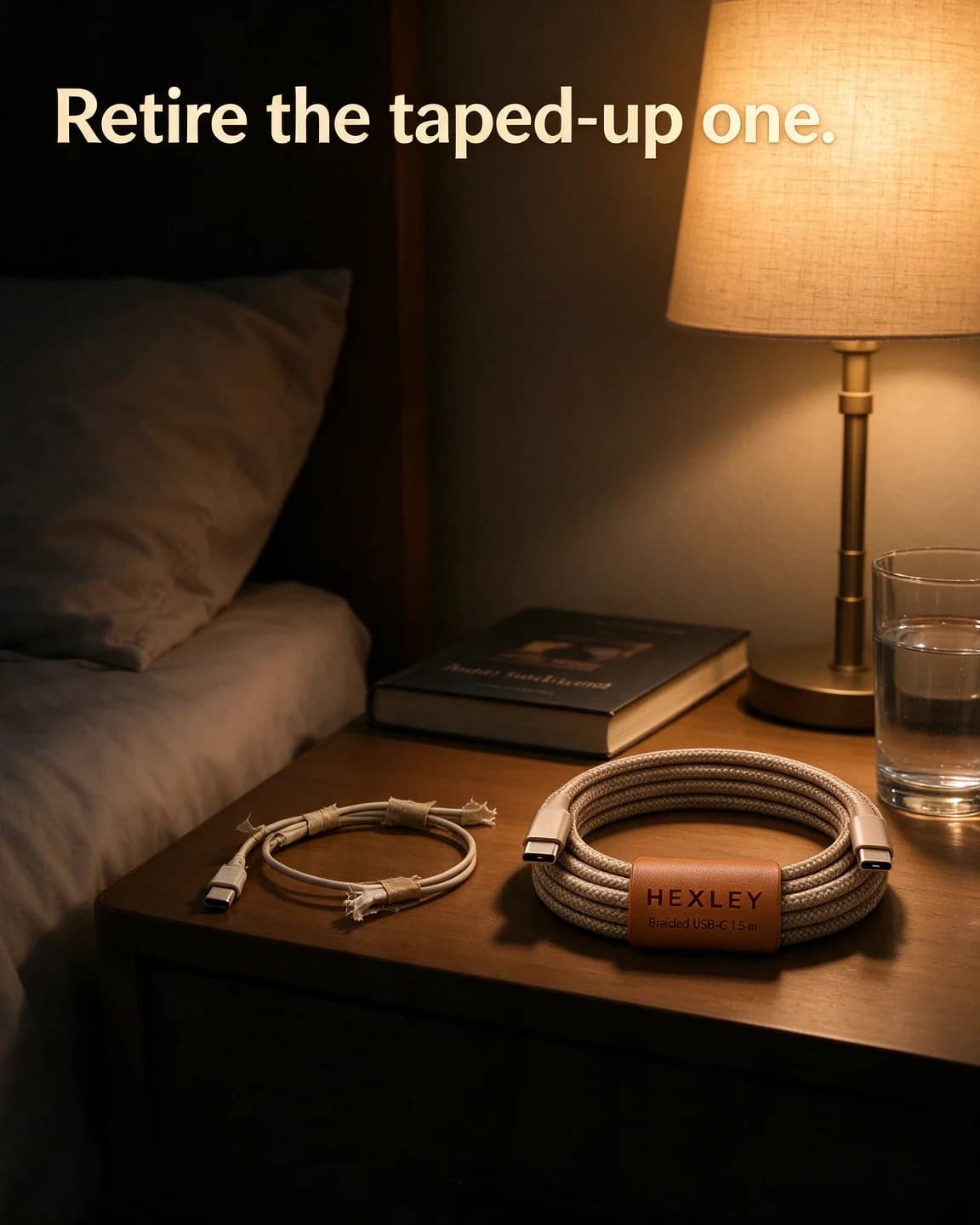
- Old beside new. An unbranded frayed cable or yellowed case next to yours. It makes the purchase feel overdue rather than optional.
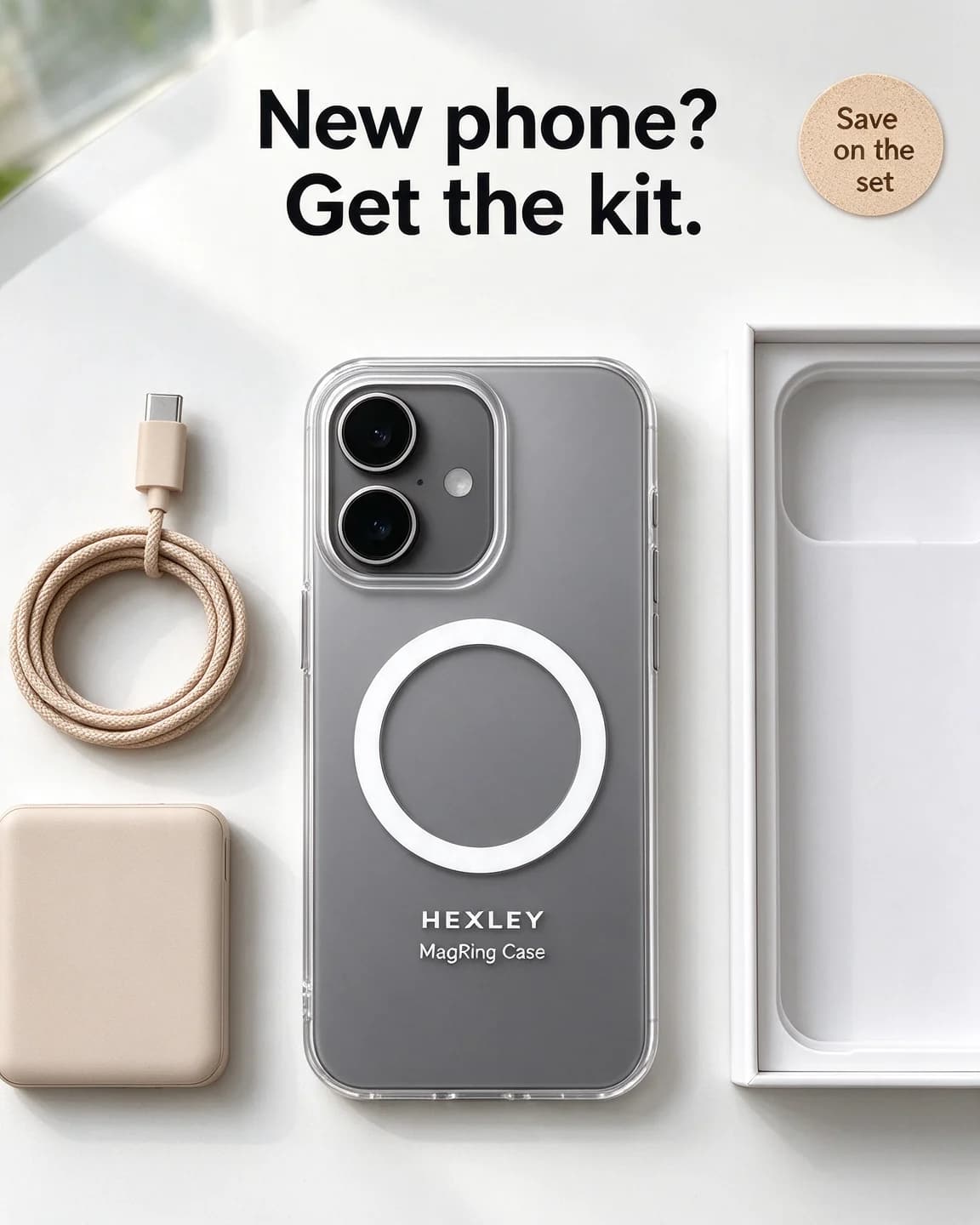
- The kit. Case, cable and power bank beside an empty plain phone box, for the moment someone is setting up a new phone.
- The bold claim. One short line on a flat colour that matches the phone, for feeds where a quiet scene gets lost.
Keep the phone itself anonymous
Your product is the accessory, but the phone fills most of the frame, and it carries someone else's brand. For the packshot, use a logo-free dummy handset, or cover the maker's logo with a plain sticker under the clear case, so the back shows only your ring and your label. Leave out phone makers' wordmarks and their accessory programme names, and keep certification marks off the image unless your exact product is listed. The Wireless Power Consortium (opens in a new tab) says a product is licensed for the Qi logo only if it appears in the Qi Certified Product Database (checked October 2026). If your charger is listed, say so in the copy and keep the listing to hand.
The screen is the other trap. Keep it off, or on a plain wallpaper, and state the battery level in words rather than drawing it. "4% at 6pm? Not today." in the headline does the job of a low-battery alert without pretending to be one, which keeps the ad clear of the Community Standard on Spam (opens in a new tab) that Meta's ad rules point to. If an AI scene adds icons or text to the screen, regenerate that ad before you launch.
Travel scenes for power banks
Travel is the strongest moment for a power bank, and the one with the most rules. The US TSA (opens in a new tab) says power banks must be packed in carry-on bags, never in checked bags, and its battery guidance puts the everyday limit for a lithium-ion battery at 100 watt-hours (checked October 2026). Some airlines go further. Emirates has not allowed passengers to use power banks on board since October 1, 2025 (Emirates announcement, checked October 2026). So set travel scenes at the gate or in the taxi queue, never mid-flight, and give travellers the number they need to check their own airline.
That number is watt-hours, while most packs are sold by milliamp-hours. Multiply the capacity in amp-hours by the cell's nominal voltage, or better still, copy the Wh rating printed on the pack itself:
| Capacity on the box | At a typical 3.7 V cell | What the ad can print |
|---|---|---|
| 5,000 mAh | 18.5 Wh | 5,000 mAh (18.5 Wh) |
| 10,000 mAh | 37 Wh | 10,000 mAh (37 Wh) |
| 20,000 mAh | 74 Wh | 20,000 mAh (74 Wh) |
If the label on your pack gives a different voltage or Wh figure, print that figure instead of the table's.
Which product to lead with
Lead with the product that brings in new customers. For many accessory stores that is the case, since every new phone needs one, and a buyer who trusts your case is easier to sell a cable to later. Give its first batch four angles, three versions each:
- Fit and finish. The case on a phone, with the model named in the first line of the copy.
- Mechanism. The magnetic snap, or the cable bent hard at the connector.
- The long day. A commute, a trip or a gig, with a first-person caption.
- The kit. Case, power bank and cable together.
The kit is worth testing early because it raises the order value without discounting the hero product. As a worked example, a case at $8.25, a power bank at $21 and a cable at $5.15 come to $34 bought separately. A kit at $29 saves the buyer $5.15, which is easy to show as one number. The bundle template shows a layout for it.
How BulkAds makes these from one accessory photo
Start with a clean packshot: the case on a plain, logo-free phone, the power bank face-on, the cable coiled, each on a plain background with the label sharp. BulkAds places that product into new scenes and layouts, and a pre-flight check compares each ad with your photo, so a changed camera cut-out, a missing port or a misspelt label is flagged. It also flags likely policy risks, fake buttons among them, before anything launches.
Each batch is one product in one size. A batch of up to 12 ads for the power bank can mix the snap on a walk, the pocket flat lay, the gate and the gig, in whichever of 1:1, 4:5 or 9:16 you pick, each with its own headline, primary text and description. Your brand kit holds the claims you can back up, like capacity and a tested drop height, and the copy is told to stick to those. Mechanism shots suit motion, such as a slow push-in as the pack meets the case, and a video ad uses 20 credits against 2 for an image ad.
Ads launch to your own Meta ad account, paused, through the bulk ad launcher, or Autopilot launches them as its own test, judges them on sales and drafts four fresh variants of each winner. That suits a category where new phone models keep arriving and last season's winning case ad needs a new model name on it.
Questions people ask
Should phone case ads show a specific phone model?
Name the models in the copy, but keep the phone in the image anonymous: no logos, wordmarks or signature design details from the phone maker. A generic handset with your case in sharp focus answers 'does it fit' without borrowing anyone's brand.
Can a power bank ad say it's safe to fly with?
Avoid blanket lines like 'flight approved'. Rules depend on capacity and airline: the US TSA says power banks travel in carry-on bags only, never checked, and some airlines, Emirates among them, don't allow them to be used on board at all. Print the watt-hour rating and let travellers check their own airline.
Which ad formats work best for cases, chargers and cables?
Use 4:5 images to compare angles quickly, 1:1 flat lays for scale, 9:16 for long-day scenes in Stories and Reels, and short videos for mechanism shots like a magnetic snap.
How do I stop accessory ads looking like marketplace listings?
Give each ad one idea and one moment: the snap on a walk, the pack beside your keys, the cable bent at the connector. Listings show the product on white, so a scene with a reason in it already looks different.
Is Hexley a real brand?
No. Hexley is fictional, and every ad on this page was made with AI for illustration.
Keep going
- Features
Product photo ads
Your real packshot, in every scene
- Features
Bulk ad launcher
A whole batch live on Meta in one go
- Guides
Product photography for ads: how to shoot it on a phone
A phone, a window and a sheet of white card are enough. How to shoot product photos that make good ads — and that AI tools can put in new scenes without mangling your label.
- Ad templates
UGC ad template
A phone-camera moment and one honest, first-person line
- Ad templates
Social post ad template
Word of mouth, captured as an ad: a name, a few casual lines, a photo
- Ad templates
Bundle ad template
Every item in the set, counted out, with one reason to buy them together
Every brand on this page is fictional and every ad was made with AI for illustration — they’re examples, not case studies.
BulkAds AI is an independent product and is not affiliated with, endorsed or sponsored by Meta Platforms, Inc. Facebook and Instagram are trademarks of Meta Platforms, Inc.