What makes beverage ads work
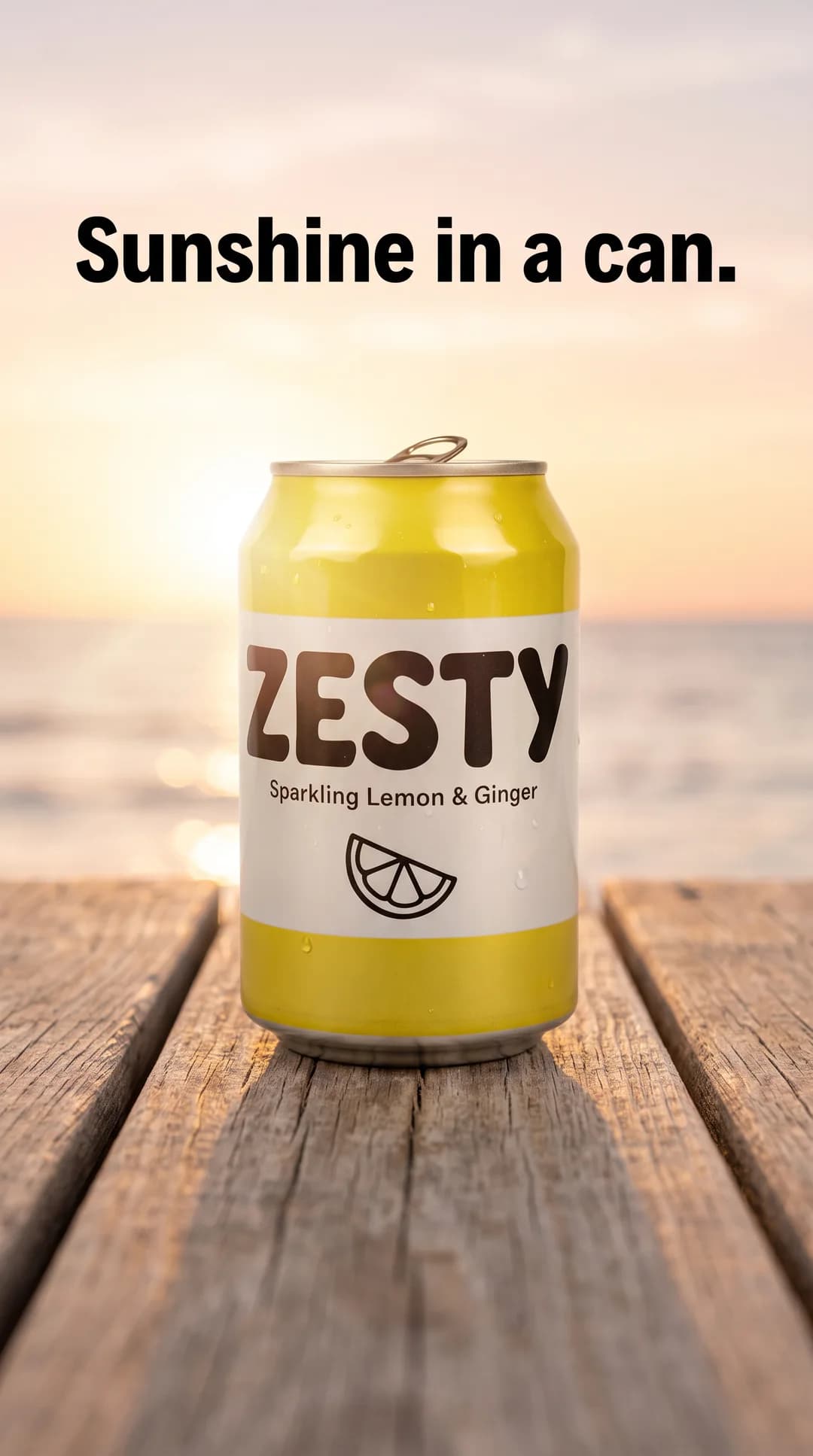
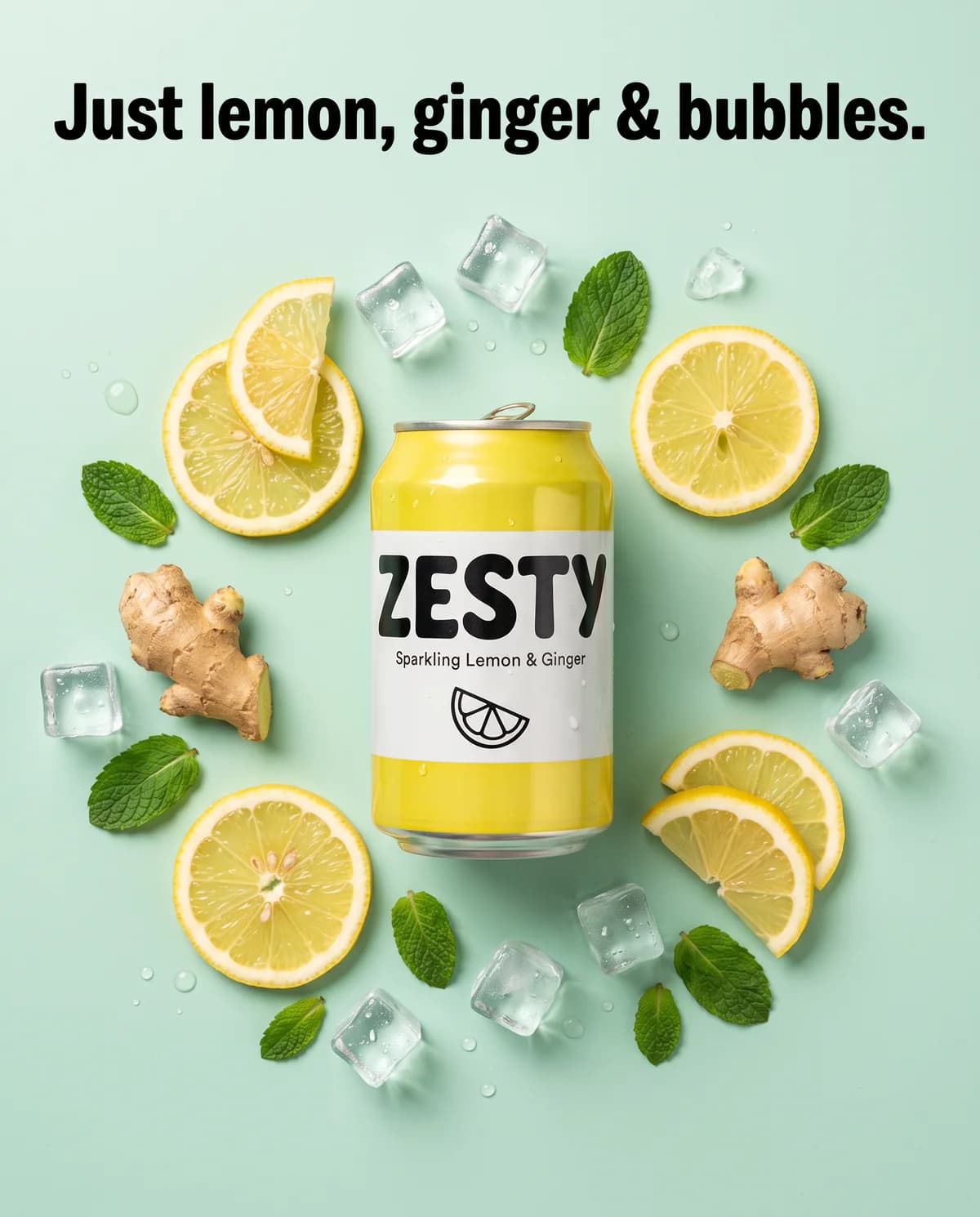
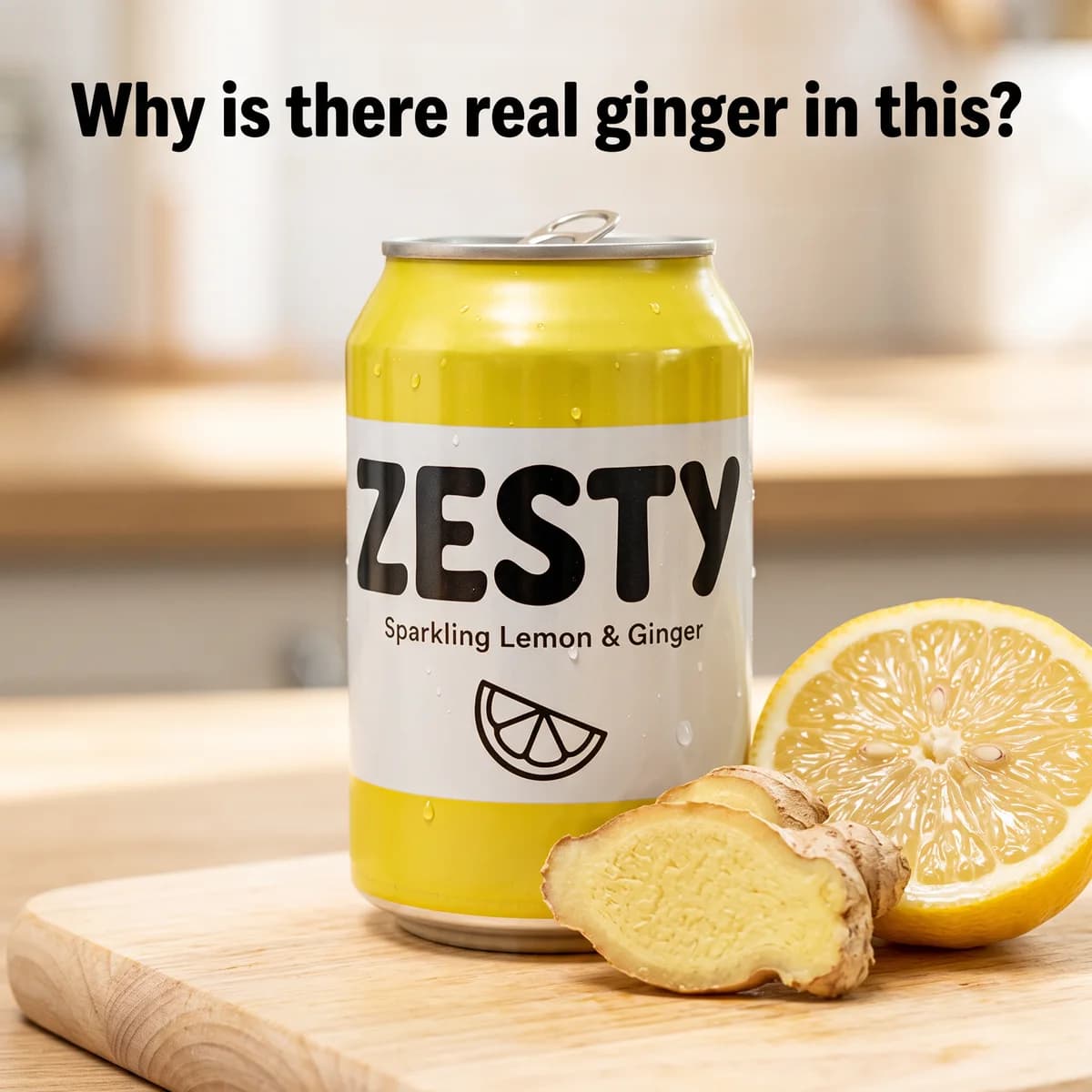
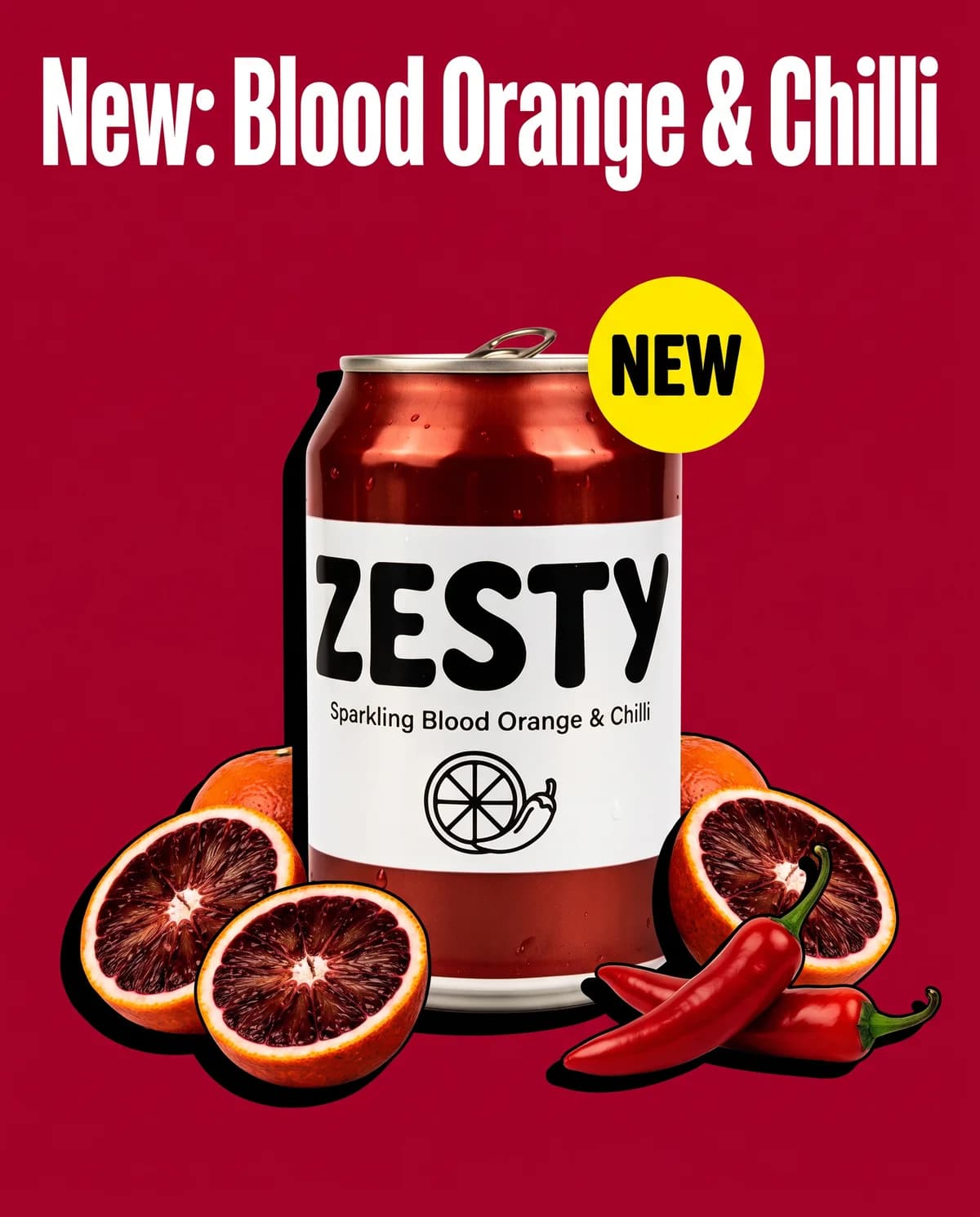
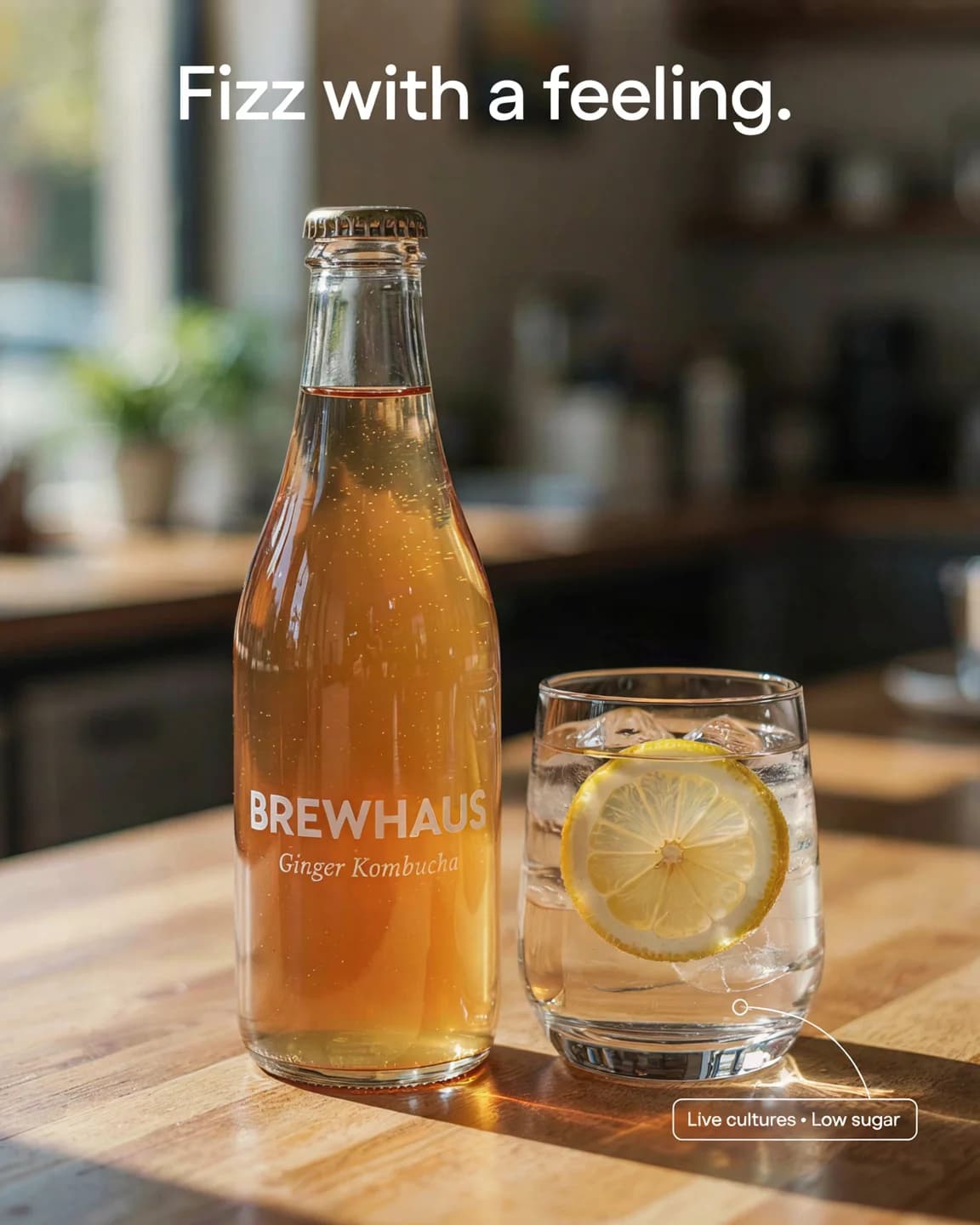
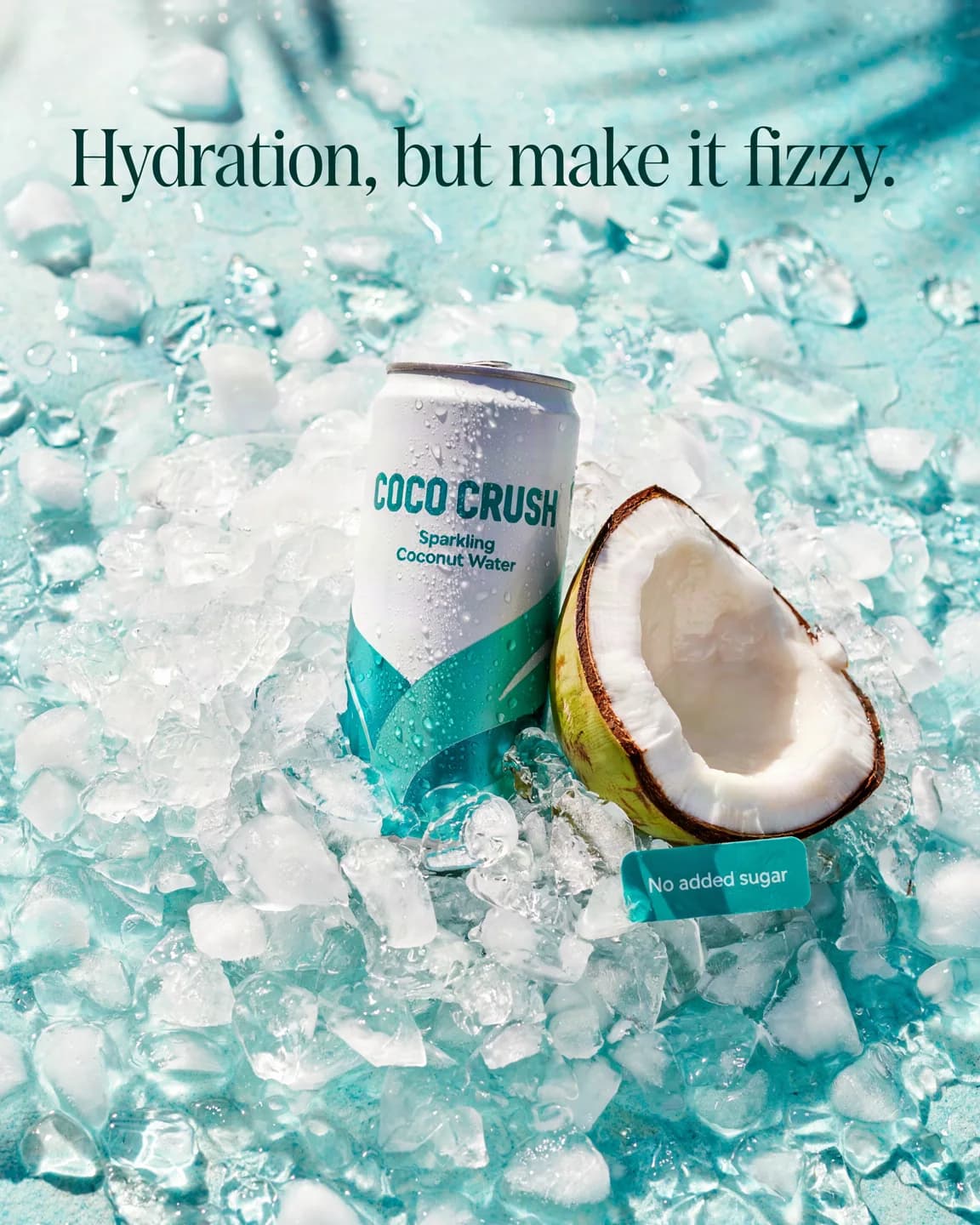
A drink ad has a problem most categories don't: nobody can taste it through a phone. So the strongest beverage ads borrow every other sense they can — condensation on the can, ice, a pour, fruit sliced open — and pin the drink to a moment the viewer already has.
Across the examples above, three jobs keep coming up:
- Make it look cold and tasty. If the can could be a tin of paint, the image isn't working hard enough.
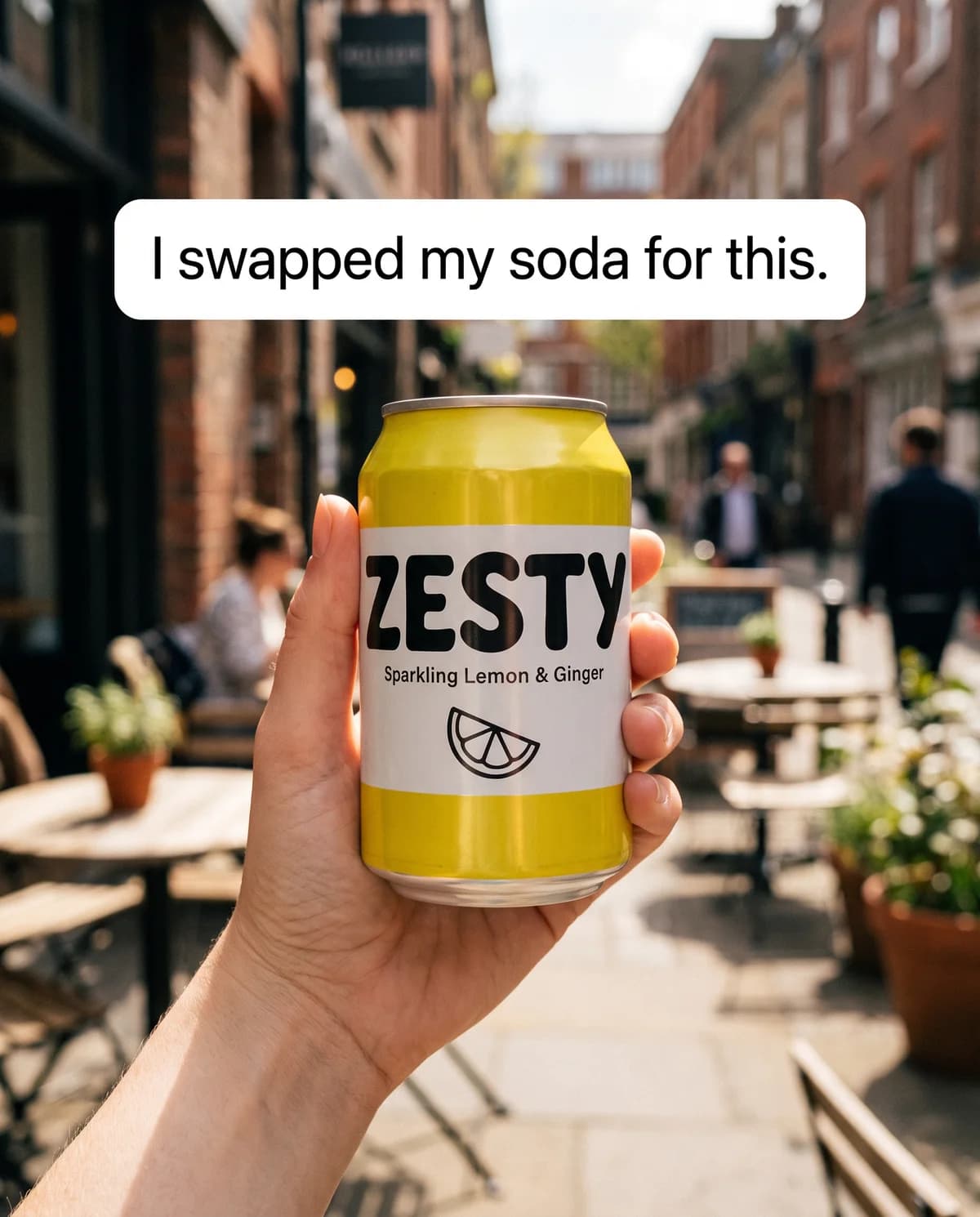
- Give a reason to switch. Most people already have a drink they like. Name what yours replaces — the 4pm cola, the sugary iced tea — and why it's better for them.
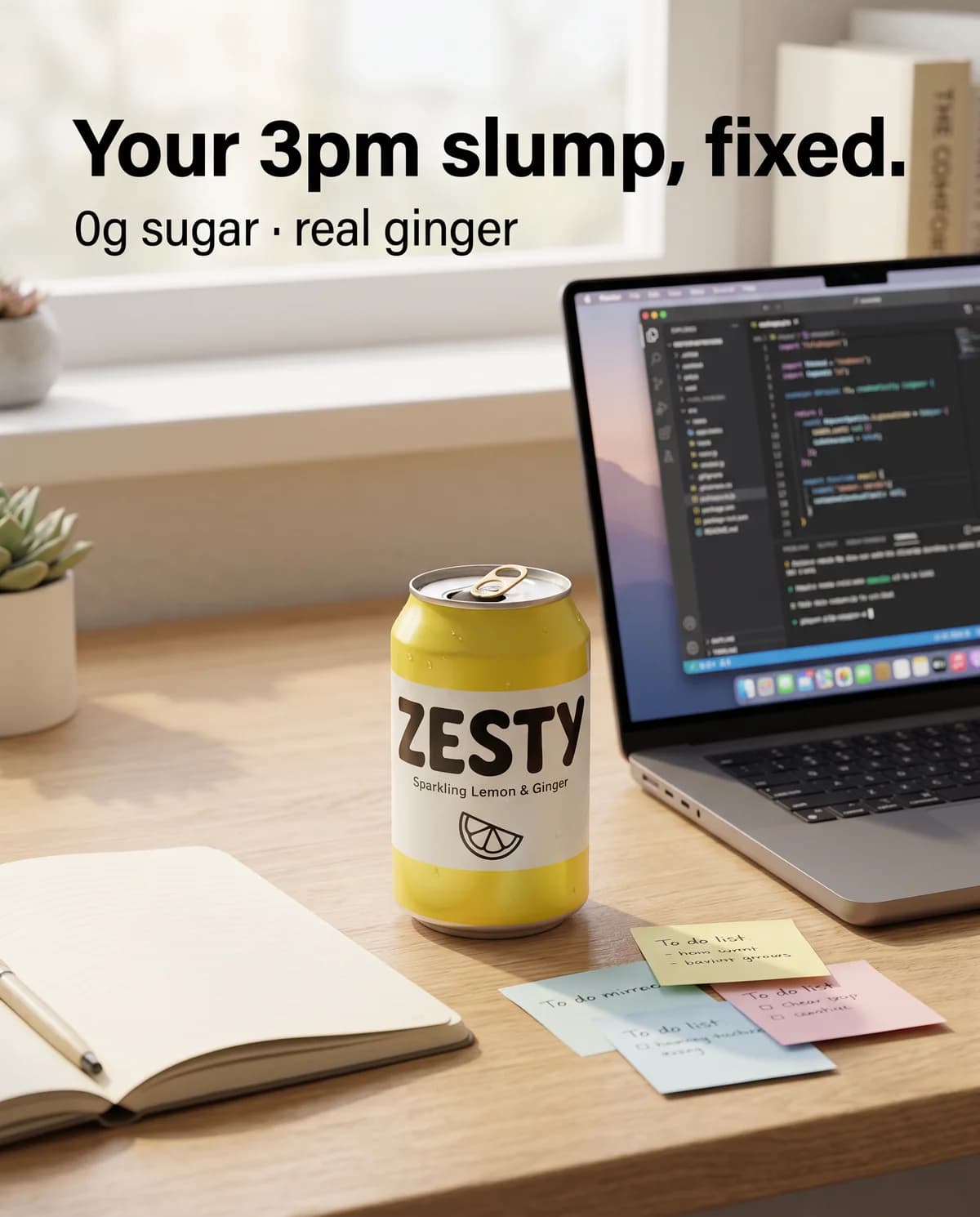
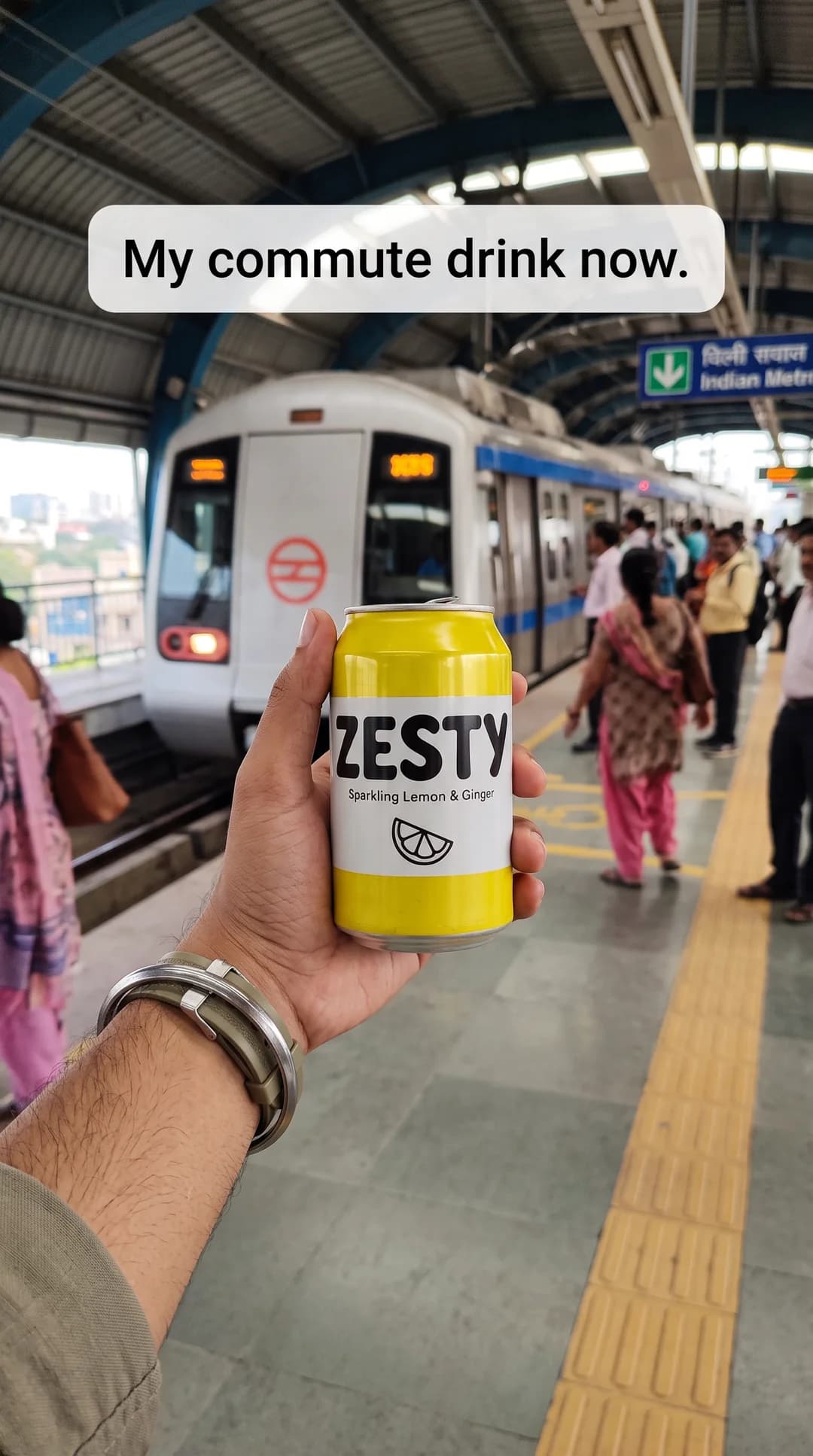
- Put it in a moment. The commute, the desk at 3pm, match night, a rooftop party. Drinks are bought for occasions, so the occasion is often the hook.
The same can carries very different ideas on this page: a mood, a hard number, a customer's voice, a question, an offer. That spread is deliberate. Different people buy the same drink for different reasons, and Meta's own creative guidance now stresses variety — genuinely different concepts give its delivery system more to match to different people than near-copies do. Our guide to creative diversity and Andromeda explains why.
A two-week testing plan for a drinks brand
Start with angles, not colour swaps. For a new drink, these five make a sensible first test:
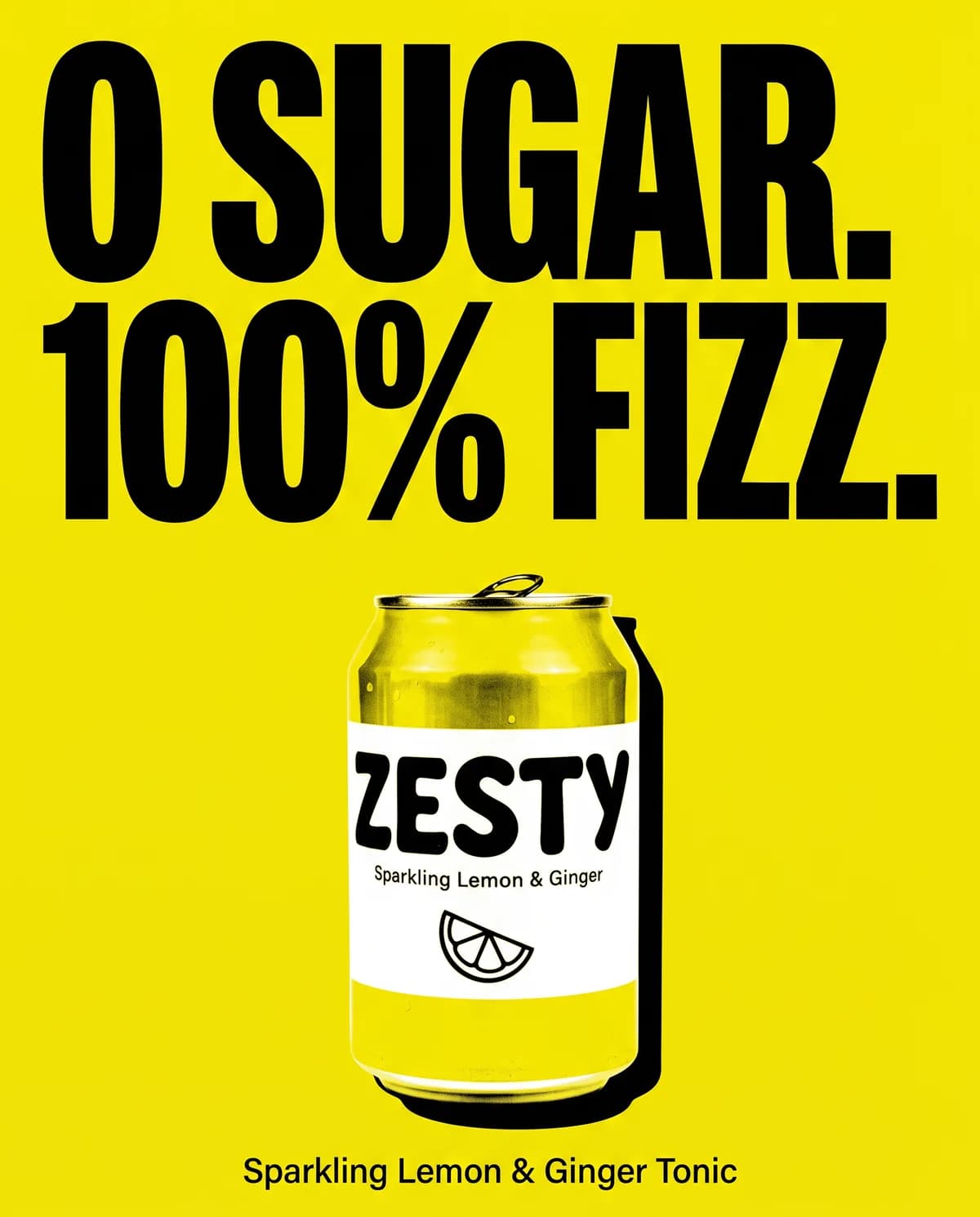
- Bold claim — your strongest label fact, set huge.
- The swap — a customer-style line naming the drink you replace.
- The moment — one everyday occasion: desk, commute or gym.
- Ingredient story — what's in it, laid out around the can.
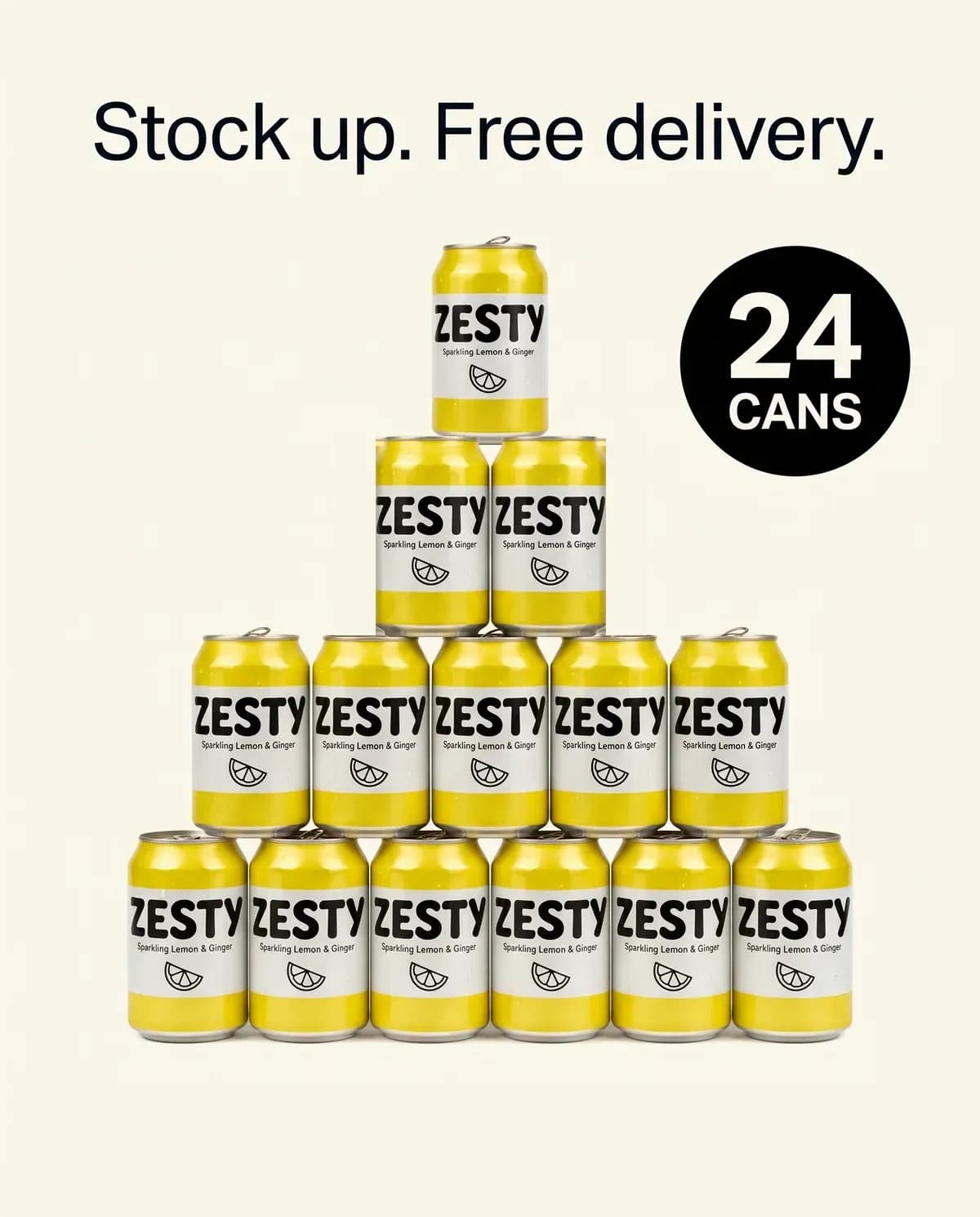
- Offer — a multipack or free delivery, mainly for people who already know you.
Make two or three executions of each — a different scene or headline for the same idea — so a weak picture doesn't sink a good angle. That's 10 to 15 ads for one product, a common starting batch. Our guide on how many ad creatives to test explains how to size it to your budget.
Build every concept in 4:5 for feeds and 9:16 for Stories and Reels. Drinks suit vertical — a tall can, a pour, bubbles rising — so don't treat 9:16 as an afterthought.
Then give each ad enough spend to earn a verdict. A common rule of thumb is to let an ad spend about twice your target cost per purchase before judging it. Say your target is $4.10 and you launch 12 ads: that's roughly $99 before the first cut. The creative test calculator runs the numbers for your own targets.
| When | What to do |
|---|---|
| Days 1–3 | Launch everything and leave it alone. Big edits can restart Meta's learning phase. |
| Days 4–7 | Pause ads that have spent about 2× your target cost per purchase with no sales. |
| Week 2 | Make fresh executions of the angles that sold and test them against the survivors. |
In the tests it launches itself, BulkAds' Autopilot can apply that stop rule for you and, by default, asks before scaling the ads that sell at or under your target.
Creative tips for drink ads
- Sweat the condensation. Droplets and frost read as cold instantly. A dry can in warm light reads as room temperature.
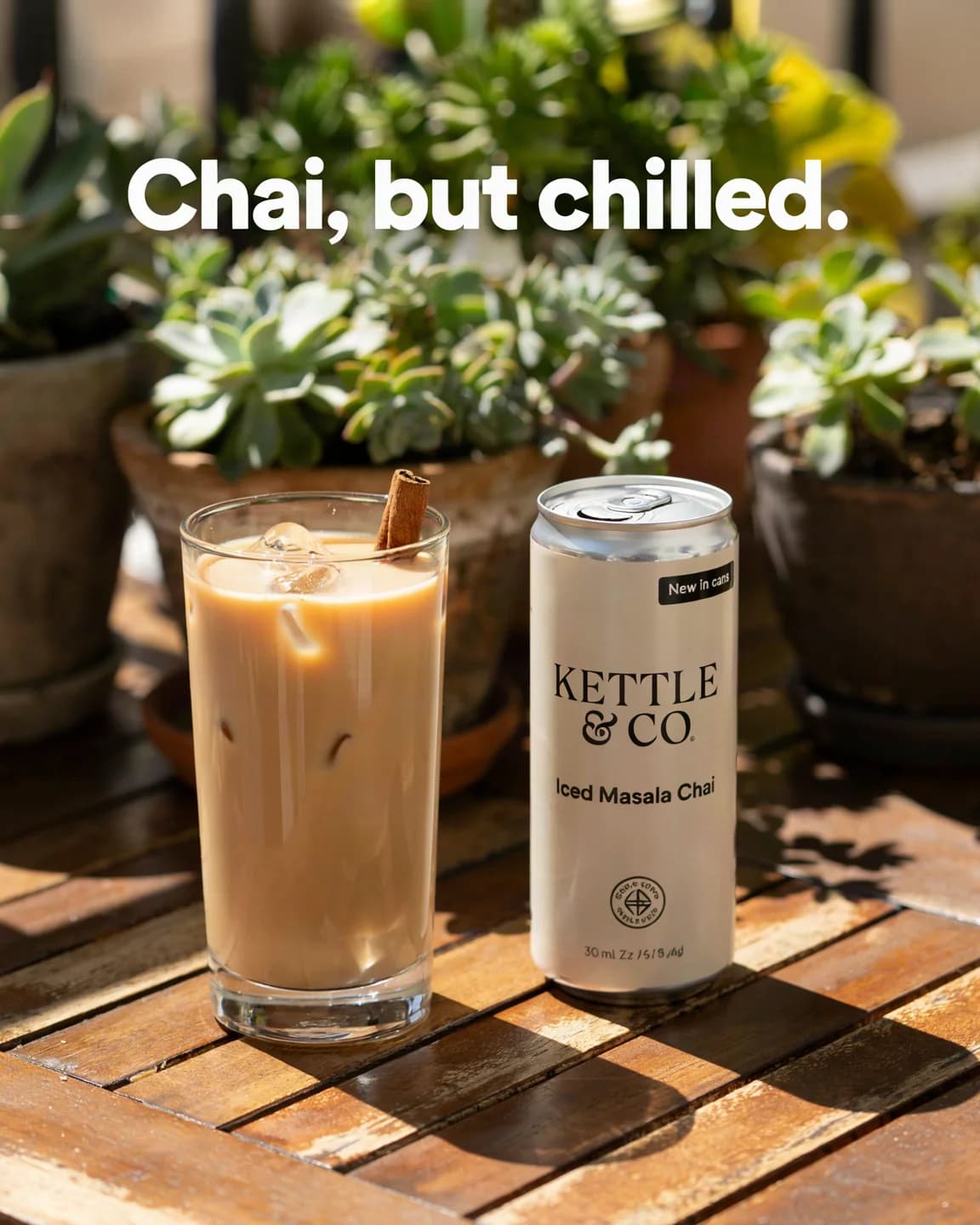
- Show the liquid when you can. A pour over ice shows colour and texture — essential for anything unfamiliar, like kombucha or iced chai.
- Let props explain the flavour. Lemon and ginger around a lemon-ginger can, blood oranges and chillies around the new flavour. Never add fruit that isn't in the drink.
- Pick scenes people recognise. A metro platform, a café table, an office desk. The more familiar the setting, the less the headline has to say.
- Keep on-image text to one idea. Four to six words is plenty. The second idea goes in the primary text.
- Respect the 9:16 safe zones. Keep text out of roughly the top 14% of Stories and Reels, the bottom 14% of Stories and the bottom 35% of Reels, where Meta's interface sits. These are approximate — the safe zone checker shows them on your own image.
Turning a winning drink ad into variants
When one ad starts selling, build on the idea while it's fresh instead of just duplicating it:
- Same hook, new moment. If "Your 3pm slump, fixed." sells, try the line at a study desk, a shop counter or on a night shift.
- Same scene, new hook. Keep the winning photo and test a question, a number or a customer line on it.
- New format. Turn the winning still into a short 9:16 video — bubbles rising, condensation running — for Reels.
- New flavour, same frame. A proven layout is the quickest way to launch a second flavour.
With BulkAds, you can ask the AI ad generator for variants of a winner in one batch, built from your real can photo, and launch them together as the next test.
Questions people ask
What makes a good beverage ad on Facebook and Instagram?
One clear idea, a product that looks cold and tasty, and a moment or a reason to switch. Keep the on-image text to four to six words and let the primary text explain the rest.
Should drink brands use video or static ads?
Both. Static images are quick for testing angles, and short vertical videos suit Reels and Stories, where bubbles or a pour add movement. A common approach is to find a winning angle with images, then turn that ad into video.
Can I say 'sugar-free' or '0 g sugar' in my ads?
Only if your label supports that exact claim. 'Sugar-free', '0 g sugar' and 'no added sugar' mean different things and are defined by food regulators in most markets.
How many drink ads should I test at once?
A common starting point is four or five angles with two or three versions each, so roughly 10 to 15 ads for one product. Size it to your budget so every ad can spend enough to show whether it sells.
Are Zesty, Brewhaus, Coco Crush and Kettle & Co. real brands?
No. They're fictional brands, and every ad on this page was made with AI to illustrate the patterns.
Keep going
- Features
Product photo ads
Your real packshot, in every scene
- Guides
How many ad creatives should you test? The number, and the maths.
A straight answer, then the simple sum that sets your real number, how many new ads to launch each week at your spend, and when to stop testing and scale.
- Guides
Static vs video ads: which to make, and when
Statics are cheap to make and quick to test, video earns its place in Reels and Stories. An honest comparison, the metrics for each and a plan that uses both.
- Ad templates
Us vs them ad template
Two matched columns, one obvious choice — against a category
- Ad templates
Bold claim ad template
One provable fact in giant type, on one flat colour
- Ad examples
Coffee & tea ad examples
Coffee and chai ads built around the daily ritual
Every brand on this page is fictional and every ad was made with AI for illustration — they’re examples, not case studies.
BulkAds AI is an independent product and is not affiliated with, endorsed or sponsored by Meta Platforms, Inc. Facebook and Instagram are trademarks of Meta Platforms, Inc.