What ethnic wear ads have to show
Ethnic wear is bought for a reason and a date: a cousin's haldi, Diwali at home, the office puja, Eid lunch. The shopper is picturing one function and asking three things at once. Will it look right there, will it fit, and is the fabric what the listing says? A single image can't answer all three, but each ad can pick one and answer it clearly.
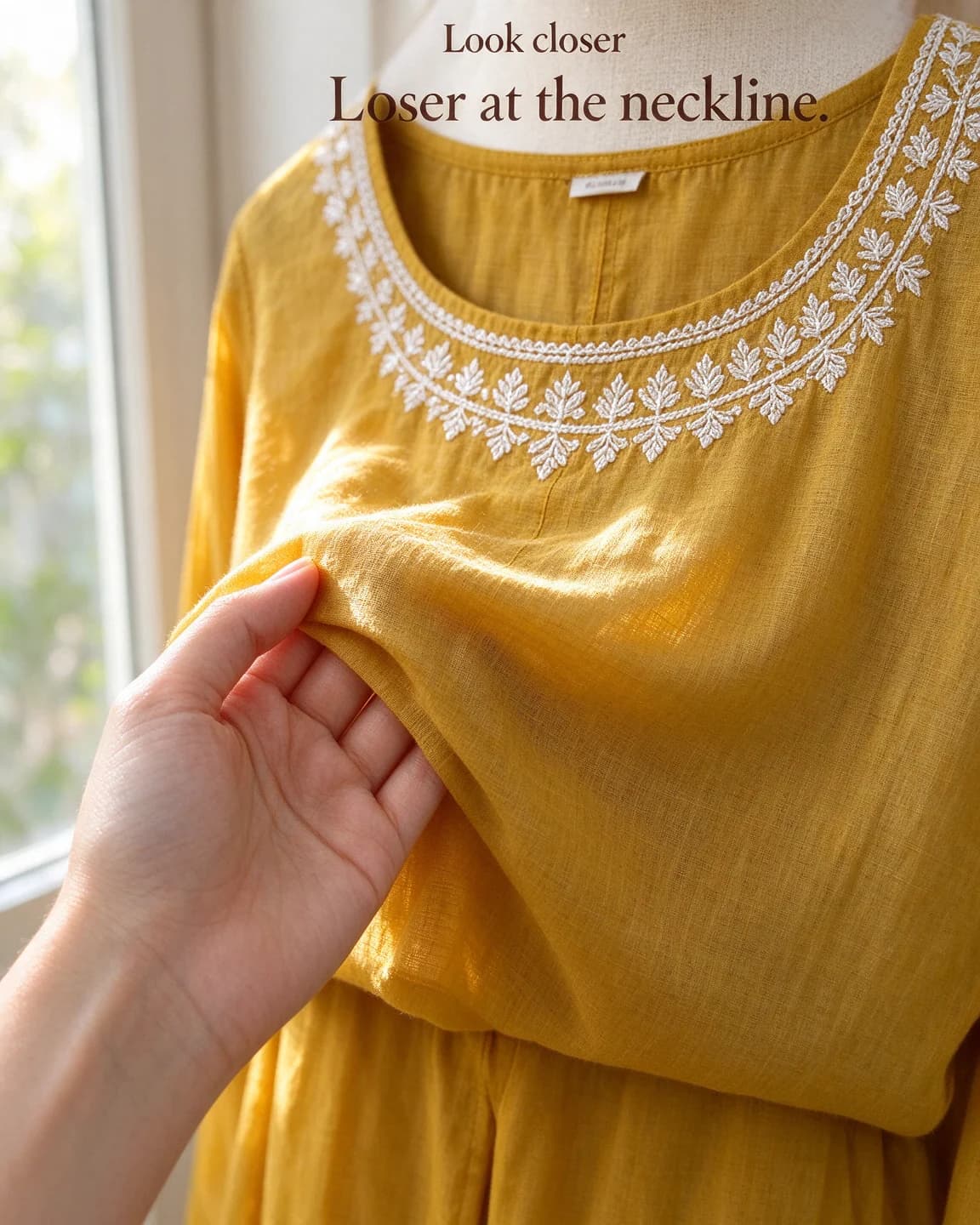
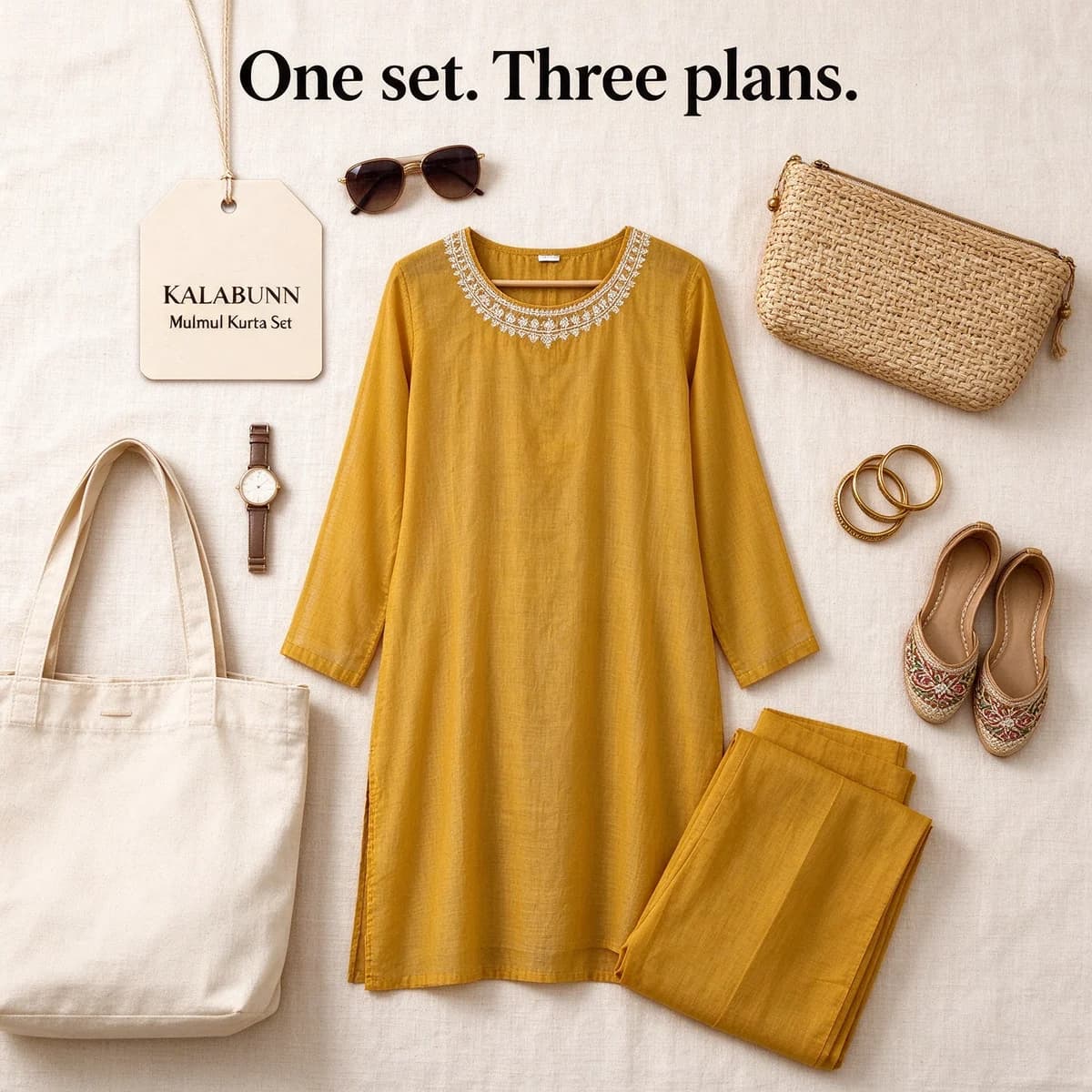
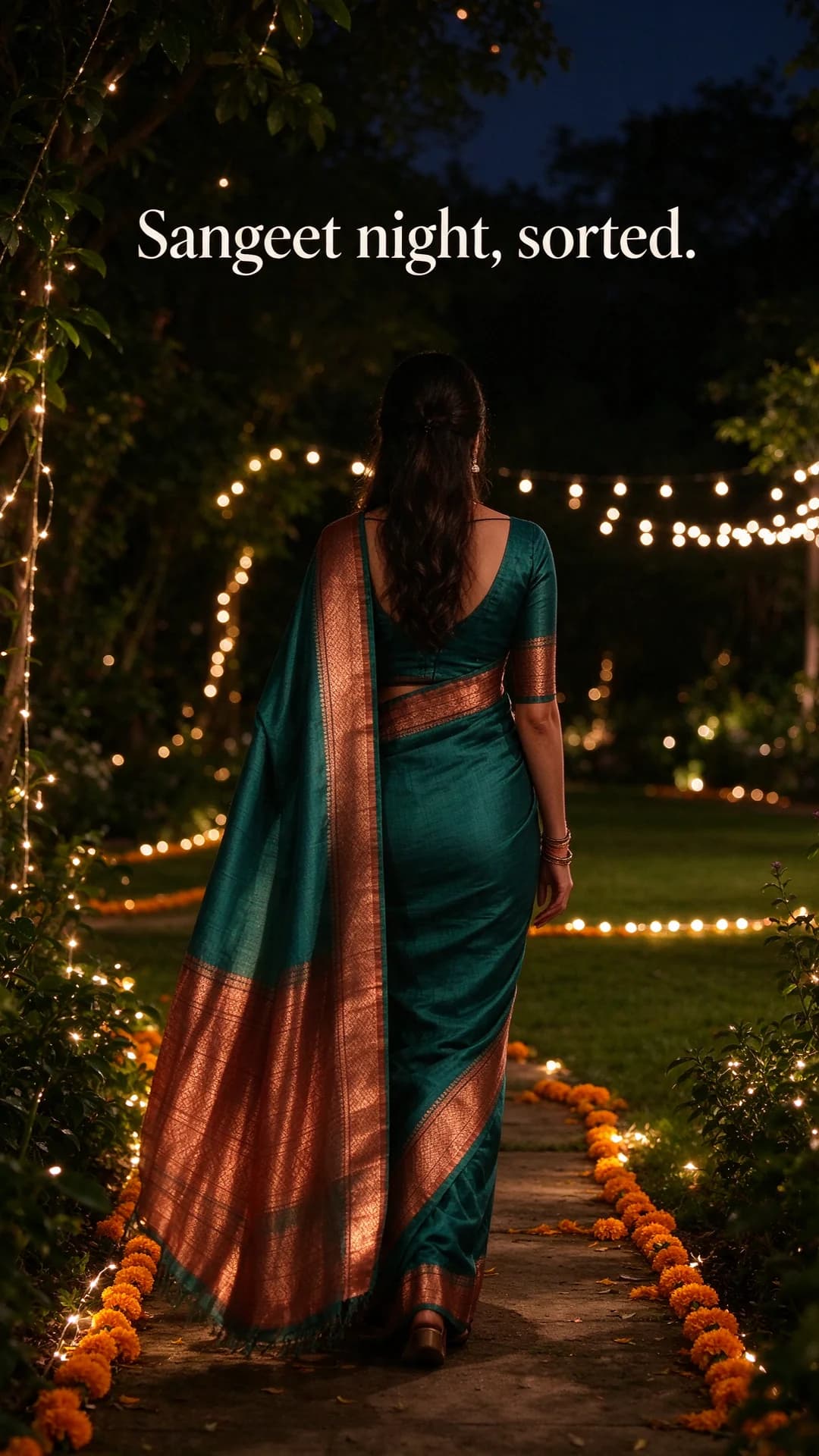
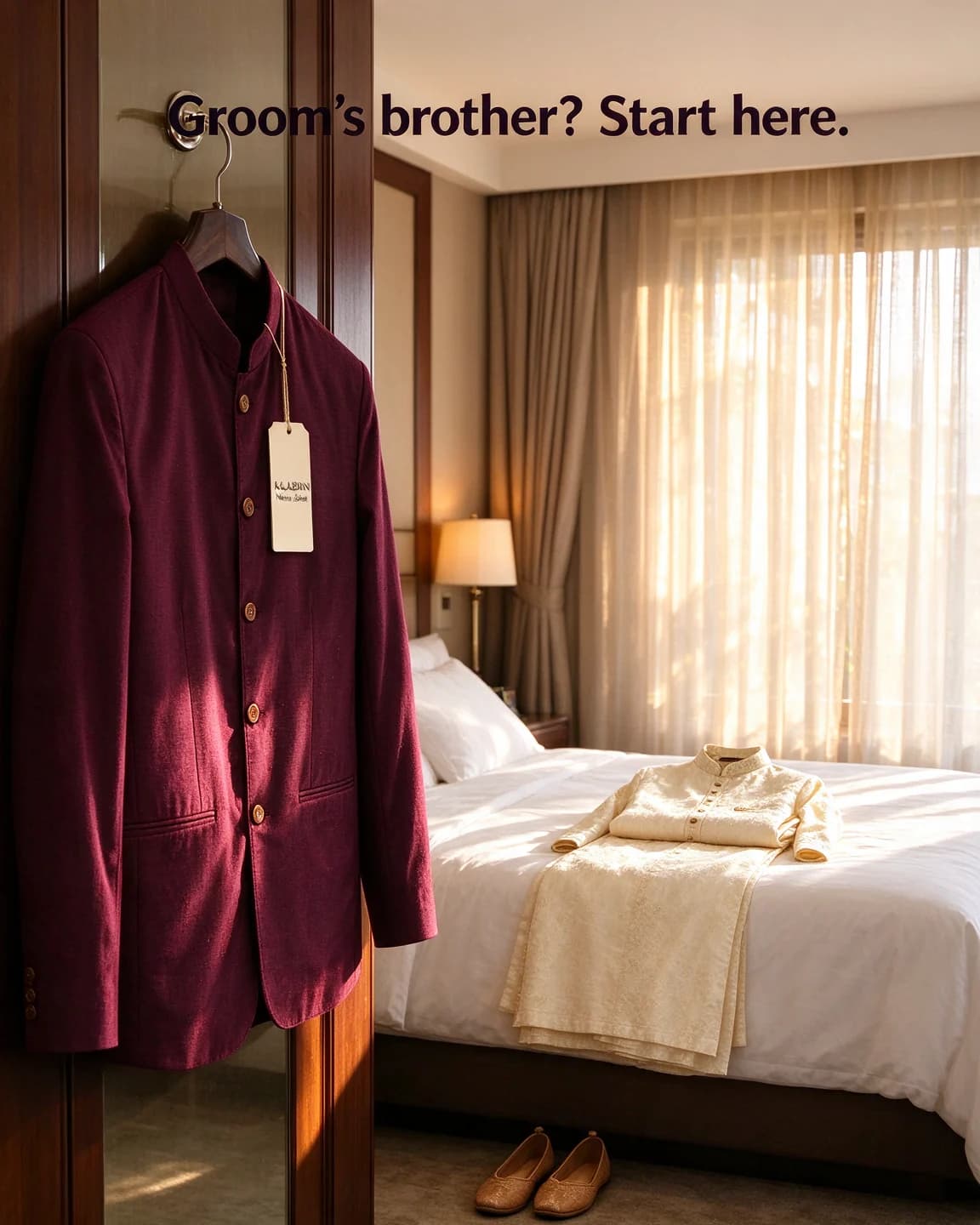
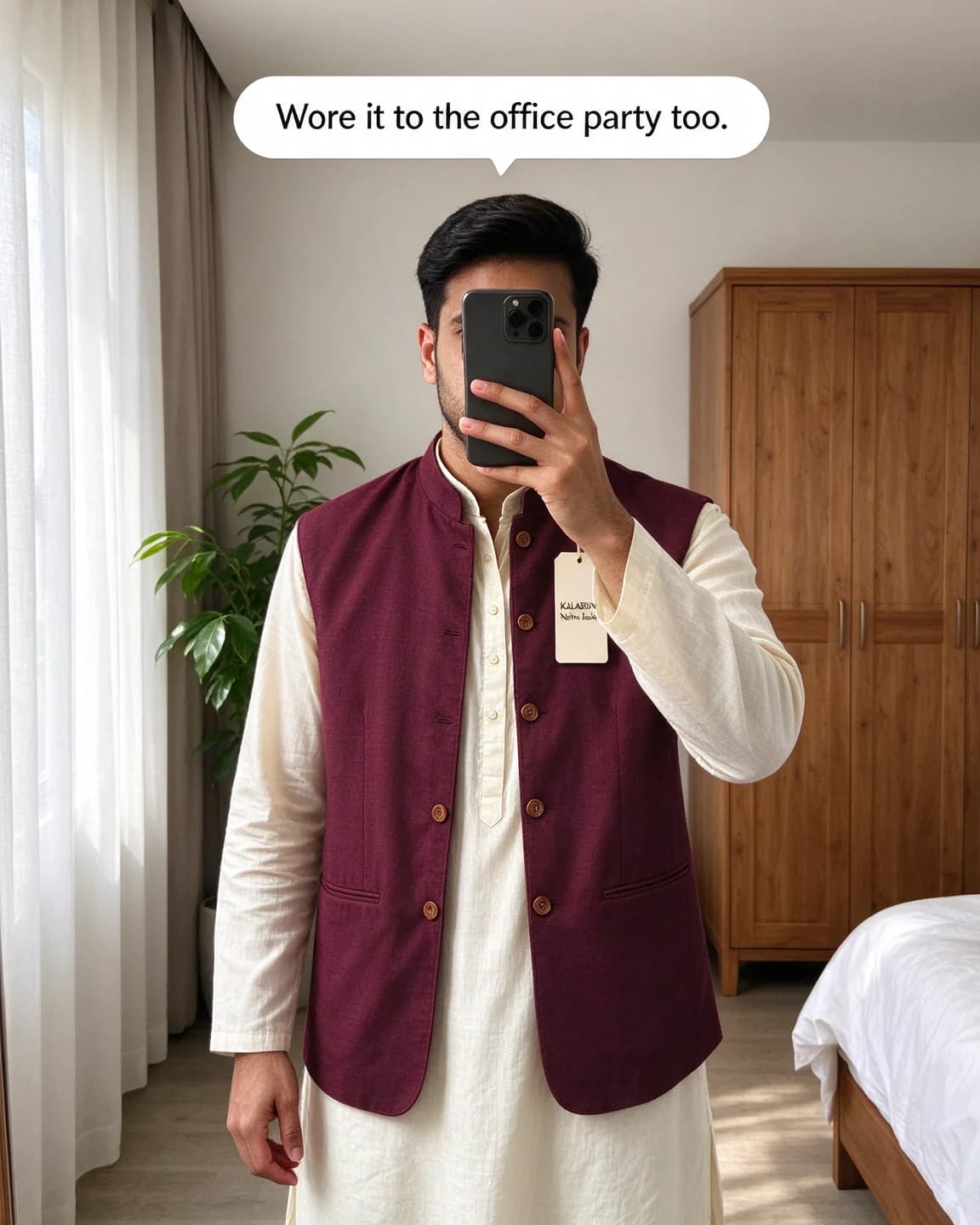
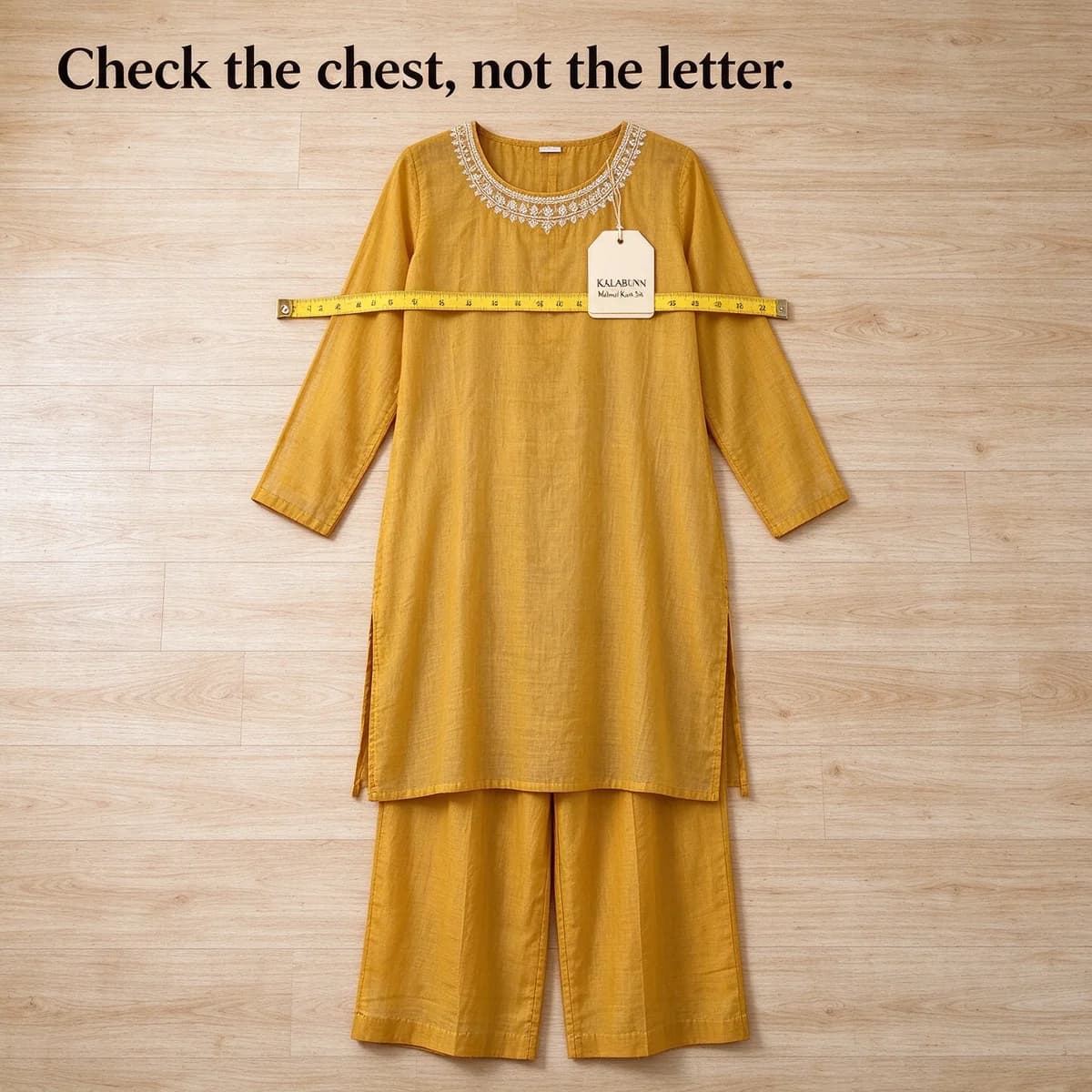
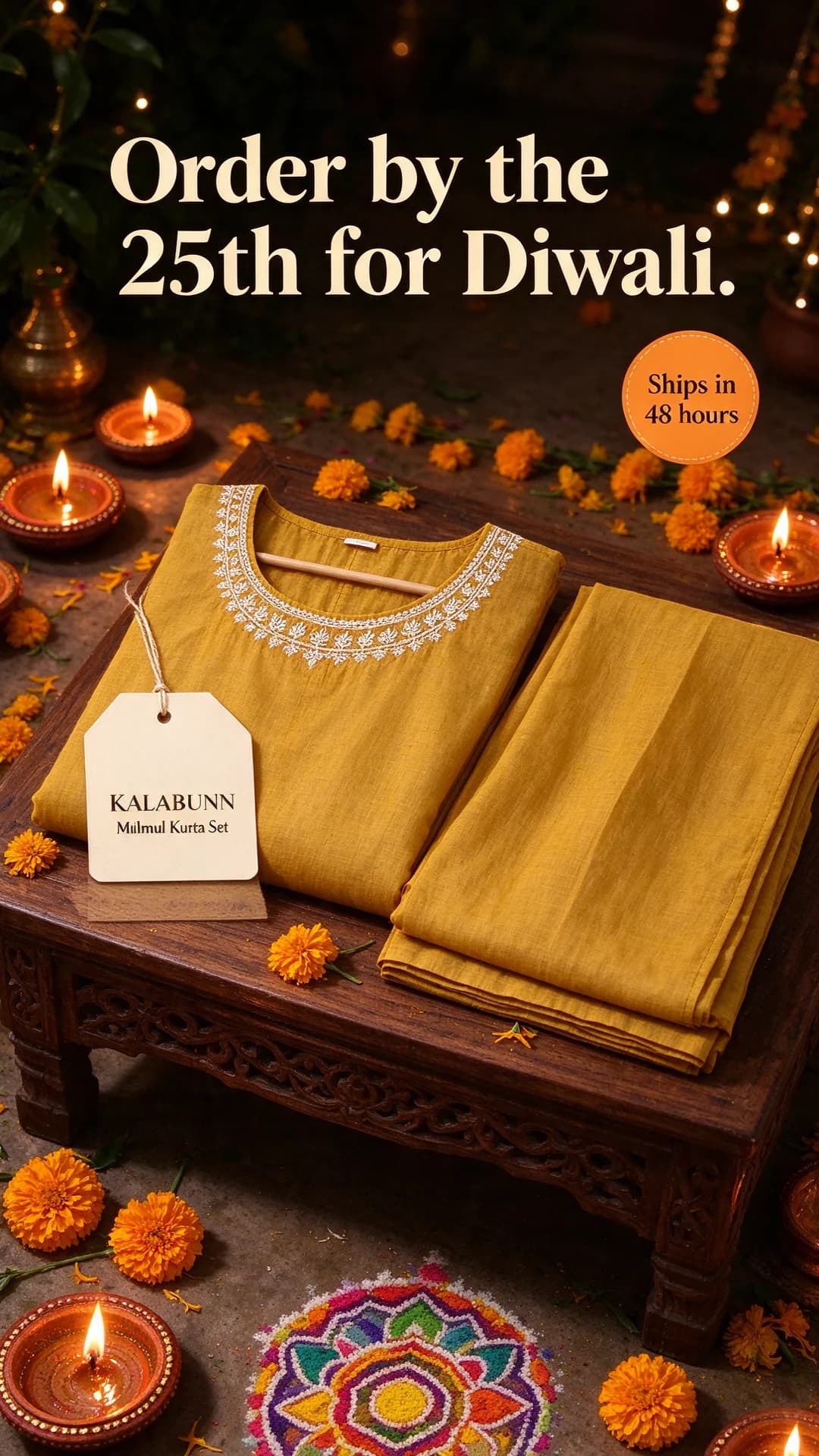
The examples above use three ways to do that. Close-ups sell the craft: the thread work on a neckline, the weave of mulmul, the border of a saree. Scenes sell the occasion: a lawn lit for a sangeet, a getting-ready room on a wedding morning, diyas on a low table. Flat shots sell fit and value: the whole set laid out, a tape across the chest, one kurta styled three ways.
Shots to make for every piece
Before you think about angles, build a short shot list for each garment. These are the frames ethnic wear buyers look for:
- Front, on a hanger or flat. The whole garment in true colour, nothing hidden by a pose. This is also the best starting photo for AI scenes.
- Fabric macro. Weave, embroidery, zari or print in raking window light. It's the closest an online buyer gets to touching it.
- The detail that sets the price. A saree's pallu and border, the back of a kurta neckline, a jacket's buttons and lining.
- The drape from behind. A saree or dupatta in motion with the wearer turned away. It shows fall and length without needing a face.
- The set, laid out. Kurta, bottoms and dupatta together, so the buyer knows exactly what arrives in the parcel.
- The occasion table. Marigolds, diyas, a puja thali, wedding lights. Props place the garment in a function without a word.
Colour is the easiest detail to get wrong on a screen. Shoot in daylight, compare the image on a phone with the real garment, and name the colour in the copy, because "mustard" and "turmeric yellow" set different expectations. The flat lay template and the model-free fashion prompts show more ways to present clothes without a model.
Plan around the wedding and festive calendar
Ethnic wear sells to a calendar, and the ads should follow it. Map each piece to the functions it suits, then make one ad per function: haldi in yellow, mehendi in something easy to sit on the floor in, sangeet in something that photographs well at night, then the wedding and the reception. A family with four functions in one week is shopping for four outfits, and an ad that names their function feels made for them.
Delivery dates matter as much as the clothes. In the last fortnight before Diwali or a big wedding weekend, "order by the 25th" does more work than a discount, because the fear has moved from the outfit to the parcel. Our Diwali ad ideas and Navratri ad ideas cover the festive side in more depth.
Pairing pieces suits weddings, where couples and siblings coordinate. As a worked example, a kurta set at $26 and a Nehru jacket at $34 come to $60 bought separately. Offer the pair at $54 and the ad can show a saving of $6.20 as one plain amount, which is easier to read at a glance than a percentage.
When each angle should run
Choose a hero piece and let the date decide the angle. An ethnic wear test run in the wrong week tells you about timing, not about the ad, so plan backwards from the festival or the wedding weekend:
| When | What to run | Why then |
|---|---|---|
| Six to eight weeks before | The craft close-up, plus one occasion ad per function the piece suits | There is time to learn which piece and which function sell before the busy weeks |
| Three to five weeks before | The winning occasion ad rebuilt for the next function, and the fit ad | Buyers have chosen the look and are now choosing sizes and colours |
| The final fortnight | Order-by-date ads, with the date on the image | The question is no longer what to wear but whether it will arrive |
| The day delivery can't make it | Switch the order-by ads off | A date you can't meet turns into a complaint, not a sale |
Make each in 4:5 for the feed and 9:16 for Stories and Reels, where a full-length drape has room to breathe. Two or three versions of each angle are enough for a first read, and if the occasion ad sells, rebuild it for the next function on the calendar instead of starting again.
What the tag says, and what the ad can say
Several everyday ethnic wear words are claims, and the "Watch out for" list above gives the rules and sources for silk, Khadi, handloom and place names. The fix usually happens in the headline, so match the wording to what the swing tag can prove:
| What the garment really is | Words the ad can use | Words to leave out |
|---|---|---|
| 100% natural silk with a Silk Mark (opens in a new tab) label | Pure silk, Silk Mark labelled | None, as long as the label is genuine |
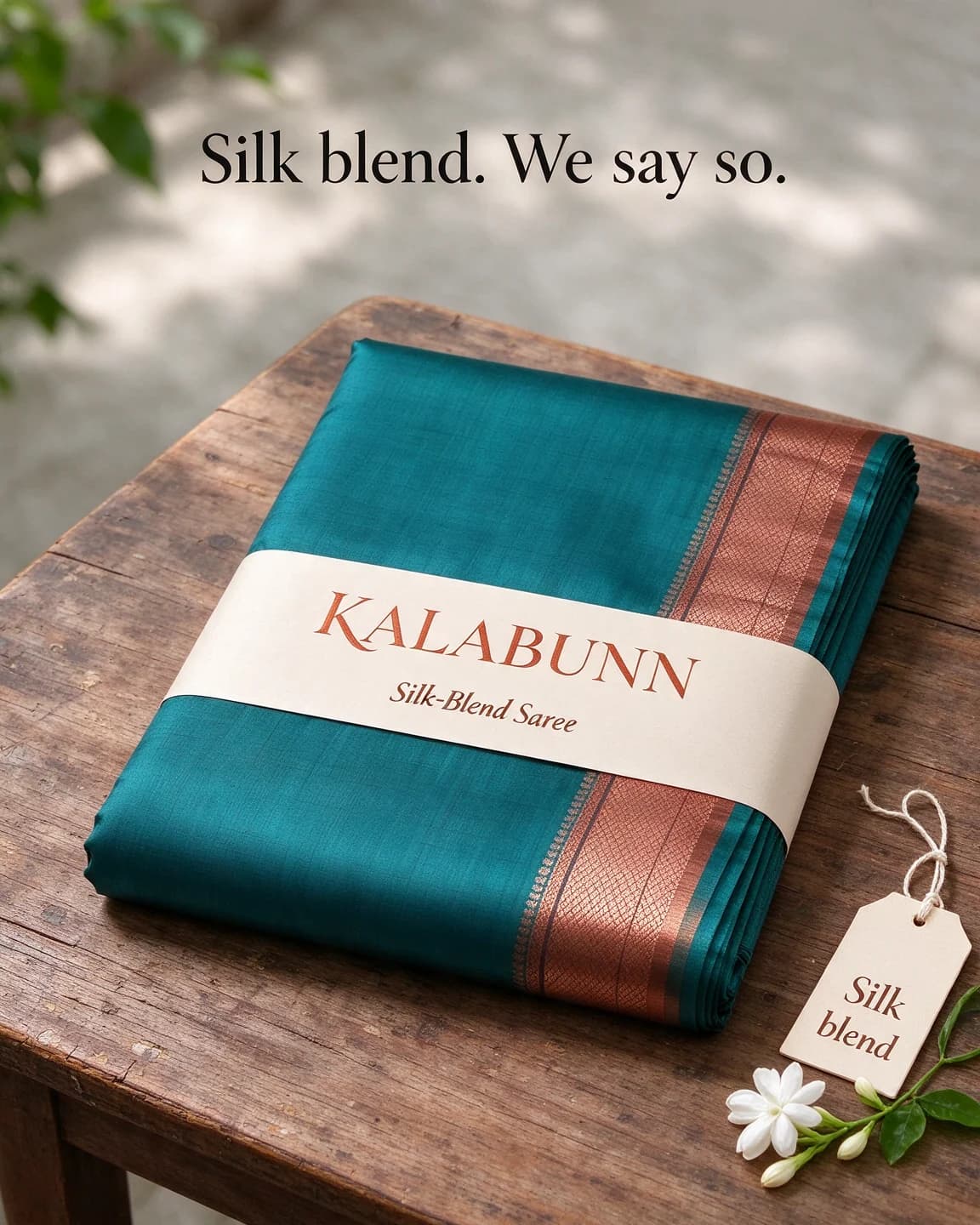
| Silk mixed with polyester or cotton | Silk blend, cotton silk, with the mix in the copy | Silk, pure silk |
| Viscose or rayon with a silk-like sheen | Art silk, viscose | Silk of any kind |
| Cotton woven on a handloom, with a Handloom Mark | Handloom cotton, handwoven | None, and show the mark in the photo |
| Powerloom cotton in a traditional style | Woven cotton, block-printed (if it is) | Handloom, handwoven |
| Hand-spun, handwoven cloth from a maker without KVIC certification | Hand-spun, handwoven | Khadi, which the KVIC (opens in a new tab) holds as a trademark |
| A temple-border silk woven outside Kancheepuram | Temple-border silk, contrast border | Kanjivaram, Kancheepuram |
| A zari brocade woven outside Varanasi | Zari brocade, buta motif | Banarasi, Banaras |
Put the fabric line on the image when it is the reason to buy, as the "Silk blend. We say so." ad does, and repeat it in the first line of the primary text. Shoppers looking only for pure silk then skip the ad instead of ordering and sending the saree back.
Making these with BulkAds from one garment photo
BulkAds works best from a hanger shot or a flat lay: the whole garment, true colour, plain background. From that one photo, a batch of up to 12 ads can place the piece in a haldi courtyard, on a sangeet lawn or beside a Diwali table, each with its own headline, primary text and description. The product photo ads page explains how the real garment stays the hero of every scene.
The pre-flight check compares every ad with your original photo, so a border that changes pattern or a colour that shifts is flagged before you launch. Hold the ads that pass up against the real garment in daylight too, because colour is the first thing buyers compare when the parcel arrives.
Copy can be written in 95+ languages, which matters for clothes bought across India. A Pongal saree ad for Tamil readers should be written in Tamil from the first word, not translated afterwards, and a native speaker should read it before you spend on it. The ad copy generator covers how that works.
If you already have photos of real people wearing your clothes, used with their permission, upload them as they are with Upload ad, add the headline and primary text (BulkAds can rewrite them) and launch them. Ads go to your own Meta ad account paused and their results sync back into BulkAds. For the AI-made ads, Autopilot can run the test itself, stopping the ones that spend without selling and drafting fresh variants of the ones that do.
Questions people ask
Do ethnic wear ads need models?
Not always. Hanger shots, flat lays and drapes photographed from behind show colour, fabric and fall clearly, and they avoid presenting an AI-made person as a real customer. If you have photos of real people wearing your clothes, with their permission, use those as they are.
Can I call a silk-blend saree silk in an ad?
Call it what it is: silk blend, cotton silk or art silk. Keep 'silk' and 'pure silk' for 100% natural silk, ideally with a Silk Mark label you can show in the ad or on the product page.
When should Diwali and wedding season ads start?
Six to eight weeks before the date is a sensible start, so you know which pieces and angles work before the busiest fortnight. In the final fortnight, switch to order-by-date ads and stop them the day delivery in time is no longer possible.
Which language should ethnic wear ads be in?
The one your buyers shop in. English works for many urban shoppers, but regional festivals and family occasions often land better in Hindi, Tamil, Bengali, Marathi or Telugu, written natively rather than translated.
Is Kalabunn a real brand?
No. Kalabunn is fictional, and every ad on this page was made with AI for illustration.
Keep going
- Ad templates
Notes app ad template
A plain phone note whose last line happens to be your product
- Ad templates
Testimonial ad template
One real review, one real name, one clear reason to buy
- Ad templates
Flat lay ad template
The product from straight above, with the few things that tell its story
- Prompt library
Model-free fashion prompts
Four model-free fashion prompts with outputs: a kurta on a peg rail, a travel flat lay, a ghost mannequin cardigan and that cardigan on autumn paper.
- Ad examples
Fashion & apparel ad examples
Kurta ads that sell fabric, fit and occasion honestly
- Ad examples
Jewelry ad examples
Gold jewelry ads for gifting, everyday wear and honest plating
Every brand on this page is fictional and every ad was made with AI for illustration — they’re examples, not case studies.
BulkAds AI is an independent product and is not affiliated with, endorsed or sponsored by Meta Platforms, Inc. Facebook and Instagram are trademarks of Meta Platforms, Inc.