What a bicycle ad has to prove
A bicycle is a big purchase to make from a phone screen. Buyers ordering online often can't test-ride first, so the ad and the product page have to settle the doubts a shop would settle in person: will it fit me, where will I actually ride it, and will it end up rusting in the hallway?
A spec list answers none of those on its own. "7-speed hub" means something to a cyclist and nothing to someone who last rode at school. The examples above take one doubt each and answer it with a picture:
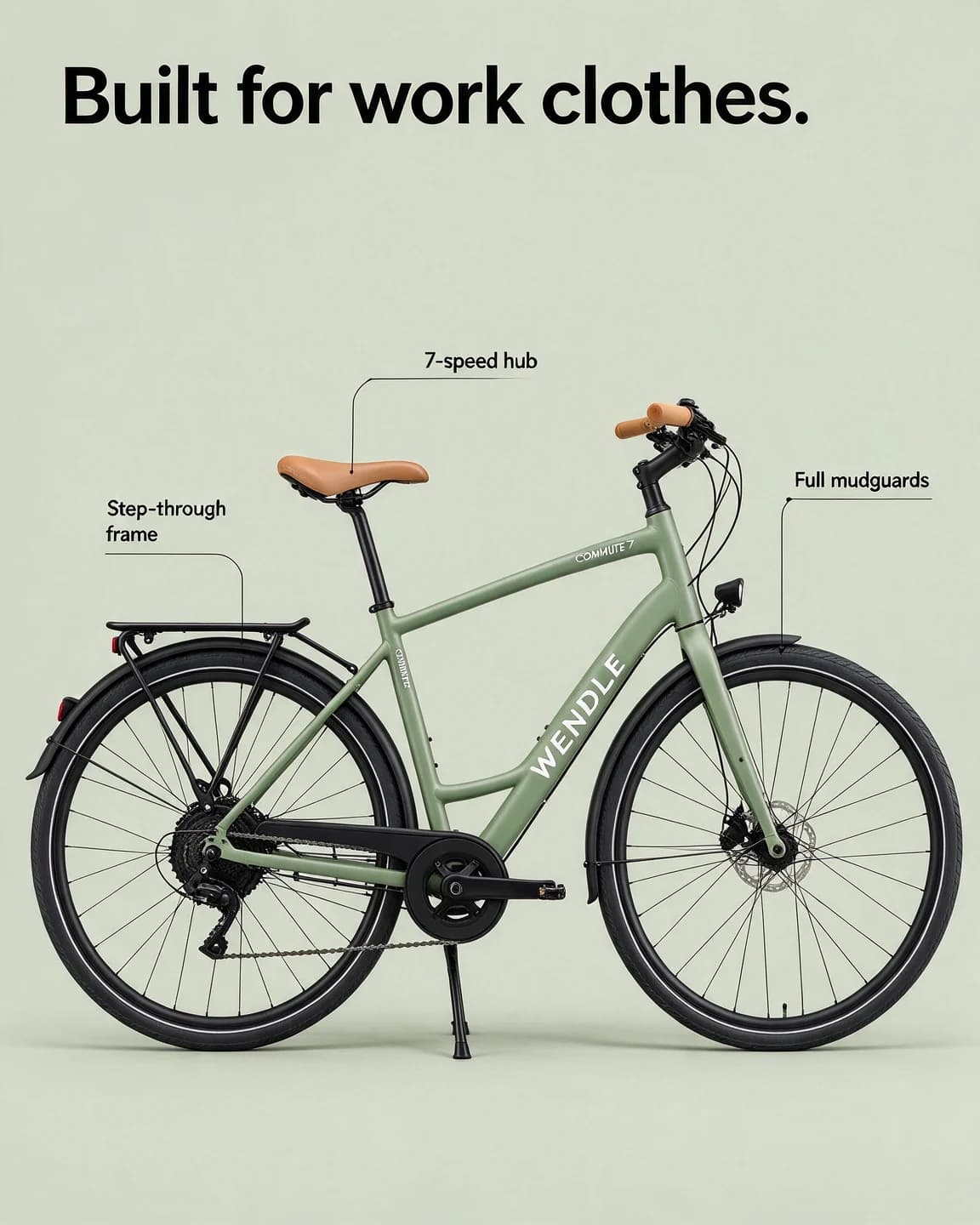
- Fit: "Built for work clothes." uses the low frame and the mudguards to say who the bike is for.
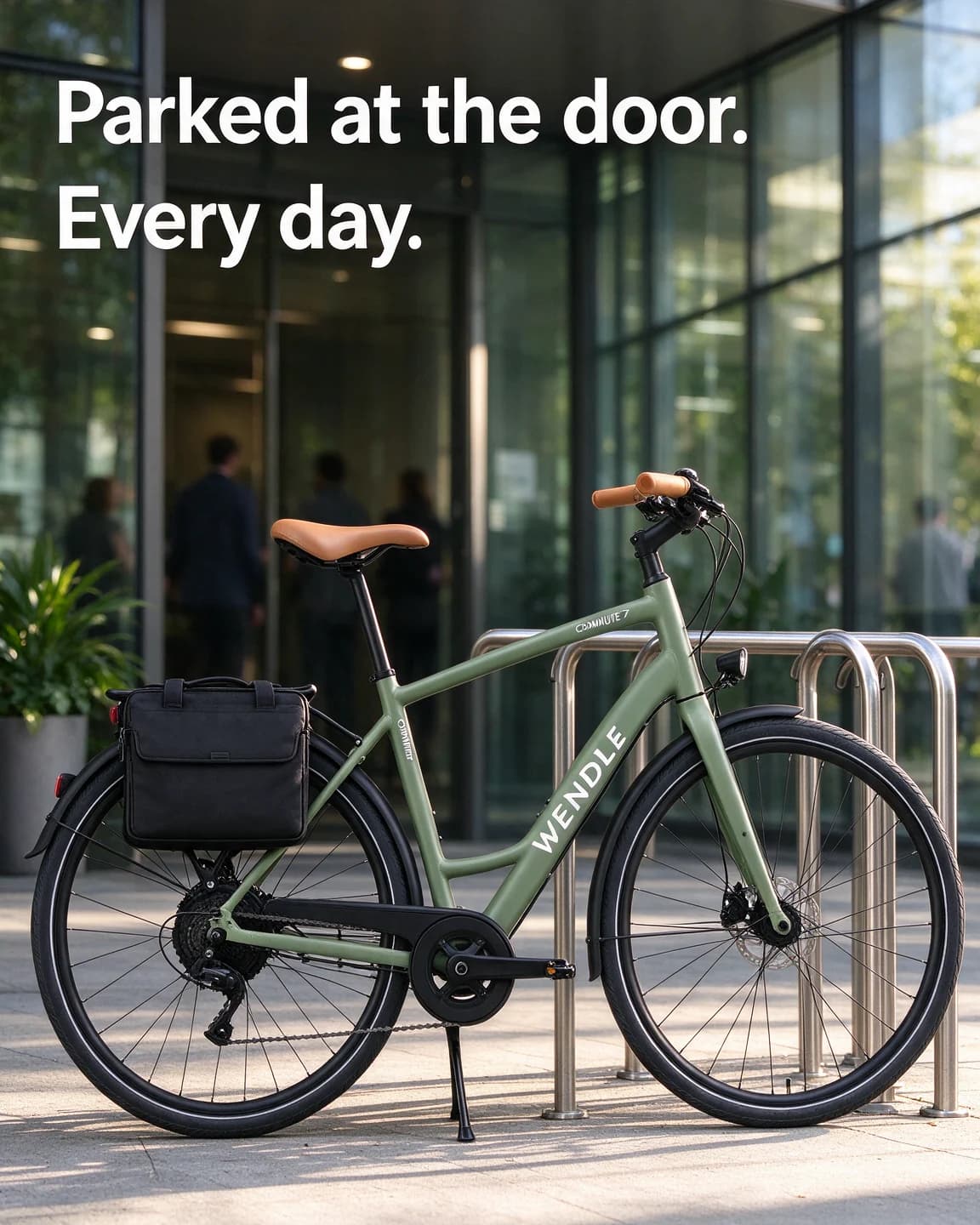
- Use: "Parked at the door. Every day." shows the destination, not the road.
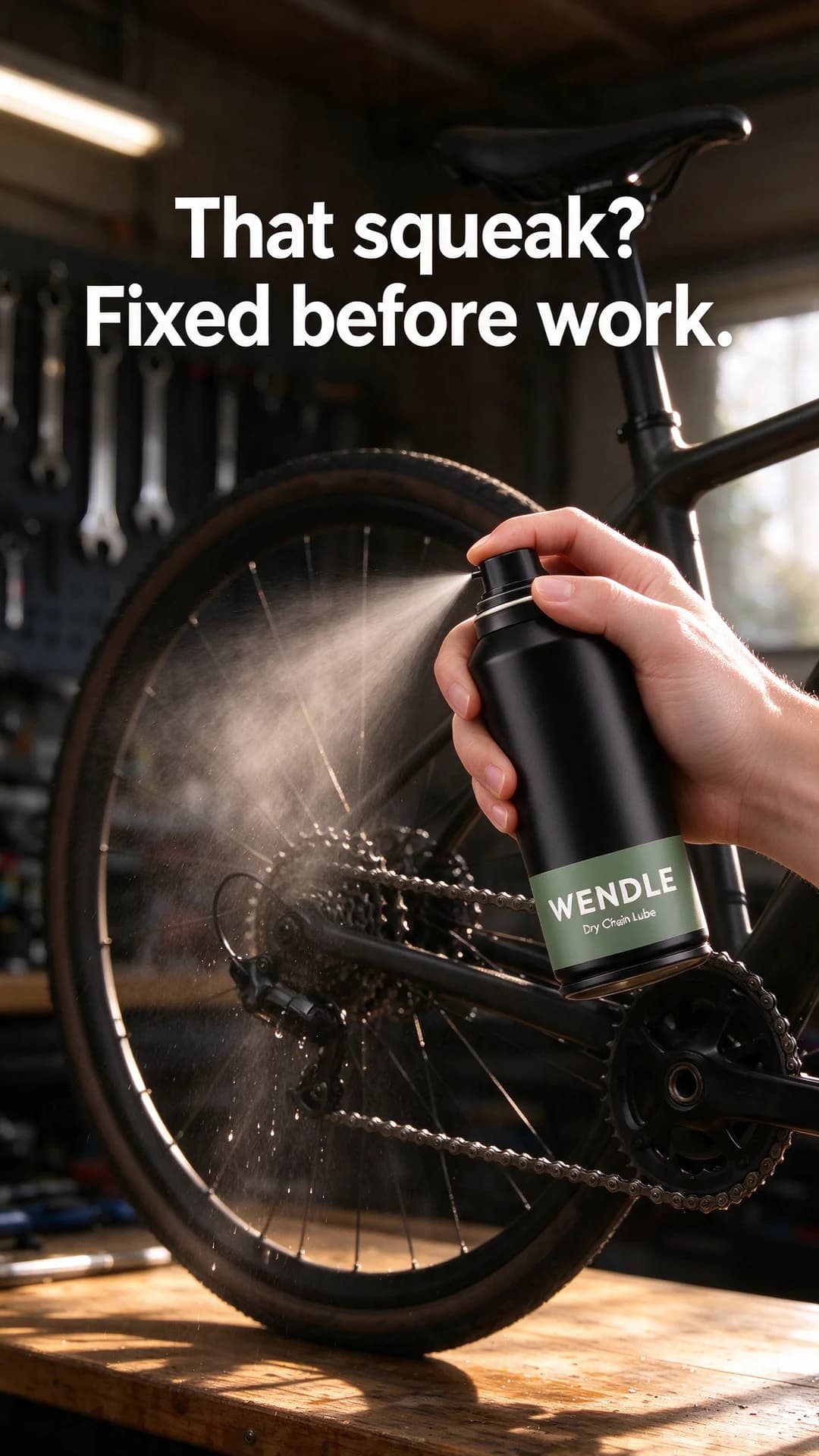
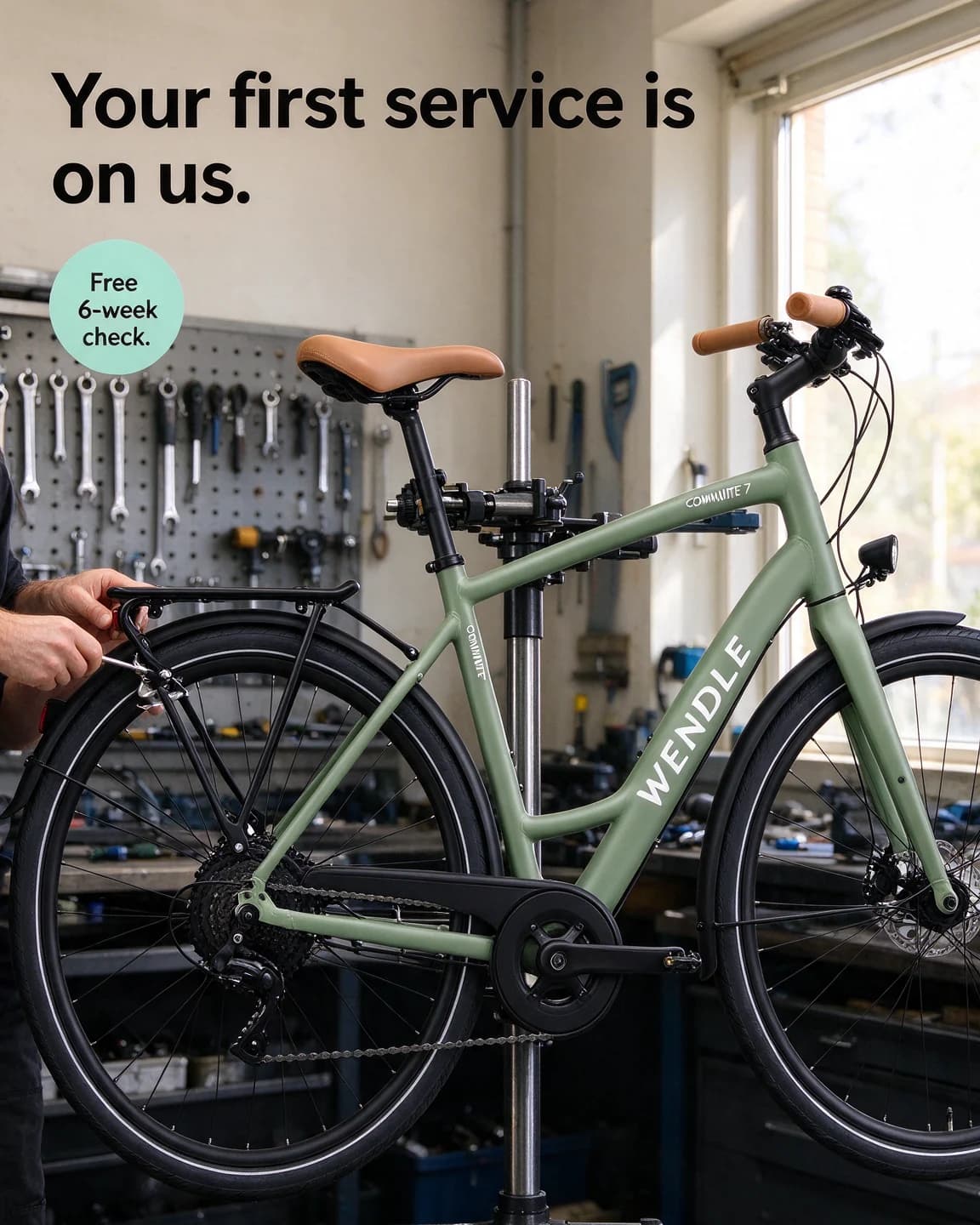
- Ownership: "That squeak? Fixed before work." and the free first service make upkeep look small.
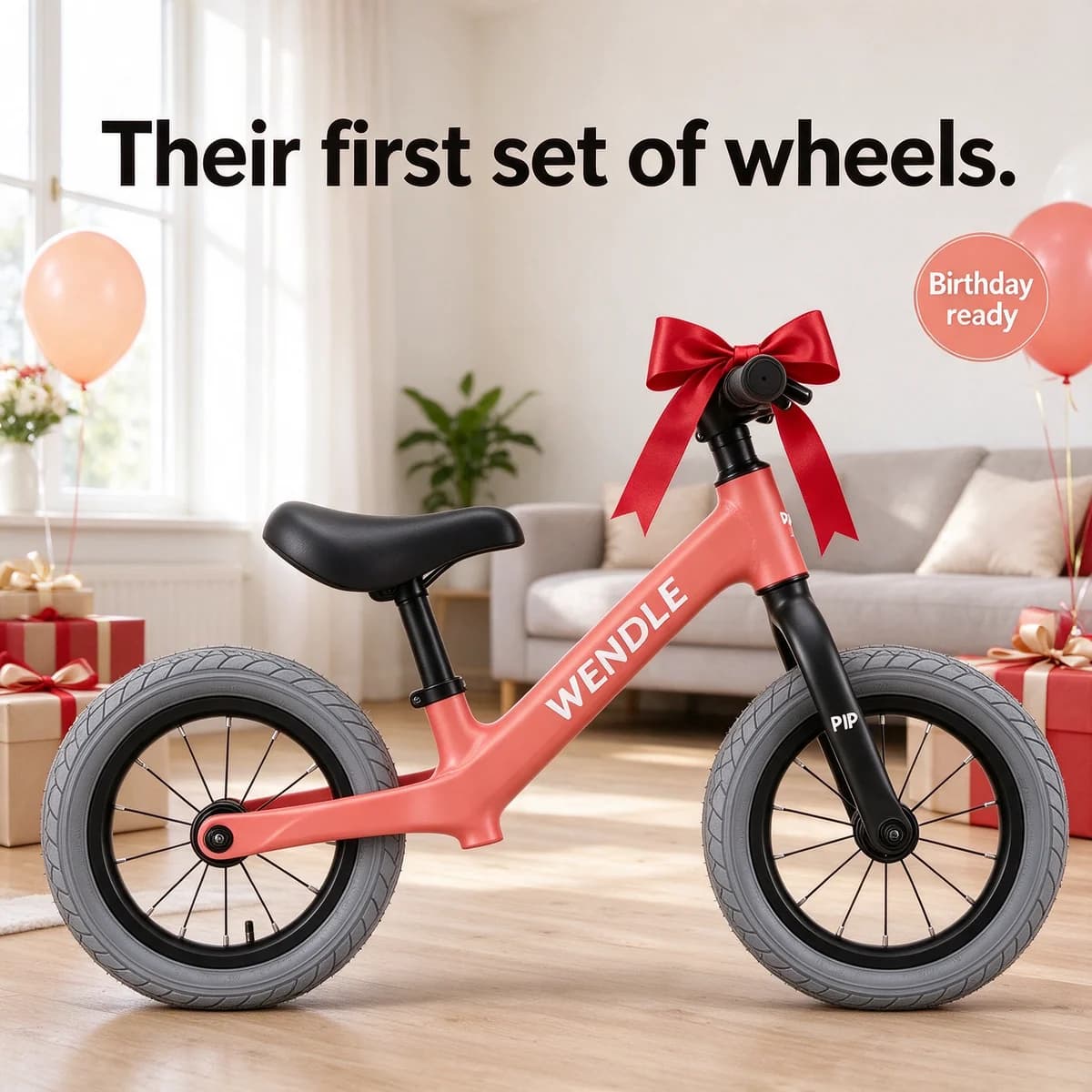
- Milestones: for the balance bike, "Their first set of wheels." sells the moment a parent wants to give.
Splitting the doubts across ads, rather than squeezing them all into one busy image, is also what makes a test readable. When "Parked at the door" outsells "Built for work clothes", you've learned that your buyers care more about arriving than about the outfit, and the next batch can lean that way.
The shots that sell a bike
Bike photography has a few fixed habits, and AI-made scenes need to follow them as closely as a real shoot would.
- The drive-side profile. The side view with the chain facing the camera and both wheels fully in frame. Buyers compare bikes in this view across brands, so make it your packshot and the base for any feature callout.
- A rider for scale, seen from behind or cropped. Legs on the pedals, hands on the grips, a back heading down a path. It shows the frame size against a body without needing a face, and it lets more people picture themselves on the saddle.
- The destination. The bike at an office rack, a school gate, a station or a café. This is the reason the purchase happens, so it deserves its own ad.
- What the rider touches. Saddle, grips, gear shifter, brake levers, chain. Close-ups suit a 9:16 frame, where one detail can fill the screen.
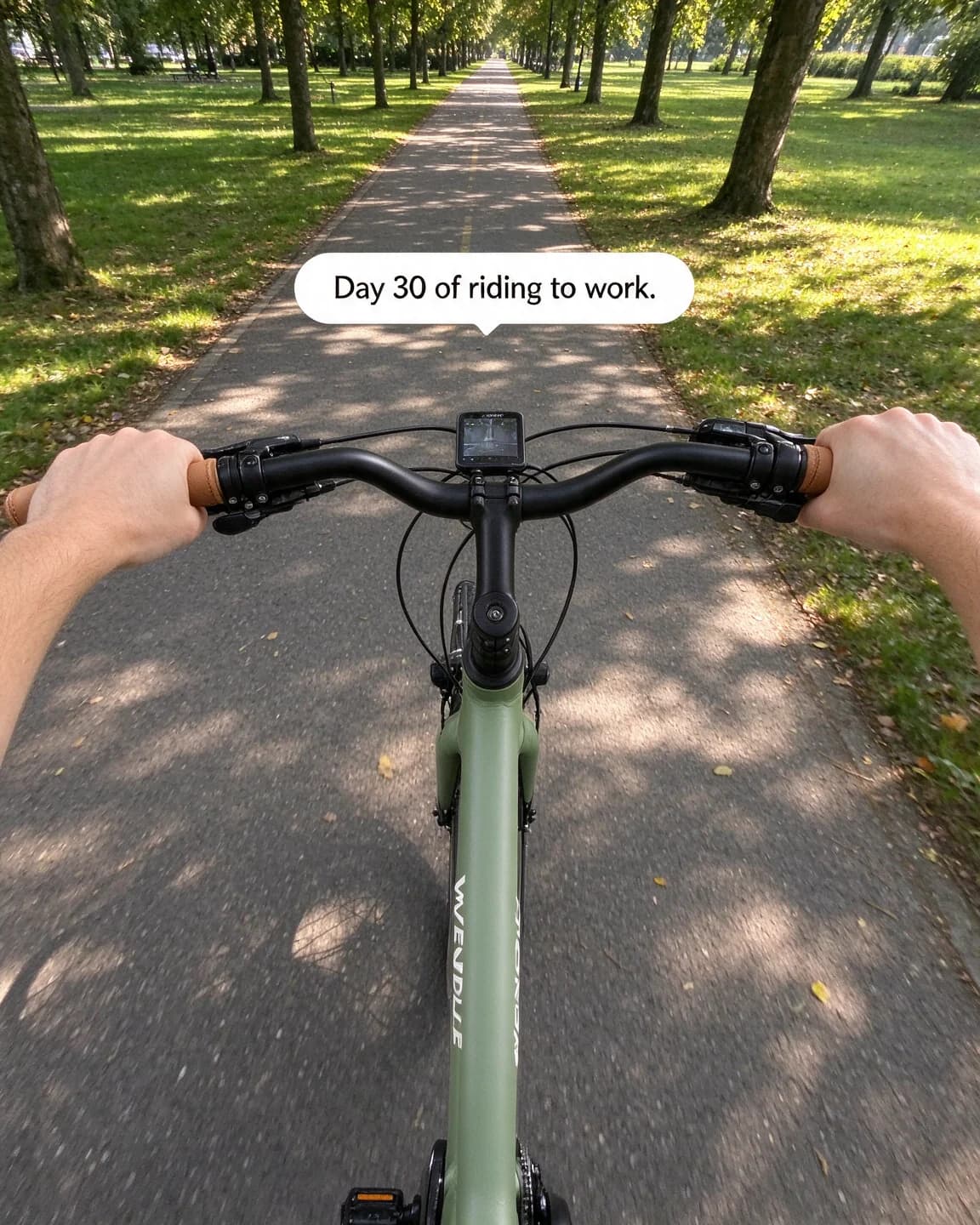
- The rider's-eye view. Looking down over the handlebars at the path ahead. It's the most natural UGC-style angle for a bike, because it's the photo riders really take.
Keep the bike sharp. Motion blur on the wheels looks fast but hides exactly what buyers want to inspect. If you want energy, let the background move and keep the frame crisp.
Kids' bikes are bought by adults
The rider of a balance bike can't read your ad. The buyer is a parent, a grandparent or a family friend, and they're judging three things: will it help the child learn, is it safe, and will it arrive for the birthday?
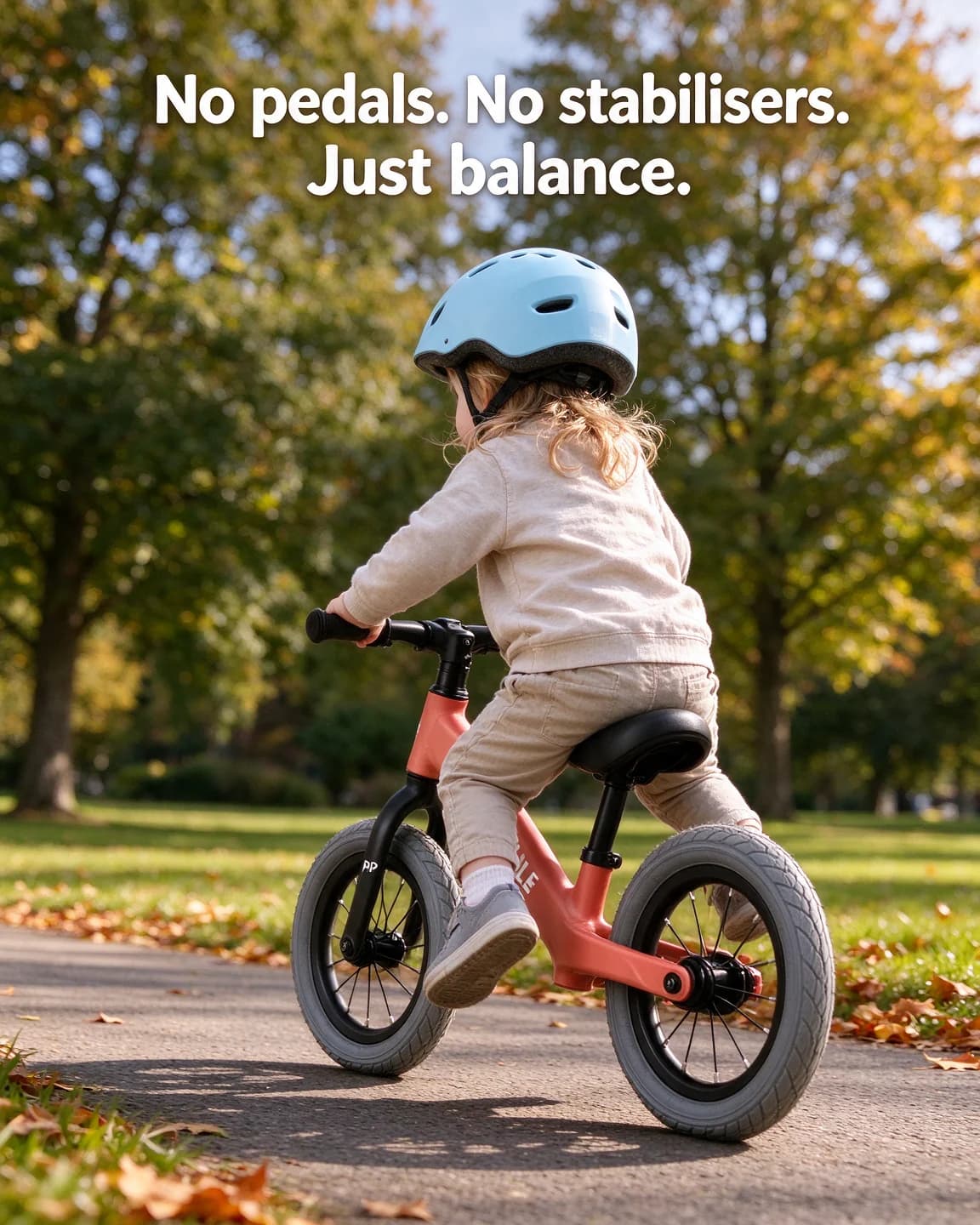
That changes the creative. Explain the idea before the product, as "No pedals. No stabilisers. Just balance." does, because many adults learned on stabilisers and have never watched a balance bike in use. Show the child from behind or in profile, always in a helmet, on a park path or a driveway rather than a road. Lead gift ads with the milestone, and put the age range and saddle height in the copy, where a careful buyer will look for them. Avoid any line that makes parents feel their child is falling behind. It's an easy hook to write and a poor way to earn trust.
Small accessories, repeat buyers
Chain lube, lights, locks and bags sell differently from bikes. They're low-priced, they're bought when something squeaks, breaks or gets stolen, and the best customers for them are people who already ride. That calls for small, problem-first ads like the chain-lube Story, aimed at riders and at people who have bought from you before.
Accessories can also make the big purchase easier. Say the Commute 7 sells for $289 and a can of Dry Chain Lube for $4.65. Putting a free can in every bike box costs about 1.6% of the bike's price at shelf price, less at cost, and it gives the buyer a reason to come back to you, not a supermarket, when the can runs out. The free first service does a similar job. It answers the "what happens after delivery?" worry before it becomes a return, and it brings the buyer back to you while the bike is still new.
What to test first
Start with one hero product and four angles, two executions of each. For a city bike, that might be:
- Destination: the bike parked where the commute ends.
- Feature callout: frame, gears and mudguards labelled on a clean background.
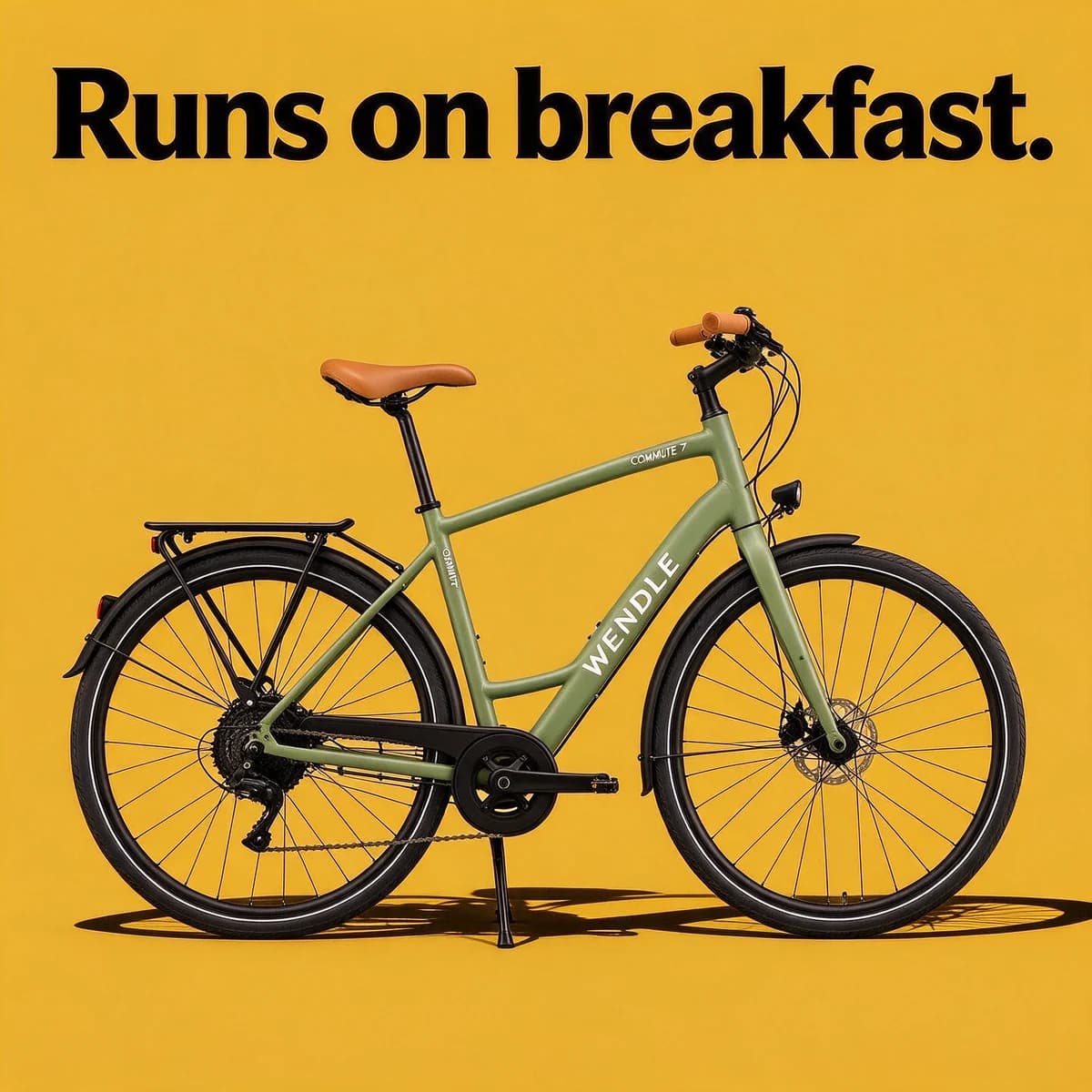
- Running cost: a one-line joke such as "Runs on breakfast." on a flat colour.
- Rider diary: a first-person caption over the rider's-eye view.
That's eight ads, the same number as on this page. Make them in 4:5 for feeds first, then rebuild the best two in 9:16 once you know which angle pulls. Our guide on how many ad creatives to test covers when to go bigger, and the creative testing matrix shows how to cross angles with formats without losing track.
Bikes sell less often than everyday products, so each ad needs longer to show a clear result. The creative test calculator works out how much spend that takes. Judge winners on sales, and treat clicks to your size guide as an early hint of which angle is drawing people in.
How BulkAds builds bike ads from one photo
Start with one sharp drive-side photo of the bike on a plain background, the same shot you'd use on the product page. BulkAds places that photo in new scenes, such as an office rack, a park path, a workshop stand or a flat colour block, and writes the headline, primary text and description for each ad from your brand kit. The copy is told to use only the proof points you've added, so put "7-speed hub", "step-through frame" and the saddle-height range in the kit, and leave out anything your spec sheet can't back up.
Every ad passes a pre-flight check that compares it with your original photo and flags the ones where the product has drifted. Look at the drivetrain and brakes yourself as well. Bikes are full of small parts, and a keen rider will spot an extra gear or a missing cable faster than any checker.
A batch holds up to 12 ads in 1:1, 4:5 or 9:16, and each image ad uses 2 credits, so a first test of eight uses 16 credits. Launch the batch to your own Meta ad account with the bulk ad launcher. It arrives paused, so nothing spends until you approve it, and its results sync back into BulkAds. If you let Autopilot launch the test instead, it stops the ads that don't sell and drafts fresh variants of the ones that do. One honest trade-off for bikes: Autopilot only calls a winner after at least three sales, and a $289 bike can take longer to reach that than a can of lube. When results are unclear after 48 hours it waits another 24 to 48 hours instead of guessing, so expect slower verdicts on the bike than on the accessories.
Turning a winning bike ad into variants
- Same angle, new destination. If the office rack wins, try the school gate, the station and the market.
- Same scene, another product. Put the balance bike on the park path the commuter bike won on.
- Same message, new format. Rebuild the winner in 9:16 with the headline inside the safe zone, then try it as a short video ad with a slow push-in.
- Same bike, new season. Swap the sunny rack for wet streets and mudguards when the rain arrives.
The guide to iterating on a winning ad explains how far to change each variant so the test still tells you something.
Questions people ask
What should a bicycle ad show first?
The whole bike, sharp, from the drive side or in the place it's ridden to. Buyers want to see the frame shape, the wheels and the gears before they read a word, so don't crop the wheels or blur the frame.
Should bike ads show riders?
Yes, for scale and use, but faces aren't needed. A rider from behind, or a rider's-eye view over the handlebars, shows the frame size and lets more people picture themselves riding. Put a helmet on anyone riding in a road or park scene.
How do I advertise a balance bike or a kids' bike?
Write for the adult who is buying it. Explain how it teaches balance, show the child from behind in a helmet on a path, lead gift ads with the milestone, and put the age range and saddle height in the copy.
Can AI images get a bicycle wrong?
Yes. Image models can add gears, move cables or change the brake type. BulkAds compares every ad with your real product photo and flags drift, but check the drivetrain and brakes yourself before launch.
Is Wendle a real bike brand?
No. Wendle is fictional, and every ad on this page was made with AI for illustration.
Keep going
- Features
Product photo ads
Your real packshot, in every scene
- Guides
Product photography for ads: how to shoot it on a phone
A phone, a window and a sheet of white card are enough. How to shoot product photos that make good ads — and that AI tools can put in new scenes without mangling your label.
- Guides
Iterating on a winning ad: what to change first, and what to keep
Keep the idea that won and change the layers around it. How to find why an ad won, the order to change things in, eight worked iterations and how to launch them safely.
- Ad templates
Feature callout ad template
Your product in the middle, short labels pointing at what matters
- Ad templates
Listicle ad template
A numbered headline and three to five reasons, strongest first
- Ad templates
Testimonial ad template
One real review, one real name, one clear reason to buy
Every brand on this page is fictional and every ad was made with AI for illustration — they’re examples, not case studies.
BulkAds AI is an independent product and is not affiliated with, endorsed or sponsored by Meta Platforms, Inc. Facebook and Instagram are trademarks of Meta Platforms, Inc.