What makes dropshipping ads different
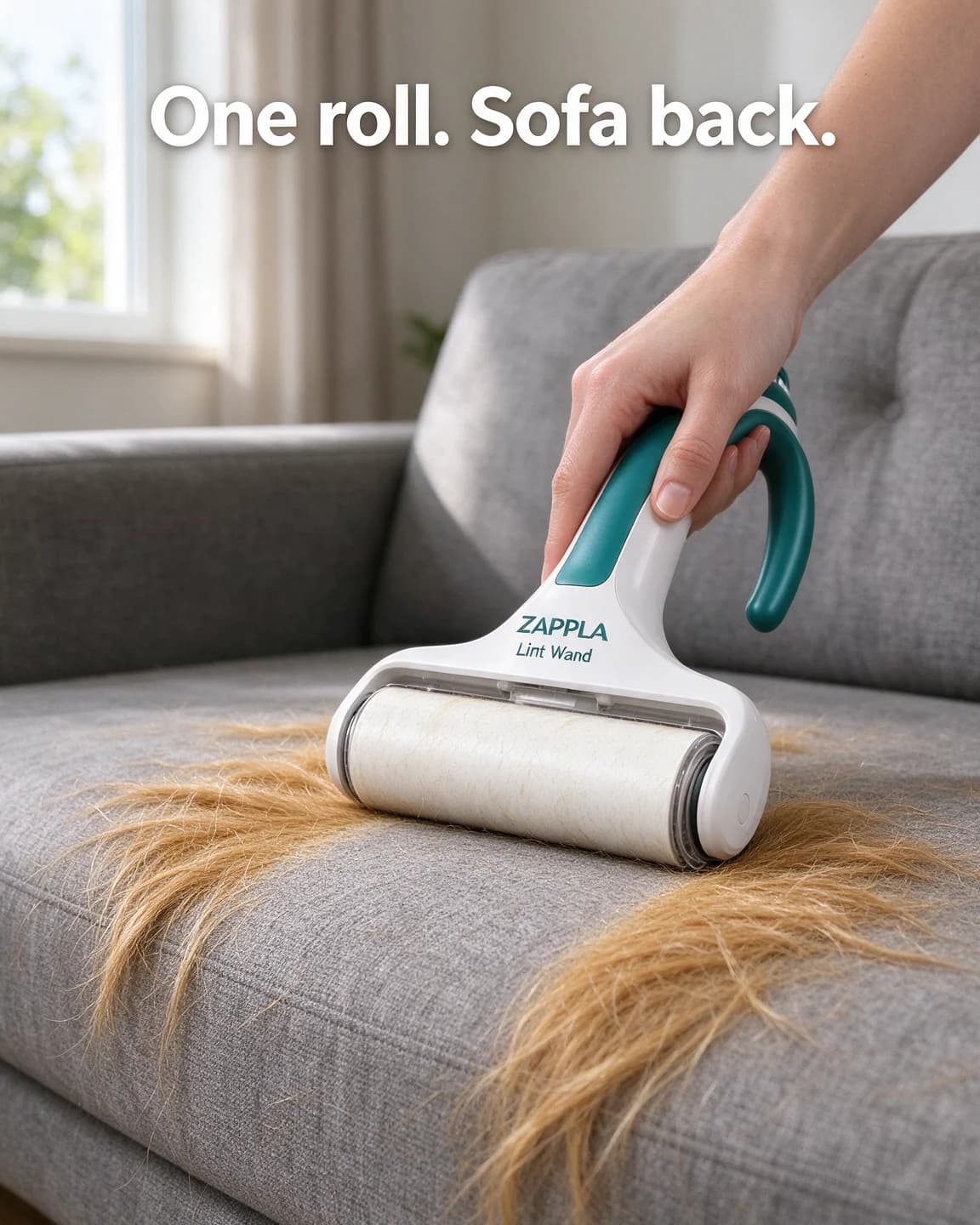
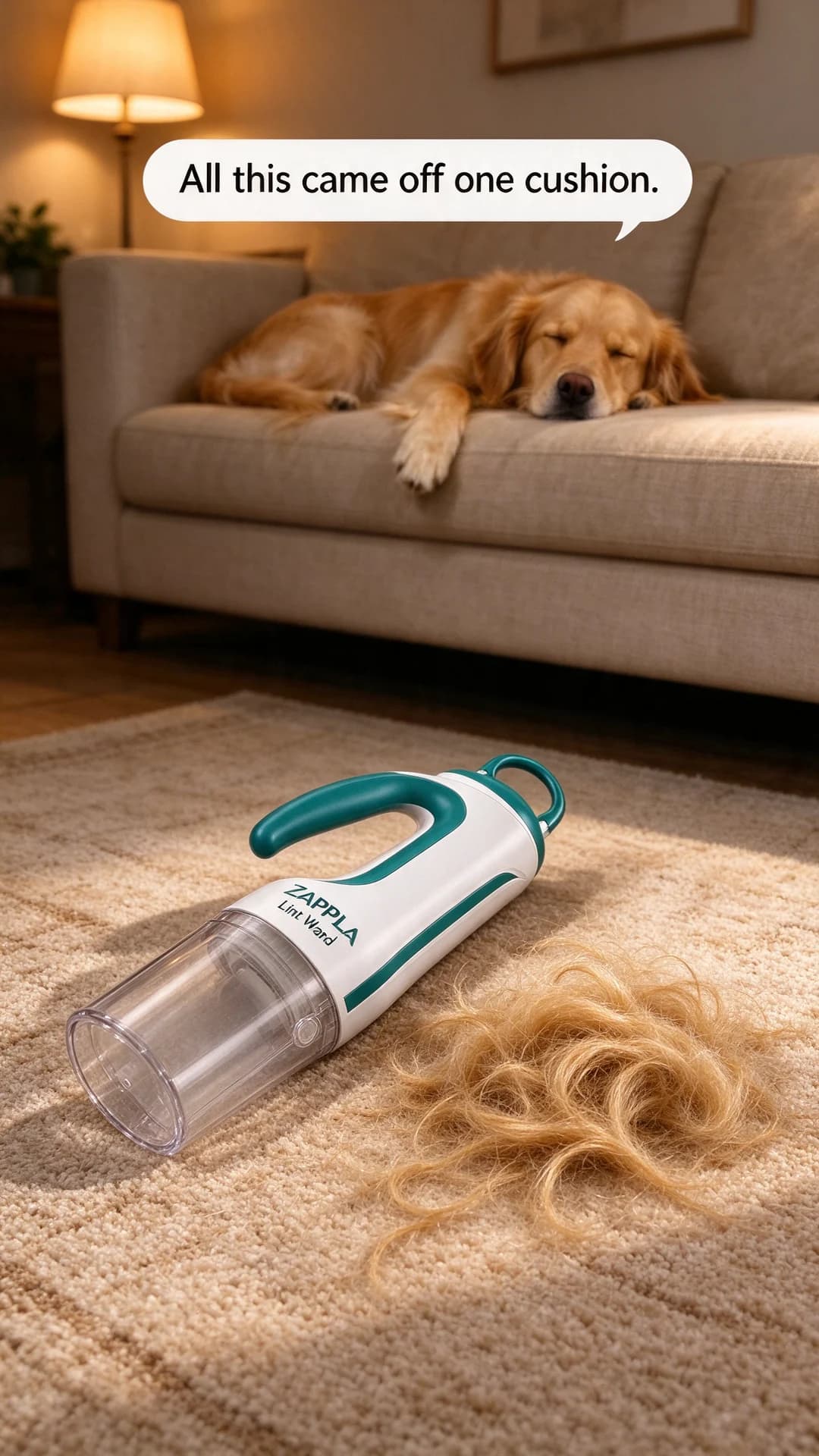
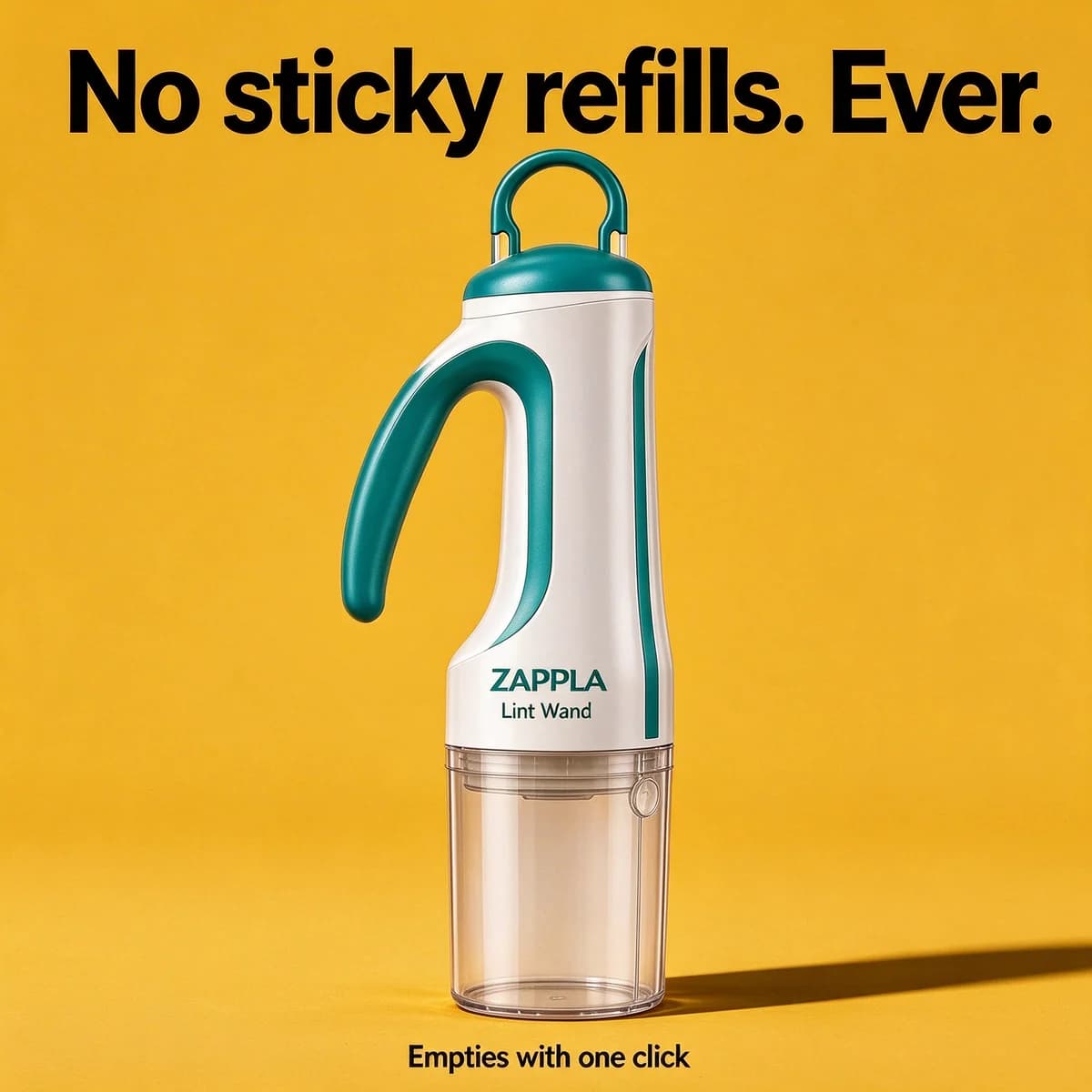
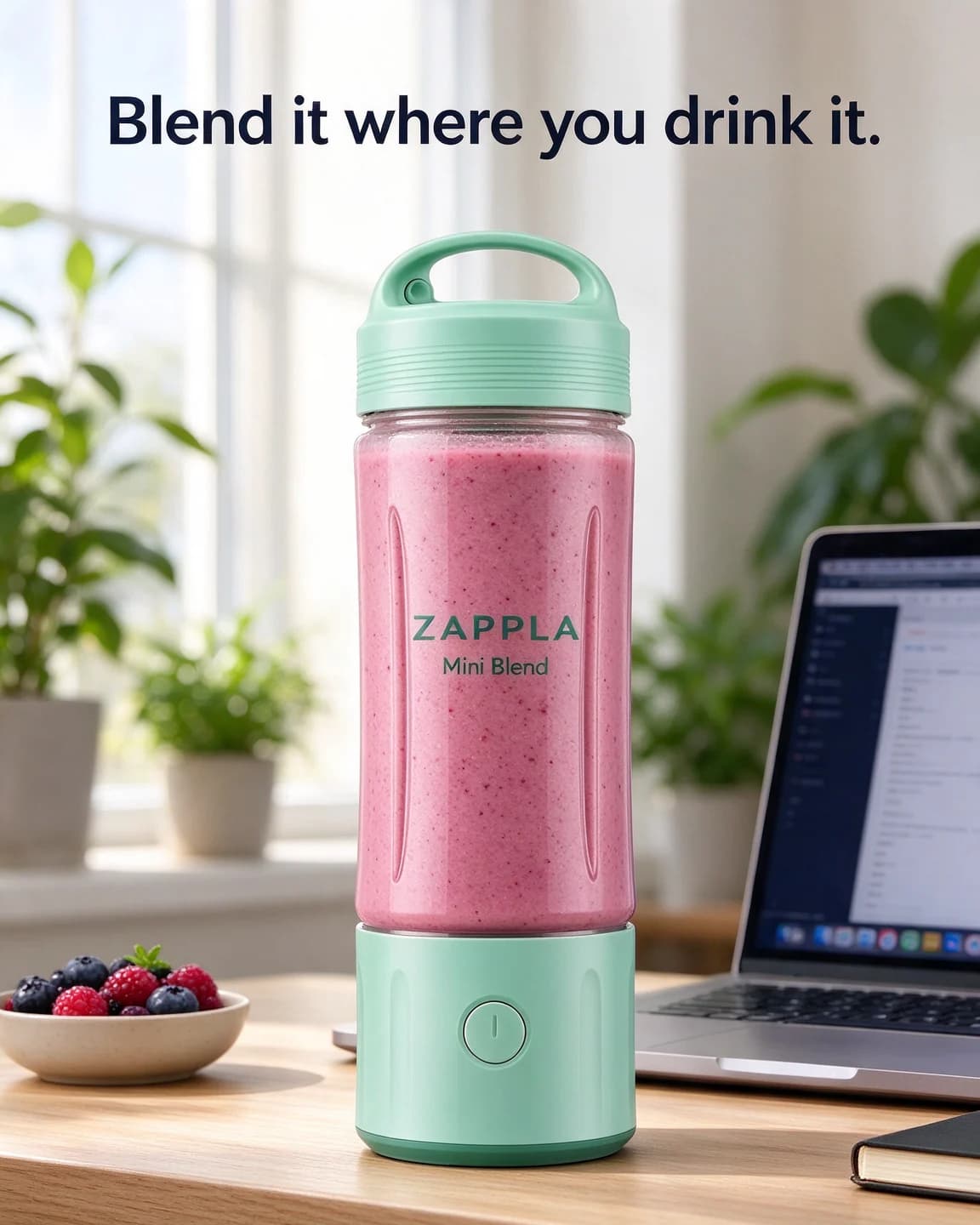
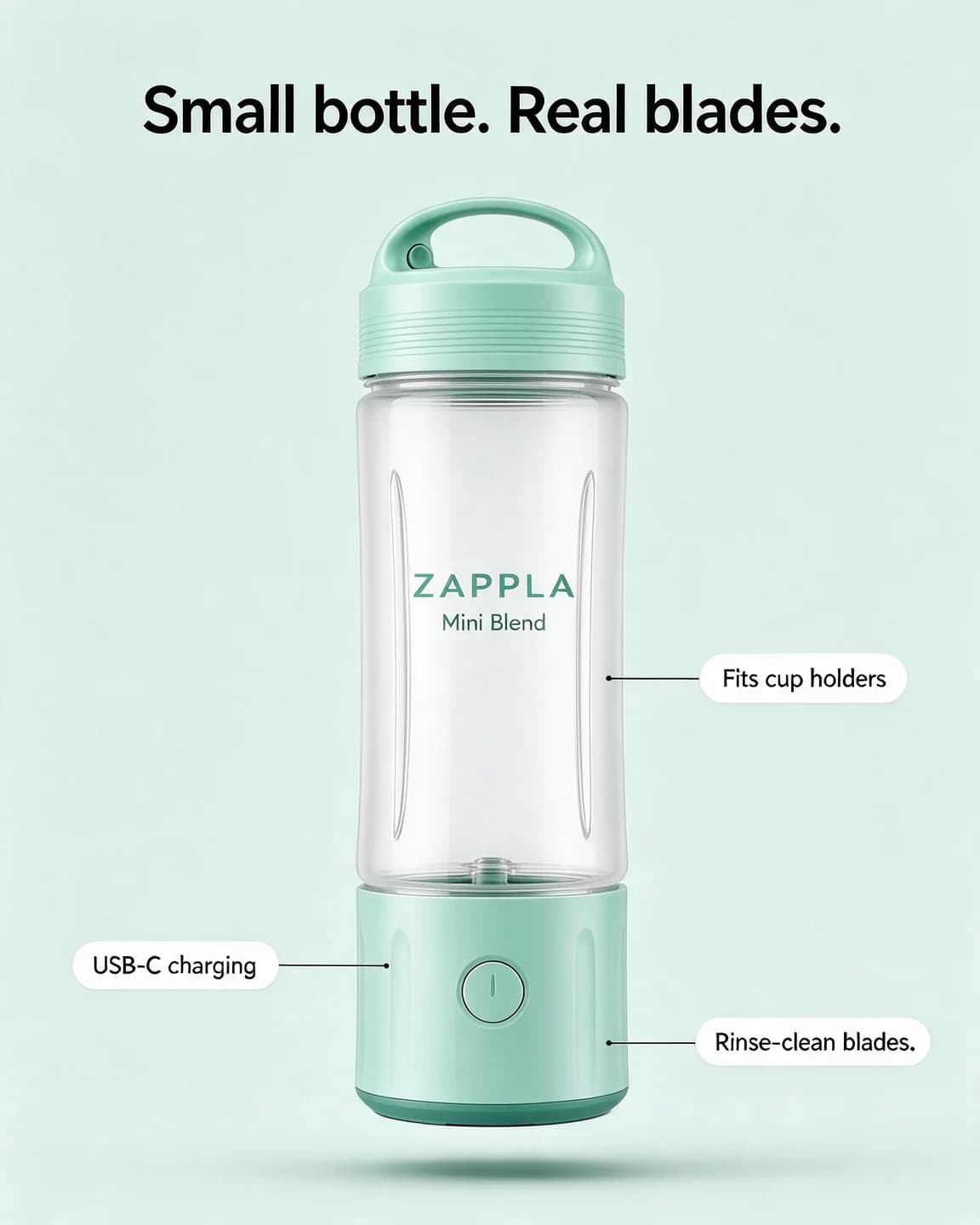
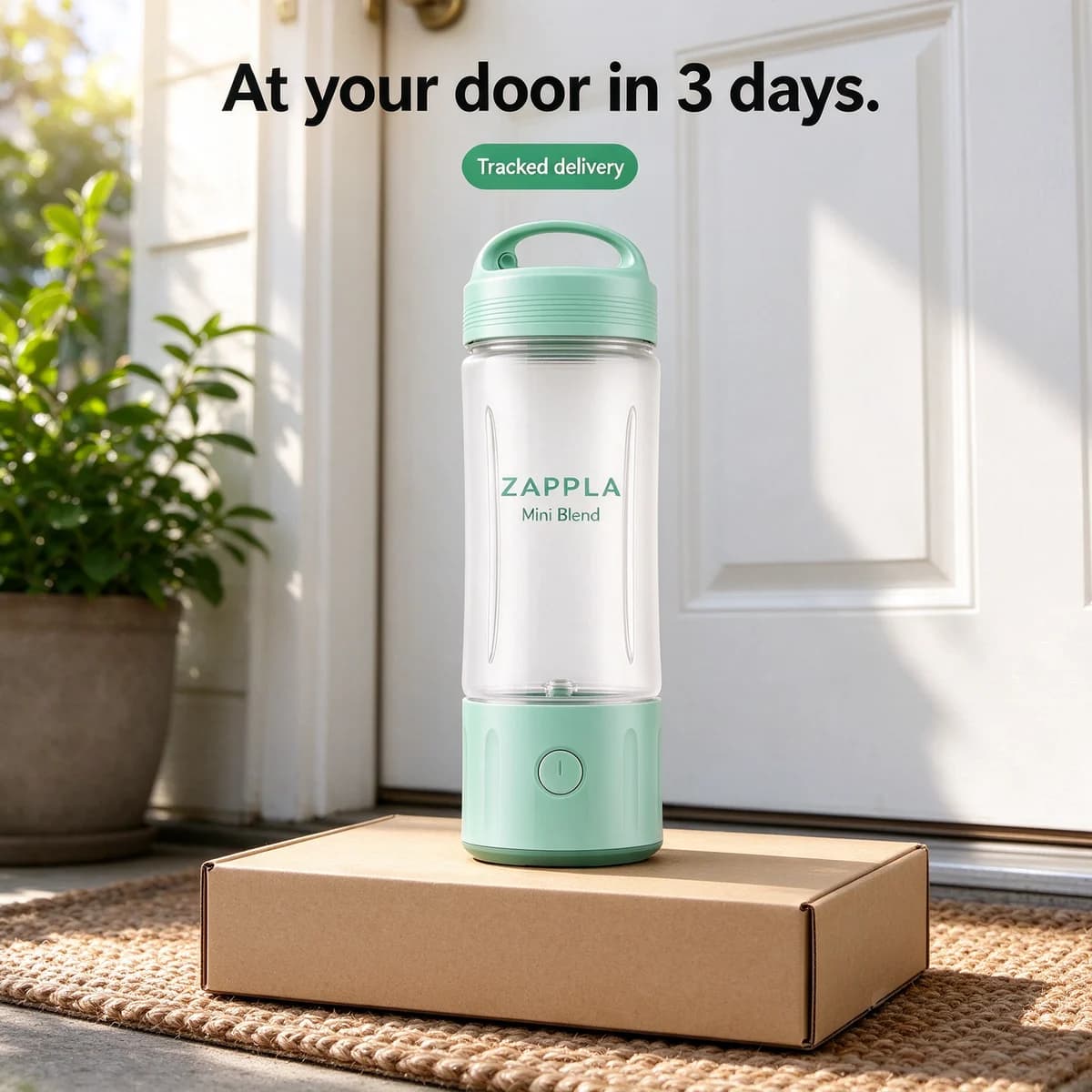
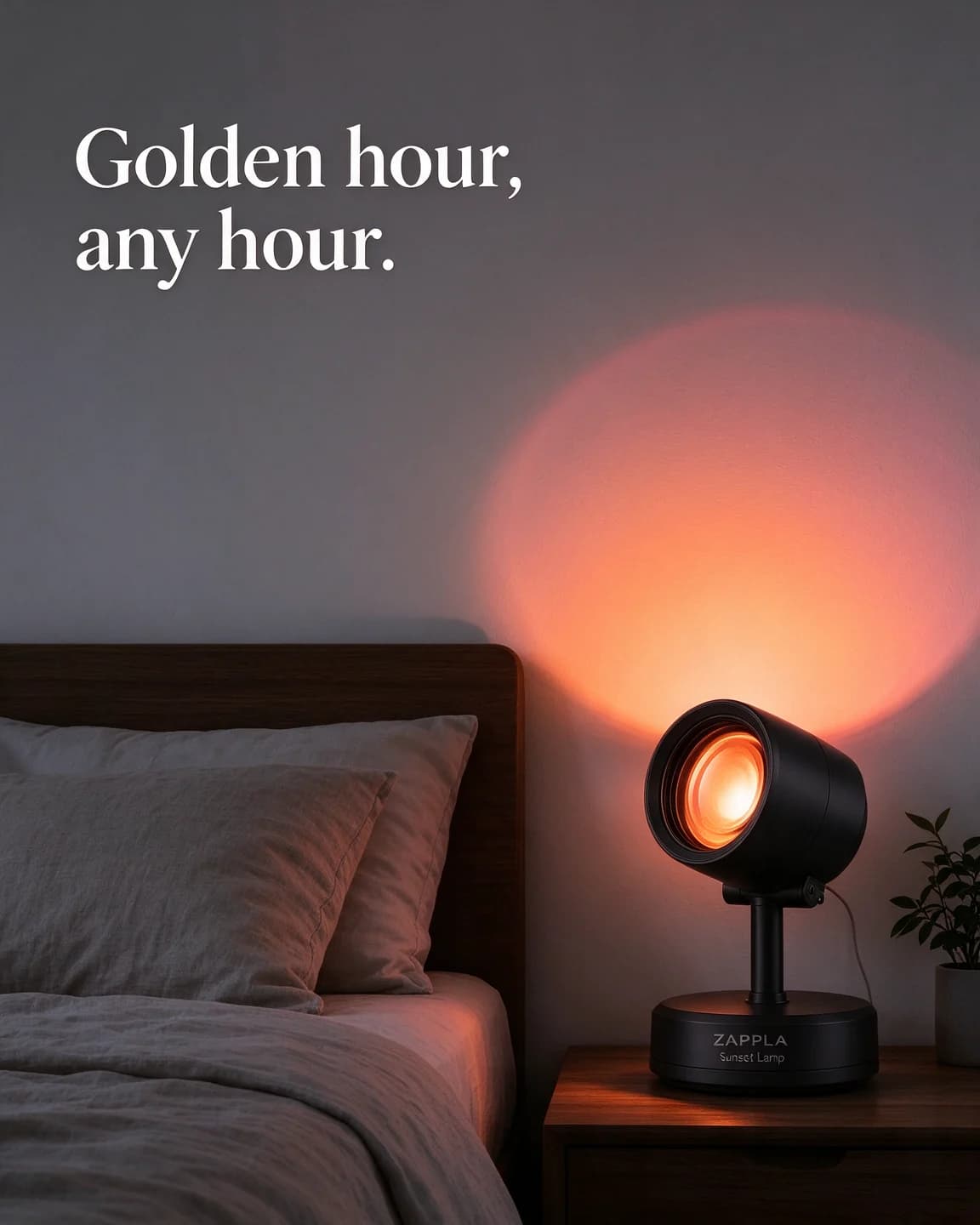
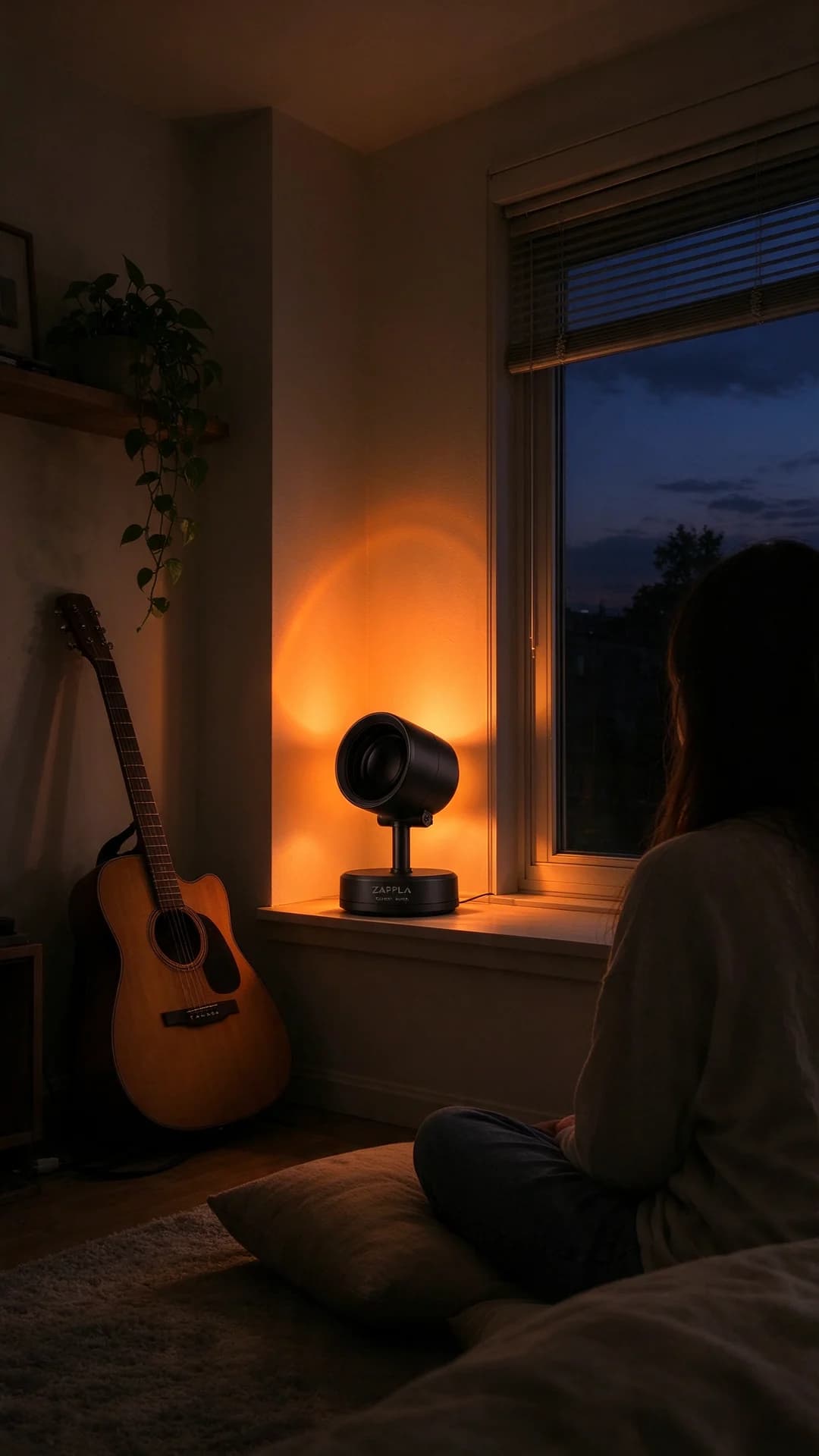
A dropshipping store rarely owns the product idea. The lint roller, the bottle blender and the sunset lamp in these examples are the kind of items several shops can be selling at the same moment, sometimes from the same supplier and with the same listing photos. So "look at this clever thing" stops working quickly. The ad has to win on three jobs instead:
- Show it working. One frame where the product and its effect appear together, like the clean stripe through dog hair.
- Say when it arrives. Delivery time is a common doubt when a shopper meets a store for the first time.
- Give a reason to buy here. Your own photos, your own tests, your answers in the comments. That is the part other stores can't download from the supplier.
The examples above spread that work across three products from one fictional store, Zappla: three ads for the Lint Wand, three for the Mini Blend and two for the Sunset Lamp.
Start with a sample, not the supplier listing
Before you make a single ad, order one unit and live with it for a few days. It does two jobs.
First, it gives you a photo that is yours. Supplier images often carry watermarks, collage layouts or text baked into the picture, and the colour may differ from what ships. A plain phone shot of the sample on a white sheet in daylight is a better start for AI ads than any of them. Our guide to product photos for AI ads covers the setup.
Second, it tells you which claims are true. Does the roller clear a cushion in one pass or five? How many smoothies does the bottle make on one charge? What colour is the lamp's light on a real wall? Write the callouts from what you measured, not from the listing.
Here is a made-up example of what Zappla's sheet could look like after a week with its three samples:
| What the listing says | What the sample did | What the ad says |
|---|---|---|
| "Removes 100% of pet hair" | One clean stripe per stroke, a few hairs left in the seams | One stripe in the photo, no "100%" anywhere |
| "20 blends per charge" | 11 smoothies before the charge light blinked | No number. "USB-C charging" carries the point |
| "Sunset red glow" | Orange fading to pink on a white wall | AI scenes ask for orange-pink light, never red |
| "Ships in 3 to 5 days" | Two test orders took 3 and 4 days | "3 to 5 days" until order records show 3 is normal |
Two test orders are not a delivery record, which is why the last row stays cautious. The same goes for any number on the sheet: one sample gives you a floor to write from, not a guarantee.
As a worked example of the cost, say each sample costs $10 landed and you're testing three products this week. That's $30 on samples, plus 24 image ads (eight per product) at 2 credits each, or 48 credits. For that you get your own photos, an honest claims sheet and a fair test for every product instead of one lonely ad each.
Delivery promises you can keep
A delivery line is one of the strongest hooks in this category, and one of the riskiest. In the US, the FTC's business guide to the Mail, Internet, or Telephone Order Merchandise Rule (opens in a new tab) says, as of October 2026, that you need a reasonable basis for any shipping time you state, and a reasonable basis for shipping within 30 days when you state none. Meta has its own reason to care: its newsroom post Improving Customer Service from Advertisers (opens in a new tab) (June 2018, with a March 2019 update) says advertisers with high negative feedback can see their ad delivery reduced or lose the right to advertise, and it suggests setting clear expectations about shipping speed upfront.
So write the delivery hook from your slowest realistic order, not your fastest. "At your door in 3 days" only works if the third day is normal, not lucky. If your records say three to five days, the hook says three to five days, and the image can still show the parcel on the doormat.
The shots that sell a gadget
Six shots cover most of what a gadget ad has to do. Decide which one each ad uses before you make it:
- The effect shot. The result and the product in one frame: the clean stripe, the full bottle, the glow on the wall.
- The problem in its setting. A furry sofa, a desk far from a kitchen, a dark room at 7pm. The setting does the explaining, so the headline can stay short.
- The phone-camera shot. Casual light, a hand in frame, a caption in a speech bubble. It reads like a post rather than a catalogue. See the UGC template.
- The callout shot. The product on a plain colour with three labels, one for each question people ask in the comments.
- The routine shot. The product in one specific moment of someone's day, not "useful for everyone".
- The arrival shot. The product on a doorstep or a mailer box, for ads that lead with delivery.
Each of these can be made from one clean product photo. What a still can't do is prove the product works. An AI image shows what the result looks like, so the result it shows must match reality. Where the claim is "it really does this", back it with a clip you filmed of your sample and run it next to the stills. Answering doubts in public works too, and the comment reply template turns a question from under your ads into the next hook.
Three angles before you judge a product
A dropshipping test asks two questions at once: does this product sell, and which ad sells it? One ad per product can't answer either. If it flops, you can't tell whether the product failed or the angle did.
So give every product at least three angles before you judge it:
- The demo, as an effect shot or a phone-camera shot.
- The problem or the old way, such as the refill drawer, the washing up or the dark room.
- Delivery or gifting, depending on the product and the season.
Make two or three executions of each, in 4:5 for feeds and 9:16 for Stories and Reels, so six to nine ads per product. If all three angles miss, drop the product with a clear conscience. If one wins, make more of that angle before you move to a new product. Our guide to concept vs iteration testing explains when to change the idea and when to change the execution, and how many ad creatives to test covers volume.
Video needs a word of its own. Mood products like the Sunset Lamp suit a short AI video ad made from a winning still, with light drifting across the room. Mechanism products like the Lint Wand need a real demo filmed on your sample, because gentle motion can't show fur coming off a cushion.
How BulkAds makes these from one product photo
Paste your store link and BulkAds builds a brand kit from it, reading Shopify and WooCommerce product feeds for names, prices and photos. Swap the supplier image for your sample photo, then ask for a batch of up to 12 ads for one product, each on its own angle, in 1:1, 4:5 or 9:16.
Every ad is compared with your photo, and ads where the product drifted are flagged before you see them. A pre-flight check also scores on-image spelling and brand fit, and flags likely policy risks such as fake buttons or medical claims.
When the same item is on sale in several stores, competitor ad research earns its place in a particular way. Add those stores to your competitor list and BulkAds pulls their active ads from Meta's Ad Library, sorted by how long each has been running, so you can see which hooks and layouts have lasted for products like yours. It rebuilds the pattern with your photo and your words, never their images or copy.
Ads launch to your own Meta ad account paused, and in the tests it launches itself, Autopilot can stop ads that spend without selling and draft fresh variants of a winner. For the store side of the workflow, see BulkAds for dropshipping.
Urgency and discounts that stay honest
Countdown timers that restart on every visit and "was" prices nobody ever paid make a store look like the ones shoppers have learned to skip. In India, the Central Consumer Protection Authority lists false urgency among the 13 dark patterns in its guidelines issued on 30 November 2023 (opens in a new tab). Meta's ad rules point the same way: as of October 2026, its Prohibited commercial practices (opens in a new tab) policy names deceptive pricing as one of the practices ads must not use.
A real offer with a real end date, stated in the copy, does the same job without the risk. For Zappla that could be a bundle of all three products for one weekend, with the end date on the image and the bundle price in the first line of copy. The Singles' Day ad ideas show timed offers that hold up.
Questions people ask
Can I use supplier photos in dropshipping ads?
Only if you have the rights, and even then they make a weak start. Supplier images may be shared by many stores, can carry watermarks or text, and may not match what ships. Photograph a sample on a plain background and build your ads from that.
What kind of ad works best for a dropshipping product?
Start with an effect shot that shows the product and its result in one frame, then test a problem-in-its-setting shot and a delivery or gifting angle. Make each in 4:5 for feeds and 9:16 for Stories and Reels.
How many ads should I test per dropshipping product?
Enough to try at least three angles with two or three executions each, so six to nine ads. A single ad can't tell you whether the product or the angle failed.
Should dropshipping ads mention delivery time?
Yes, if you can keep the promise. A stated window answers a real doubt, but in the US the FTC expects a reasonable basis for any shipping time you state, and late orders lead to complaints that can hurt your ads.
Is Zappla a real store?
No. Zappla, the Lint Wand, the Mini Blend and the Sunset Lamp are fictional, and every ad on this page was made with AI for illustration.
Keep going
- Features
Product photo ads
Your real packshot, in every scene
- Features
Competitor ad research
What rivals keep paying for, decoded
- Use cases
BulkAds for dropshipping
Supplier photos look the same in every store. BulkAds turns them into fresh, on-brand Meta ads per product, checked for accuracy, so you can test more angles.
- Use cases
BulkAds for Shopify stores
Paste your Shopify store link and BulkAds reads your products, photos and prices, then makes batches of on-brand Meta ads that you review and launch paused.
- Guides
Product photography for ads: how to shoot it on a phone
A phone, a window and a sheet of white card are enough. How to shoot product photos that make good ads — and that AI tools can put in new scenes without mangling your label.
- Guides
Concept vs iteration testing: find the idea, then refine it
Concept tests find the idea that sells, iteration tests sharpen it. How to tell them apart, run each one, read the results and decide next week's mix.
Every brand on this page is fictional and every ad was made with AI for illustration — they’re examples, not case studies.
BulkAds AI is an independent product and is not affiliated with, endorsed or sponsored by Meta Platforms, Inc. Facebook and Instagram are trademarks of Meta Platforms, Inc.