Why oral care ads sell habits
Toothpaste, toothbrushes and mouthwash are bought on repeat, used twice a day and barely thought about in between. That makes oral care an odd category to advertise. The product works out of sight, the benefits are slow, and the most tempting claims, whiter teeth and healthier gums, are the ones that need the most proof and draw the closest review.
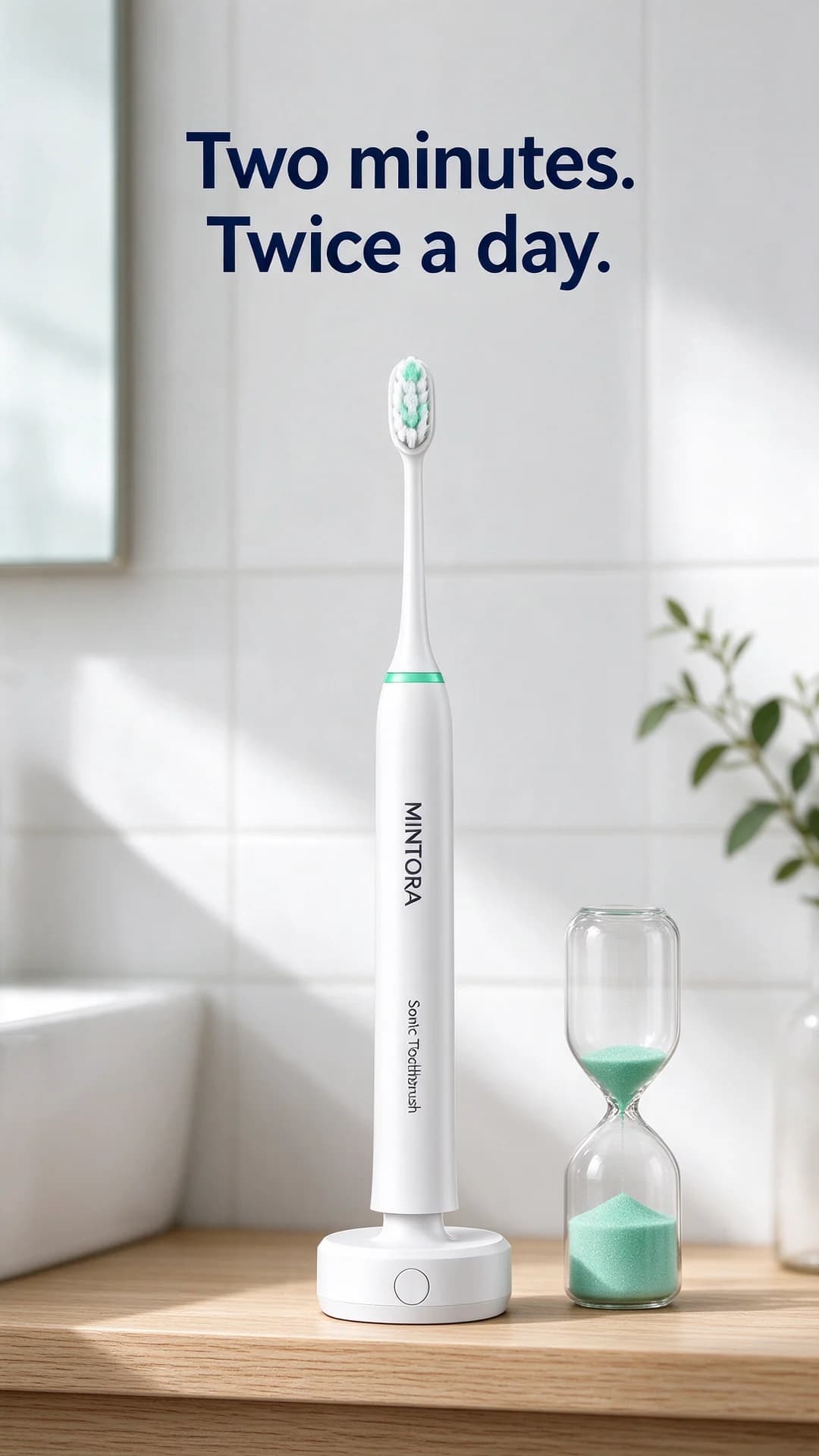
The ads that work sell the routine instead. They show the brush on the shelf, the stripe on the brush head, the bottle in the desk drawer and the travel case on top of the bag. They borrow advice people already trust, and they attach the product to moments rather than promises.
Advice you can quote, with its source
Habit lines are strongest when they repeat guidance from a body people trust, and the primary text should name it. As of October 2026:
- The NHS page "How to keep your teeth clean" (last reviewed June 2025) says to brush twice a day for about two minutes, that adults should use a paste with at least 1,350 ppm fluoride, and to spit rather than rinse, because rinsing straight away washes off the concentrated fluoride.
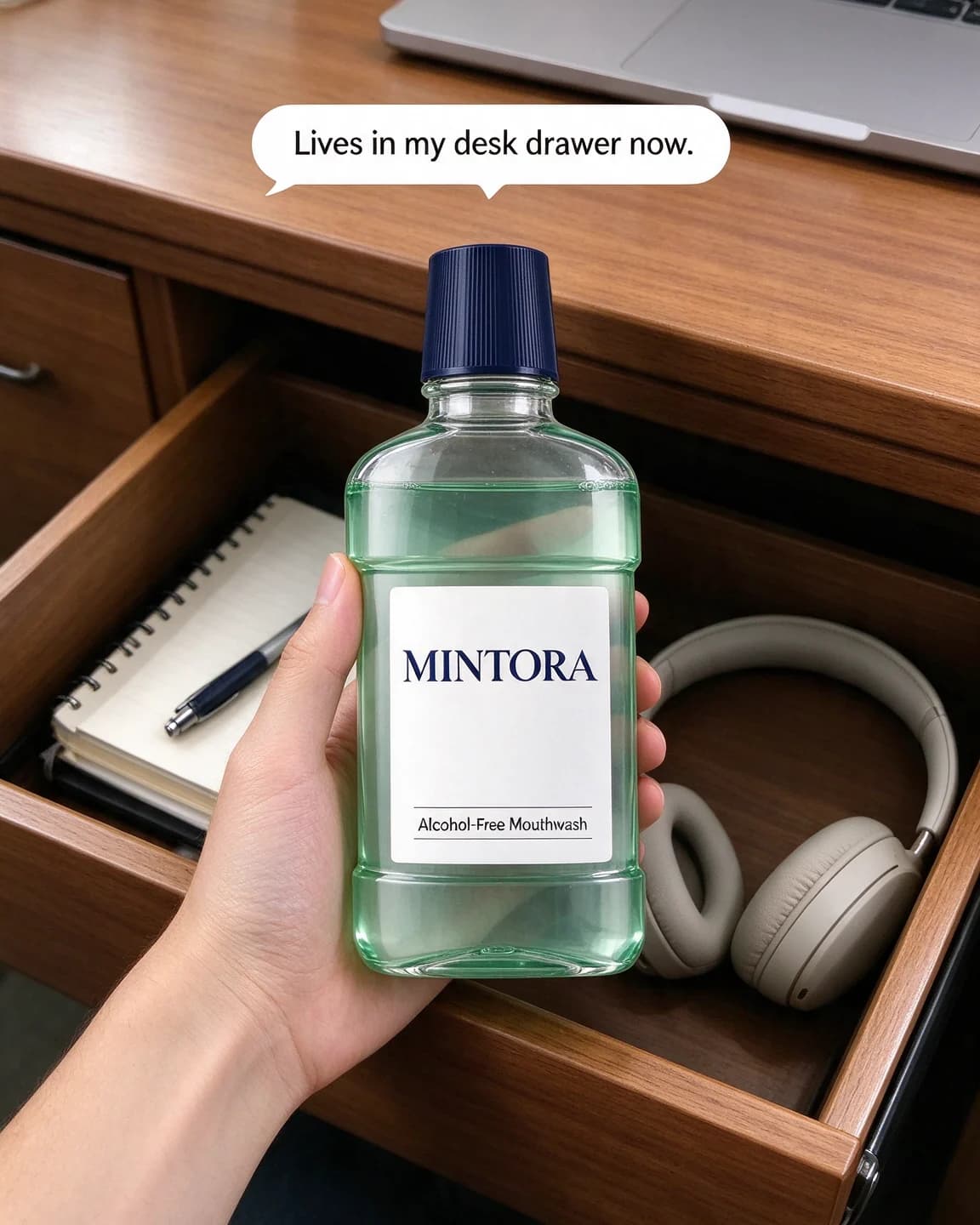
- The same page says not to use mouthwash straight after brushing, but at a different time, such as after lunch.
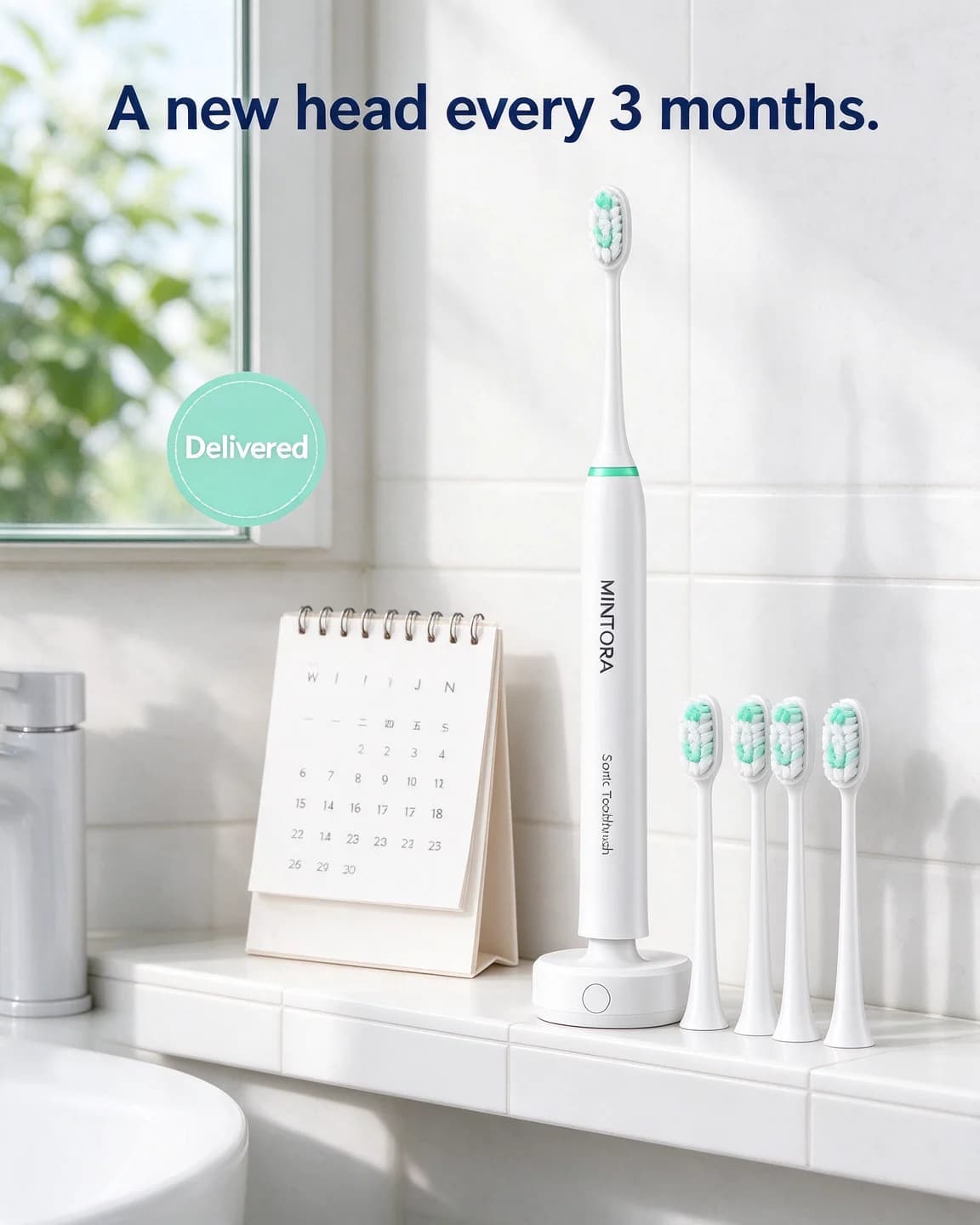
- The American Dental Association's toothbrushes page (updated August 2026) advises replacing a toothbrush every three to four months, or sooner if the bristles are visibly matted or frayed.
- World Oral Health Day falls on 20 March every year, according to the campaign site run by FDI World Dental Federation.
Each of these becomes an ad without a single result claim: the two-minute Reels image, the fluoride number, the refill reminder, the mouthwash in the desk drawer and the myth-and-fact mock-up above. Quote the advice exactly and check the source again before each campaign, because guidance gets revised.
The shots oral care needs
- The shelf shot. Brush on its base, paste beside it, morning light. It sells design and routine in one frame.
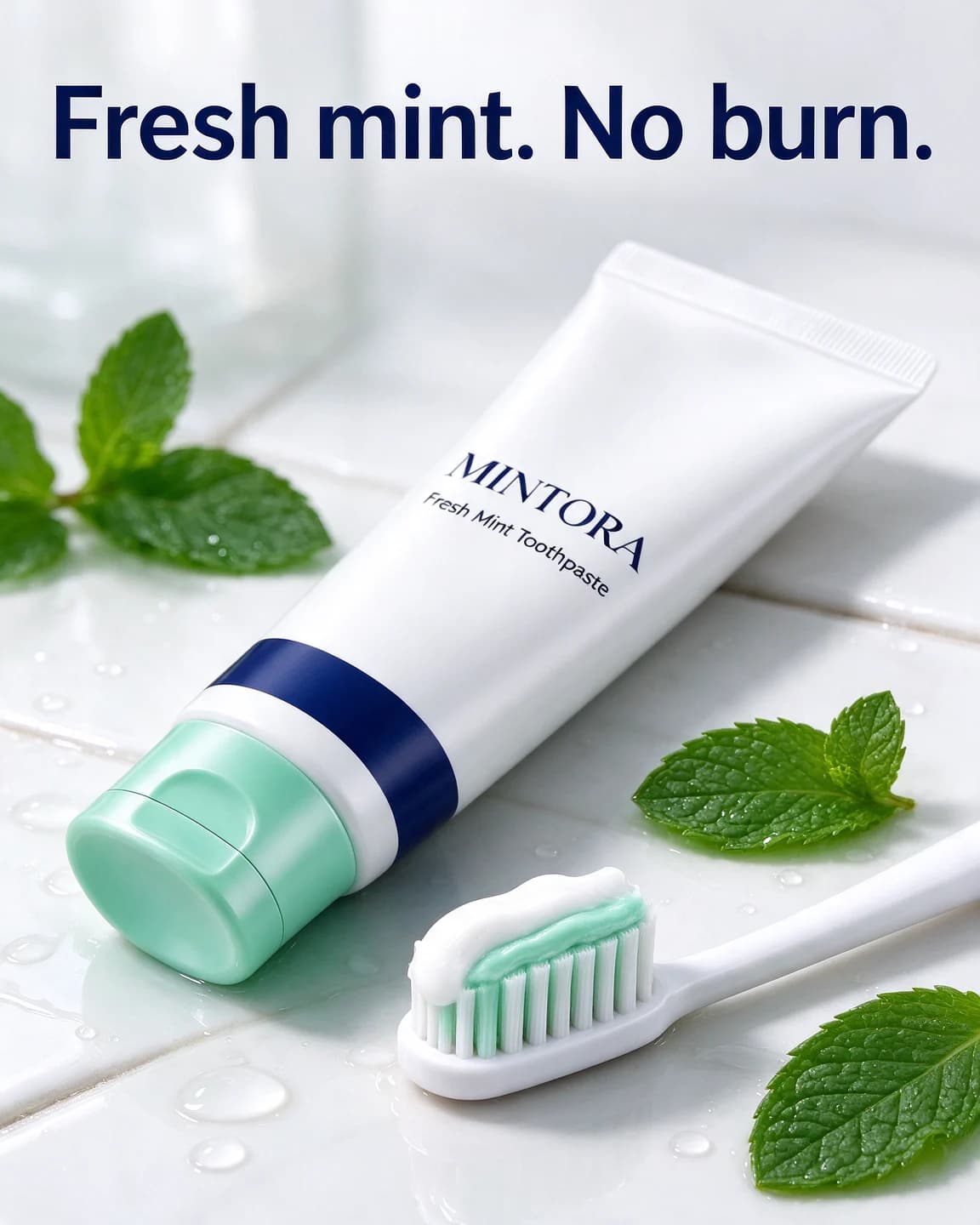
- The brush-head macro. A clean stripe of paste on the bristles, the one close-up in this category that looks fresh rather than clinical.
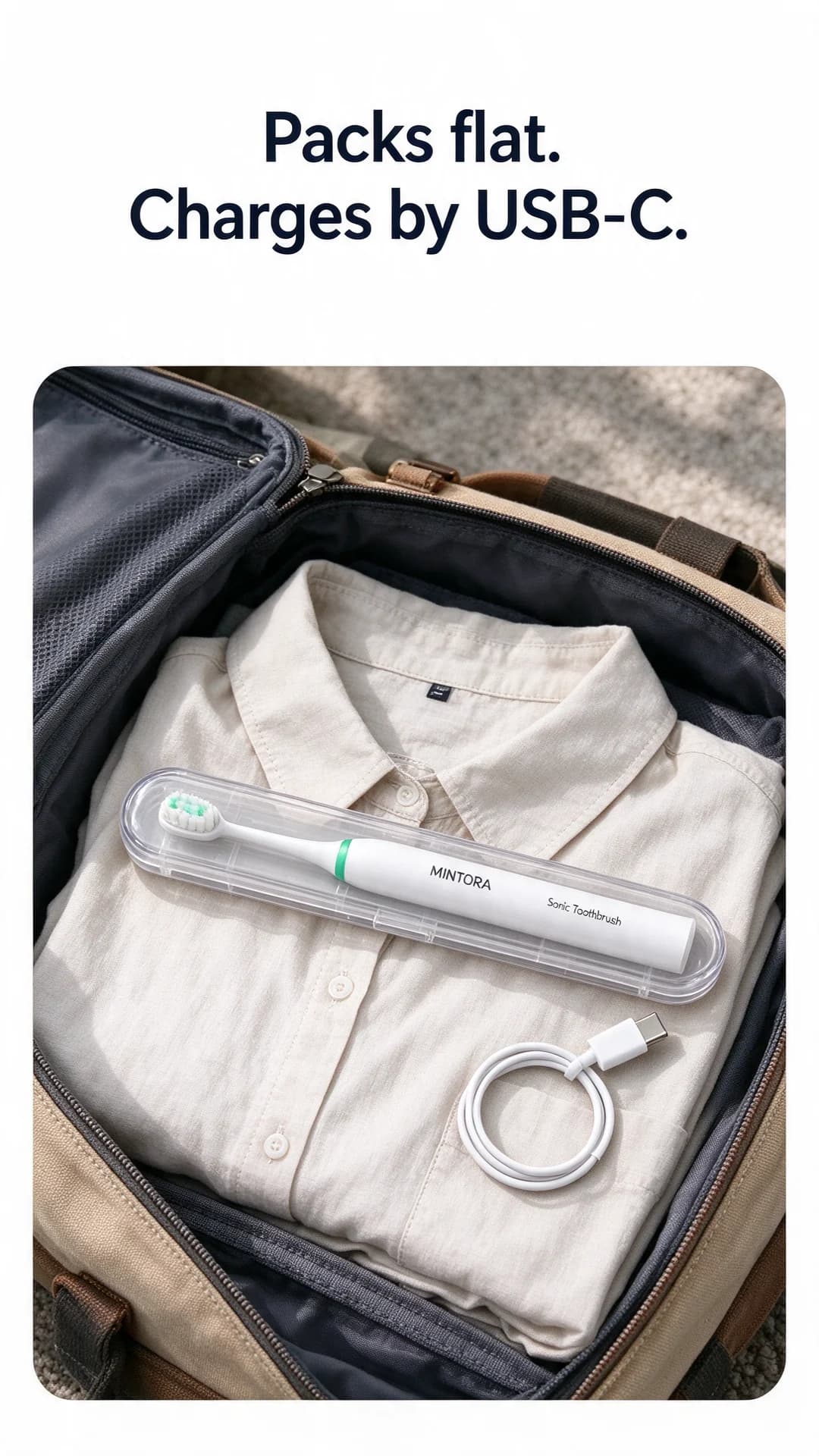
- The out-of-bathroom moment. A desk drawer, a gym bag, a wash bag. Taking the product out of the bathroom makes the ad stand apart from a feed full of sinks.
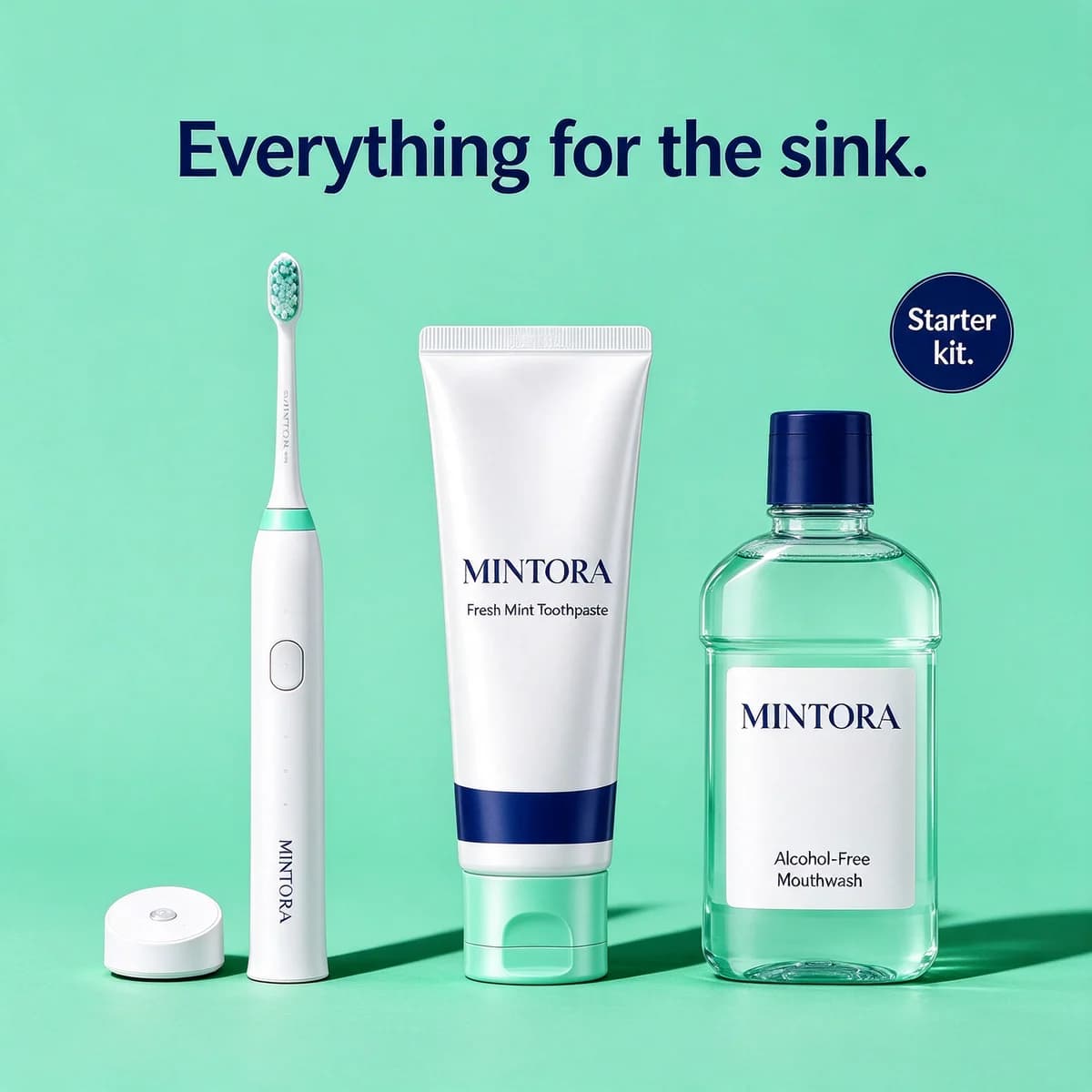
- The kit. All three products together on a flat colour, for starter bundles and gifts.
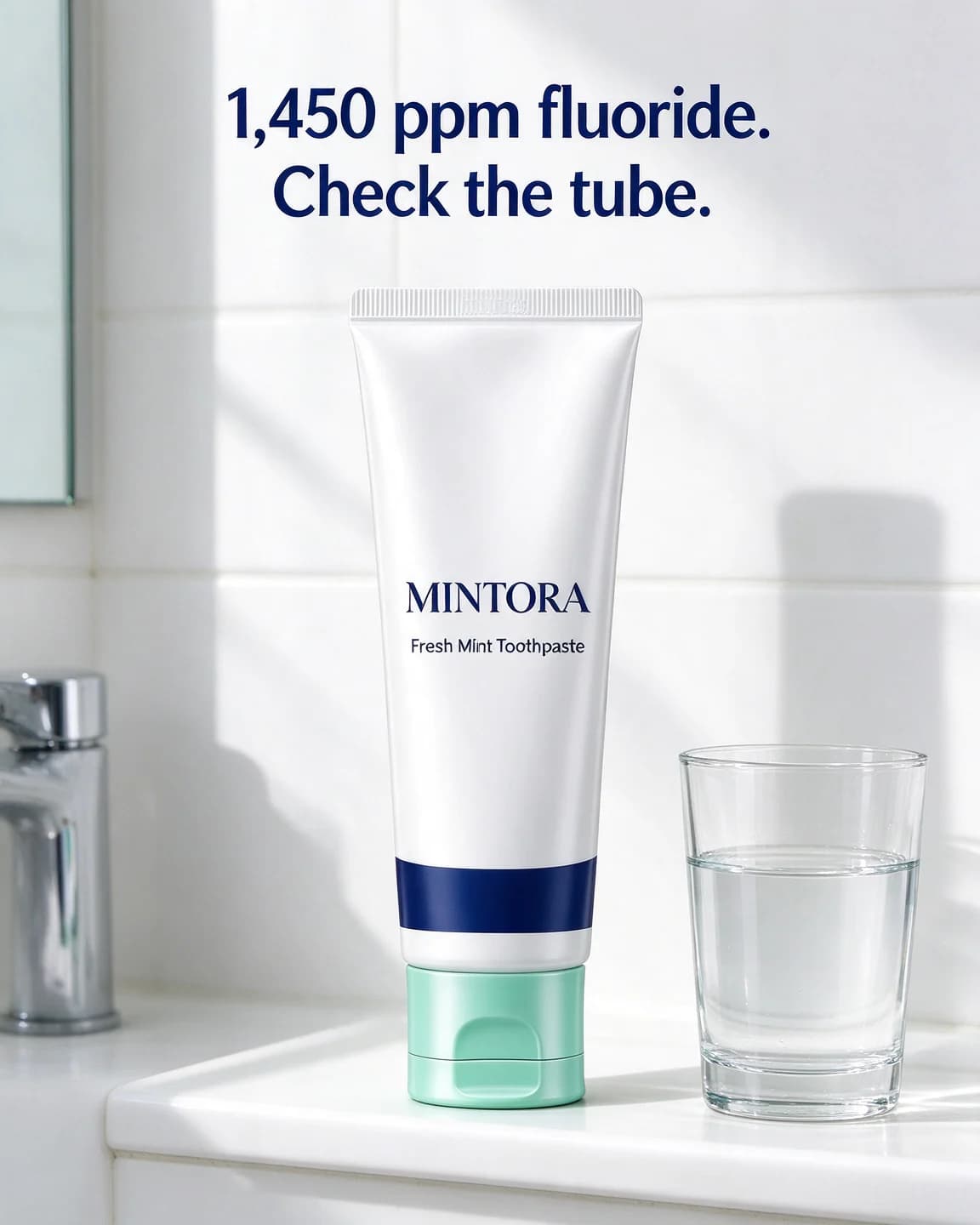
- The pack fact. The tube alone, with its key number as the headline.
What you won't find above is a close-up of teeth. Generated mouths often look wrong, and a dazzling smile reads as a whitening promise whether you meant one or not.
Finding the reason people switch
People switch toothpaste and brushes reluctantly, often only when something annoys them: a paste that stings, a brush that dies on a trip, a head they forgot to change. The first test should find which annoyance moves your buyers. Make two or three ads for each of these five angles, ten to fifteen in all:
- Taste and feel, such as no burn or alcohol-free.
- Habit, such as the built-in timer or the refill reminder.
- Fact from the pack, such as the fluoride level.
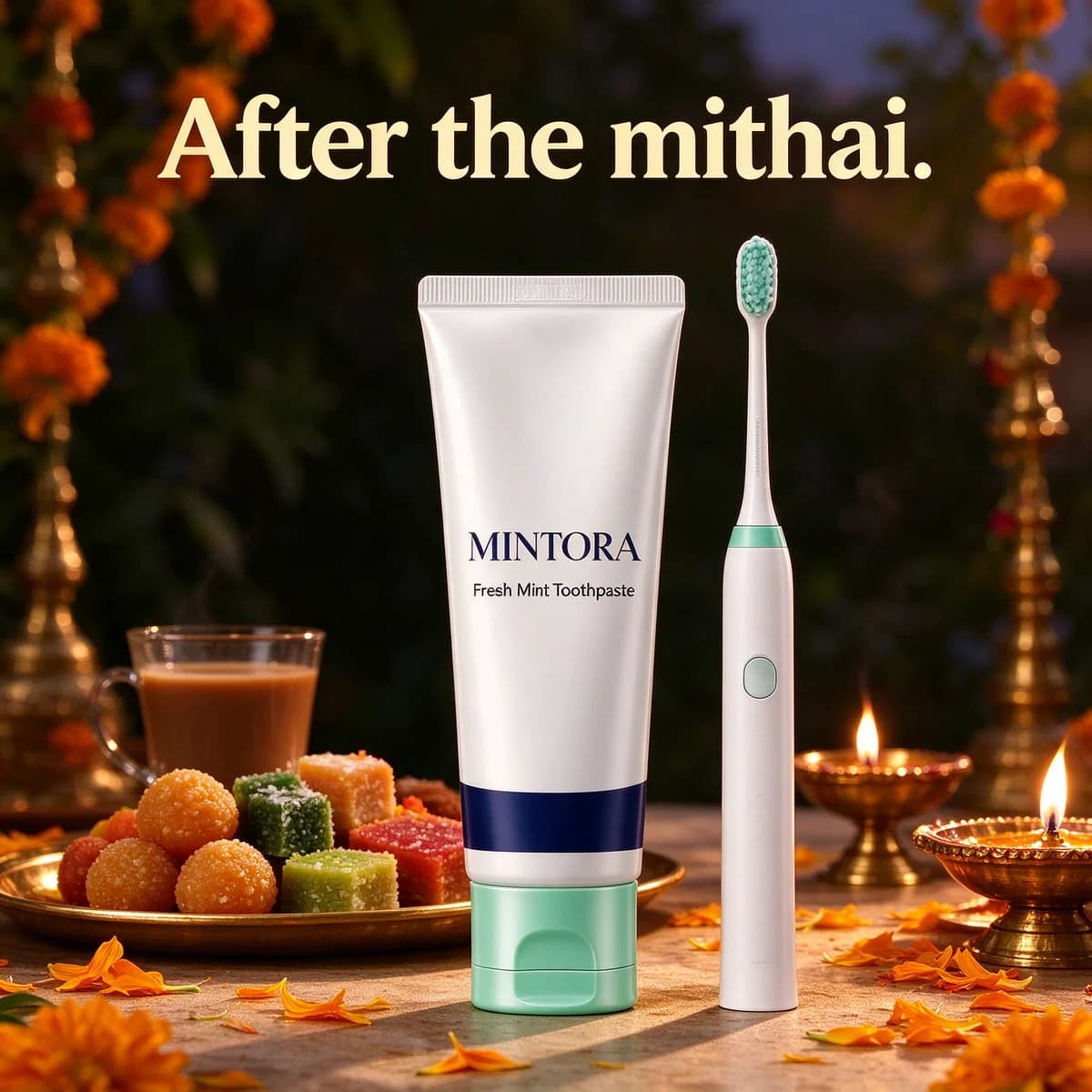
- Moment, such as travel, the desk drawer or after the sweets.
- Kit or subscription, which gives a first-time buyer one decision instead of three.
Make the brush ads in 9:16 too. An upright brush is a naturally tall subject, which is why two of the eight examples are full-screen images. Keep the headline away from the top and bottom edges, and check it with the safe zone checker. For how large the batch should be, see how many ad creatives to test.
Making the batch in BulkAds
Start with a clean packshot of each product on white: the tube, the brush on its base, the bottle. BulkAds places that real photo into new scenes instead of redrawing the product, and the pre-flight check compares every ad with it, flagging any where the label, cap colour or logo drifted. Small details on a toothpaste tube, such as the fluoride line, are exactly the kind that can shift, so zoom in on each one. Product photo ads explains the process.
Two settings matter more here than in most categories. The first is the proof points in your brand kit. Add the fluoride level, "alcohol-free" and anything else printed on the pack, and leave out what you can't support, because every headline and caption is written from that list. The second is the pre-flight report. It flags likely Meta policy risks such as medical claims and before-and-after shots, but you should still read every on-image line against your packaging before launch.
Ads go to your Meta ad account paused, so nothing runs until you approve it. When one sells in a test Autopilot launched, it drafts four fresh variants of it, and a winning still can become a short video ad, with sand running through the timer or water flowing over the brush head.
Worked example: pricing the subscription
Subscriptions suit oral care because the replacement cycle is predictable. Say the brush costs $26 and a replacement head $3.60. Four heads a year comes to $14, or about $1.20 a month. The image carries "A new head every 3 months." and the primary text does the rest: the monthly cost, that the subscription can be paused, and what arrives in each box. If the head price changes, only the text needs editing, and the image keeps running.
Iterating on a winner
Decide what the winner is really selling, the habit it names or the place it shows, then keep that part and change something else. If "Two minutes. Twice a day." works for the brush, try "Spit, don't rinse." for the paste. If the desk drawer wins, move the mouthwash to a gym bag or a car door pocket. If the fluoride number works on a plain shelf, put it into a comparison chart next.
The myth vs fact template and the comparison chart template show the layouts behind the two mock-ups, and the education hooks page has more lines that teach before they sell.
Questions people ask
Can oral care ads show before-and-after smiles?
Be careful. As of October 2026, Meta's health and wellness policy allows before-and-after transformations for cosmetic products in ads aimed at adults, and a whitening result still needs evidence behind it. Most oral care brands are better served by habit, taste and pack-fact ads, which carry far less risk.
Can I say 'dentist recommended' in an ad?
Only with a survey or endorsement that supports exactly that wording, and the same goes for any association seal. If you can't show the evidence, drop the line and lead with a fact from the pack.
What should a toothpaste ad headline say?
One thing a shopper can check: the flavour, the fluoride level printed on the tube, alcohol-free, or the habit it supports. Skip promises about teeth or gums that your packaging doesn't make.
Which format works best for toothbrush ads?
Try 9:16 Stories and Reels for the brush, which is a tall subject, and 4:5 or 1:1 for kits and paste. A short video of the timer running or water over the brush head is a natural next step for a winning still.
Is Mintora a real brand?
No. Mintora is fictional, and every ad on this page was made with AI for illustration.
Keep going
- Features
Product photo ads
Your real packshot, in every scene
- Ad templates
Myth vs fact ad template
Crosses for the myths, ticks for the facts, one belief corrected per row
- Ad templates
Comparison chart ad template
Labelled rows, the same measure on each side, numbers you can check
- Ad examples
Skincare & beauty ad examples
Serum and SPF ads that sell texture and trust, not miracles
- Ad ideas
Diwali ad ideas
Diwali ad ideas for 2026 and 2027: 6 example ads from Dhanteras to Bhai Dooj, 15 hooks, festive sale offers, a creative checklist and the lines to respect.
- Hook bank
Education hooks
35 education hooks for ads: rules of thumb, common mistakes, label decoders and quick how-tos, each with a reason it works and a filled-in product example.
Every brand on this page is fictional and every ad was made with AI for illustration — they’re examples, not case studies.
BulkAds AI is an independent product and is not affiliated with, endorsed or sponsored by Meta Platforms, Inc. Facebook and Instagram are trademarks of Meta Platforms, Inc.