What makes pet product ads work
Pet ads talk to two audiences in one frame. The pet gets the attention — a head tilt, eager eyes, a sit-and-wait by the treat cupboard. The owner makes the decision, and owners read labels, worry about ingredients and hate wasting money on something their dog won't touch.
The examples above split that work cleanly:
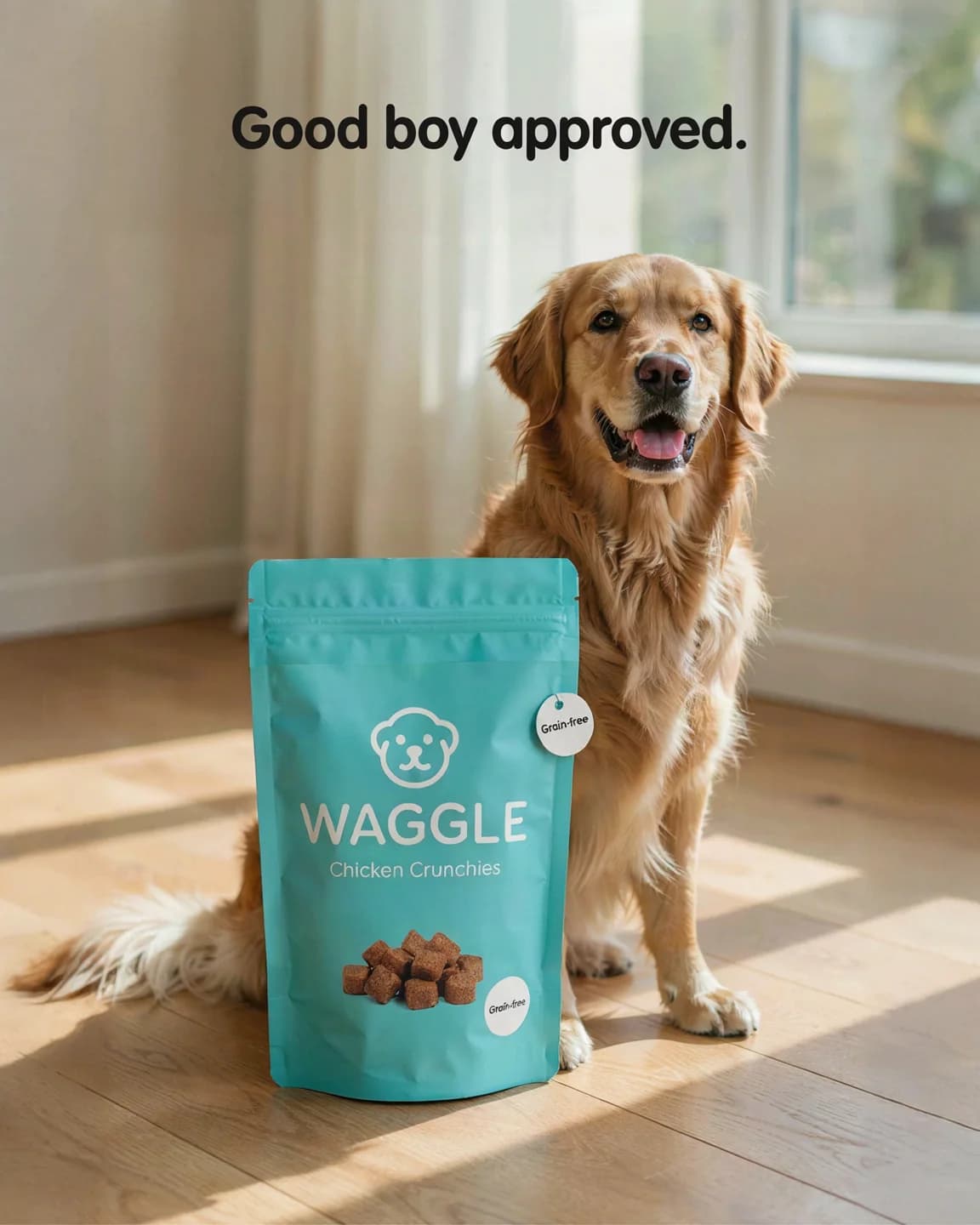
- The pet's reaction stops the scroll. "Good boy approved." needs no explanation next to a happy retriever.
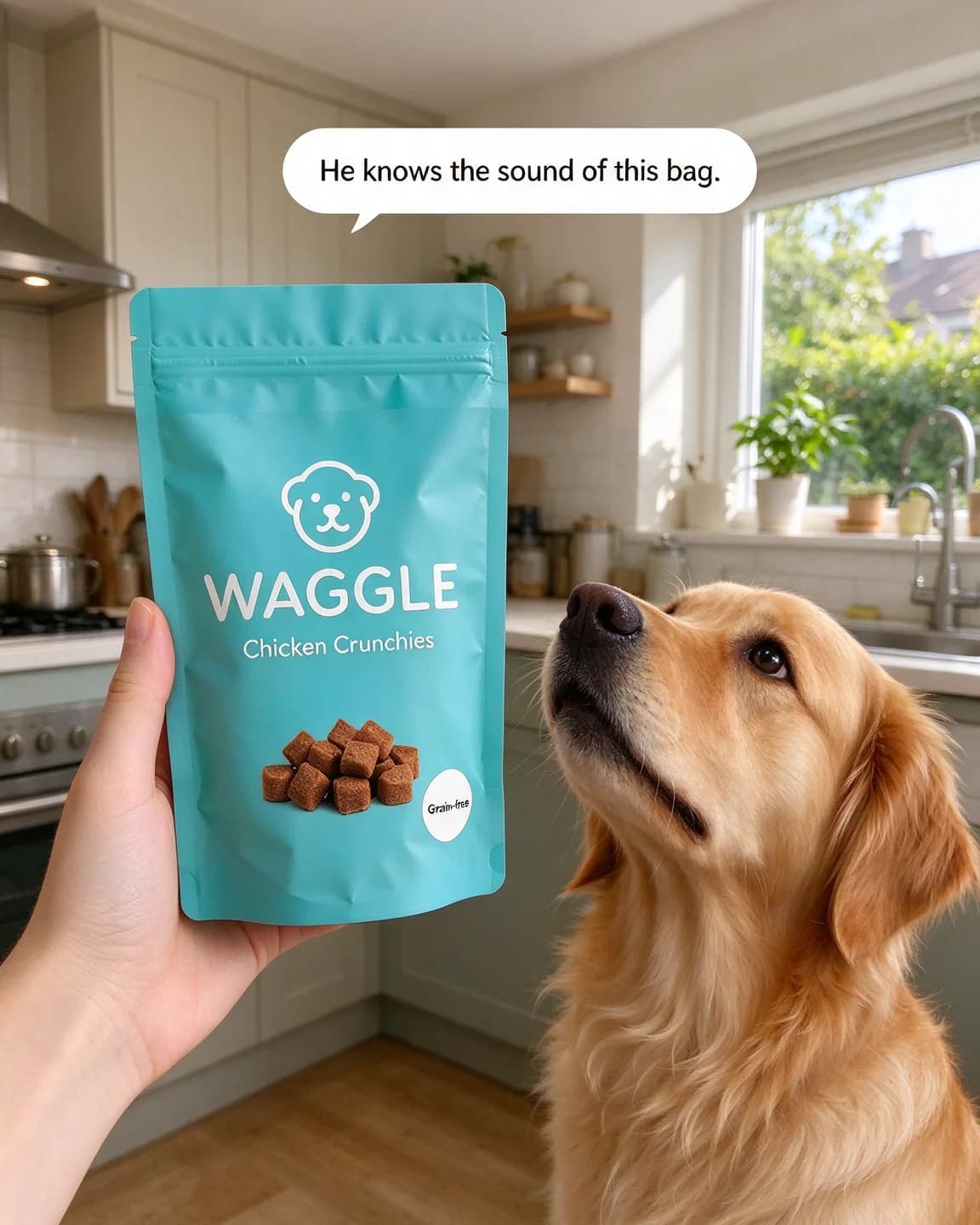
- Owner humour builds recognition. "He knows the sound of this bag." is a joke every dog owner has lived.
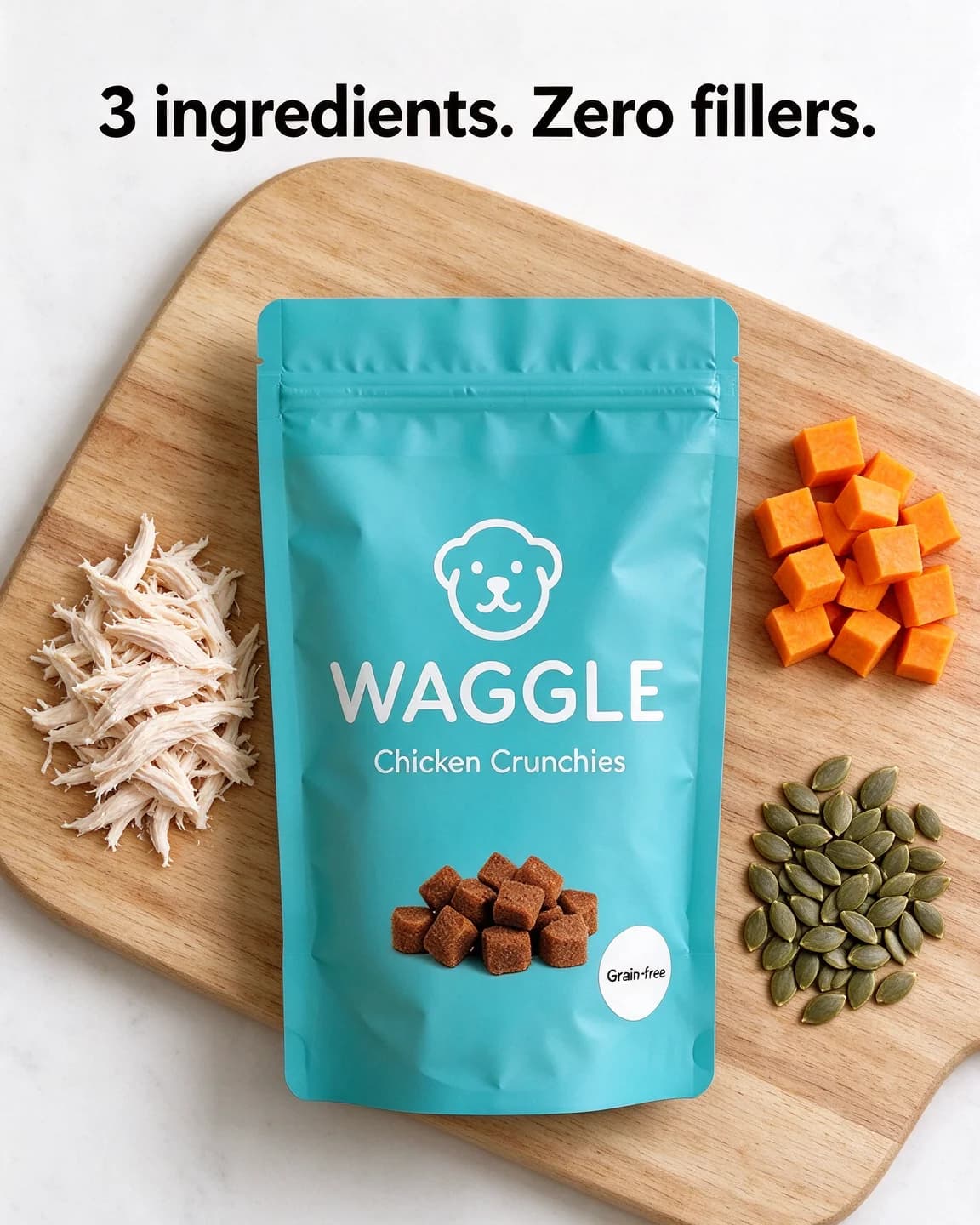
- Ingredients close the sale. "3 ingredients. Zero fillers." gives label readers something to check.
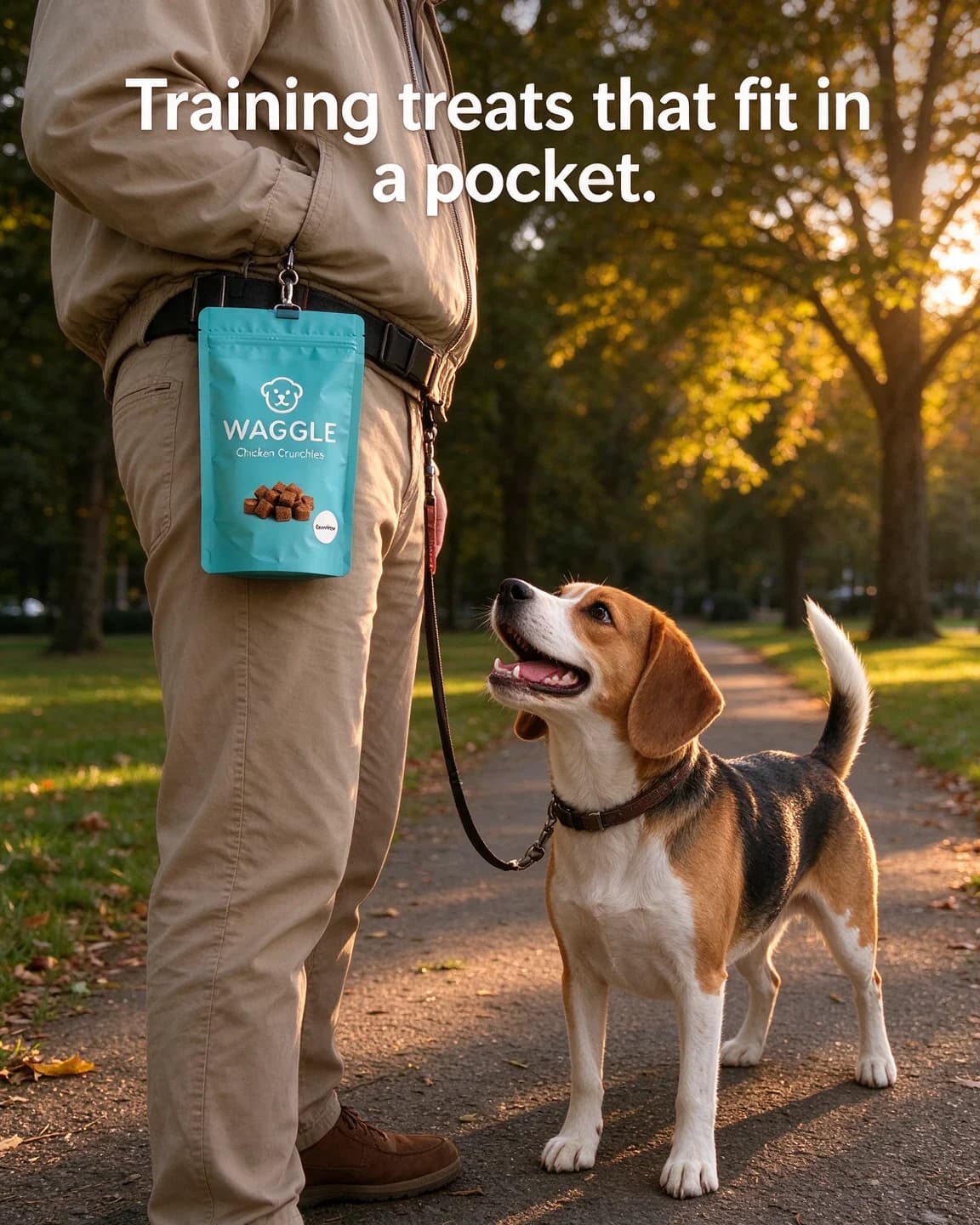
- A job widens the reason to buy. "Training treats that fit in a pocket." turns a snack into a tool.
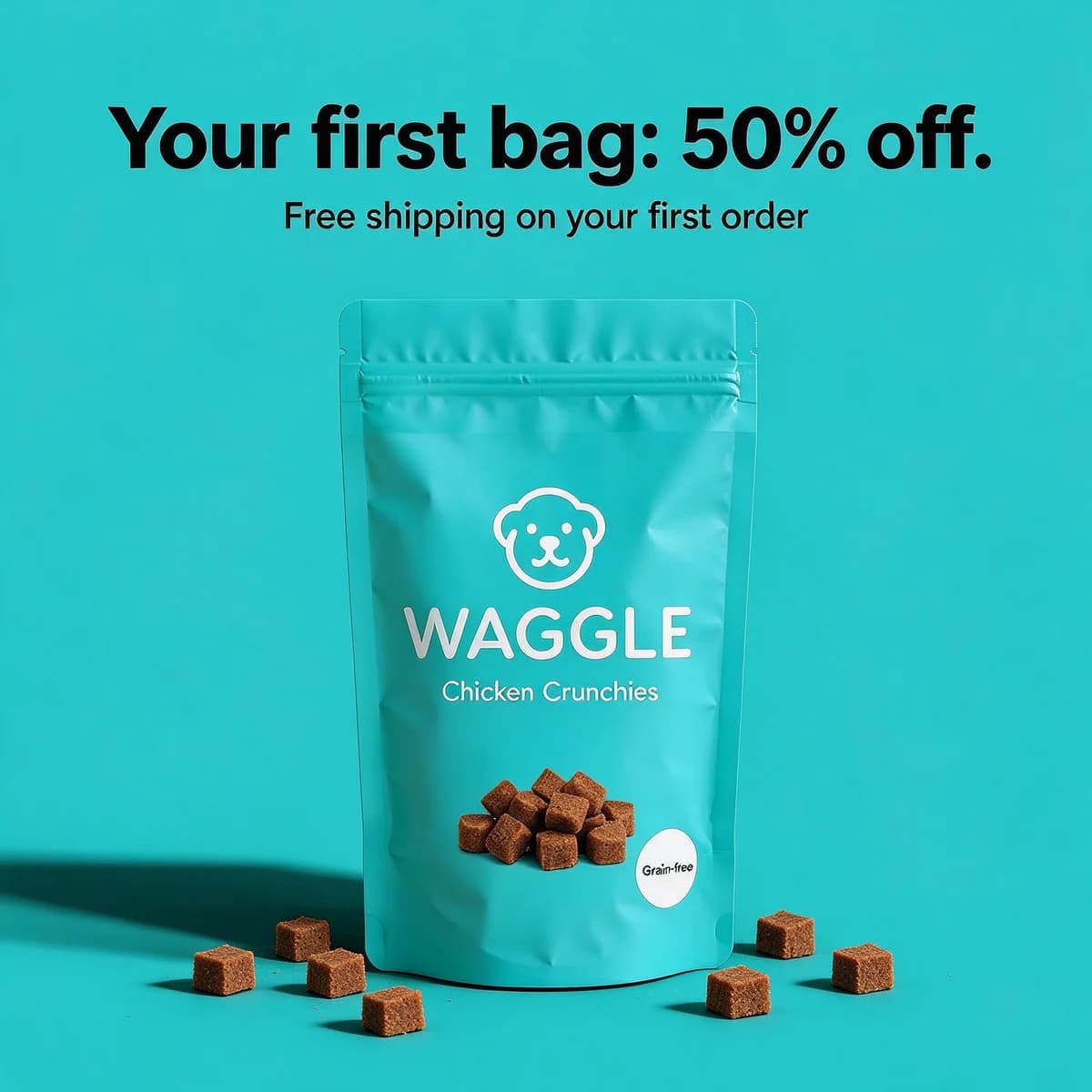
- A low-risk first order handles fussiness. A half-price first bag lowers the cost of finding out.
Pet brands have one advantage most categories don't: people like looking at animals. That makes pet ads easy to enjoy and share, but likes aren't the test — sales are. The ads worth copying also respect the animal: relaxed, safe, happy pets, handled gently, in scenes owners would be proud to post themselves.
A two-week testing plan for pet brands
Start with five angles, with two or three versions of each:
- Pet approval — the animal's reaction next to the product.
- UGC moment — a phone-camera shot with an owner's caption.
- Ingredient story — every ingredient laid out around the pack.
- Moment of use — training, walks, car rides.
- First-order offer — mainly for people who've visited but not bought.
That's 10 to 15 ads for one product. Our guide on how many ad creatives to test explains how to adjust that for your budget, and the creative test calculator shows the spend each ad needs before you judge it.
Vary the animals as well as the words. A golden retriever, a beagle and an Indian indie dog make three genuinely different ads, and owners may be quicker to stop for a dog that looks like theirs. Genuinely different creative also gives Meta's delivery system more to work with than near-copies do — our guide to creative diversity explains why.
Use 4:5 for feeds and 9:16 for Stories and Reels — a wagging tail is made for vertical video — and 1:1 for offer posters. If you can, show the first-order offer mainly to people who already know the brand, so a discount doesn't crowd out the other angles you're trying to learn about.
Creative tips for pet ads
- Shoot at the pet's eye level. It makes the animal the hero and puts the viewer in the moment.
- Let the pet look at the product. Eyes on the pouch lead the viewer's eyes there too.
- Hands, not faces. An owner's hand holding the bag is enough and keeps the focus where it belongs.
- Show the product itself. Owners care about size and texture, so put a few treats next to the pack.
- Write captions in the owner's voice. "He", "she", "our girl" — the way owners actually talk about their pets.
- Style safely. No foods that are toxic to dogs in the shot, sensible portions, and relaxed, safe animals. The watch-outs on this page list the common traps.
Keep the on-image text in the owner's voice and down to one idea. The primary text can carry what the picture can't: the full ingredient list, the size of each piece, a sensible number of treats a day and which ages they suit — only if your pack says so. If you also sell for cats, give them their own ads. The behaviours, the jokes and often the product are different, and a dog-shaped ad won't land with cat owners.
Turning winners into new variants
- Same caption, new breed. The quickest way to reach different owners with a proven line.
- Same breed, new moment. The walk, the sofa, the car, the training class.
- Same layout, new flavour or size. A proven frame launches a range quickly.
- New format. A few seconds of tail-wagging or a head tilt makes a strong Reel.
Seasonal touches — a monsoon walk, a cosy corner on a noisy Diwali night — are an easy way to refresh a proven ad, so keep a few versions of your best one ready before each season.
BulkAds' AI ad generator can make variants of a winning ad in one batch from your real pack photo, ready to launch as the next test.
Questions people ask
What makes a good pet product ad?
A pet's genuine reaction to earn attention, plus one clear reason for the owner to trust the product: its ingredients, a job it does or a low-risk first order. Keep claims to what's on the pack.
Can pet brands make health claims in Facebook ads?
Only claims you can substantiate. Phrases like 'improves digestion' or 'vet recommended' need evidence behind them, and unsupported health claims can get ads rejected.
Should pet ads show the owner?
Hands and bodies are usually enough. The pet should be the star. Leaving faces out also makes a scene feel like it could be anyone's home.
Which breed should I show in my ads?
Test a few. Different breeds and sizes are an easy way to make genuinely different creatives, and they help you learn which owners respond.
Is Waggle a real brand?
No. Waggle is fictional, and every ad on this page was made with AI for illustration.
Keep going
- Features
AI ad generator
On-brand image ads in batches of up to 12
- Guides
How many ad creatives should you test? The number, and the maths.
A straight answer, then the simple sum that sets your real number, how many new ads to launch each week at your spend, and when to stop testing and scale.
- Guides
Meta Andromeda and creative diversity: what changed and what to do
What Meta's Andromeda retrieval system is, what it changes for your ads, a practical diversity checklist and how to tell whether your ads are different enough.
- Ad templates
Founder story ad template
The person who made it, explaining why — in three short paragraphs
- Ad templates
Notes app ad template
A plain phone note whose last line happens to be your product
- Ad templates
UGC ad template
A phone-camera moment and one honest, first-person line
Every brand on this page is fictional and every ad was made with AI for illustration — they’re examples, not case studies.
BulkAds AI is an independent product and is not affiliated with, endorsed or sponsored by Meta Platforms, Inc. Facebook and Instagram are trademarks of Meta Platforms, Inc.