What car accessory ads have to show
Nobody scrolls looking for a tyre inflator. People want the soft tyre sorted before work, the windscreen clear on a wet morning, the phone somewhere other than the passenger seat. A car accessory ad works when it opens on that small, annoying moment and shows the product ending it.
Each of the ads above starts from one of those moments:
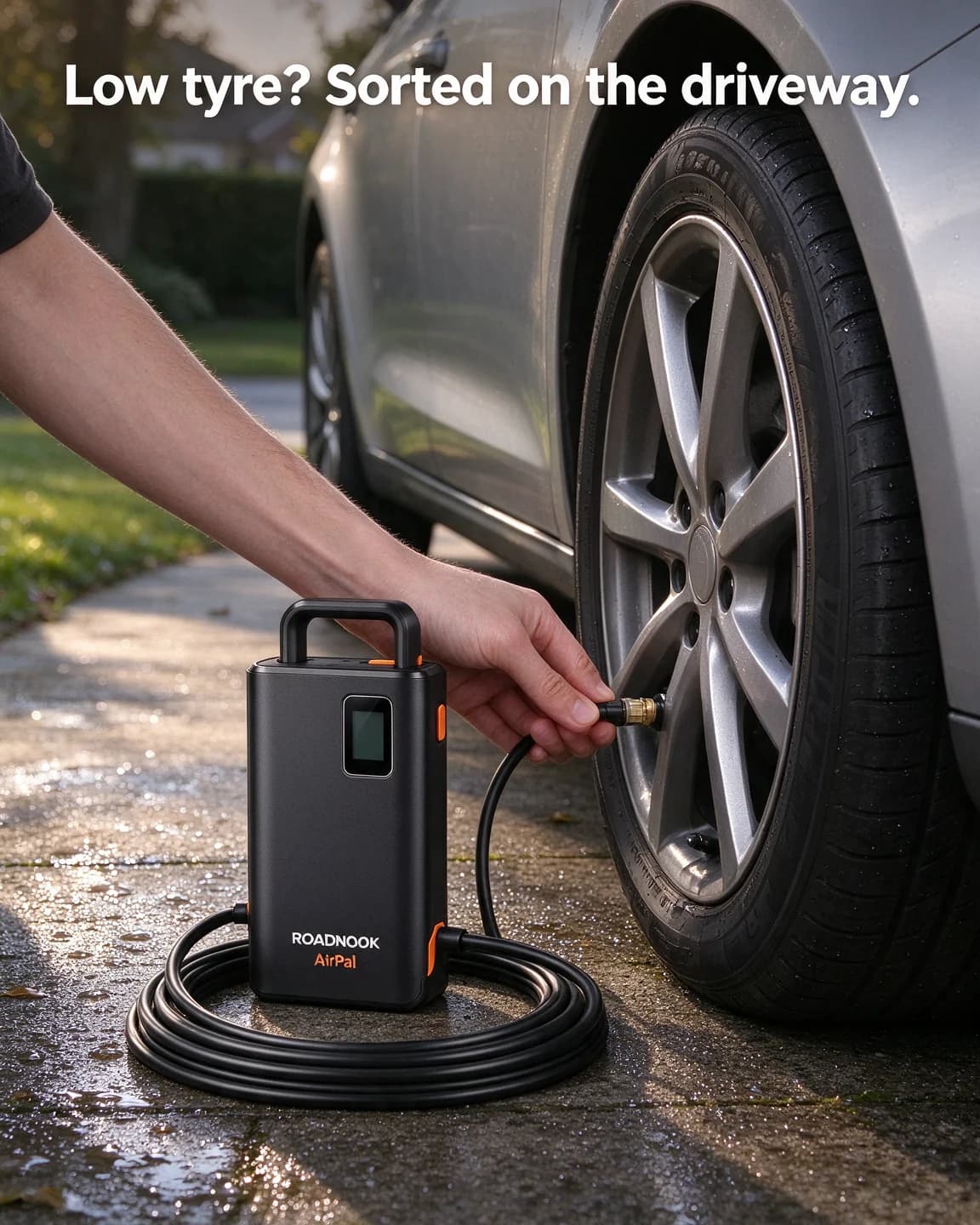
- The soft tyre: "Low tyre? Sorted on the driveway."
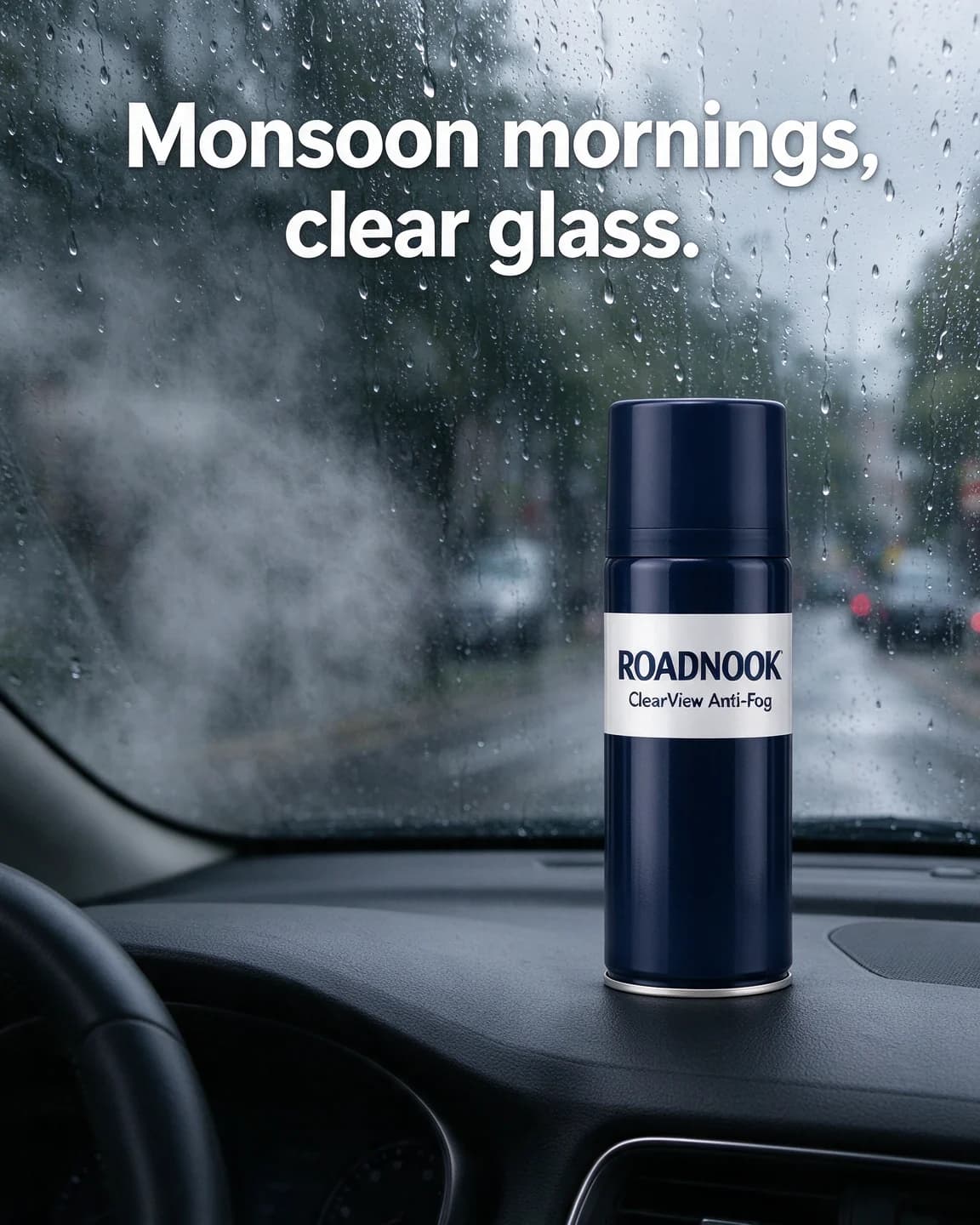
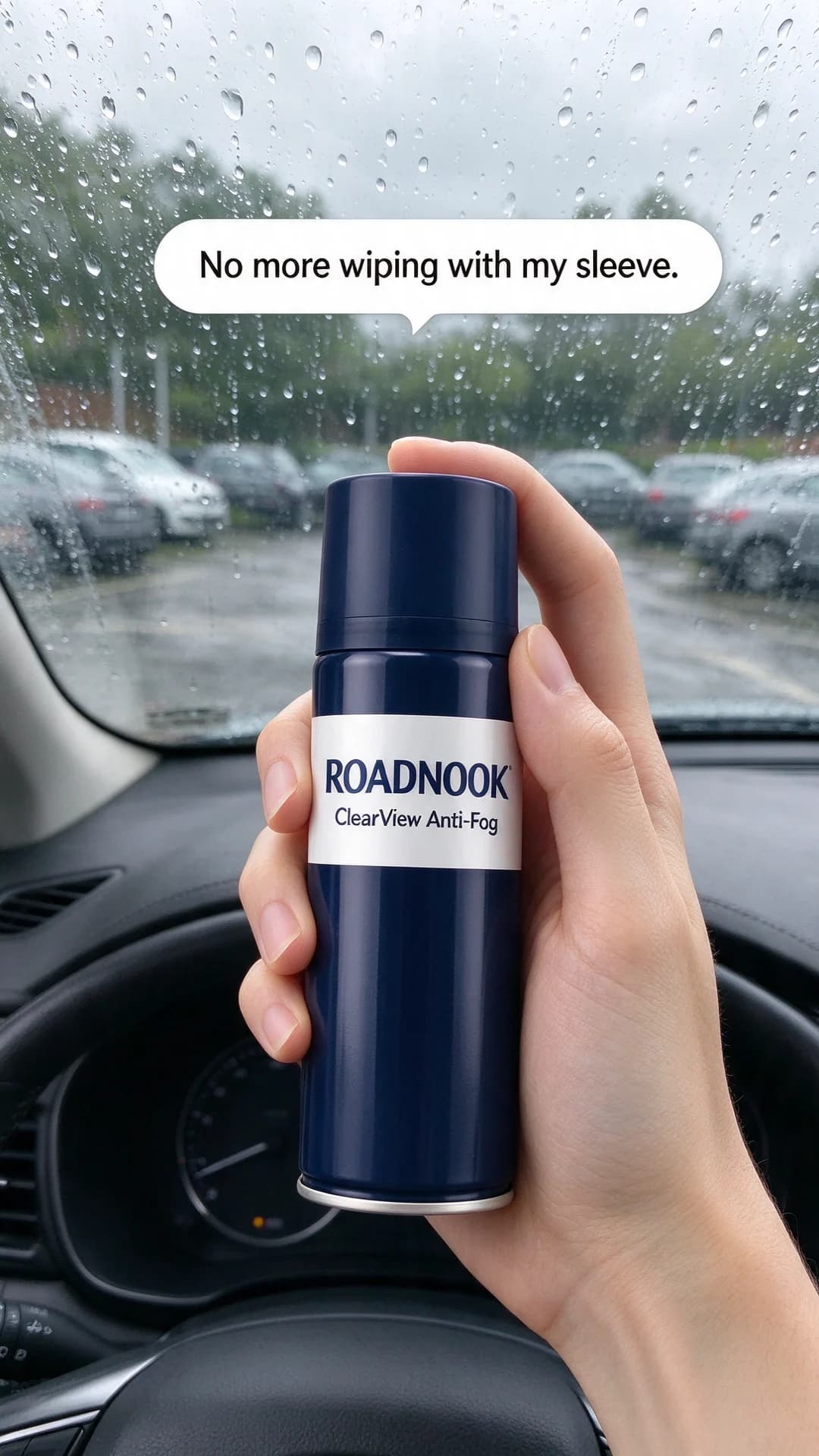
- The misted glass: "Monsoon mornings, clear glass."
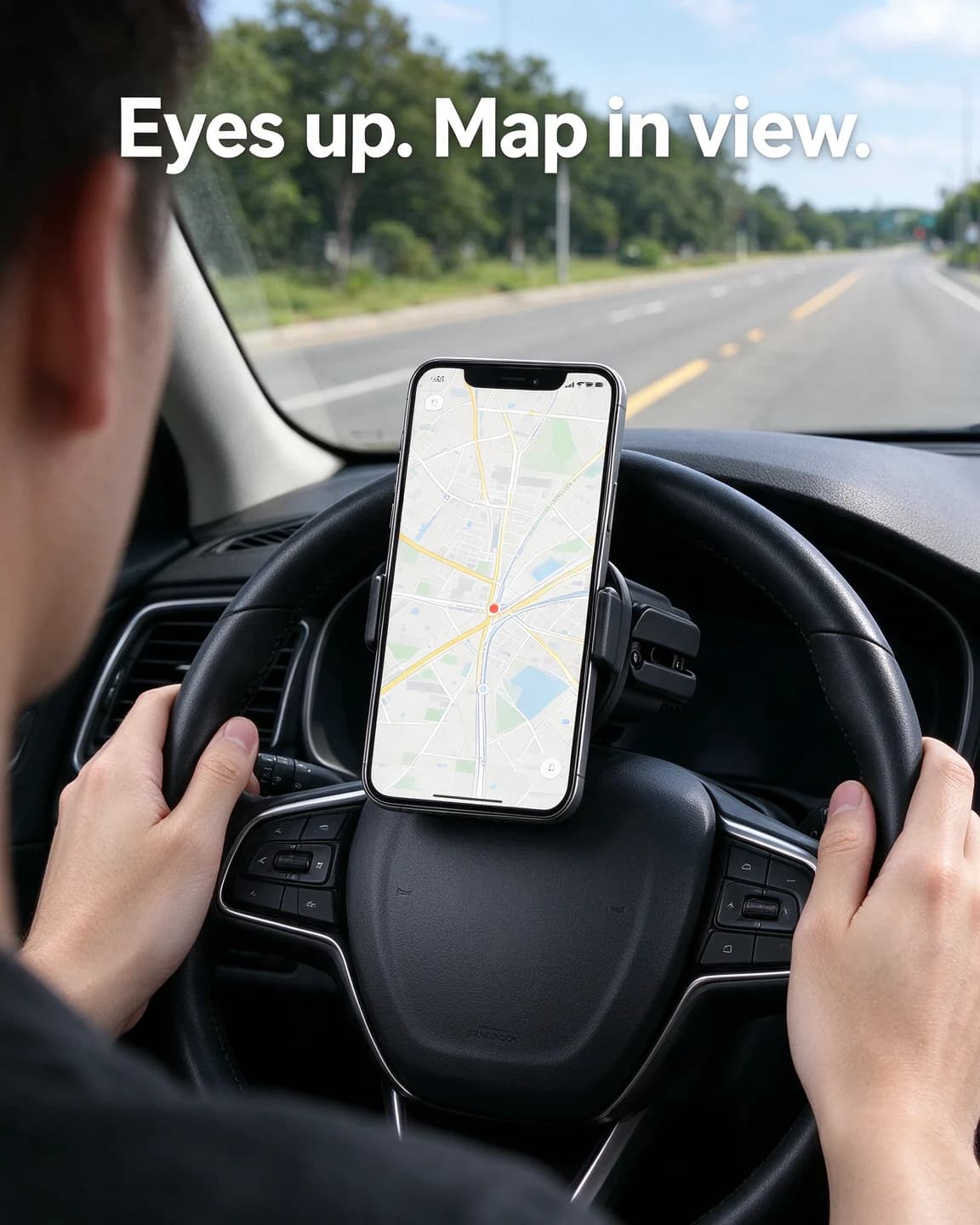
- The loose phone: "Eyes up. Map in view."
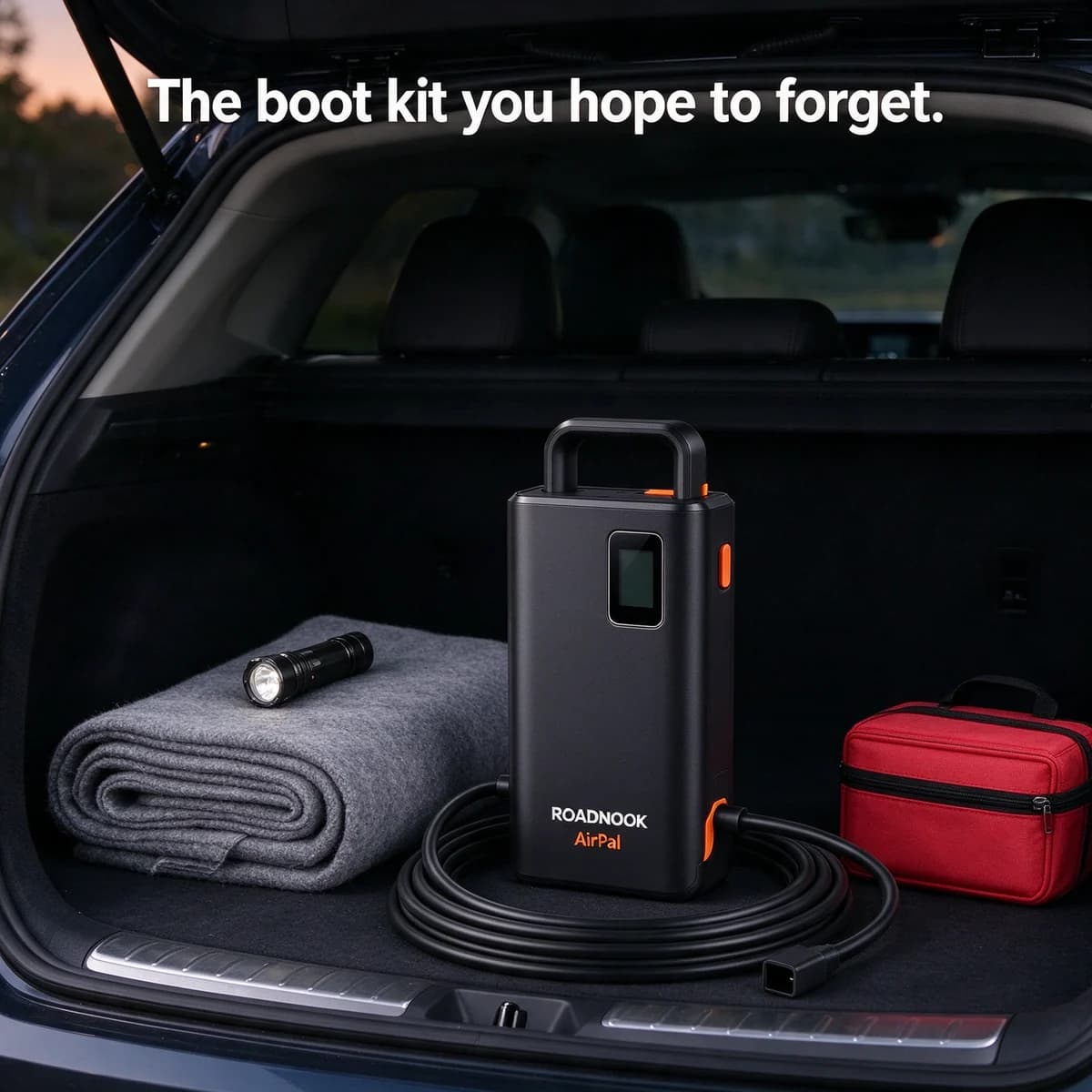
- The moment you hope never comes: "The boot kit you hope to forget."
Then the ad has a second job, which is showing the product in a car that looks like the buyer's own. A gadget floating on white tells people what it is. A gadget on a wet dashboard, a driveway or a boot full of everyday clutter tells them it belongs in their life. Most of the craft in this category is making that car look local, ordinary and safe.
Car scenes that look local and legal
Car interiors trip up AI images more than most settings, so check every scene for these before it goes anywhere near an ad account:
- The steering side. In India, the UK and Australia people drive on the left, so the steering wheel sits on the right. In most of Europe and North America it's the other way round. A dashboard on the wrong side makes an ad look imported at best and careless at worst.
- Badges and plates. Image models love to add a real car maker's logo to a steering wheel or grille, and to write readable number plates. Keep wheels and grilles blank, and keep plates out of frame or unreadable.
- Parked by default. Demonstrations happen in parked cars. If the car is moving, hands stay on the wheel and eyes on the road.
- Light. Car interiors are dark, and dashboards throw reflections onto the glass. Morning light through the windscreen or an open door gives the product a clean edge without glare.
- Scale. Show the inflator in a hand and the mount holding a phone. Accessories are small, and a floating close-up can make a palm-sized gadget look like a toolbox.
The safety line in car ads
Car accessory ads sit close to road-safety rules, and the UK spells them out. GOV.UK's guidance on phones and driving says the ban on hand-held use still applies at traffic lights and in queues, and the UK's CAP Code names accessories, not only cars, in its motoring section. Rule 19.2 of that code also rules out showing a driving practice that breaks a Highway Code rule that is a legal requirement, and Highway Code rule 149 says drivers must not use a hand-held phone for any purpose while driving, including when stationary in traffic (GOV.UK, The Highway Code, checked October 2026). Put together, a driver holding a phone is off the table for a UK ad, even as a two-second "before" shot of the problem the mount solves.
For a phone mount, that turns compliance into the creative. "Eyes up. Map in view." sells the mount as the safe way to follow a map, with the phone low on the dash and nobody touching it. For every other product, the simplest habit is to shoot the car parked. It costs nothing in persuasion, because the moments these products fix, a soft tyre, a misted windscreen, a cluttered boot, all happen before the drive starts.
Testing small-ticket accessories
Lead with the product people need in a hurry, usually the inflator, and test four angles with two executions each: the problem moment, a feature callout, peace of mind and a demonstration. Bring the anti-fog spray in as a seasonal test when the rains or the cold arrive, rather than in the first batch, so its results aren't judged in the wrong month.
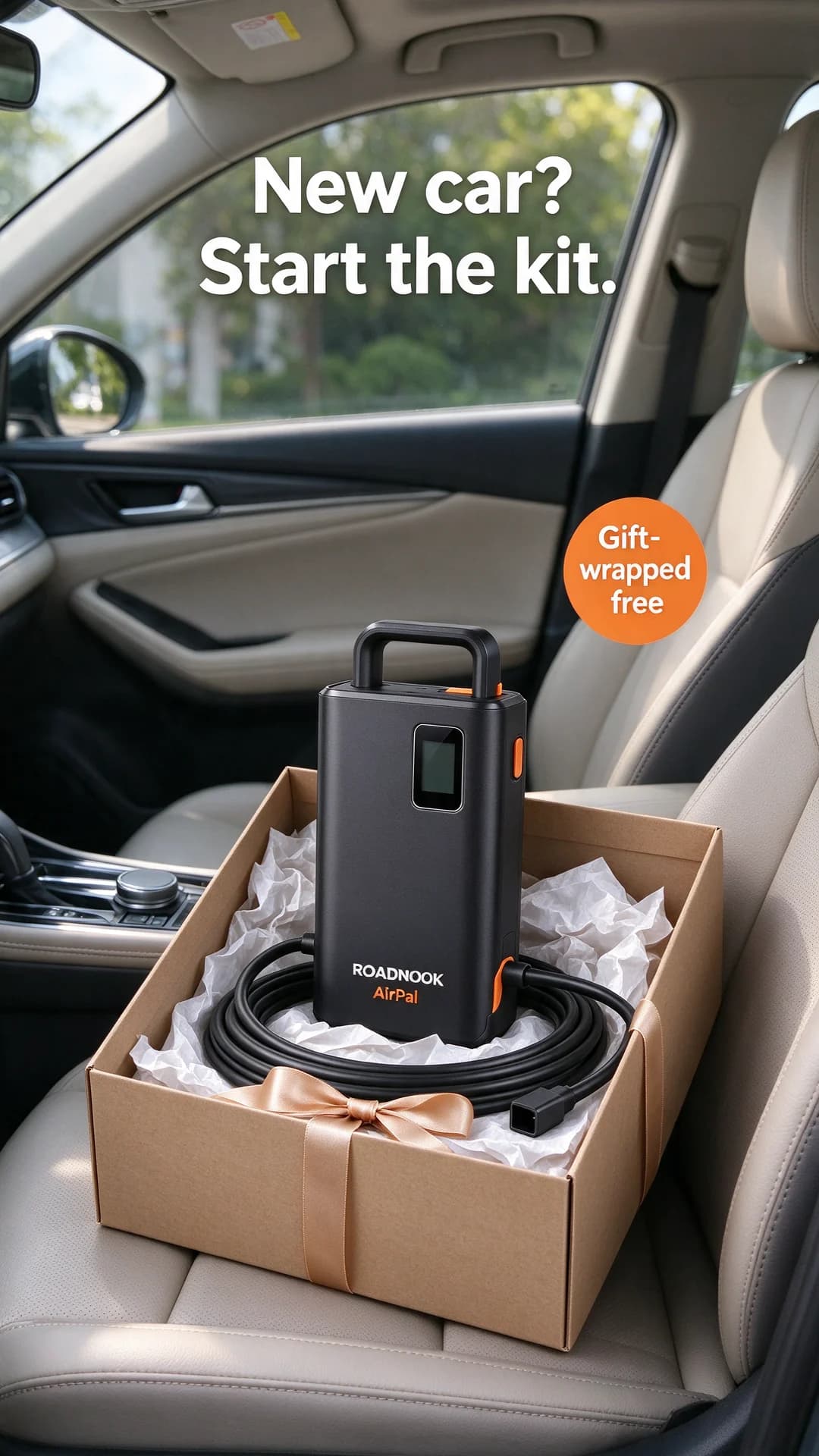
Low prices change how a car accessory ad earns its keep. One small purchase rarely carries an ad on its own, so kits and bundles do a lot of the work. As a worked example, if the AirPal sells for $33, ClearView for $3.60 and MagMount for $9.30, the three bought separately come to $46. A "new car kit" at $37 is a 20% saving, simple to put on a sticker, and it turns three small purchases into one easy gift. Test the kit against the inflator alone and let sales tell you which to lead with.
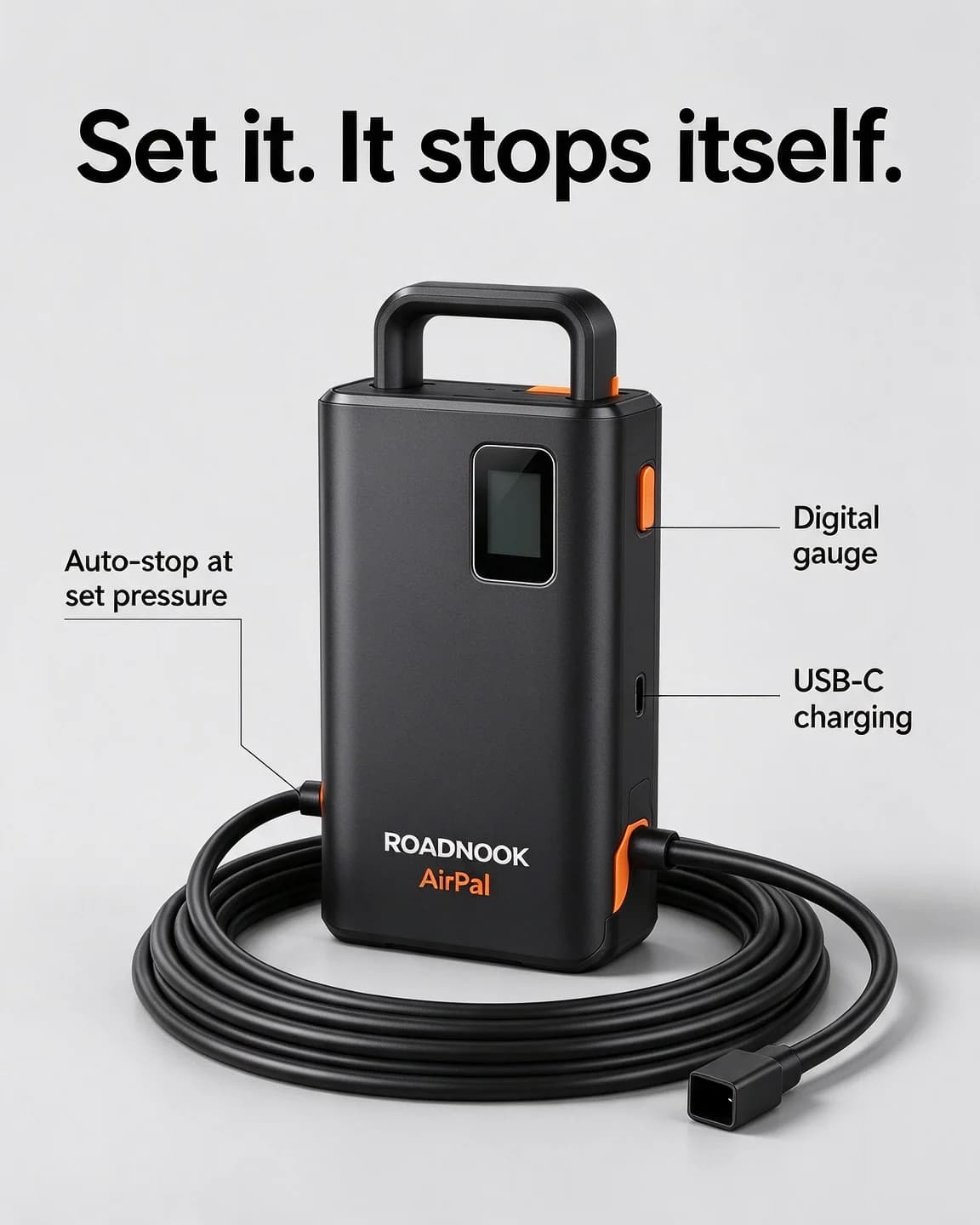
For how many ads to make and how long to give each one, see how many ad creatives to test and the creative test calculator. When an ad has to explain several specs at once, the feature callout template shows the leader-line layout the inflator ad uses.
From one packshot to a driveway, a boot and a dashboard
Car accessory photography usually means borrowing a car, finding a quiet street and waiting for the right weather. BulkAds needs one clean photo of the product on a plain background. From it, a batch can put the inflator on a driveway, the spray on a rain-streaked dashboard and the mount on an air vent, with a headline, primary text and description written for each ad. A batch holds up to 12 ads in 1:1, 4:5 or 9:16, at 2 credits per image ad.
The pre-flight check compares every ad with your original photo and flags drifted products, misspelt on-image text and likely Meta policy risks. Don't treat it as a road-safety review, though. Look at every in-car scene against the points above yourself: steering side, badges, plates, and hands nowhere near a phone while the car moves.
Copy can be written in 95+ languages, which suits a category where a monsoon ad in Hindi or Tamil reads more naturally than a translated one. When a scene wins, turn it into a short video ad, with rain sliding down the glass while the inside stays clear. The bulk ad launcher sends the batch to your Meta ad account paused. If you hand the test to Autopilot instead, it launches the batch as its own paused test, stops ads that spend without selling and drafts four fresh variants of each winner, so a winning driveway scene can come back as a frosty-morning or road-trip version.
The scene notes behind the in-car ads
Every in-car ad on this page started as a written scene, and the safety and branding rules were written into that scene rather than checked for afterwards. These are the phrases that did the work, quoted from the prompts used for the ads above:
| Ad | Phrase in the scene | What it heads off |
|---|---|---|
| "Monsoon mornings, clear glass." | "parked right-hand-drive car", "no car badges or logos anywhere, no people" | The wrong steering side, a borrowed badge, a driver mid-journey |
| "Eyes up. Map in view." | "clipped to the central air vent low on the dashboard", "no hand touching the phone", "simple generic street map with no app logos" | A phone blocking the view, a finger on the screen, a real app's branding |
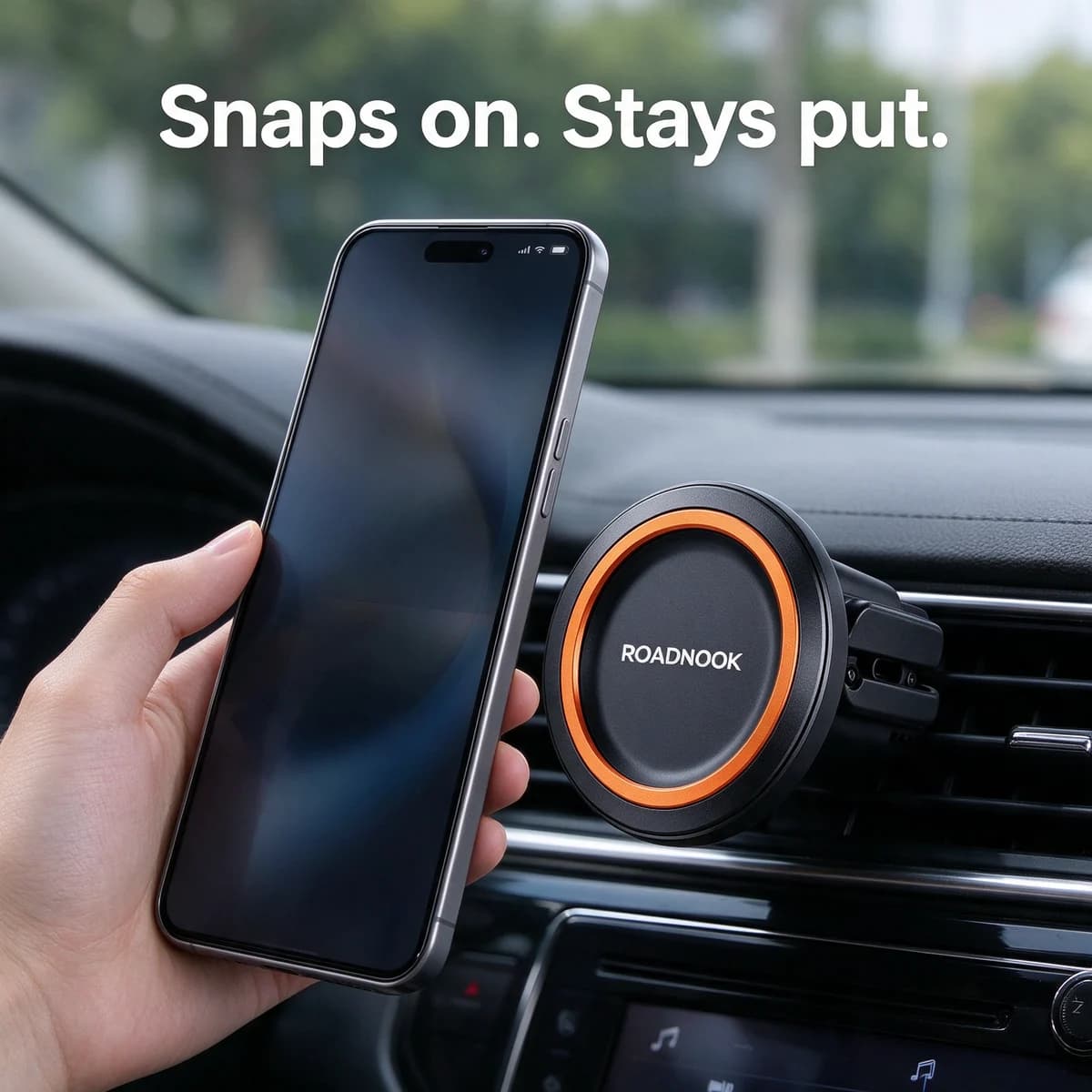
| "Snaps on. Stays put." | "air vent of a parked car", "the moment before contact so the mount stays visible" | Use while moving, and a phone hiding the very product the ad sells |
| "The boot kit you hope to forget." | "plain red first-aid pouch with no logos", "no car badges or number plates visible" | Real brands on props and readable plates |
In BulkAds the same phrases go into a batch's instructions, for example "parked car, steering on the right, no badges or number plates, nobody touching the phone", and the batch is built to follow them. Keep them short and concrete. "Make it safe" gives a model nothing to work with, while "parked car" and "hands on the wheel" describe a picture it can draw. Then check the results anyway, because a model can still slip a badge onto a steering wheel.
For a market that drives on the right, change one phrase, "left-hand-drive car", and rebuild only the in-car ads. Product-only ads such as the feature callout can run everywhere unchanged.
Questions people ask
What should a car accessory ad show?
The small moment the product fixes, such as a soft tyre, a misted windscreen or a phone with nowhere to go, and the product ending it in a car that looks like the buyer's. Keep the car parked for demonstrations.
Can a phone mount ad show someone using their phone while driving?
Don't do it. The UK government's guidance on GOV.UK says you must not use a device in your hand for any reason while driving, even at lights or in a queue, and the UK's CAP Code says ads must not condone unsafe driving. Show the phone fixed in the mount with the view clear and nobody touching it, or the car parked.
Do I need separate ads for left- and right-hand-drive markets?
For in-car scenes, yes. A dashboard with the steering on the wrong side looks foreign to local buyers. Product-only ads, such as a flat colour block or a feature callout, can run everywhere.
How do I advertise low-priced car accessories?
Lead with the problem moment, and test a kit or bundle alongside single products. A named kit with a clear saving is easier to buy, and to give, than three small items.
Is Roadnook a real brand?
No. Roadnook is fictional, and every ad on this page was made with AI for illustration.
Keep going
- Features
Product photo ads
Your real packshot, in every scene
- Features
Ad copy generator
Headlines and primary text in 95+ languages
- Guides
Product photography for ads: how to shoot it on a phone
A phone, a window and a sheet of white card are enough. How to shoot product photos that make good ads — and that AI tools can put in new scenes without mangling your label.
- Guides
The creative testing matrix: plan every round on one grid
Cross angle, persona and format on one grid, then test a few cells at a time. A worked matrix, four ways to pick cells, round-by-round moves and a checklist.
- Ad templates
Problem–solution ad template
Name a problem people recognise, then show the fix
- Ad templates
Us vs them ad template
Two matched columns, one obvious choice — against a category
Every brand on this page is fictional and every ad was made with AI for illustration — they’re examples, not case studies.
BulkAds AI is an independent product and is not affiliated with, endorsed or sponsored by Meta Platforms, Inc. Facebook and Instagram are trademarks of Meta Platforms, Inc.