What makes shoe ads work
Runners buy shoes on feel — lightness, bounce, grip — and feel is the one thing an ad can't transmit. So the strongest shoe ads work around it: they show motion, back the feeling with a number, borrow proof from other runners and take the risk out of buying online.
The examples above cover each of those:
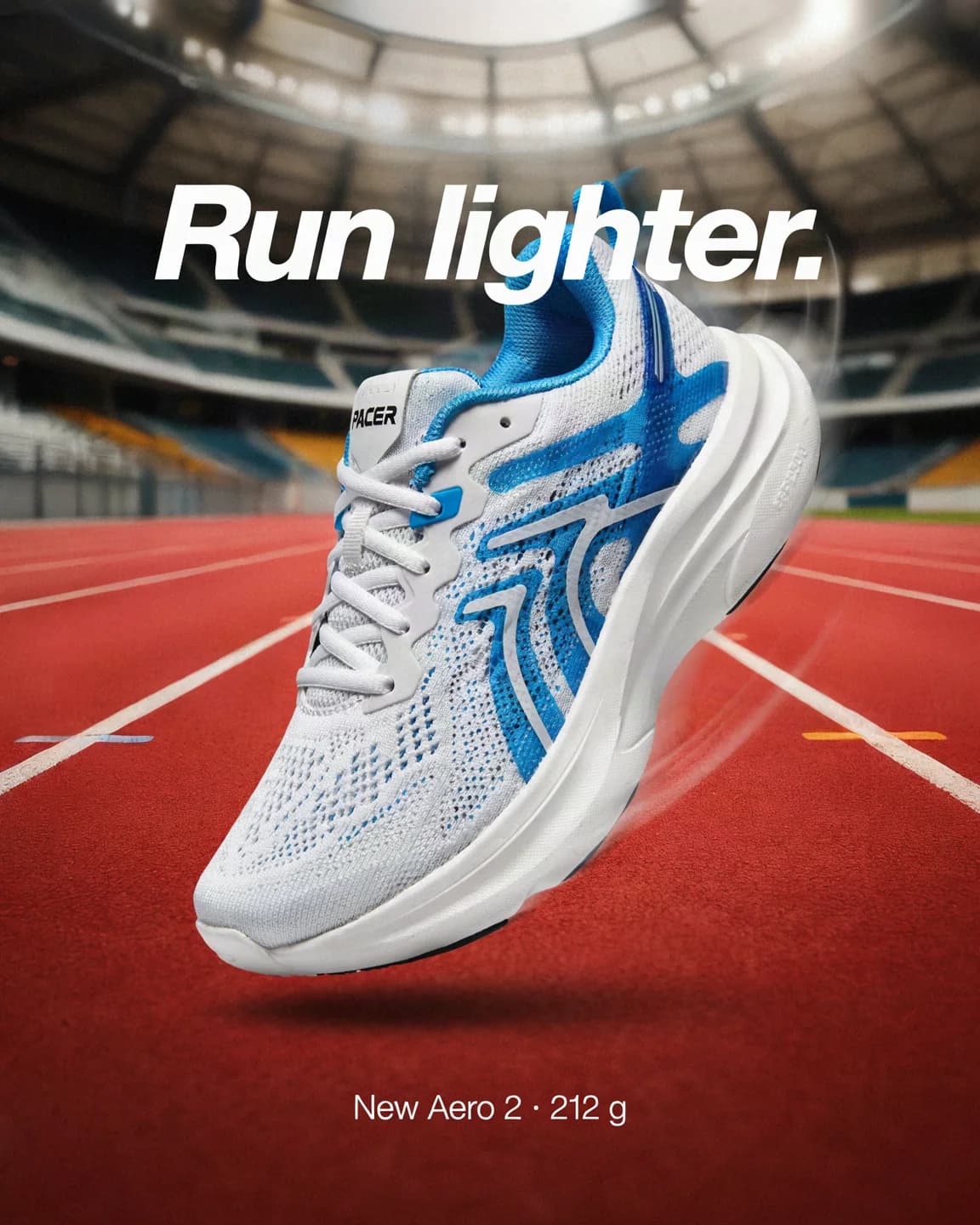
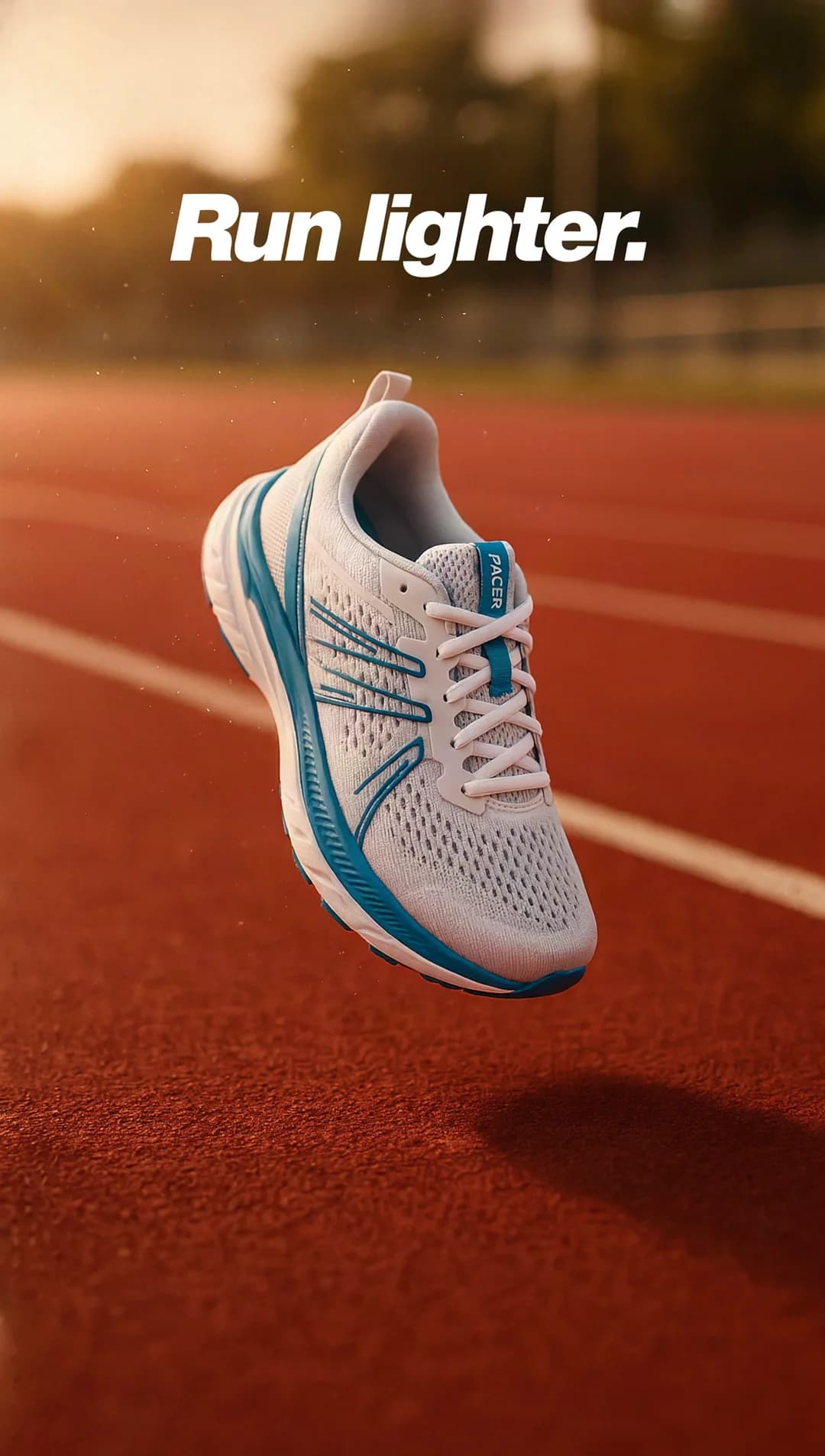
- Motion. A shoe floating over the track in "Run lighter." makes lightness visible.
- A number. "212 g" in small print backs the feeling for spec-minded runners.
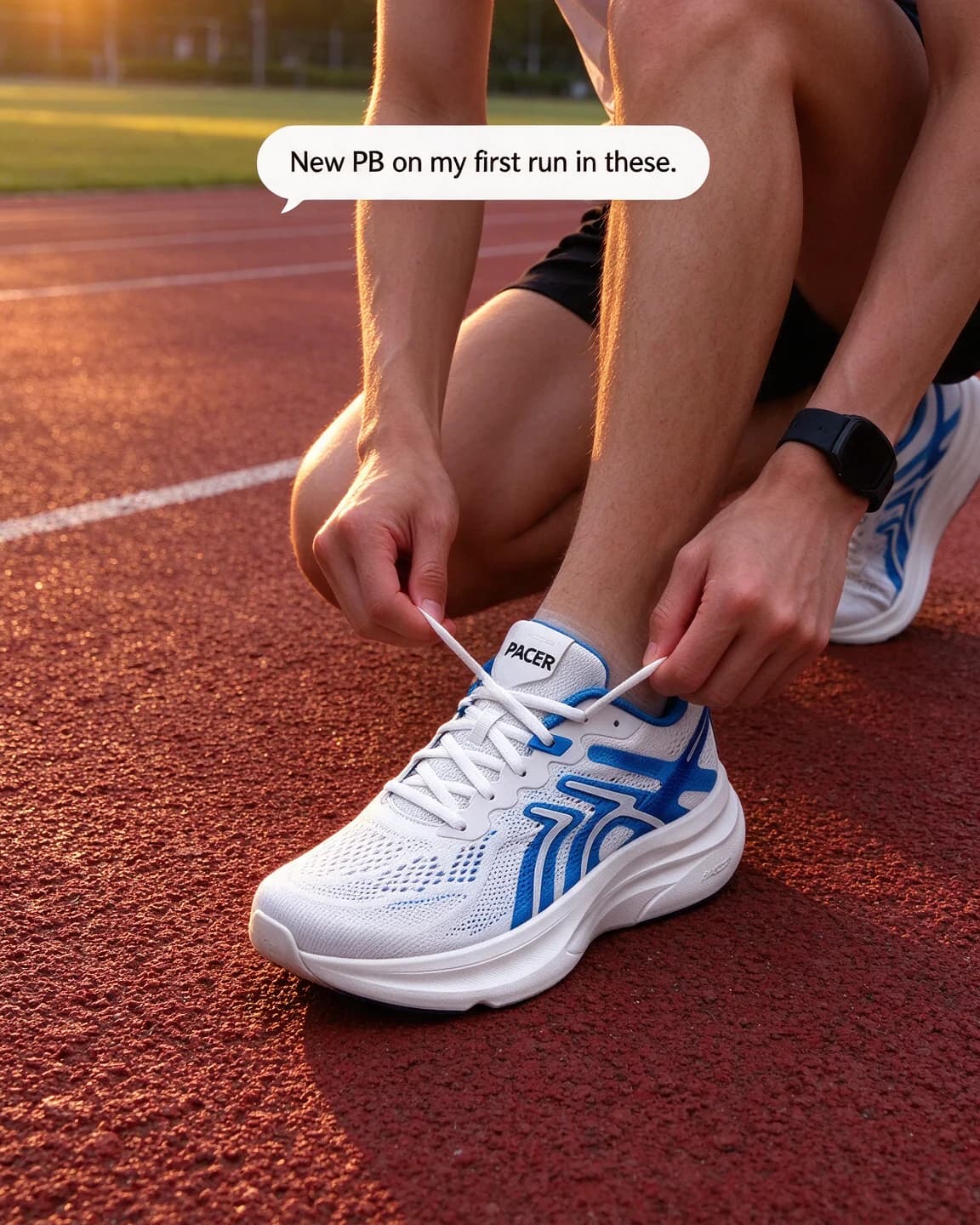
- Proof. "New PB on my first run in these." is a runner's story, not a brand promise.
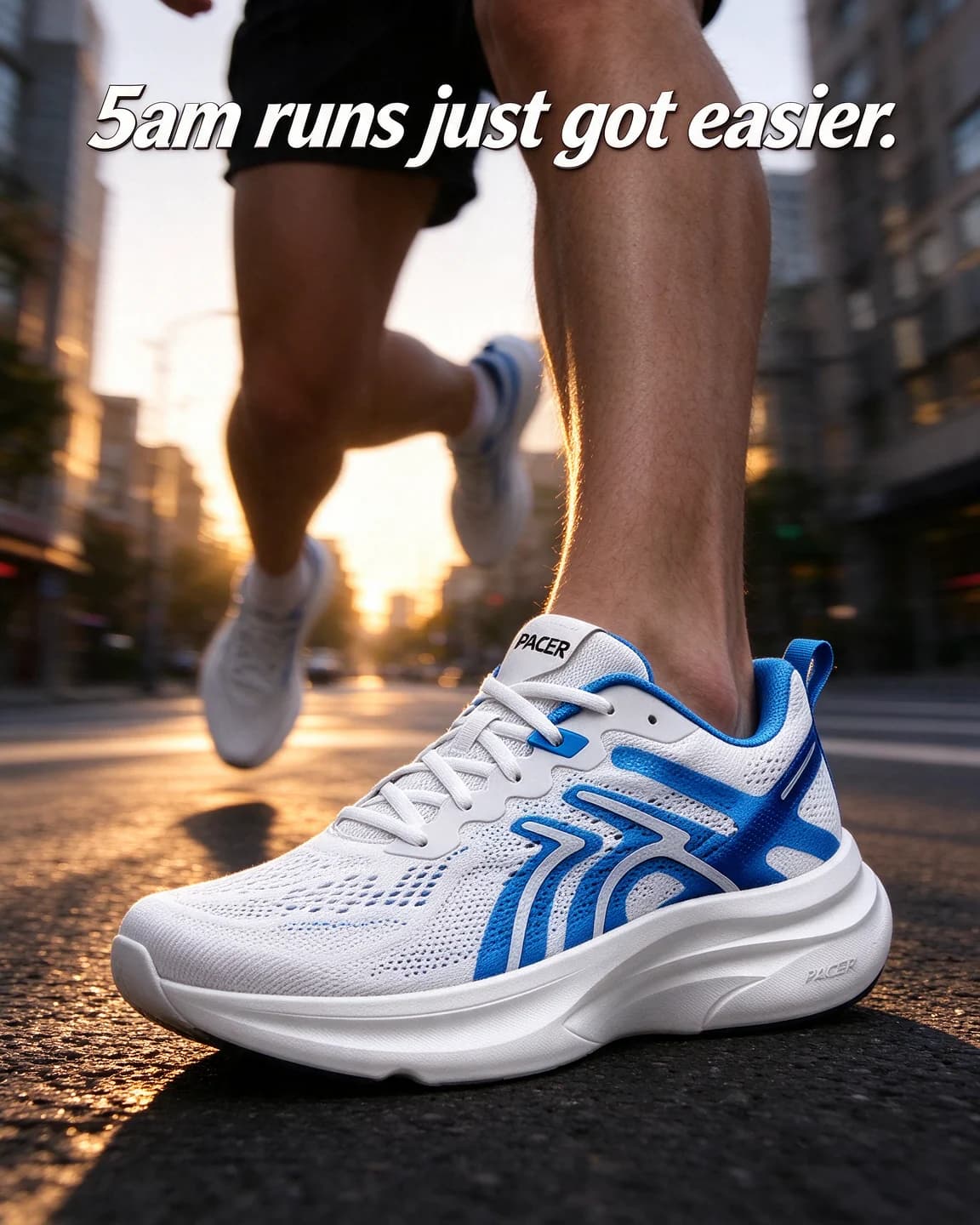
- Routine. "5am runs just got easier." ties the shoe to the hardest run of the day.
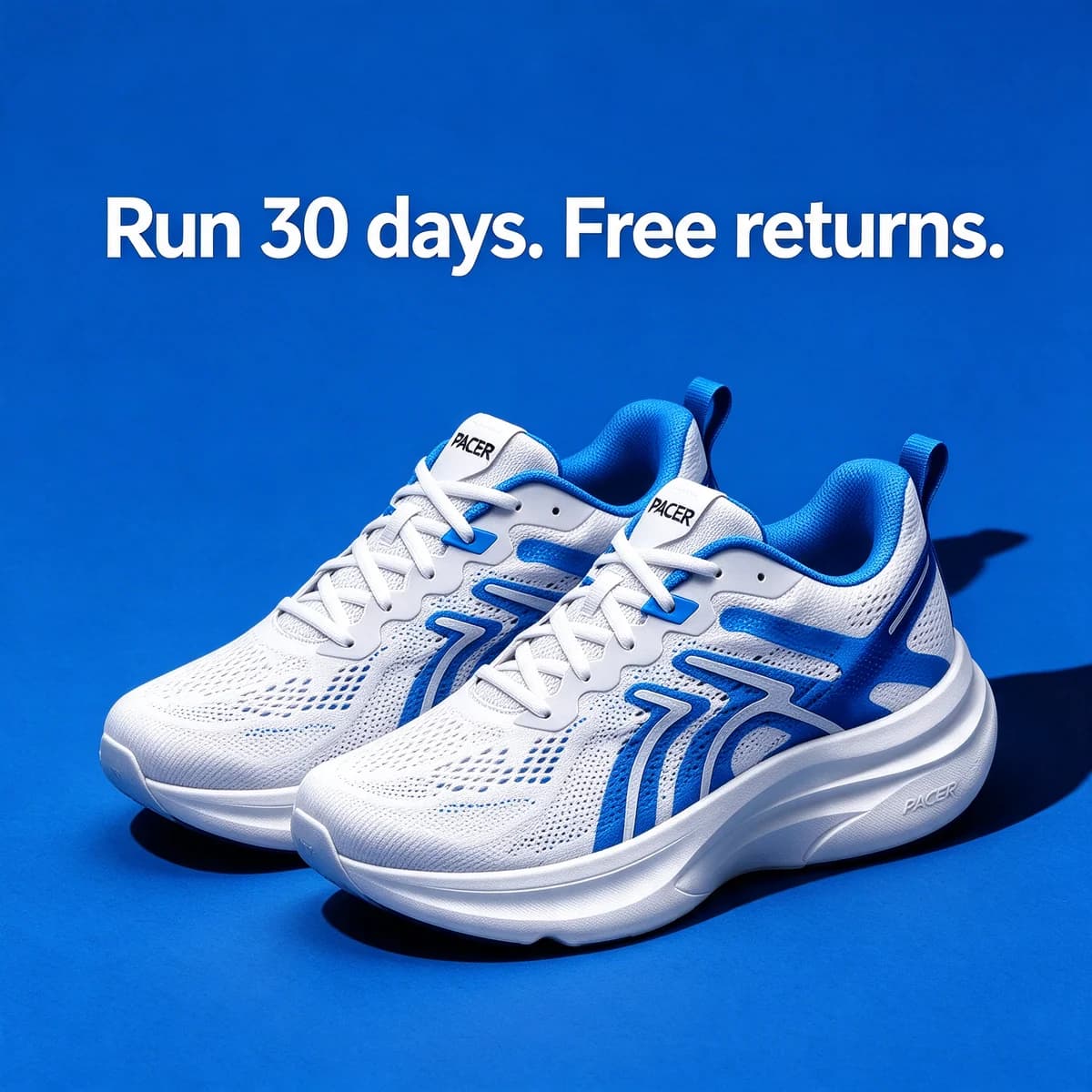
- Risk reversal. "Run 30 days. Free returns." answers the fit worry.
There are often two kinds of buyer. Runners researching specs want weight, drop and grip. Everyday buyers care more about look and comfort, and want to see the shoe on a foot in a setting they recognise. Test for both. Honest proof matters here, too: runners compare notes, and a shoe that doesn't live up to its ad gets called out in comments and running groups.
A two-week testing plan for footwear brands
Five or six angles make a good first test:
- Core benefit — one or two words, with motion.
- UGC proof — a runner's first-person caption.
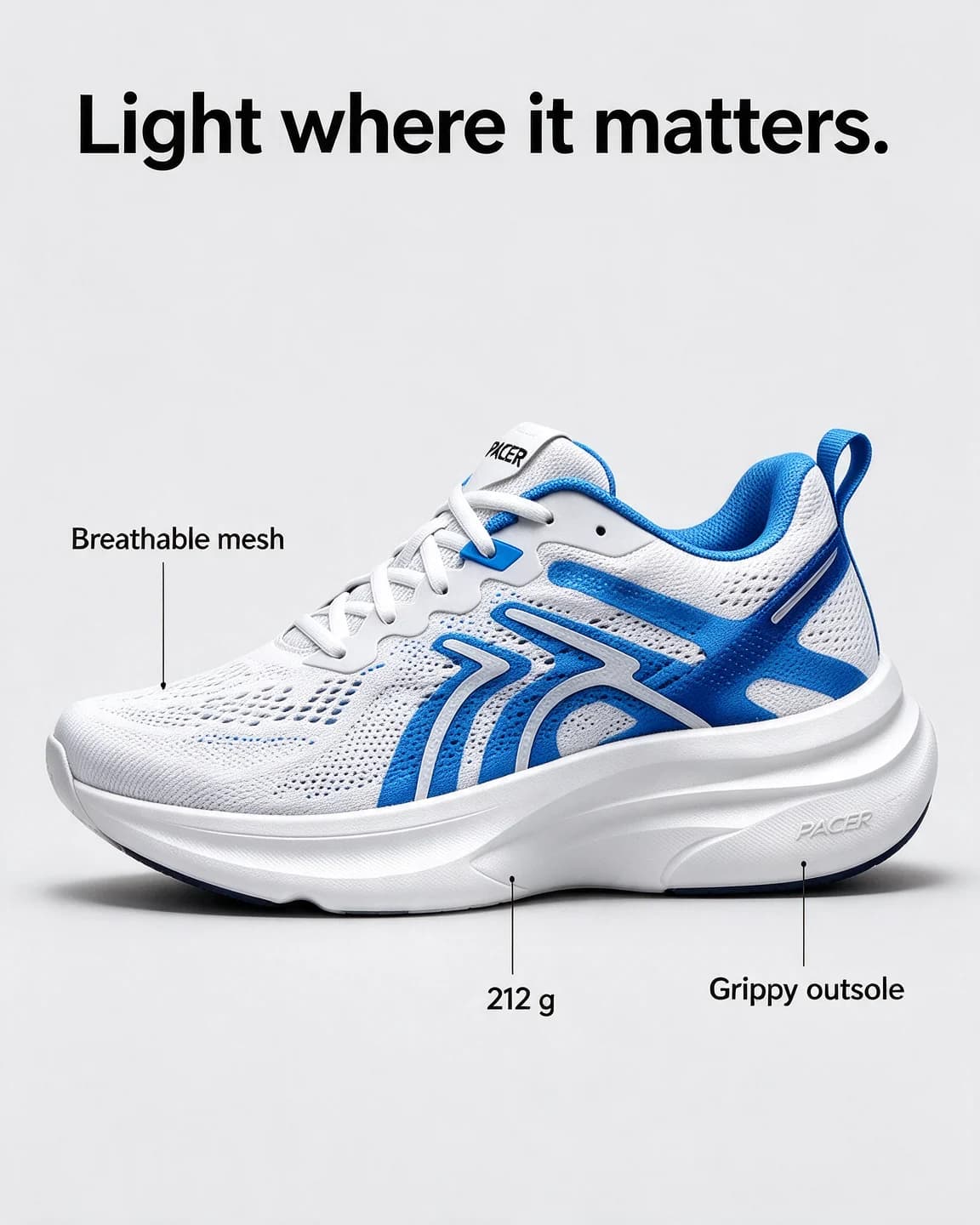
- Feature callout — weight, upper and outsole, labelled.
- Moment of use — dawn runs, lunchtime loops, weekend long runs.
- Comparison — against the runner's old pair, not a named brand.
- Risk reversal — trial period and free returns, mainly for retargeting.
Two or three executions of each gives 12 to 18 ads. Running shoes sit at a higher price than many D2C products, so your target cost per purchase is higher and each ad needs more spend before you can judge it. Our guide on how many ad creatives to test explains how to balance the number of ads against budget, and the creative test calculator works it out from your target. At a $19 target cost per purchase, 12 ads at about twice that each is roughly $445 before the first cut. Include at least one ad for the everyday buyer — the shoe with jeans, on a commute or a weekend walk — so you learn whether non-runners respond too.
Use 4:5 for feeds, 9:16 for Stories and Reels, and 1:1 for offer posters. Footwear is made for motion, so a short video ad built from a proven still — the shoe hanging in mid-air, dust catching the light — is one of the first variants worth making.
Creative tips for shoe and activewear ads
- Shoot low. A camera near the ground makes the shoe the hero and adds a sense of speed.
- Use real running surfaces. Tracks, city streets, park paths and seafront promenades — the places your runners actually train.
- Show the outsole and the upper. Grip and breathability are claims people want to see, so include a detail shot.
- Legs, not faces. Mid-stride legs and laces being tied keep the focus on the shoe and let viewers picture their own run.
- Dawn and golden hour. Low light adds atmosphere and long shadows that read as early, committed runs.
- Bold, italic, short. Sporty type with a one-line headline, and the weight or offer in small text underneath.
In the primary text, give runners what they check before buying: the size the weight refers to, the heel-to-toe drop, the kind of running the shoe is built for and the returns window. Keep the voice of a running friend rather than a spec sheet — "Your long run, a little lighter" reads better than a list of foams and meshes, and the specs can follow in the next line.
Turning a winning shoe ad into variants
- Same hook, new setting. The track becomes a city street, a seafront or a trail.
- Same scene, new colourway. Every colour gets its own version of a proven frame.
- Same proof, new runner. Different ages, paces and body types reach different buyers.
- Add the offer. Pair a winning benefit ad with the free-returns line for retargeting.
Whatever changes, keep the shoe itself identical in every variant. The colourway, sole and logo must match what arrives, because runners notice.
BulkAds' AI ad generator makes these variants in one batch from your real product photo, so each round of testing starts from a proven idea rather than a blank page.
Questions people ask
What makes a good shoe ad on Facebook and Instagram?
Motion, or a sense of it, one clear benefit and one number to back it, such as weight. For online buyers, a trial or free-returns offer answers the fit worry.
Should running shoe ads show specs?
Yes, for people already comparing shoes — weight, upper and grip in a few labels. For colder audiences, lead with the feeling and keep the specs in small print or the copy.
Can I use customer race times in my ads?
Only with the runner's permission, and present them as one person's experience rather than a typical result. Avoid implying the shoe alone made them faster.
Are video ads worth it for shoes?
Shoes suit motion — a mid-stride shot or a floating shoe shows lightness well — so video is worth testing. Run it against the same message as a still, so you learn about the format rather than the idea.
Is Pacer a real brand?
No. Pacer is fictional, and every ad on this page was made with AI for illustration.
Keep going
- Features
AI video ads
Turn a winning still into a Reel
- Guides
How many ad creatives should you test? The number, and the maths.
A straight answer, then the simple sum that sets your real number, how many new ads to launch each week at your spend, and when to stop testing and scale.
- Guides
Static vs video ads: which to make, and when
Statics are cheap to make and quick to test, video earns its place in Reels and Stories. An honest comparison, the metrics for each and a plan that uses both.
- Ad templates
Us vs them ad template
Two matched columns, one obvious choice — against a category
- Ad templates
Notes app ad template
A plain phone note whose last line happens to be your product
- Ad templates
Feature callout ad template
Your product in the middle, short labels pointing at what matters
Every brand on this page is fictional and every ad was made with AI for illustration — they’re examples, not case studies.
BulkAds AI is an independent product and is not affiliated with, endorsed or sponsored by Meta Platforms, Inc. Facebook and Instagram are trademarks of Meta Platforms, Inc.