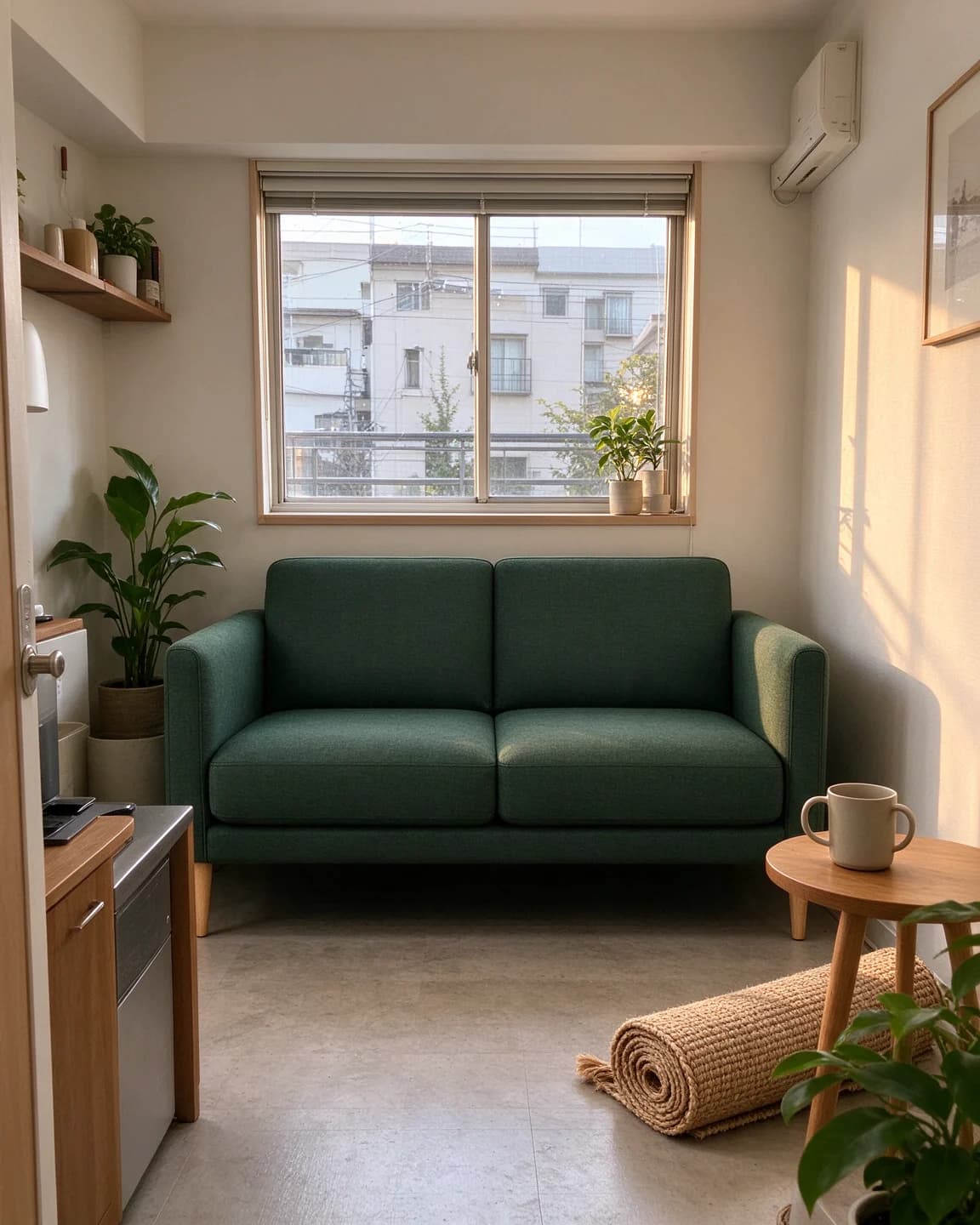
Furniture ads sell the room
Nobody buys a sofa in the abstract. They buy it for the wall under the window, the corner by the bookshelf or the flat they move into next month. An ad that shows only the product on white leaves the buyer to imagine all of that, and many won't bother. The ads that work put the piece in a room that looks like somewhere a person lives, then answer the practical questions that stall a large purchase: will it fit, what is it made of, how does it arrive and what will it cost in total.
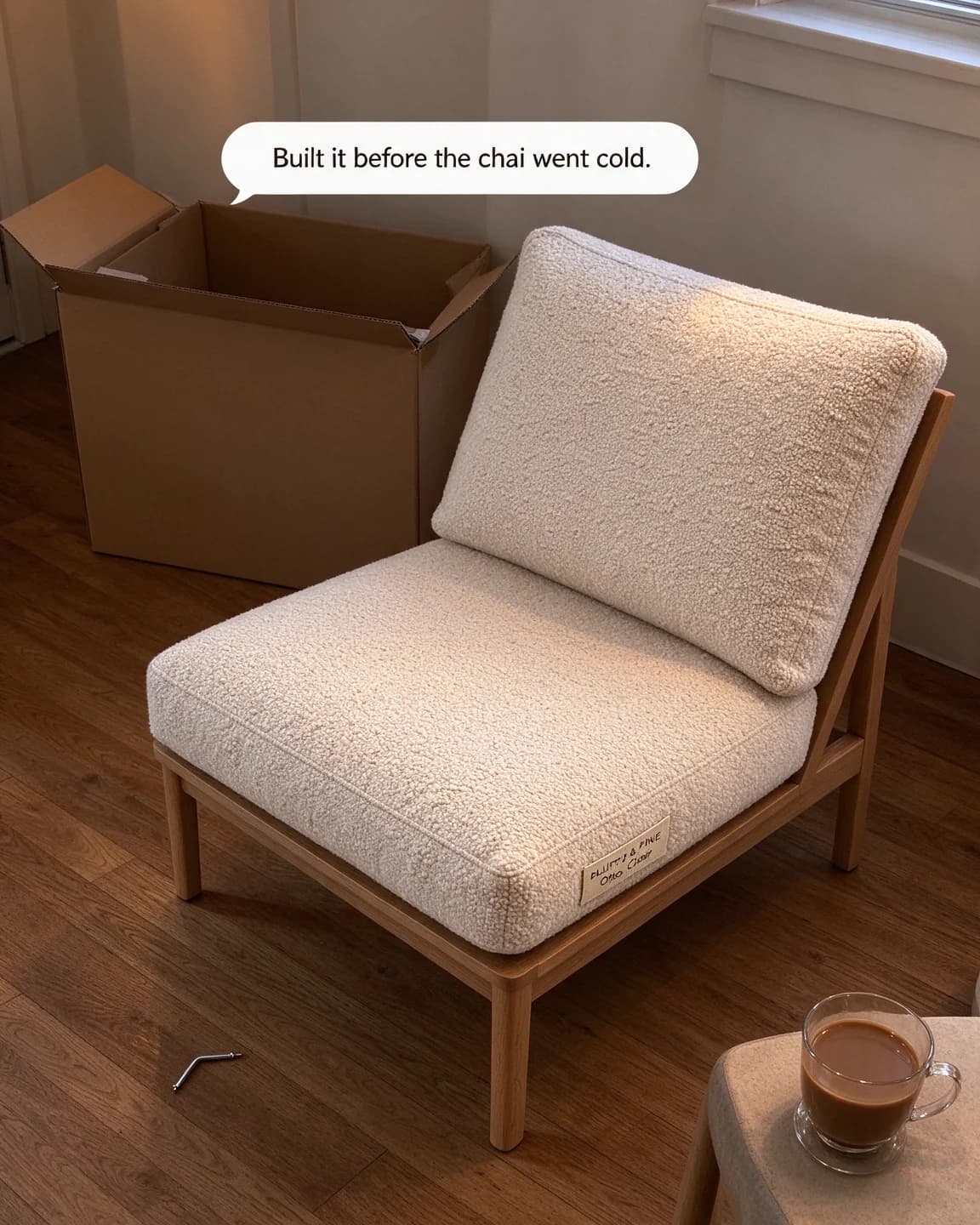
That is why the eight ads above fall into two groups. Half are about the room: the reading corner, the city flat, the round table among teacups and the before-and-after split. The other half are about logistics: dimensions, fabric, assembly and delivery.
The six shots furniture needs
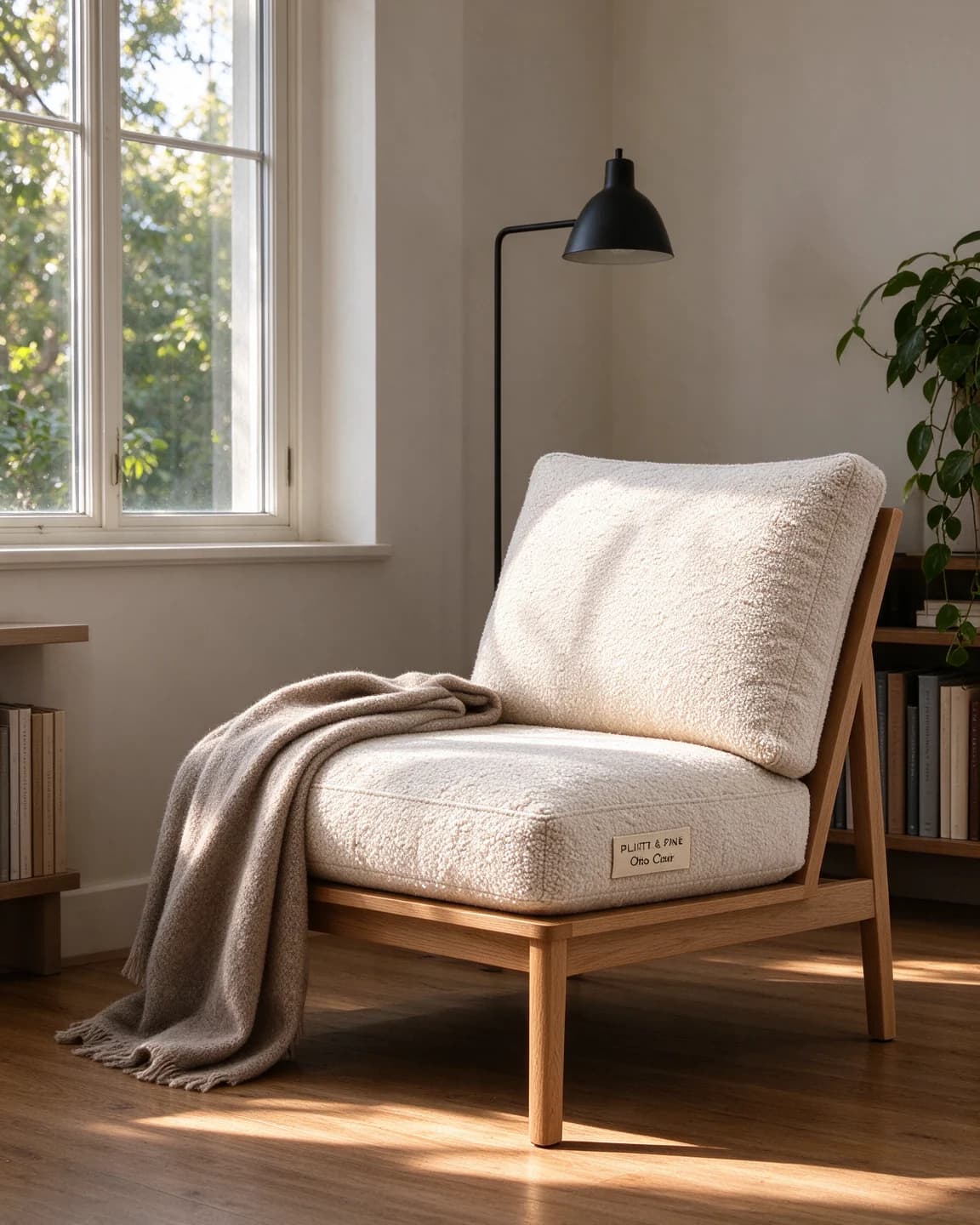
- The finished room. The piece in a believable room with daylight. Keep the styling simple, a lamp, a plant, a throw, so the product is still the hero.
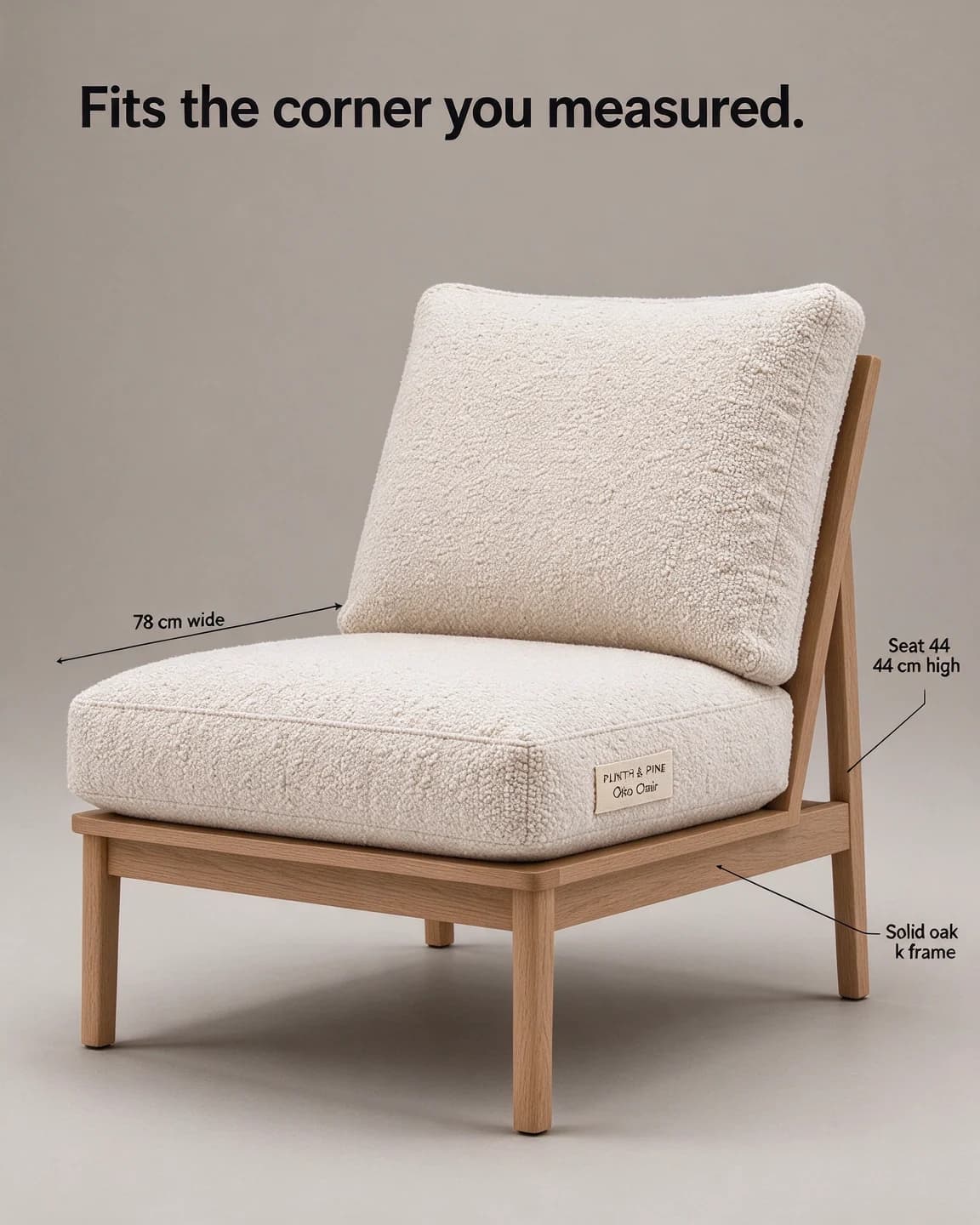
- The scale shot. The product on a plain background with dimensions as callouts, or a wide room shot that includes a doorway and walking space.
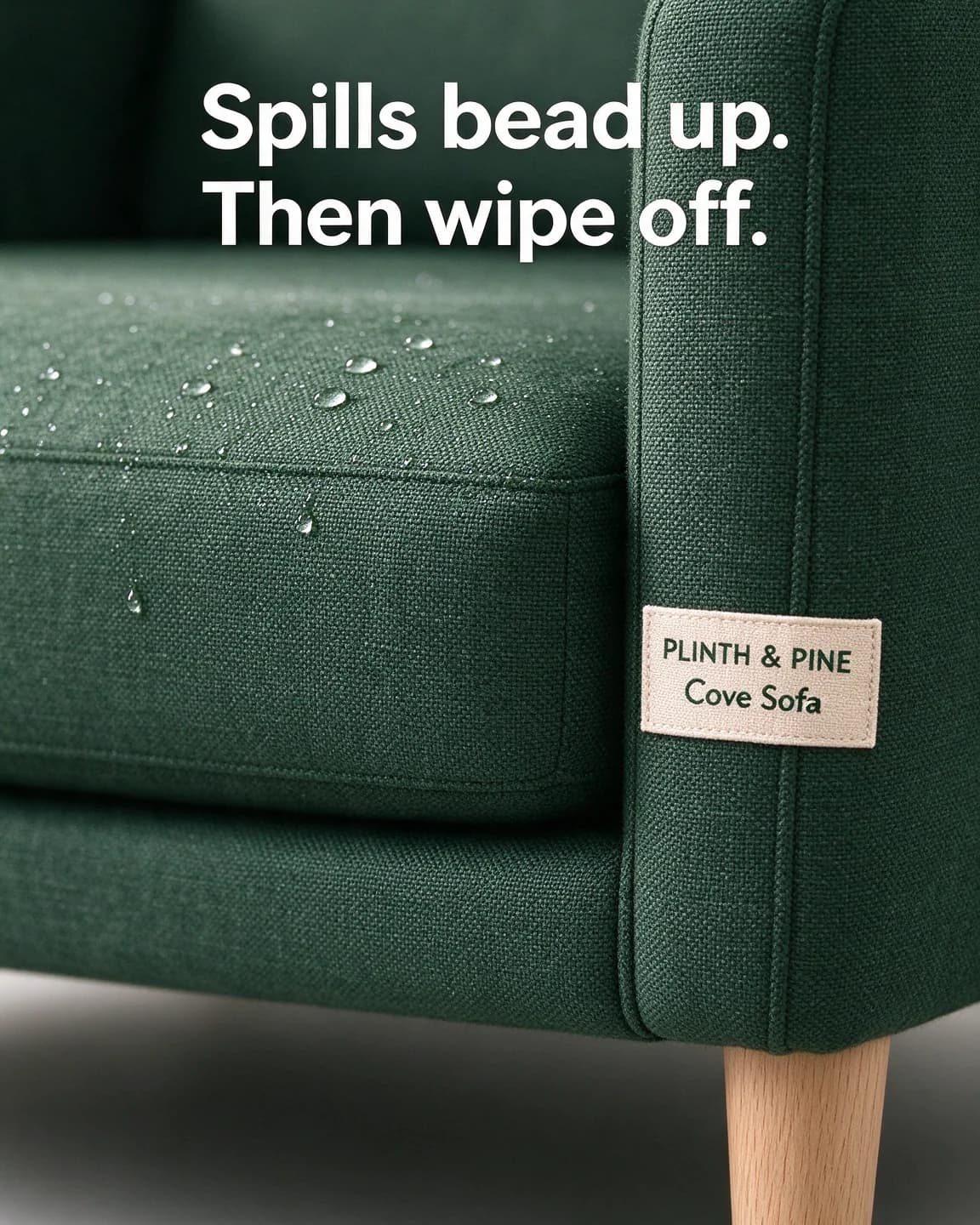
- The material macro. Wood grain, the weave of the fabric, a dovetail joint, water beading on a treated fabric.
- The assembly moment. An open box, the hex key, the half-built frame, framed like a phone snap.
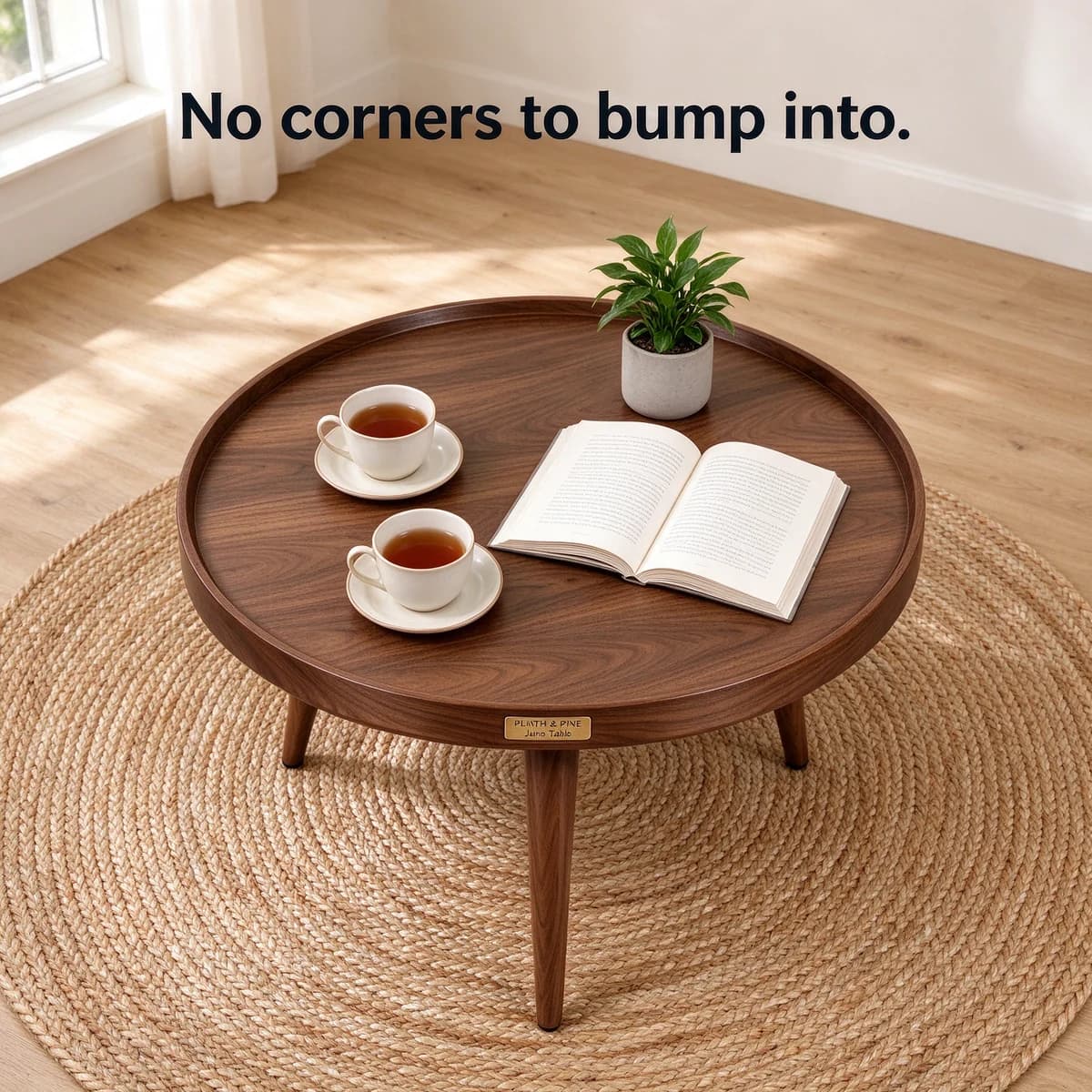
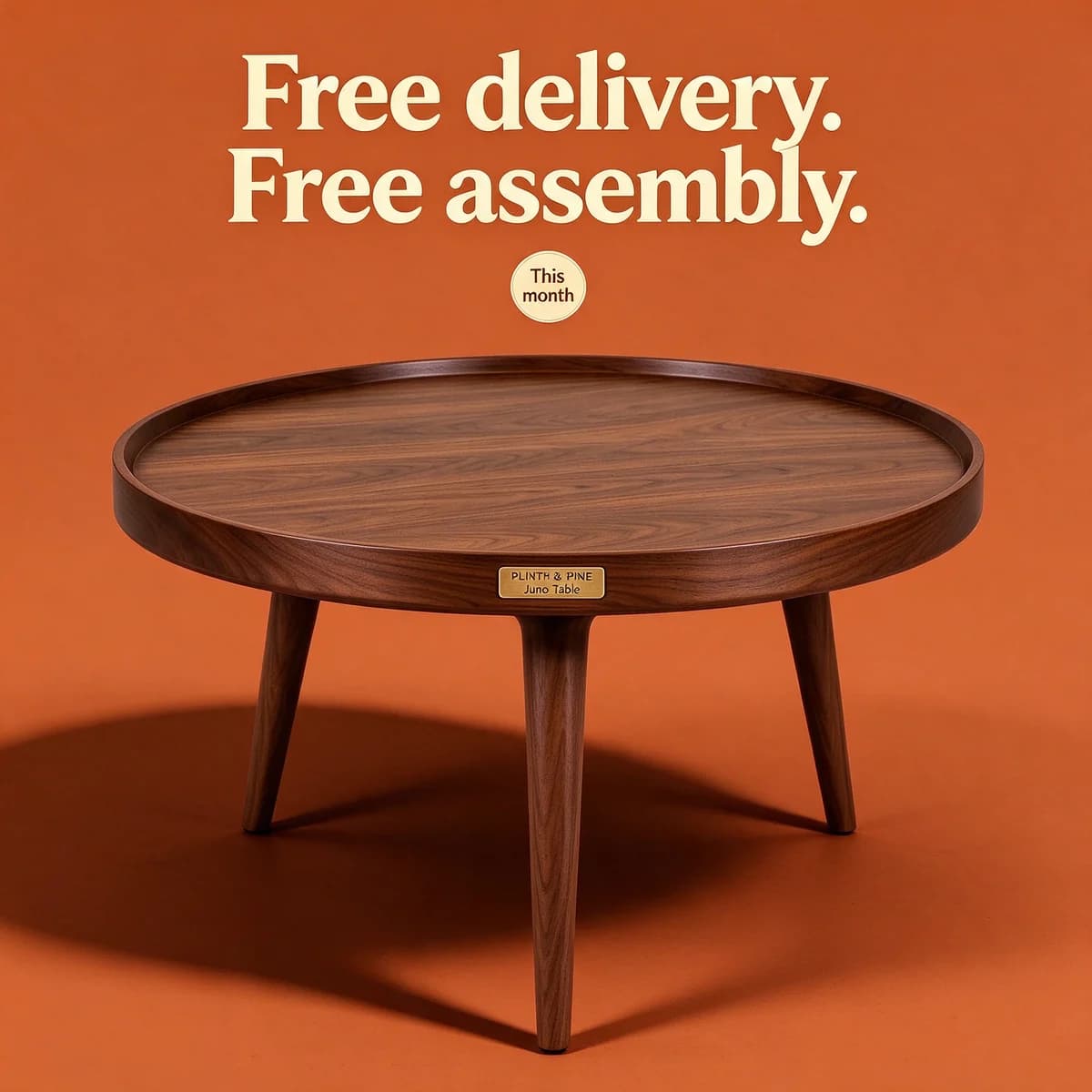
- The overhead. Tables and rugs read best from above, where the full shape shows.
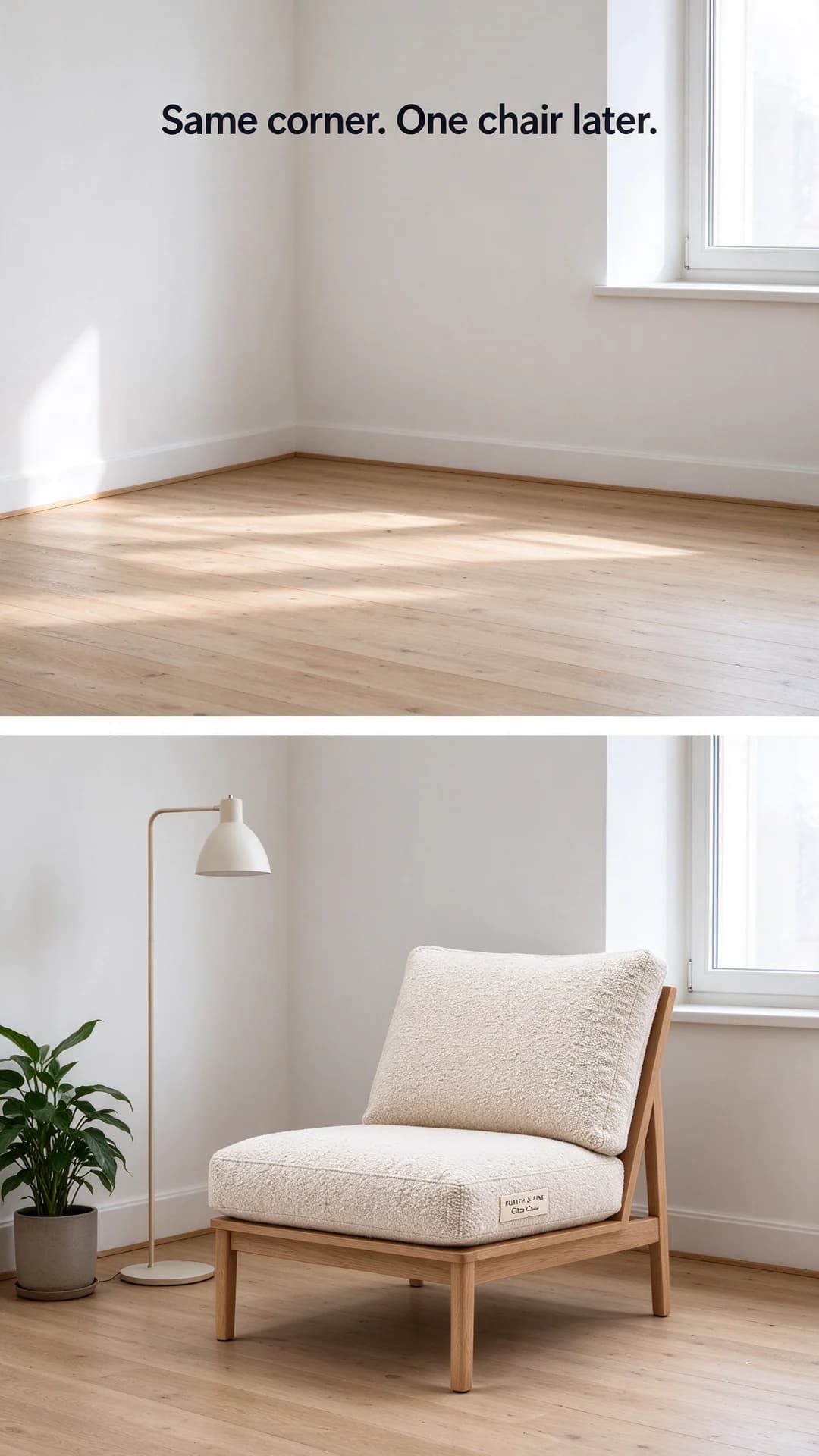
- The split. The same corner bare and finished, stacked for 9:16.
The lifestyle template and the split-screen template show how the room and split shots are laid out, and the lifestyle shot entry covers styling.
Room shots without a photo studio
Furniture is one of the categories where AI scenes save the most work. A real room set needs a space, props, lighting and people to carry the sofa in, and each new room is another day of hire. In BulkAds you start from one clean packshot of the piece on white, and each ad places that real product into a different room: a sunlit corner, a compact flat, a living room dressed for a festival. Product photo ads explains how the photo is placed rather than redrawn.
The trade-off is accuracy. Buyers notice proportions in furniture: leg thickness, cushion depth, the curve of an arm. The pre-flight check compares every generated ad with your product photo and flags ones where the shape, label or colours drifted, but look at each ad as if you were the customer opening the box. If the chair in the ad looks deeper than the one you sell, drop it.
A first test for one hero piece
Pick the piece with the clearest selling point. For Plinth & Pine that is the Otto chair, because it suits a corner and its oak and boucle photograph well. One BulkAds batch holds up to 12 ads, enough for two or three ads on each of these five angles:
- Styled room, no overlay, with the hook in the primary text.
- Room before-and-after, built for Stories.
- Size callout, using the real dimensions.
- Material close-up, only with a claim you have tested.
- Assembly or delivery, showing the box and the time it takes.
The first two sell the picture and the last three sell the practical answers, so split the batch roughly in half. The result then tells you whether your buyers respond more to the room or to the logistics, which decides what the next batch is made of. Keep the on-image text to two to seven words, and leave specifications, prices and delivery areas to the primary text. For a fuller view of batch sizes, read how many ad creatives to test.
Worked example: price per year
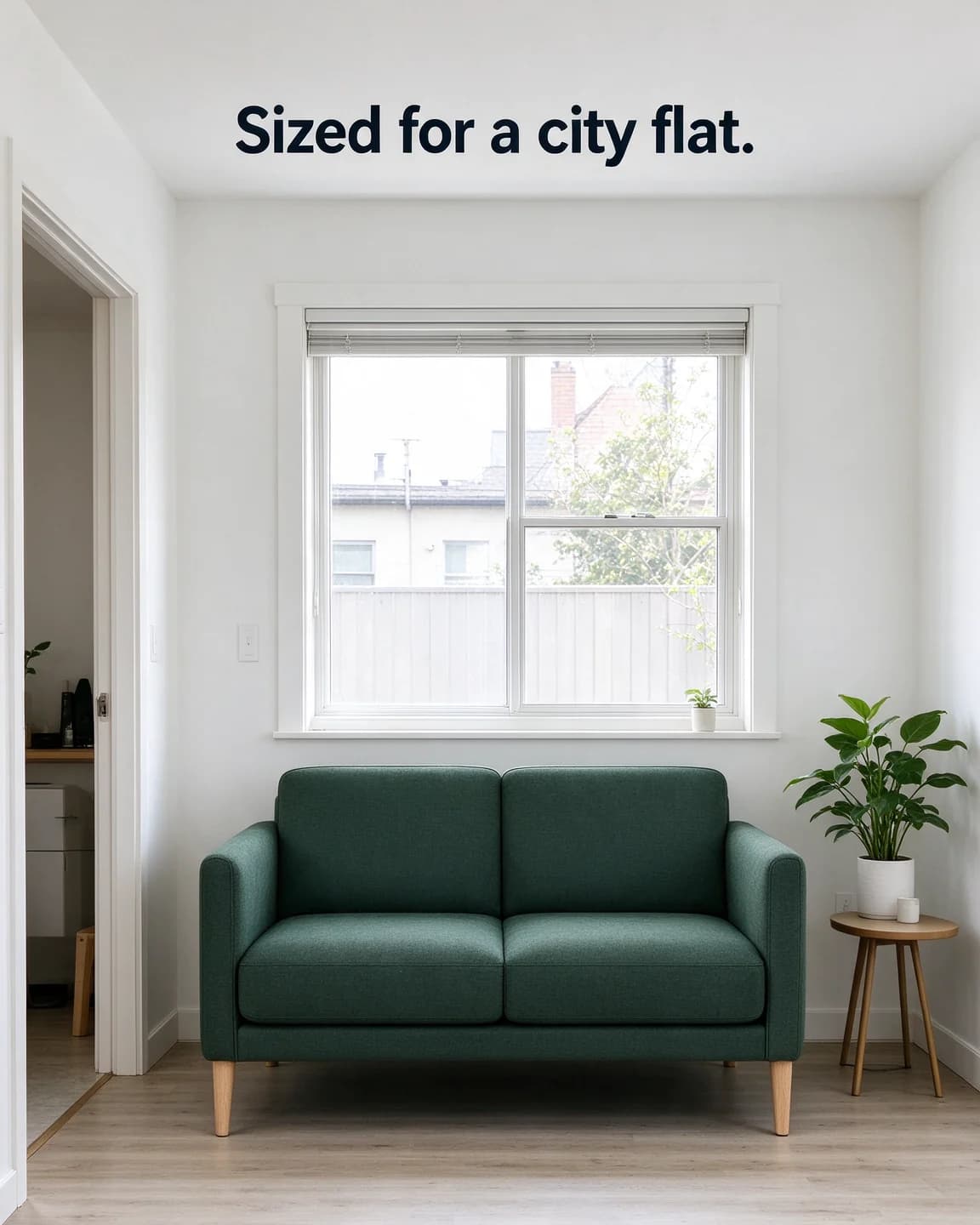
Furniture prices look large in a feed, so the primary text can reframe them. Say the Cove sofa costs $361. Sat on every day for ten years, that is about $36 a year, or under $0.10 a day. The image stays about the room ("Sized for a city flat.") and the copy carries the maths, the warranty and the delivery terms. If you offer payment in instalments, show the full price next to the monthly figure, so the smaller number never stands alone.
The comments every furniture ad collects
Furniture ads gather the same questions underneath them: how wide is it, what colour is it in daylight, how long is delivery, is assembly included. Each repeated question is a brief for the next ad. If people keep asking about width, the dimensions callout deserves more variants. If they keep asking about delivery, make a delivery-led ad with the order-by date. The comment reply template turns a genuine question into a creative, as long as the comment is real.
Turning a winner into variants
A furniture range gives a winner obvious places to go. Keep the scene and swap the piece, so the reading corner that sold the Otto chair now shows the Juno table beside it. Keep the piece and swap the room, so the Cove moves from the city flat to a family living room. Or keep the claim and change the format: the size callout becomes a 9:16 image, and the fabric macro becomes a short video ad with a droplet rolling off the weave.
Colourways are the simplest variant to plan. If a sofa comes in several fabrics and the green one wins, the same scene in another fabric shows whether people bought the room or the colour. Give each colour its own packshot rather than asking for a recolour, so the ad starts from the real fabric, and still check every result against the physical swatch, because a fabric that looks right in one room's light can look wrong in another.
In the tests it launches itself, Autopilot drafts four fresh variants of each winner, and in its default ask-first mode nothing goes live until you approve it. For more home categories, the home decor ad examples cover candles and planters.
Questions people ask
What makes a good furniture ad?
One that answers 'will it fit and what is it like?' at a glance. Show the piece in a believable room, give the real dimensions, show the materials up close and say how it arrives.
Should furniture ads have text on the image?
Test both. A styled room with no overlay looks more like a home and less like an ad, while a size or delivery headline answers a buyer's question directly. One photo can serve both, with the hook moved to the primary text for the clean version.
Can I use before-and-after images for furniture?
Yes, for rooms. A bare corner next to the same corner with your chair in it is a fair comparison. Keep the room, the angle and the light the same in both halves, so the only change is your product.
How do I make room shots without a photoshoot?
Start from one clean photo of the piece on white and let BulkAds place it into different rooms. Check every ad's proportions and colours against the real product before you launch it.
Is Plinth & Pine a real brand?
No. Plinth & Pine and its chair, table and sofa are fictional, and every ad on this page was made with AI for illustration.
Keep going
- Features
Product photo ads
Your real packshot, in every scene
- Ad templates
Lifestyle ad template
Your product in the real moment someone reaches for it
- Ad templates
Split-screen ad template
Two panes in one frame, and the difference visible before anyone reads
- Ad templates
Comment reply ad template
A real question pinned to the frame, answered by the ad itself
- Ad examples
Home & decor ad examples
Candle and planter ads that sell how a room feels
- Ad ideas
Diwali ad ideas
Diwali ad ideas for 2026 and 2027: 6 example ads from Dhanteras to Bhai Dooj, 15 hooks, festive sale offers, a creative checklist and the lines to respect.
Every brand on this page is fictional and every ad was made with AI for illustration — they’re examples, not case studies.
BulkAds AI is an independent product and is not affiliated with, endorsed or sponsored by Meta Platforms, Inc. Facebook and Instagram are trademarks of Meta Platforms, Inc.