What a houseplant ad has to prove
A plant is a living thing sent through the post, and buyers know it. Before anyone orders, they're quietly asking three questions: will it arrive healthy, will it suit my room, and will I manage to keep it alive? An ad that looks lovely but answers none of them earns a like, not an order.
The eight Fernlow ads above each take one of those doubts and answer it with a picture:
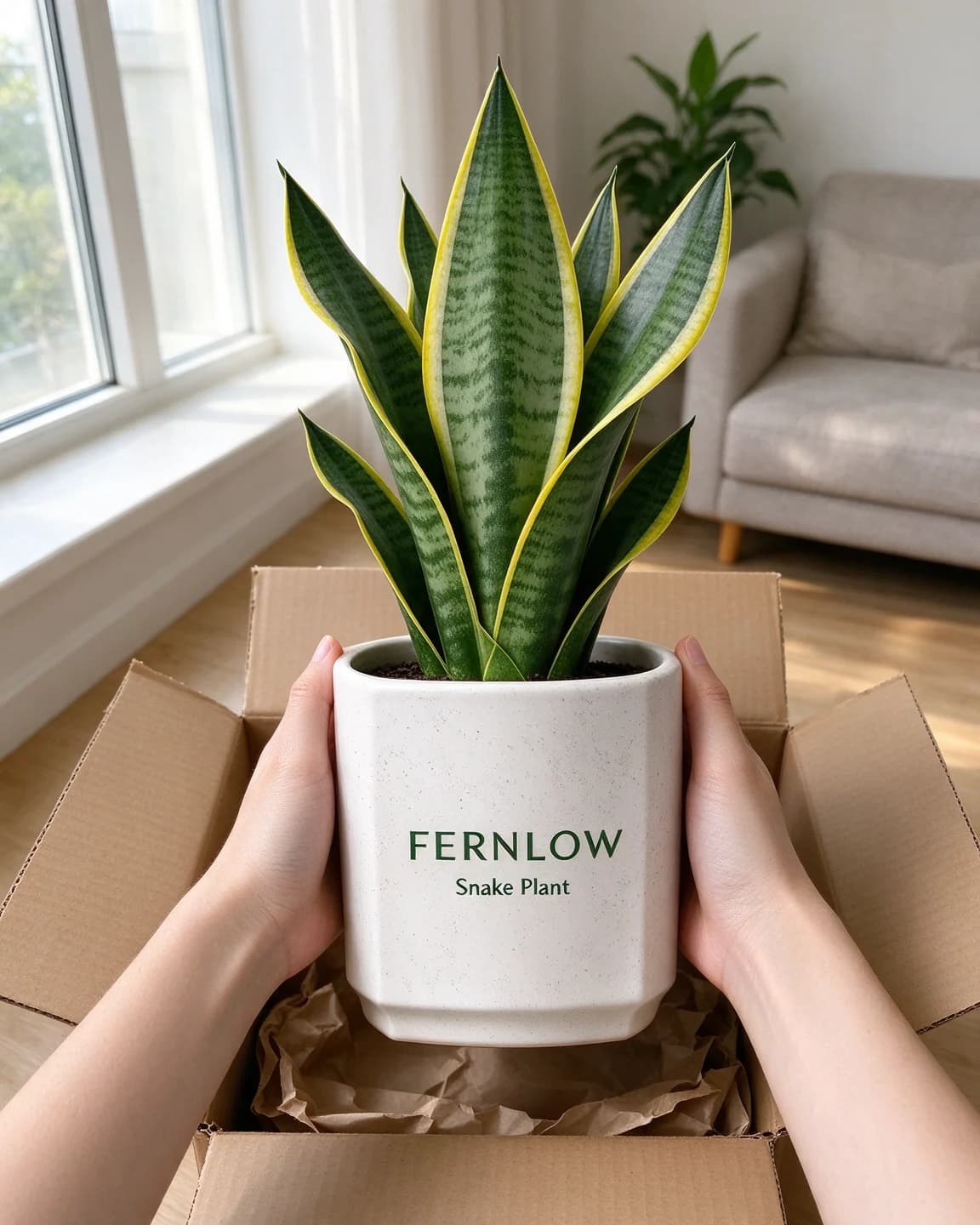
- Arrival: hands lifting a snake plant out of its box, paper padding still in shot.
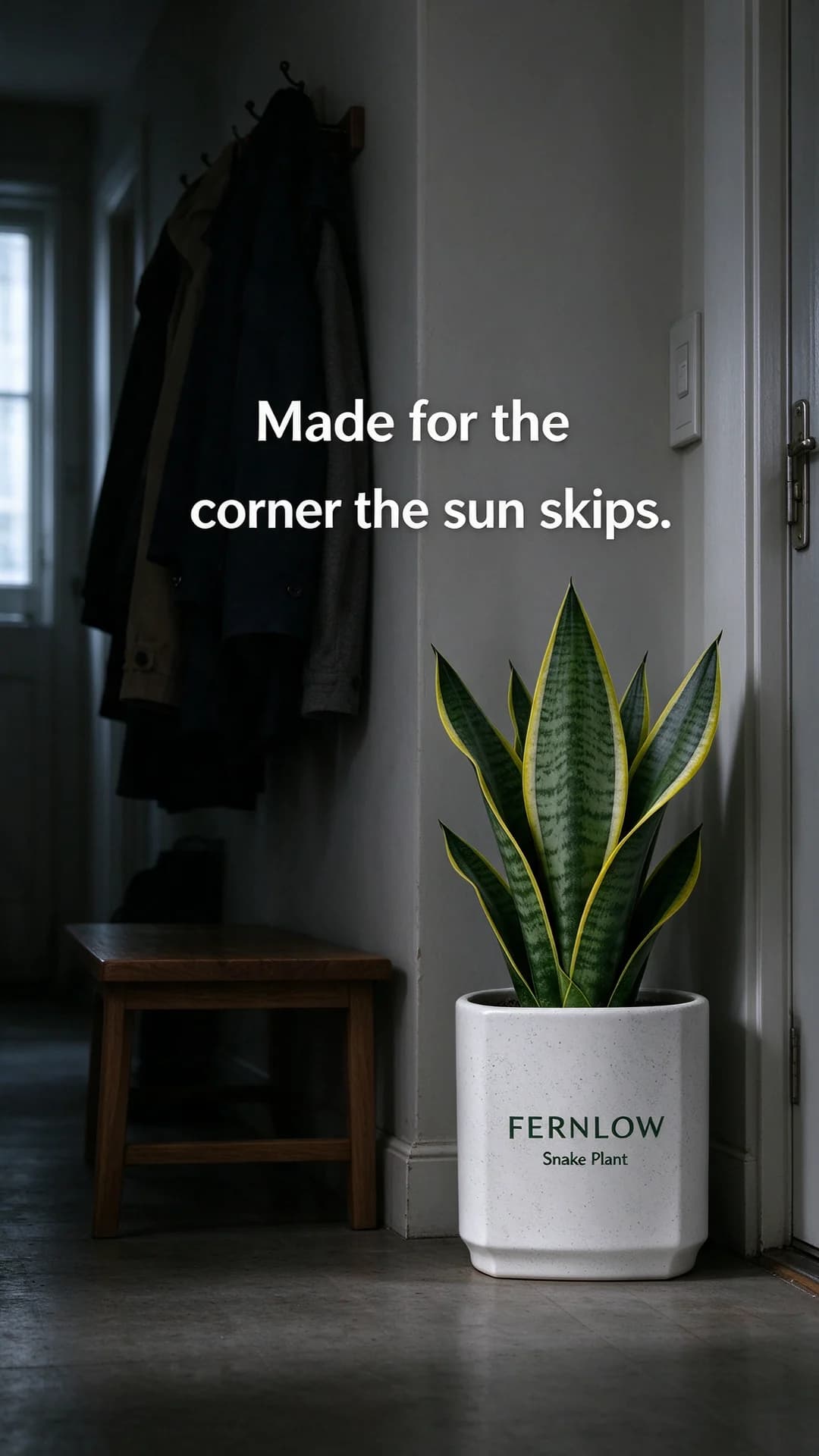
- The room: a dim hallway corner, because "will it cope with my flat?" is the real question.
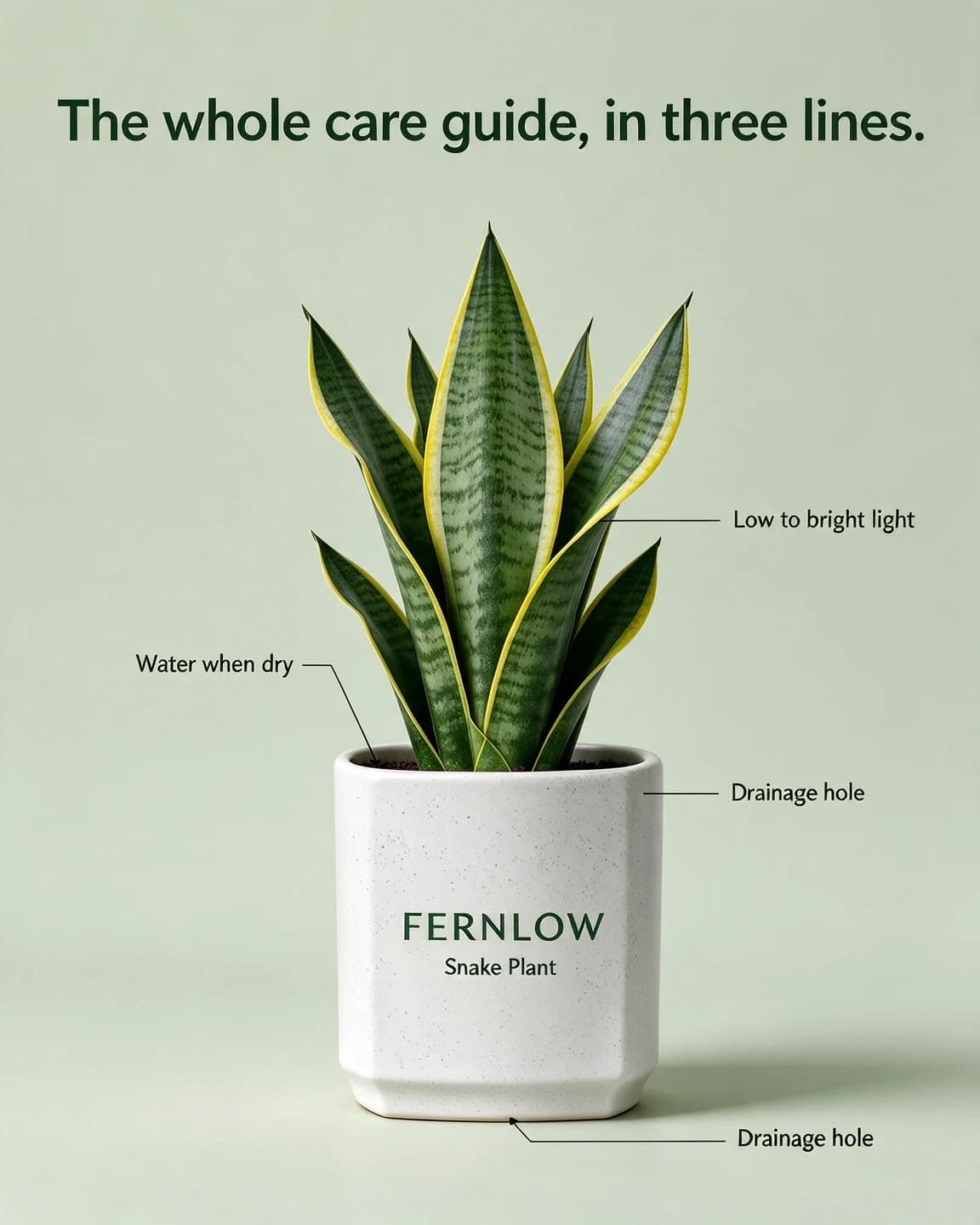
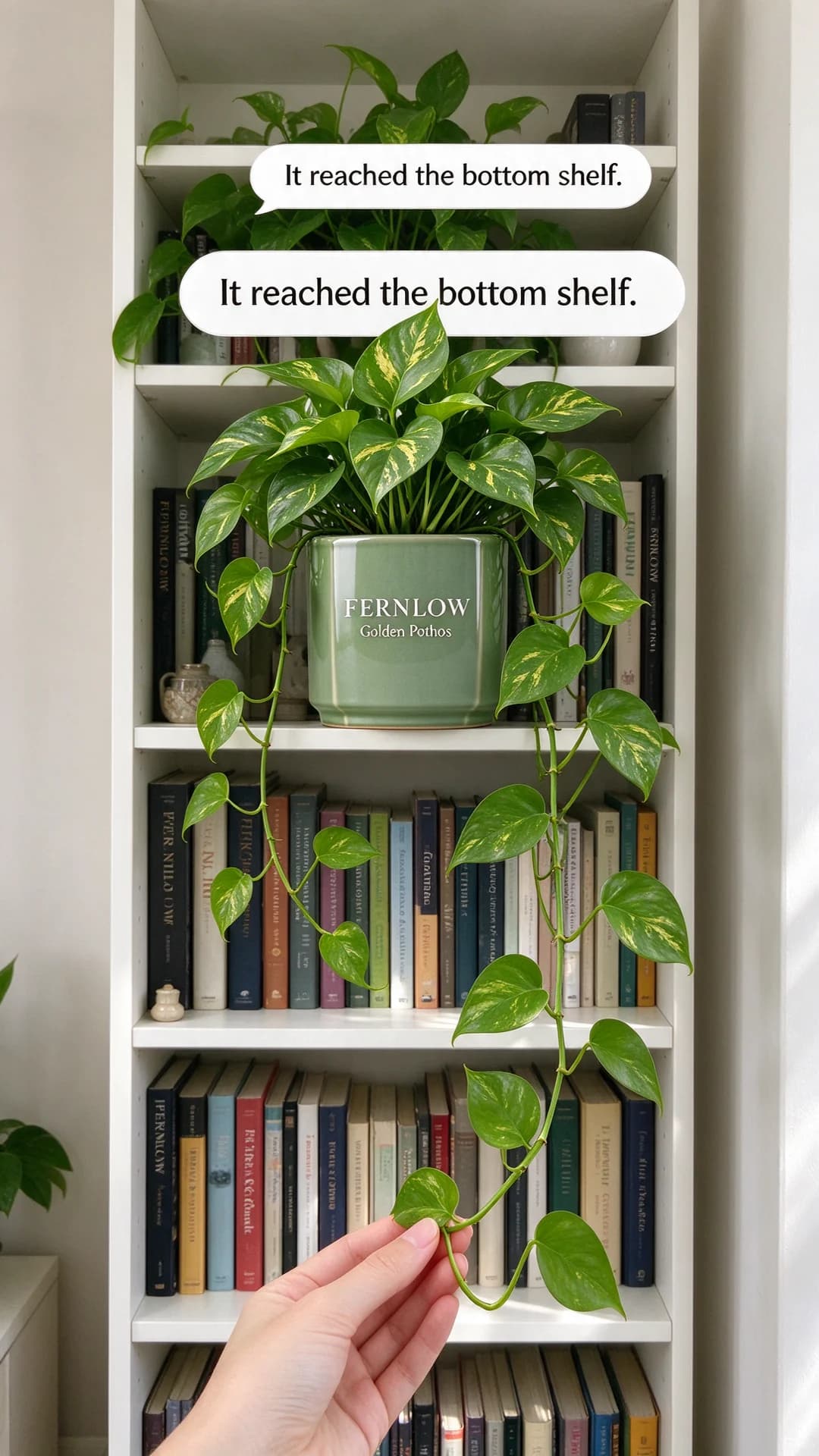
- Survival: three short care labels, a vine that has reached the bottom shelf, a review about new leaves.
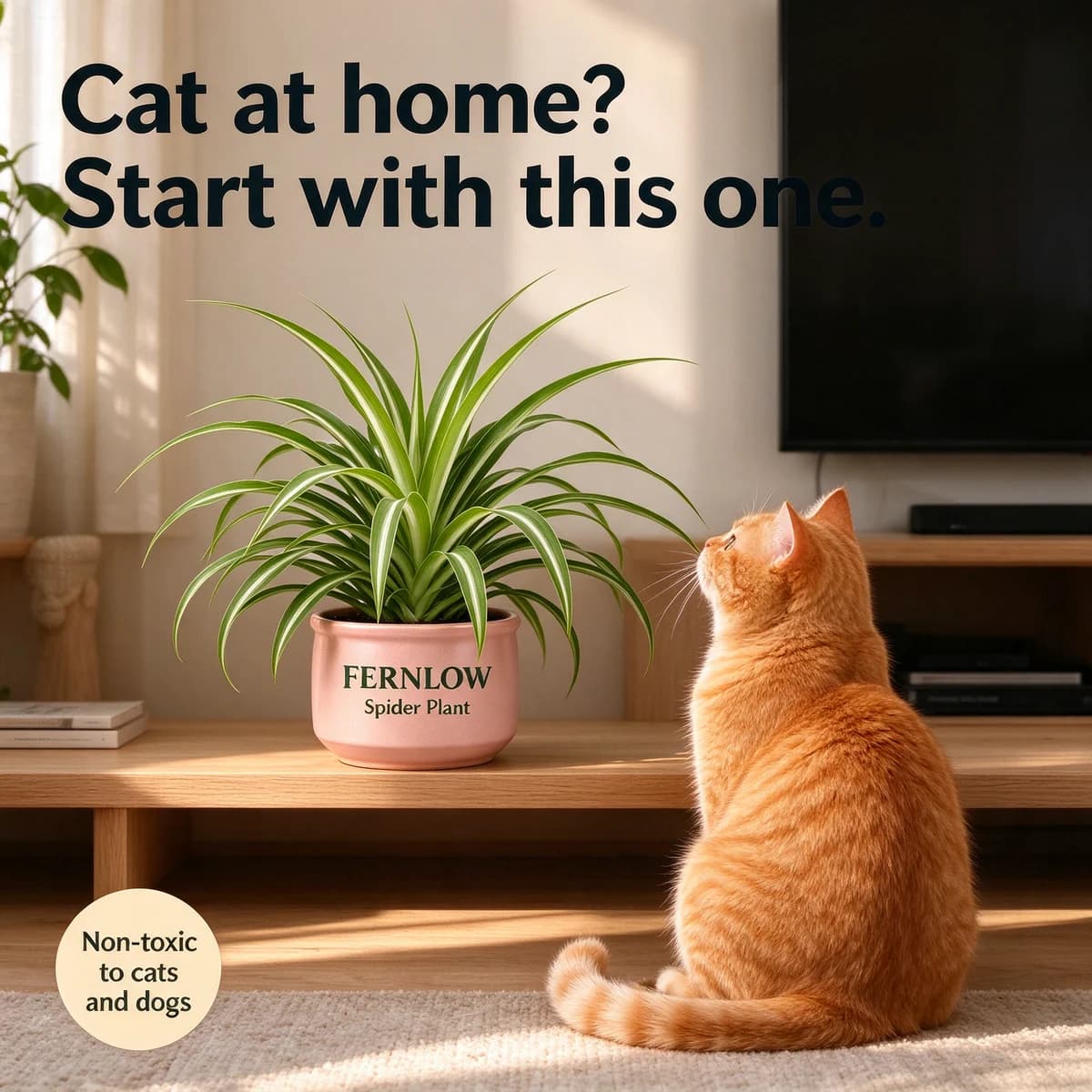
The rest of the batch is about the buyer's situation rather than the plant: a cat at home, a gift to choose, a first flat to fill. That's typical for this category. People rarely buy a plant for its Latin name. They buy it for a spot, a person or a feeling, and the ad that names the spot often beats the ad that names the species.
The shots that sell a plant
Plant photos fail in a particular way: a lush plant on a white background looks like every other listing. These shots carry more information.
- The box shot. The plant coming out of its packaging. It's the most reassuring photo you can show a first-time buyer, and it suits a phone-camera frame with no overlay at all.
- The room shot. The plant in the exact light it's sold for, whether that's a north-facing window, a bathroom or a desk under a tube light. Don't flood a low-light plant with sunshine to make it look greener.
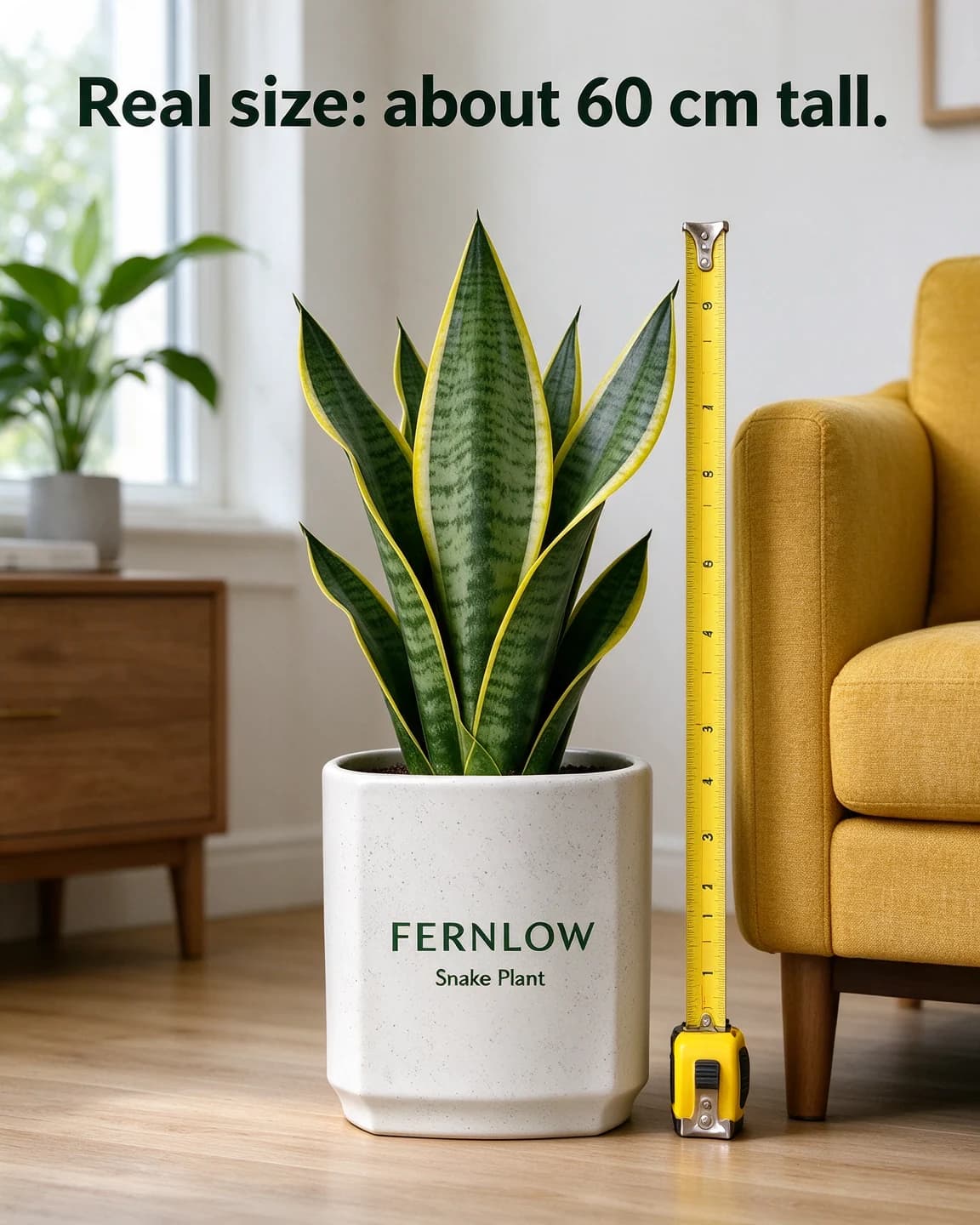
- The scale shot. A chair arm, a tape measure or a hand beside the pot. Listings often give pot diameter, which says little about how big the plant looks in a room.
- The care shot. Light, water and pot in three labels. The feature callout template is built for it.
- The growth shot. A trailing vine, a new leaf, roots showing through the drainage hole at repotting time. Growth is the result plant buyers hope for, and you can show it without claiming anything.
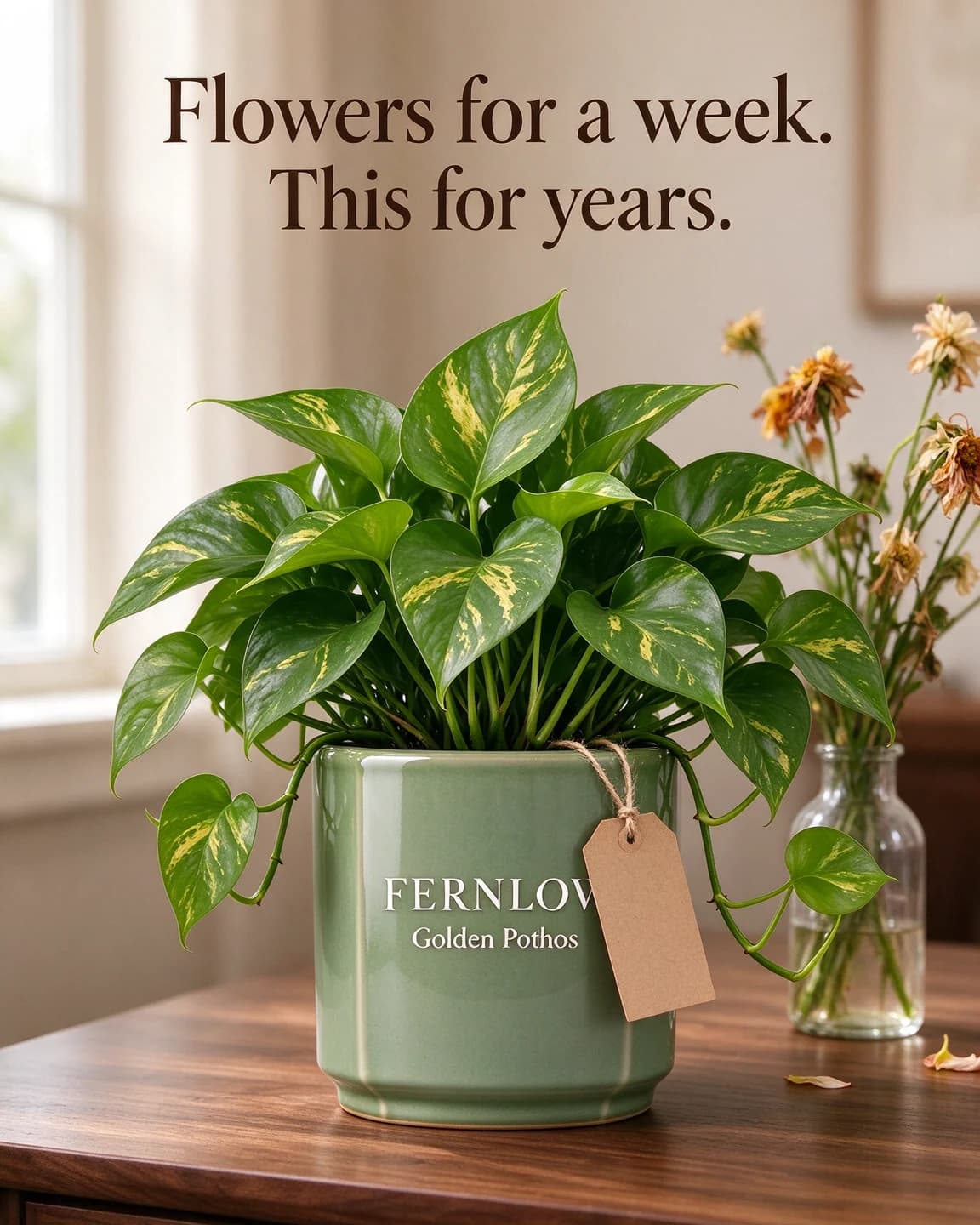
- The gift shot. Tag, twine, box and card. Plants compete with flowers on birthdays and festivals, so show exactly what arrives at the door.
Leaf detail matters more than it looks. Variegation, leaf shape and colour are how plant people tell one variety from another, and a buyer who orders a yellow-edged snake plant and receives a plain green one will notice. Keep the hero plant sharp and in true colour, and keep the name printed on the pot readable at thumbnail size.
What to test first
For a first round, pick one hero plant and make two versions of five angles:
- Arrival proof, as a no-text phone photo with the hook in the primary text.
- Right plant, right room, naming the spot in the headline.
- Care made small, as a feature callout.
- Scale, with something familiar beside the pot.
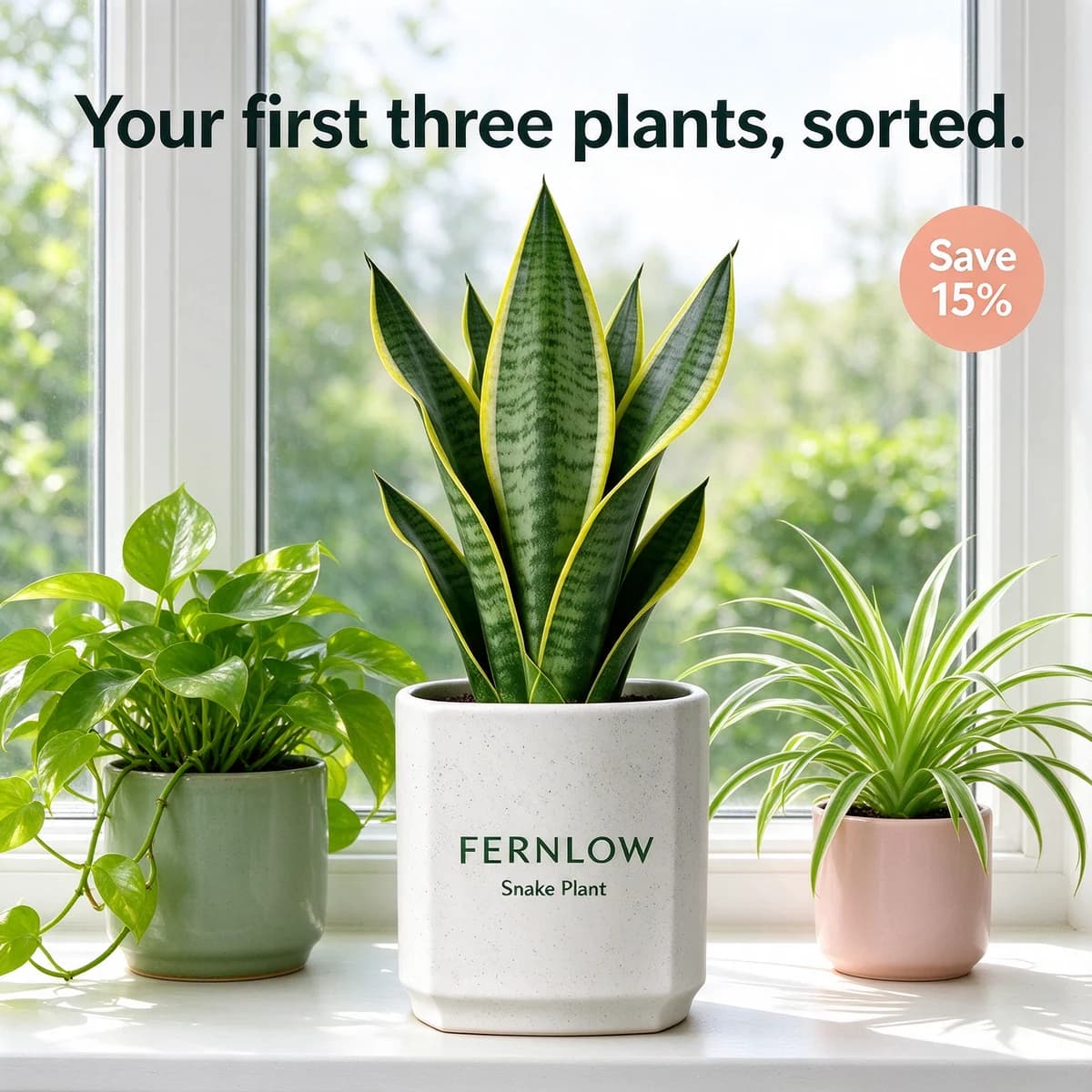
- An offer, usually a bundle, for people who have already visited.
That's ten ads, which fits in one BulkAds batch with two places left for a pet-aware or gift version. Our guide to how many ad creatives to test covers when to go bigger.
Offers deserve a little arithmetic before they go on an image. Say single plants sell at $20. Three come to $60, so a trio at 15% off is $51, a saving of $9. A sticker reading "Save 15%" is tidy, but some buyers respond better to the amount saved. Test the two stickers on the same photo, so the only thing that changes is how the saving is said.
Judge the test on orders rather than saves. Plant photos collect hearts easily, and a pretty windowsill can be the most-liked ad in the account while selling nothing.
Making plant ads in BulkAds
Everything on this page started from one clean photo of each plant standing in its pot on a white background. That's the packshot BulkAds works from. With product photo ads, the same plant is placed in new scenes, such as a hallway, a bookshelf or an opened box, and each finished ad is compared with your original photo before you see it.
That check matters more for plants than for most products. AI image models like to "improve" foliage with an extra leaf, brighter variegation or a fuller pot. The product-match check flags ads where the plant has drifted from your photo, so you can regenerate the image or drop it.
A few habits help:
- Photograph each variety separately, in the pot it ships in, with the printed name facing the camera.
- Write your proof points into the brand kit, such as "ships in its ceramic pot" or "care card in every box", so the copy repeats facts rather than inventing them.
- Describe the scene you want when you build a batch from your own instructions, for example "dim hallway, soft window light from the left, lead with low light", and the batch follows it.
- Keep the plant in the light it's sold for. If a scene puts a low-light plant in blazing sun, regenerate that ad.
When an angle wins, ask for variants of it rather than starting over: the same arrival shot with the pothos, the same room shot in a bathroom, or the winning still turned into a short video ad with leaves moving gently in a breeze. Our guide on iterating on a winning ad covers which part to change first.
Copy that keeps plant ads honest
Let the primary text carry what the image can't: the plant's height in centimetres, the pot it comes in, the light it likes and what's in the box. Write care advice as conditions ("water when the top few centimetres of soil are dry") rather than a calendar, because a sunny Chennai balcony and an air-conditioned Delhi office dry soil at very different speeds.
And say that plants vary. Two snake plants from the same batch won't be identical, and a line that admits it reads as care, not as small print.
Questions people ask
What should a houseplant ad show?
The thing the buyer is unsure about: the plant arriving in its box, the plant in the kind of light it's sold for, or the plant next to something familiar for scale. A plant on plain white is fine for a listing but rarely stops anyone in a feed.
Can I say a plant purifies the air?
It's best not to. The claim comes from 1989 NASA chamber tests, and a 2019 Drexel University review found potted plants clean indoor air far more slowly than ordinary ventilation does. Sell the look, the routine and the calm instead.
How do I advertise pet-friendly plants?
Check each plant against a reliable source, such as the ASPCA's toxic and non-toxic plant database, and only put 'non-toxic to cats and dogs' on plants it lists that way. Say plainly which plants in your range aren't suited to homes with pets.
Which formats suit plant ads?
4:5 images suit room and scale shots in feeds, 1:1 suits bundles and offers, and 9:16 suits trailing plants and tall shelves in Stories and Reels. Make the strongest angle in more than one shape and compare them on orders.
Is Fernlow a real plant shop?
No. Fernlow is fictional, and every ad on this page was made with AI for illustration.
Keep going
- Features
Product photo ads
Your real packshot, in every scene
- Guides
Iterating on a winning ad: what to change first, and what to keep
Keep the idea that won and change the layers around it. How to find why an ad won, the order to change things in, eight worked iterations and how to launch them safely.
- Ad templates
Us vs them ad template
Two matched columns, one obvious choice — against a category
- Ad templates
Testimonial ad template
One real review, one real name, one clear reason to buy
- Ad templates
Feature callout ad template
Your product in the middle, short labels pointing at what matters
- Ad templates
Unboxing ad template
The box open, everything inside named, the viewer on the receiving end
Every brand on this page is fictional and every ad was made with AI for illustration — they’re examples, not case studies.
BulkAds AI is an independent product and is not affiliated with, endorsed or sponsored by Meta Platforms, Inc. Facebook and Instagram are trademarks of Meta Platforms, Inc.