Ad examples

Food & snack ad examples: 8 ideas that make people hungry, honestly

Food ads have to make people hungry first and reassure them second. These eight protein-snack ideas for a fictional brand cover taste, ingredients, snacking moments and offers, each with its hook and why it works, plus the claims to handle carefully.

6 ads2 live templates15 hooks

The swipe file

Each ad with its angle, its hook and why it works. Every brand is fictional. The ads were made with AI to show the idea.

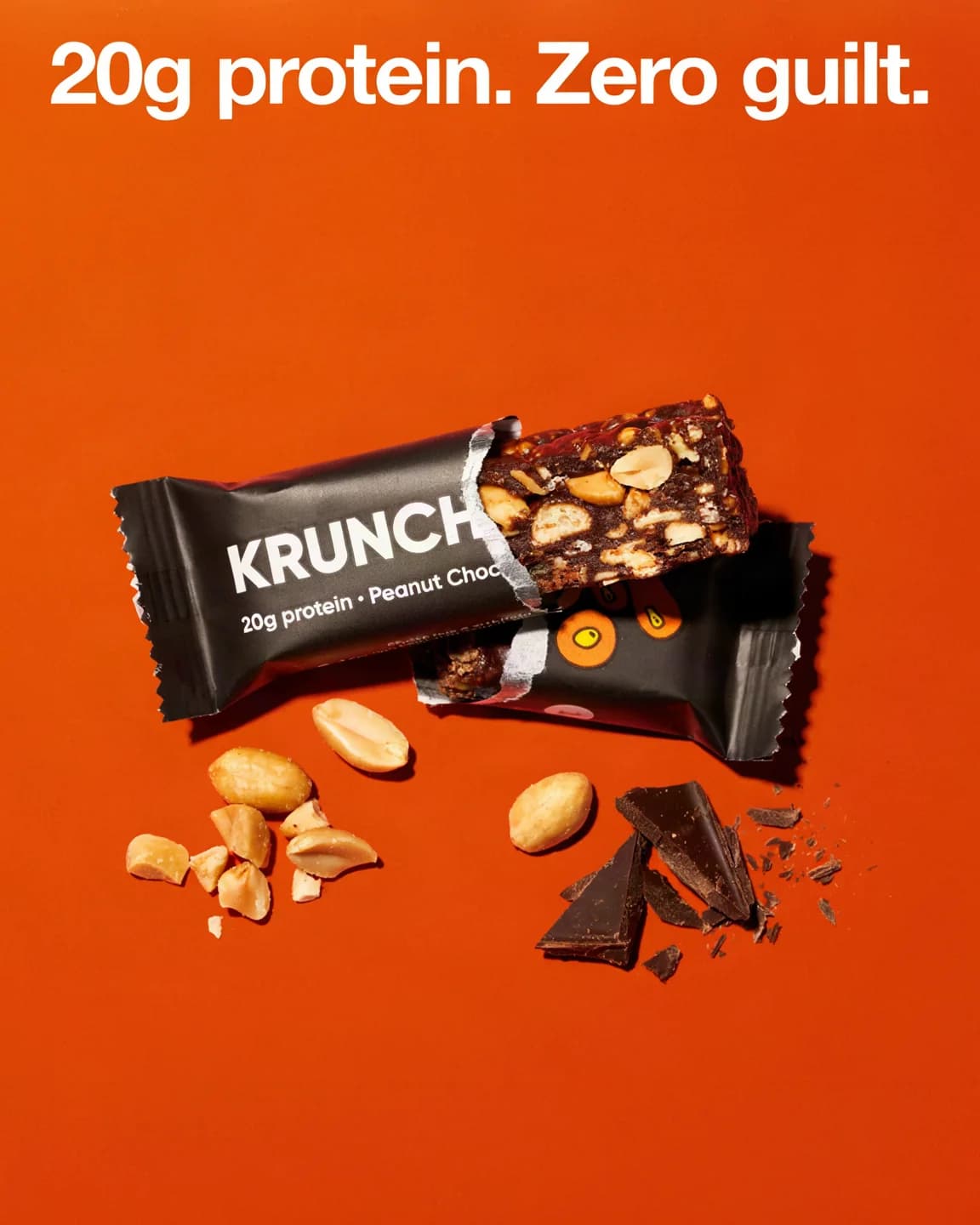
Two Krunch Peanut Choc protein bars, one torn open to show peanuts and chocolate inside, on a bright orange background with loose peanuts and chocolate shards, headline "20g protein. Zero guilt."

KrunchBold claimFeed · 4:5 image

“20g protein. Zero guilt.”

A hard number people compare, then an emotional release: the classic protein-snack pairing. The torn wrapper shows the chunky inside, which answers the 'is it chalky?' worry — though 'guilt' language suits some brand voices better than others.

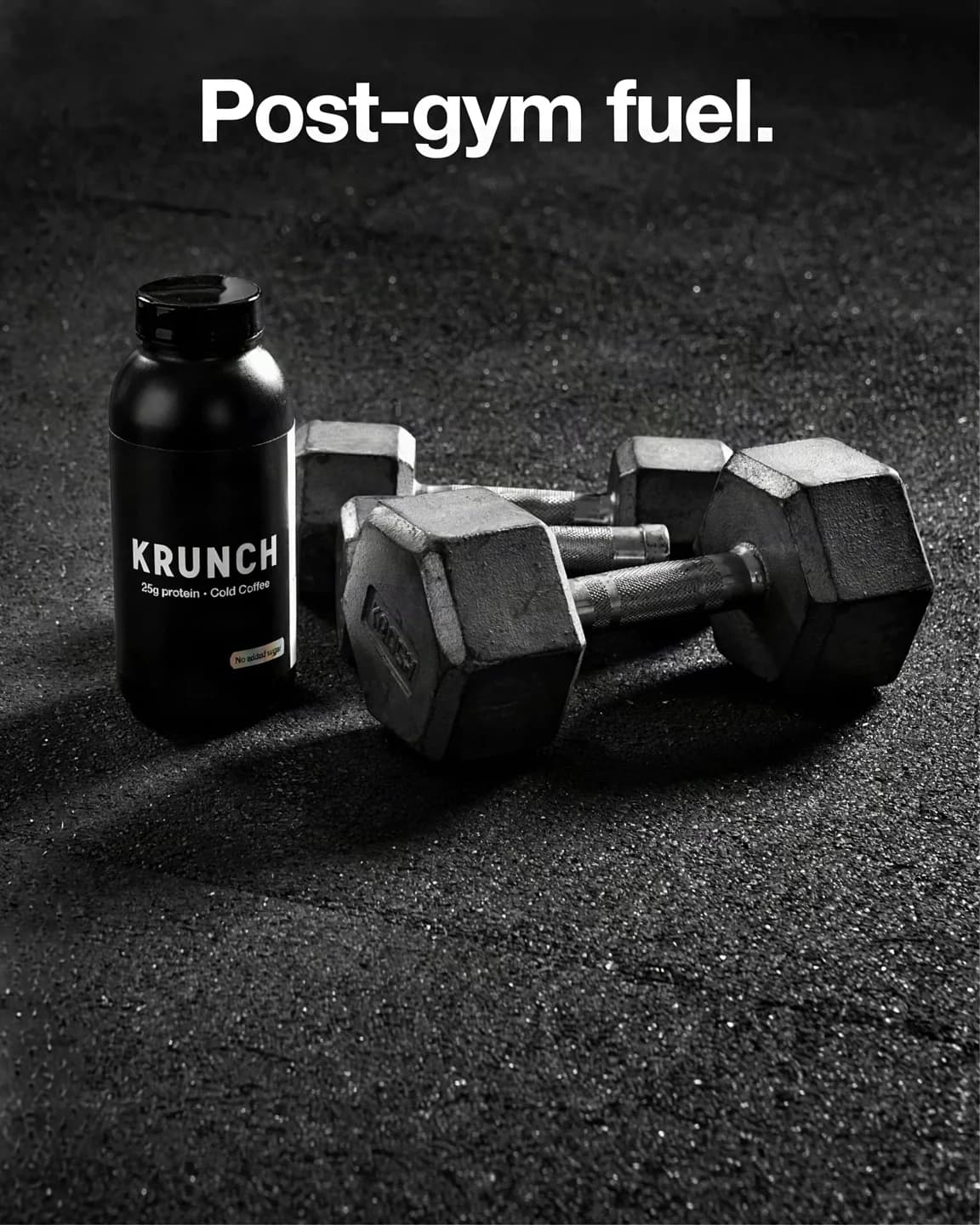
A black Krunch Cold Coffee protein shake bottle labelled "25g protein" with a "No added sugar" sticker next to dumbbells on a dark gym floor, headline "Post-gym fuel."

KrunchMoment of useFeed · 4:5 image

“Post-gym fuel.”

Three words and a gym floor tell you exactly when to drink it, and the moody black-and-white look suits a serious training audience. It's a line-extension ad, too: the bar brand stepping into shakes, a natural test for people who already buy the bars.

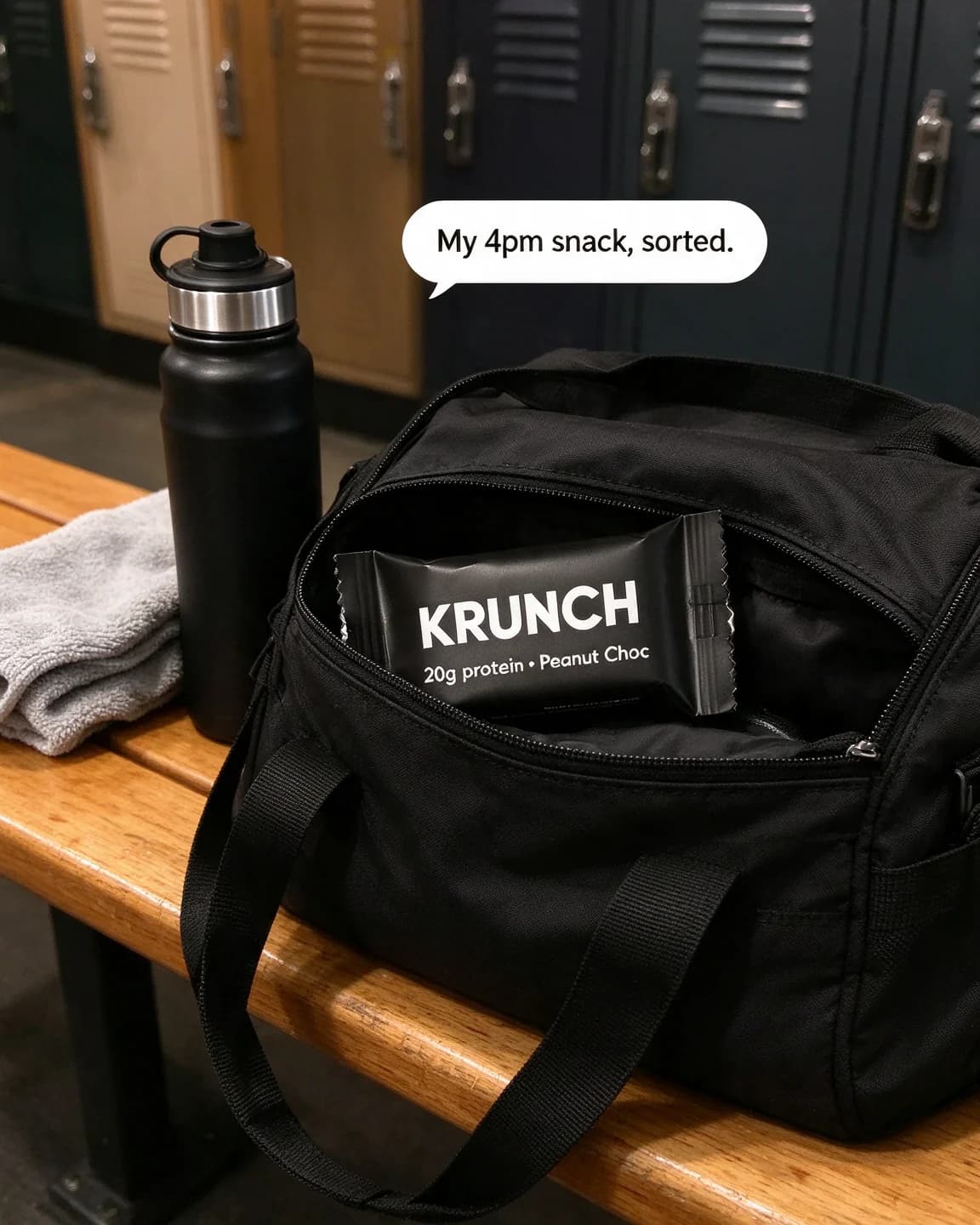
A Krunch bar peeking out of an open gym bag with a water bottle and a towel on a locker-room bench, with a speech-bubble caption reading "My 4pm snack, sorted."

KrunchUGC momentFeed · 4:5 image

“My 4pm snack, sorted.”

The caption claims a specific gap in the day, and the half-packed gym bag makes it feel like a real routine. It's aimed at busy people who grab whatever snack is nearest because nothing better is to hand.

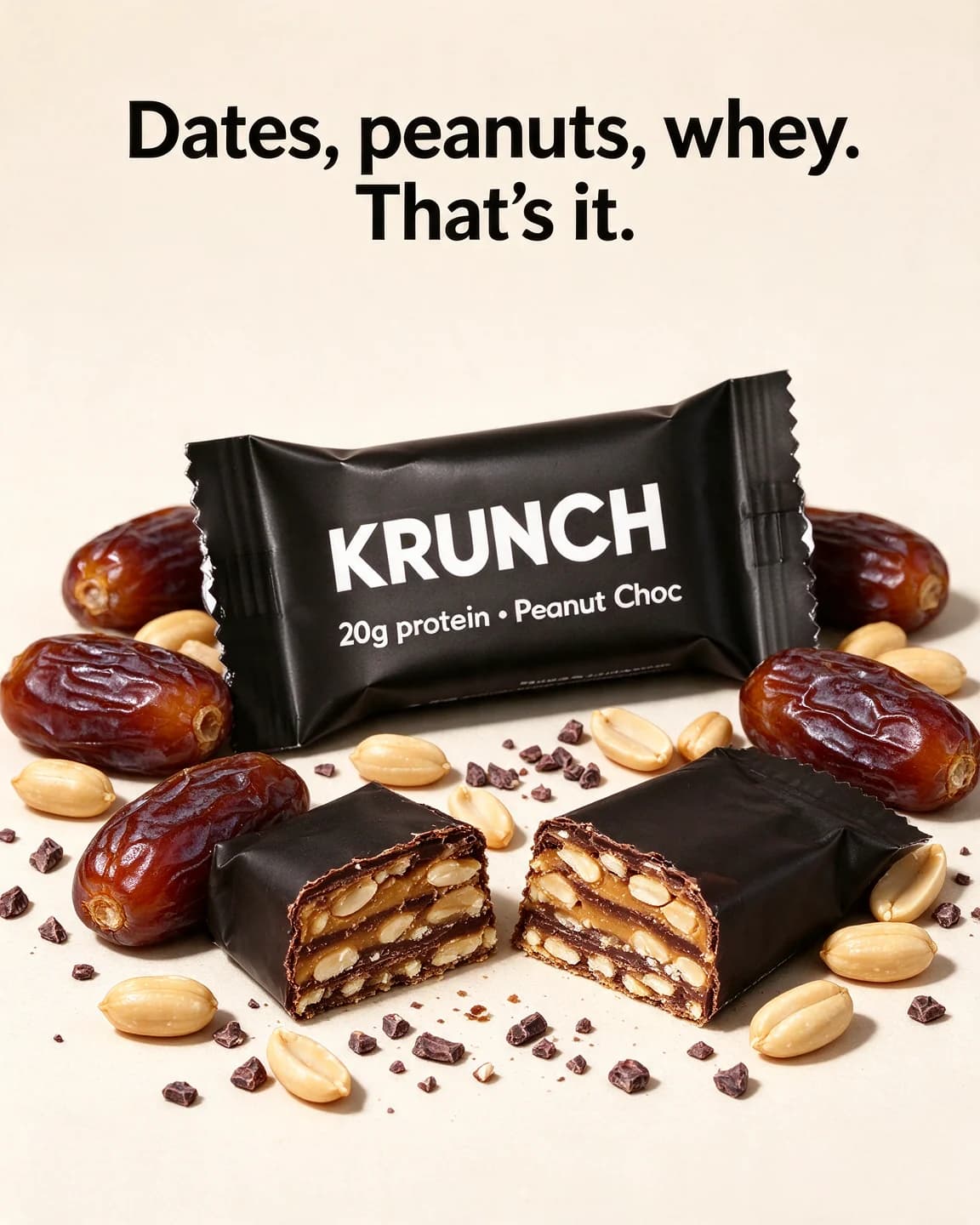
A Krunch bar broken in half to show its layers, surrounded by whole dates, roasted peanuts and cocoa nibs on a cream background, headline "Dates, peanuts, whey. That's it."

KrunchIngredient storyFeed · 4:5 image

“Dates, peanuts, whey. That's it.”

Naming every ingredient in the headline is a strong trust move for label readers, and the broken bar shows texture as well as contents. 'That's it' only works if the pack says the same — one extra ingredient breaks the promise.

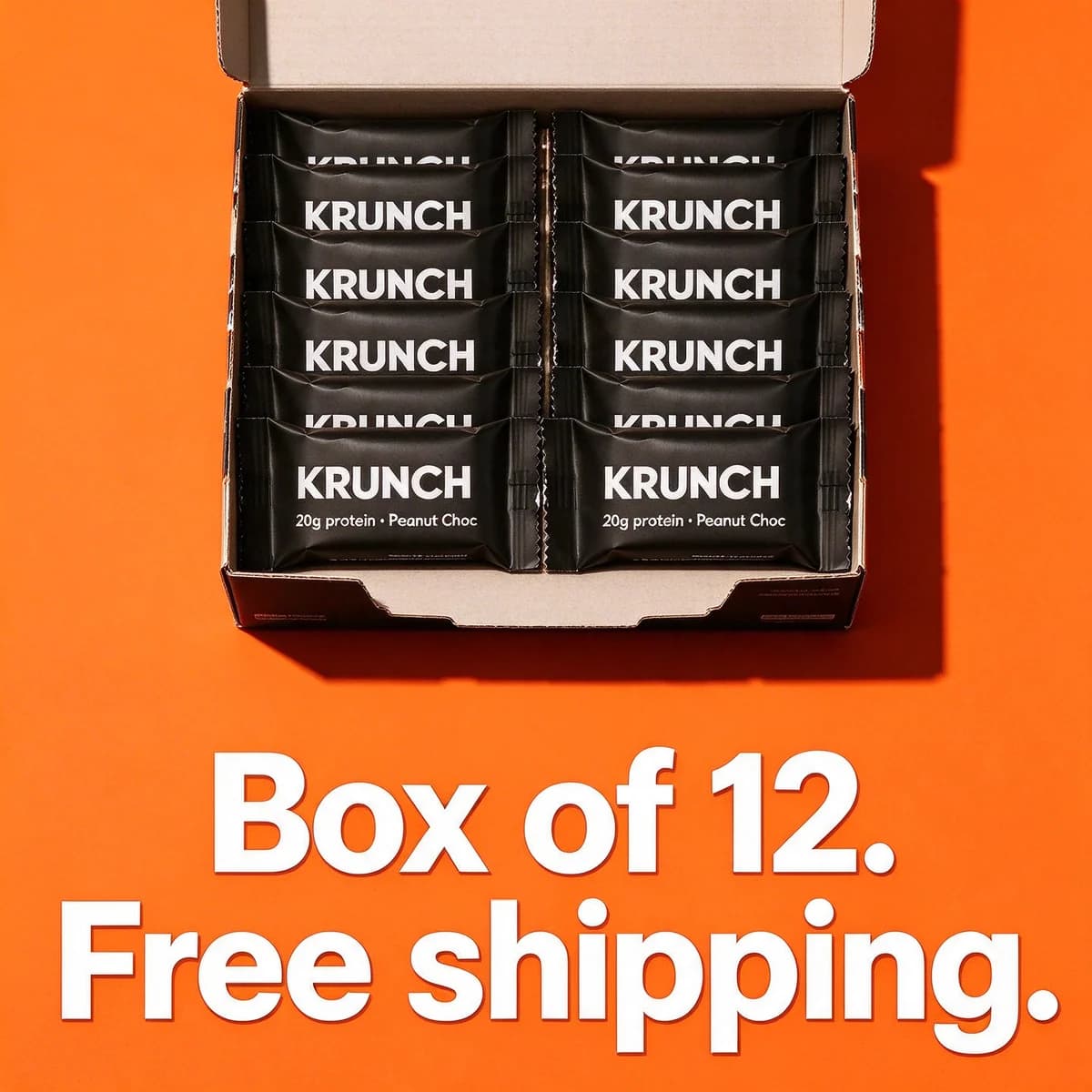
An open box of twelve Krunch bars on a bright orange background with a hard shadow, headline "Box of 12. Free shipping."

KrunchBundle offerFeed · 1:1 image

“Box of 12. Free shipping.”

A box of twelve matches how regular snackers buy — for the week or the month — and free shipping removes the usual reason not to order online. It's best shown to people who've tried a bar or visited the product page.

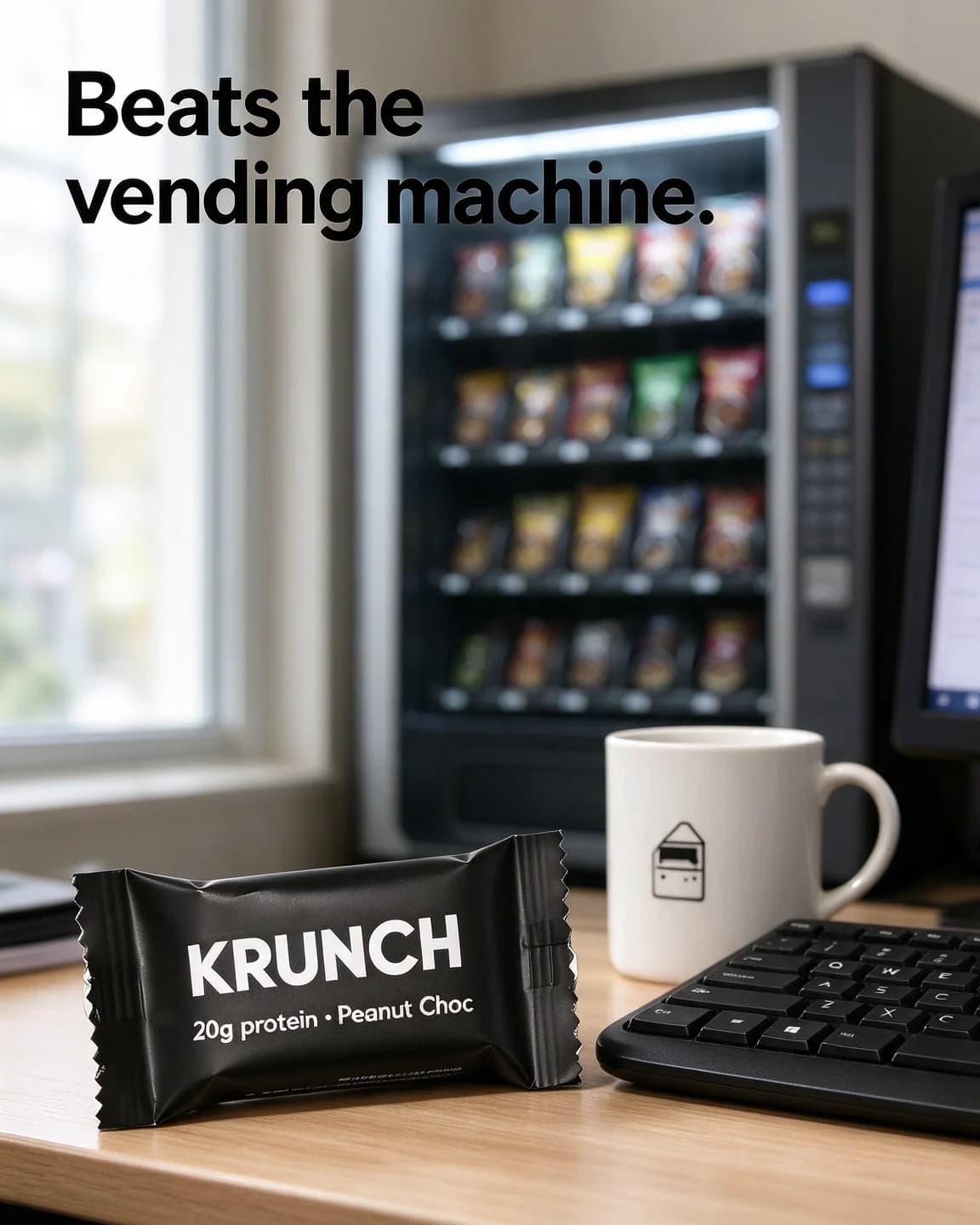
A Krunch bar on an office desk beside a keyboard and a mug, with a vending machine blurred in the background, headline "Beats the vending machine."

KrunchComparisonFeed · 4:5 image

“Beats the vending machine.”

It compares against the real alternative at 4pm — the office vending machine — rather than another brand, so the contrast is fair and instantly understood. The blurred machine in the background lets the picture make the argument.

Two more ways to try

  • KKrunchSponsored

    ★★★★★

    “Chewy, crunchy, and it doesn't taste like chalk. I keep two in my laptop bag for long site visits.”

    RRohan P. Verified buyer · Hyderabad
    KRUNCH20G PROTEIN
    Protein barShop bars

    Testimonial ad

    A review about taste and texture — not weight or health — is social proof that stays well clear of nutrition-claim trouble.

    Edit this template
  • KKrunchSponsored

    A note from our founder

    I wanted a protein bar I'd actually look forward to.

    Every one I tried was either chalky or tasted of sweetener. So I started blending dates and peanuts in my kitchen.

    Forty-odd recipes later, Krunch has 20 g of protein and a crunch you can hear.

    Tara

    Founder, Krunch

    KRUNCH20G PROTEIN
    Protein barTry Krunch

    Founder story ad

    The founder's own complaint — chalky, sweetener-heavy bars — is an objection many buyers already have, so the story sells taste without a single health claim.

    Edit this template

Angles to test first

  1. 1

    Taste and texture first

    Break it, pour it, bite it: show what it's like to eat. For anything sold as better-for-you, proving it tastes good is often the bigger job.

  2. 2

    Short ingredient lists

    Name the ingredients in the headline and lay them out around the product. It persuades only when the pack matches word for word.

  3. 3

    The snacking moment

    4pm at the desk, after the gym, the school pick-up, the long drive: claim a gap in the day and show the product filling it.

  4. 4

    The honest comparison

    Compare with the real alternative — the vending machine, the biscuit tin — rather than a named brand, and keep it factual.

  5. 5

    Stock-up offers

    Boxes, variety packs and subscriptions fit how regular snackers buy. They work best on people who've already tried one.

15 hooks for food & snack ads

  • [Number]g protein. [Number] [ingredients].
  • My [4pm] snack, sorted.
  • [Ingredient], [ingredient], [ingredient]. That's it.
  • Box of [12]. Free [shipping].
  • Beats the [vending machine].
  • Post-[gym] [fuel].
  • The [protein bar] that doesn't taste like [chalk].
  • What's inside a [bar]: [ingredient] and [ingredient].
  • [Flavour] that tastes like [dessert].
  • Your [desk drawer], upgraded.
  • Snacks for [long drives], not [vending machines].
  • Hear that [crunch]?
  • [Number] flavours. Which one's yours?
  • Sweetened with [dates], nothing else.
  • Try the [variety pack] before you pick a [favourite].

Moments to plan for

  • New Year (Jan)

    A 'better desk drawer' angle with a starter variety pack — taste and protein facts, not weight loss.

  • Ramadan (dates vary)

    Snack boxes for suhoor and iftar tables, with delivery timings in the copy.

  • Navratri (Sep–Oct)

    Only call a product fasting-friendly if every ingredient fits the rules your customers follow. Otherwise, skip the occasion.

  • Back to school (Apr–Jun)

    Lunchbox and after-school angles aimed at parents — check allergen rules first, as some schools restrict nuts.

  • Monsoon (Jun–Sep)

    Rainy-day cravings with a steaming chai in the frame and the product as a crunchy alternative to the usual fried snacks.

  • Diwali (Oct–Nov)

    Gift boxes as an alternative to the usual sweets, in festive wrapping with a note card.

Watch out for

  • Nutrition numbers must match the pack exactly. If the label says 20 g protein per bar, the ad can't round up or quote a different serving.
  • Stay on the food side of the line: 'builds muscle', 'boosts recovery', 'burns fat' or 'boosts immunity' are supplement-style health claims that need evidence, and Meta can reject them.
  • Keep weight loss out of it unless you're ready for the rules: Meta restricts weight-loss ads, including before-and-after images and who they can be shown to, and body-focused imagery invites rejection.
  • In India, FSSAI's advertising and claims rules set conditions for nutrition claims such as 'high protein' and for words like 'natural' and 'fresh'. Check them before they go on an ad.
  • Put allergens where people will look. Nut, dairy and gluten information belongs on the landing page, and peanut-heavy products deserve a clear mention in the copy.

Practical pointers, not legal advice. Check Meta’s Advertising Standards and your local rules.

What makes food and snack ads work

Food ads have to make people hungry before they make them think. The order matters: appetite appeal first — a bar snapped in half, crumbs, a glossy layer — then a reason to choose yours, then an offer for the people who are ready.

Better-for-you snacks carry a second job. Many buyers assume healthier means worse-tasting, so the ad has to prove the taste and the label at the same time. The examples above split those jobs:

  • Taste and texture. The torn wrapper in "20g protein. Zero guilt." shows the chunky inside.
  • A short, visible ingredient list. "Dates, peanuts, whey. That's it." lets people check with their eyes.
  • A snacking moment. "My 4pm snack, sorted." claims a gap in the day.
  • An honest comparison. "Beats the vending machine." compares against the real alternative, not a rival brand — the us-vs-them template is built for this.
  • A stock-up offer. "Box of 12. Free shipping." matches how regular snackers buy.

Nutrition is also where food ads get into trouble. Stick to facts printed on your pack, and keep health outcomes — weight loss, muscle gain, immunity — out of the ad unless you can prove them. Specific facts like "20 g protein" or "three ingredients" are clearer than vague health words anyway, and far easier to defend.

A two-week testing plan for snack brands

Choose five or six angles, with two or three versions of each:

  1. Taste close-up — the product broken, bitten or poured.
  2. Bold claim — the nutrition fact your buyers compare, straight from the label.
  3. Ingredient story — every ingredient around the product.
  4. Snacking moment — desk, gym bag, car, school bag.
  5. Comparison — against the vending machine or the biscuit tin.
  6. Bundle offer — mainly for retargeting.

That's 12 to 18 ads. Snacks often sell at a lower price than many D2C products, so your target cost per purchase is lower and ads reach a verdict on less spend — which means you can often afford to test more ideas at once. Our guide on how many ad creatives to test covers the trade-off, and the creative test calculator does the numbers. Say your target is $2.60: letting each of 15 ads spend about twice that comes to $77. Read the comments as well as the sales — questions about sugar, allergens or taste tell you what the next ad should answer.

Use 4:5 for feeds, 9:16 for Stories and Reels — a snap or a crumble in slow motion is made for vertical video — and 1:1 for offer posters.

Creative tips for food ads

  • Hero the inside. Cross-sections, broken bars and cut-open packs show texture and ingredients at once.
  • Props are a promise. Only show ingredients that are in the recipe. Strawberries next to a peanut bar imply a flavour you don't sell.
  • Match the background to the flavour. Warm oranges and browns for chocolate and peanut, brighter colours for fruit.
  • Put the product where it's eaten. Desks, gym bags, lunchboxes, car cup holders. Context makes the occasion obvious.
  • Numbers big, words small. "20 g protein" should be readable at thumbnail size. The flavour name can be smaller.
  • Mention allergens in the copy. Peanut-heavy products deserve a clear note — it builds trust and prevents unhappy orders.

In the primary text, lead with taste, then the label fact, then the offer, and keep every nutrition number identical to the pack. If you sell in more than one language, write the copy natively rather than translating it: words like "crunchy", "chewy" and "not too sweet" carry the appetite appeal, and they don't always survive a literal translation. BulkAds' ad copy generator writes copy in 95+ languages from the start.

Turning a winning food ad into variants

  • Same frame, new flavour. A proven layout is the quickest way to launch a second or third flavour.
  • Same hook, new occasion. "My 4pm snack, sorted." becomes the pre-run bite, the school pick-up or the late shift.
  • Same idea, new product. Put the shake or a bite-size pack into the frame that already sold the bar.
  • Still to video. A slow-motion snap or crumble for Reels.

Refresh often. The same shoppers can see a snack ad many times, and a new flavour or a new occasion is the cheapest way to look fresh without abandoning an angle that works.

The AI ad generator makes these variants in one batch from your real pack photo, and its pre-flight check flags likely policy risks, such as unsupported health claims, before anything goes live.

Questions people ask

What makes a good food ad on Facebook?

Appetite appeal first — texture, a bite, the inside of the product — then one clear reason to buy, such as the ingredient list, a nutrition fact from the pack or an occasion. Offers work best on people who've already shown interest.

Can snack brands say 'healthy' in their ads?

Be careful: 'healthy' and similar words can be treated as health or nutrition claims, and many markets regulate them. Specific, label-backed facts like '20 g protein' are safer than general health promises.

Should food ads be video or static?

Both are worth testing. Stills are quick for comparing angles, and short videos can show the snap, pour or crunch that makes food appealing.

How do I avoid Meta rejecting my protein snack ads?

Stick to the facts on your label, avoid weight-loss and body-transformation framing, and don't claim health outcomes such as muscle gain or fat loss without evidence.

Is Krunch a real brand?

No. Krunch is fictional, and every ad on this page was made with AI for illustration.

Keep going

Every brand on this page is fictional and every ad was made with AI for illustration — they’re examples, not case studies.

BulkAds AI is an independent product and is not affiliated with, endorsed or sponsored by Meta Platforms, Inc. Facebook and Instagram are trademarks of Meta Platforms, Inc.

More ad examples

Your next fifty ads are one link away.

Paste your website, meet your brand kit and see your first batch in minutes. 7 days for $9.99 — cancel anytime.

yourbrand.comMake my ads

See pricingExplore featuresBrowse the library