Ad examples

Lighting ad examples: 8 ideas that sell the glow, not the fitting

A lamp spends most of its day switched off, yet people buy it for the hour it's on. Strong lighting ads show both states: how the lamp looks at noon and how the room feels at nine. Glowmoor, an invented lamp maker, gets eight ads below, from a balcony dinner with no socket to a bedside pair, each with notes on why it works.

8 ads2 live templates15 hooks

The swipe file

Each ad with its angle, its hook and why it works. Every brand is fictional. The ads were made with AI to show the idea.

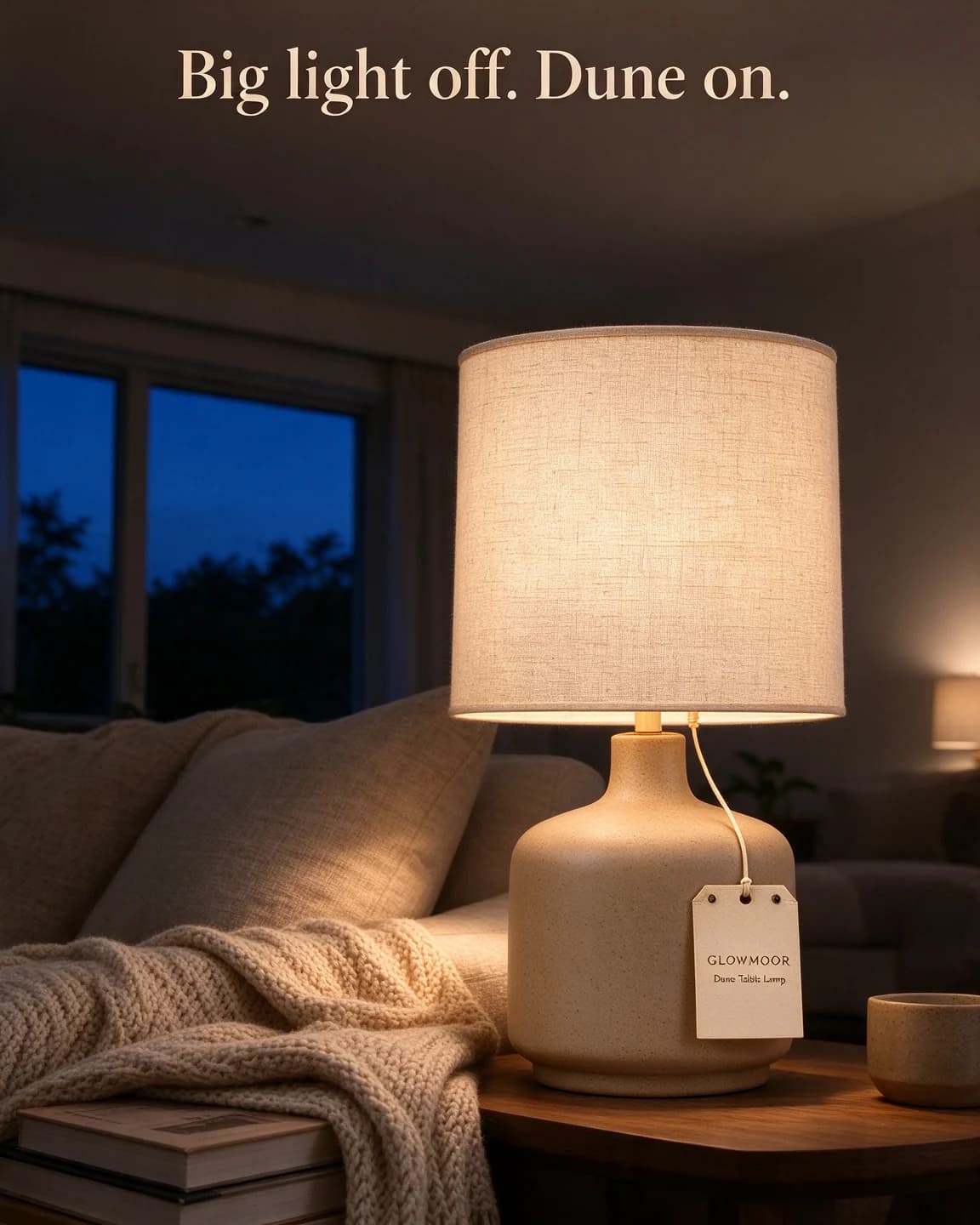
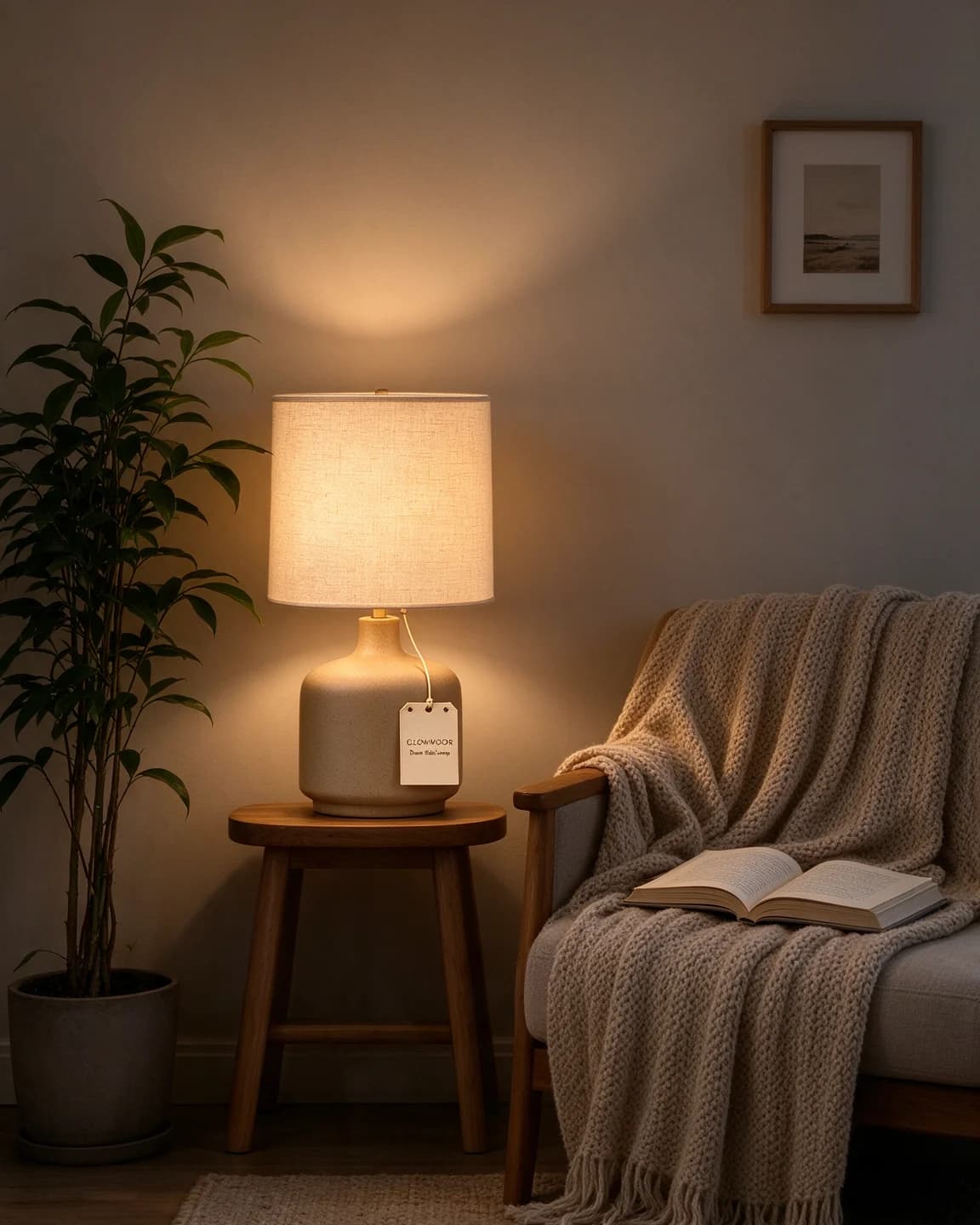
A Glowmoor Dune Table Lamp switched on beside a sofa at dusk, warm light pooling on a throw and a stack of books, headline "Big light off. Dune on."

GlowmoorSwap the big lightFeed · 4:5 image

“Big light off. Dune on.”

Everyone knows the flat glare of a ceiling light, so naming it sets up the contrast before anyone has looked at the lamp. The pool of warm light on the throw is the real product here, and shooting at dusk gives the glow something to beat.

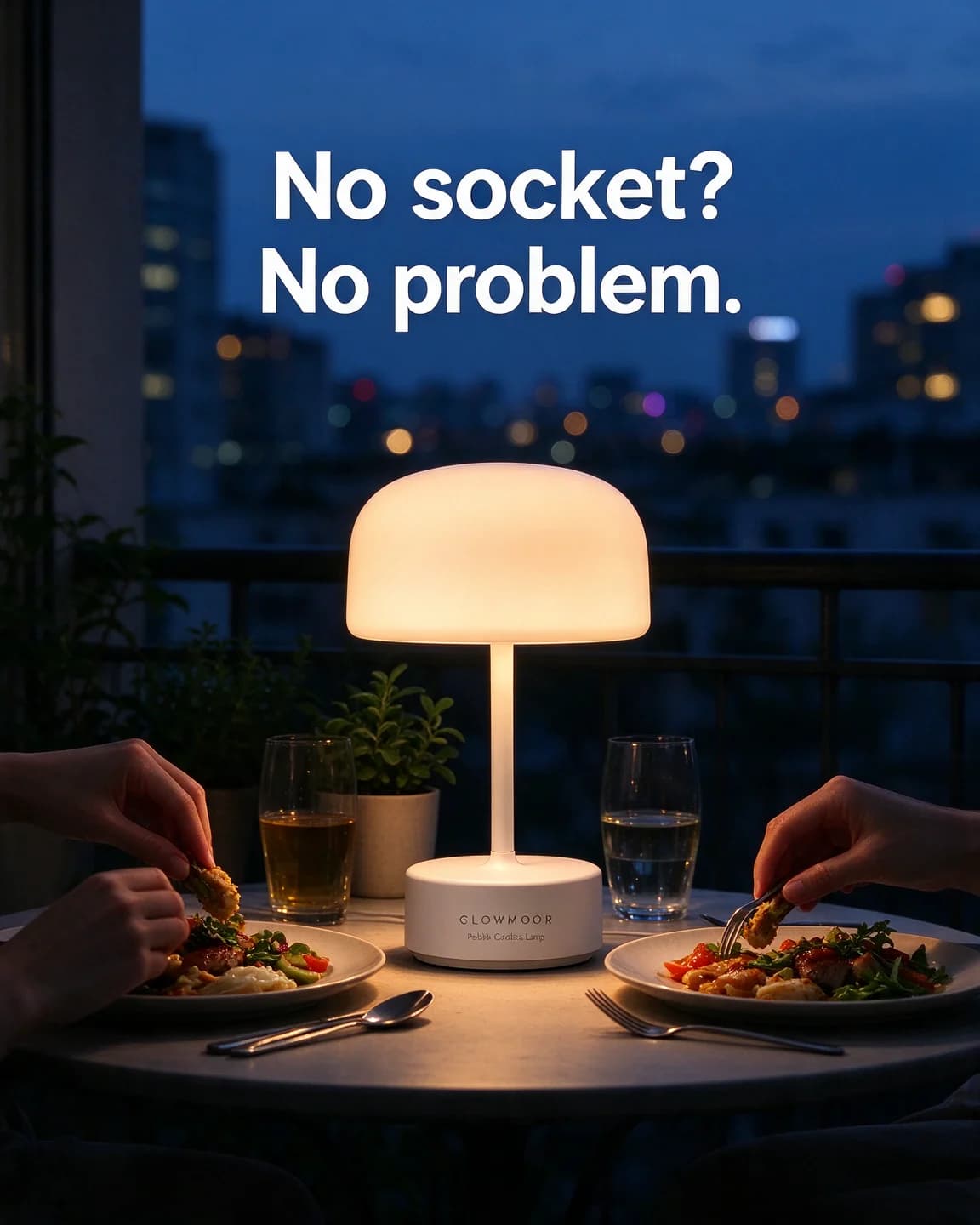
A glowing Glowmoor Pebble Cordless Lamp on a balcony dinner table with plates, glasses and plants at blue hour, no cables in sight, headline "No socket? No problem."

GlowmoorCordless freedomFeed · 4:5 image

“No socket? No problem.”

Balconies and dining tables rarely have a socket where you want the light, which is the whole reason a cordless lamp exists. A dinner table with no cables in shot makes the point without a single word about batteries.

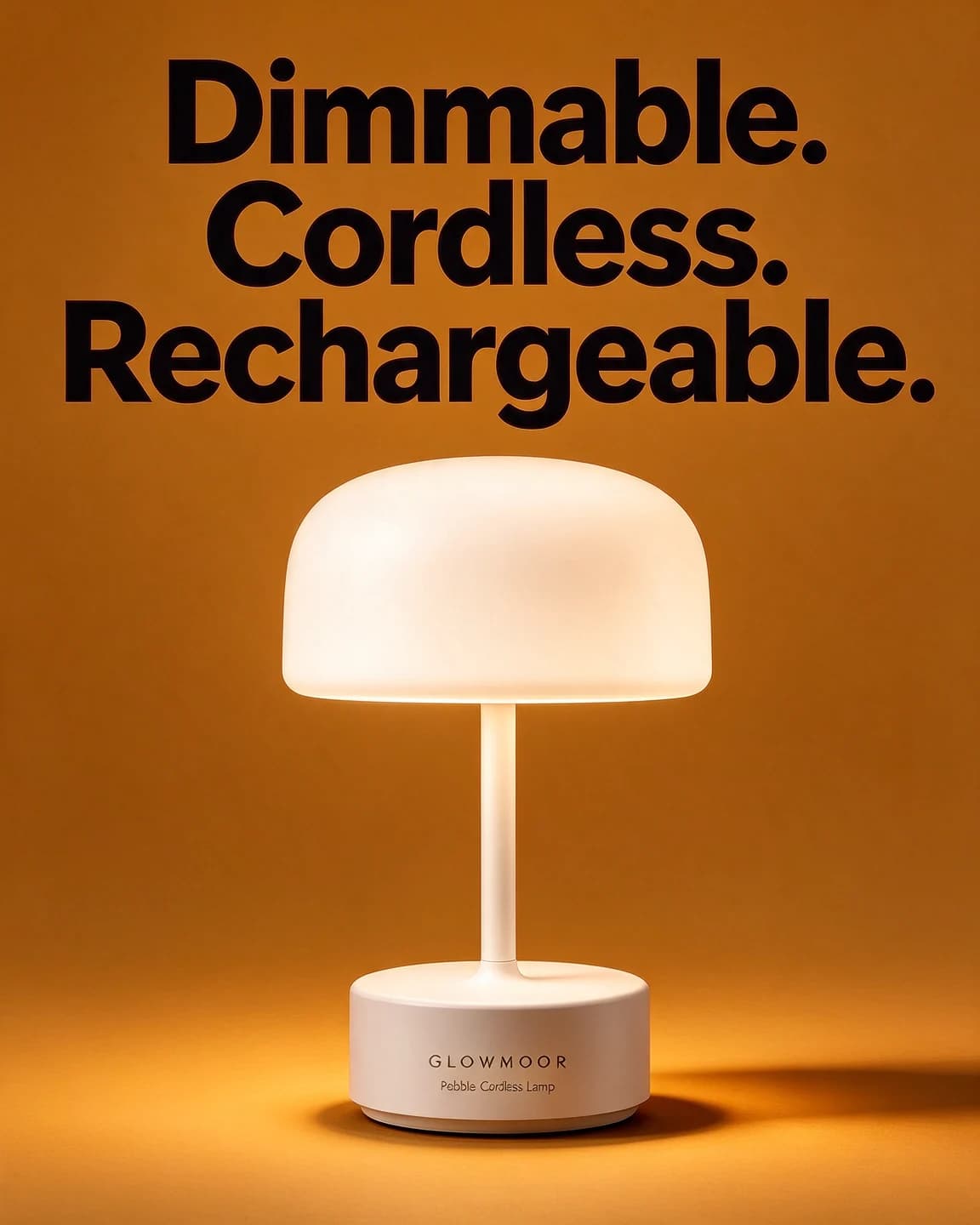
A glowing Glowmoor Pebble Cordless Lamp centred on a flat warm amber background with a hard shadow, headline "Dimmable. Cordless. Rechargeable."

GlowmoorSpec stackFeed · 4:5 image

“Dimmable. Cordless. Rechargeable.”

Three features in three words, on a flat warm colour that stands out among dim interior shots. It's the plain answer for people who already know they want a cordless lamp and are now choosing which one.

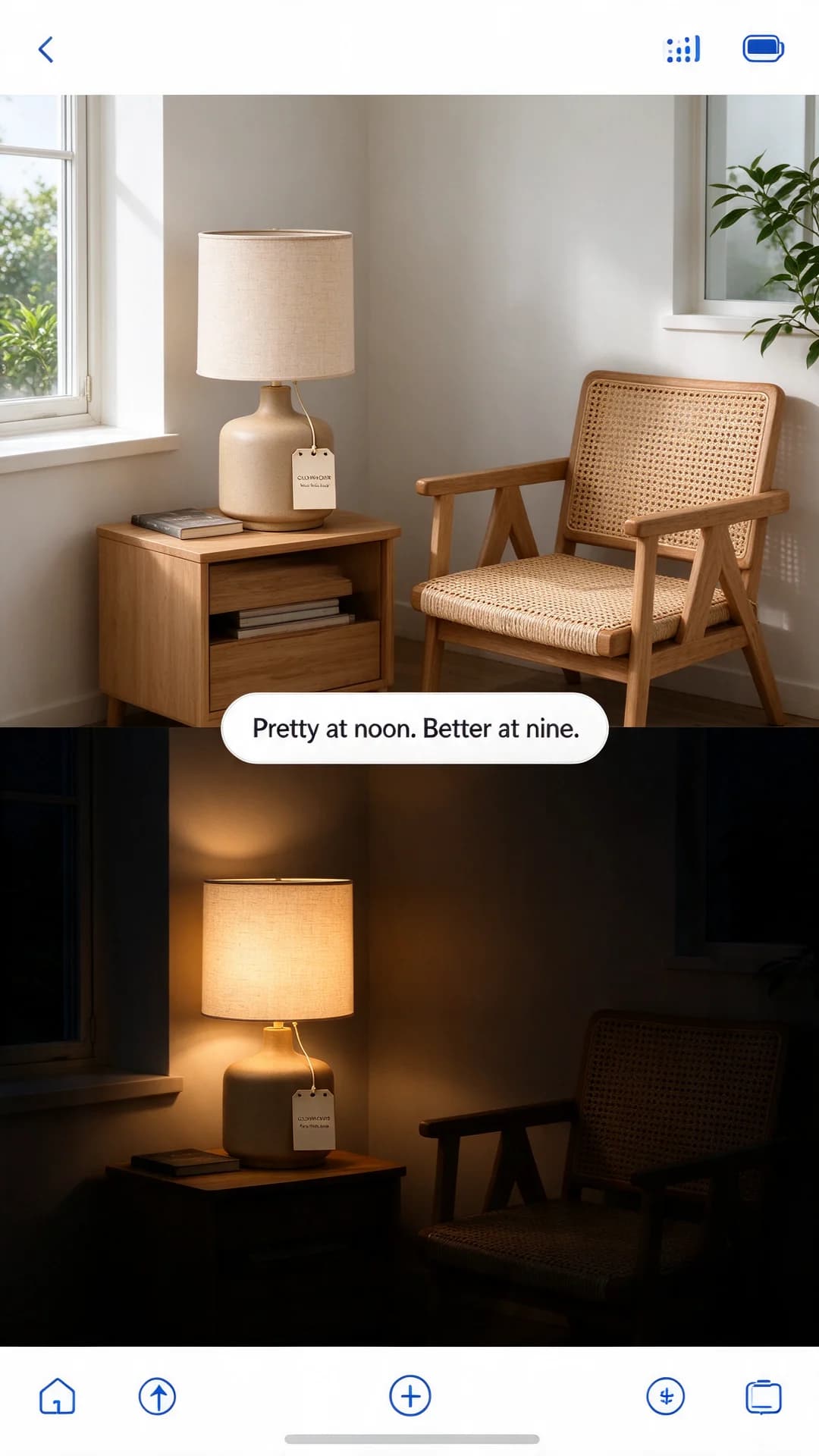
A vertical split of the same reading corner, a Glowmoor Dune Table Lamp switched off in noon daylight above and glowing at night below, headline "Pretty at noon. Better at nine."

GlowmoorDay and nightReels · 9:16 still

“Pretty at noon. Better at nine.”

The split shows the lamp as an object in daylight and as a light at night, which covers both things a buyer is judging. The tall frame suits the stacked layout, and the same image can open a Reel that cuts from one half to the other.

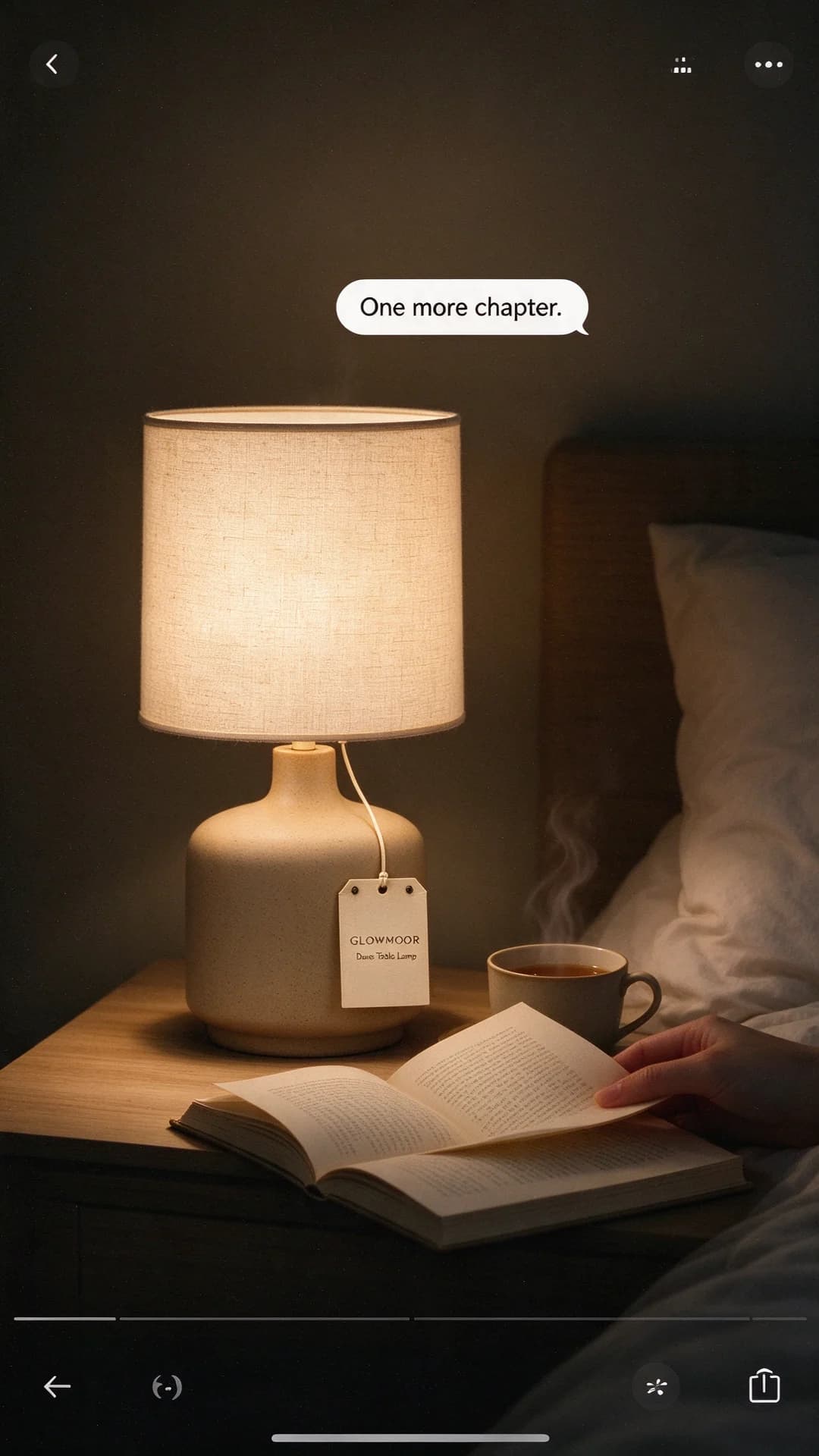
A Glowmoor Dune Table Lamp glowing on a bedside table beside an open paperback and a cup of tea in a dark bedroom, with a speech-bubble caption reading "One more chapter."

GlowmoorBedtime ritualStories · 9:16 still

“One more chapter.”

A small, familiar habit gives the lamp a job at a particular time of night. The dark room around the pool of light shows the lamp is gentle enough for a bedside, with no brightness figure needed.

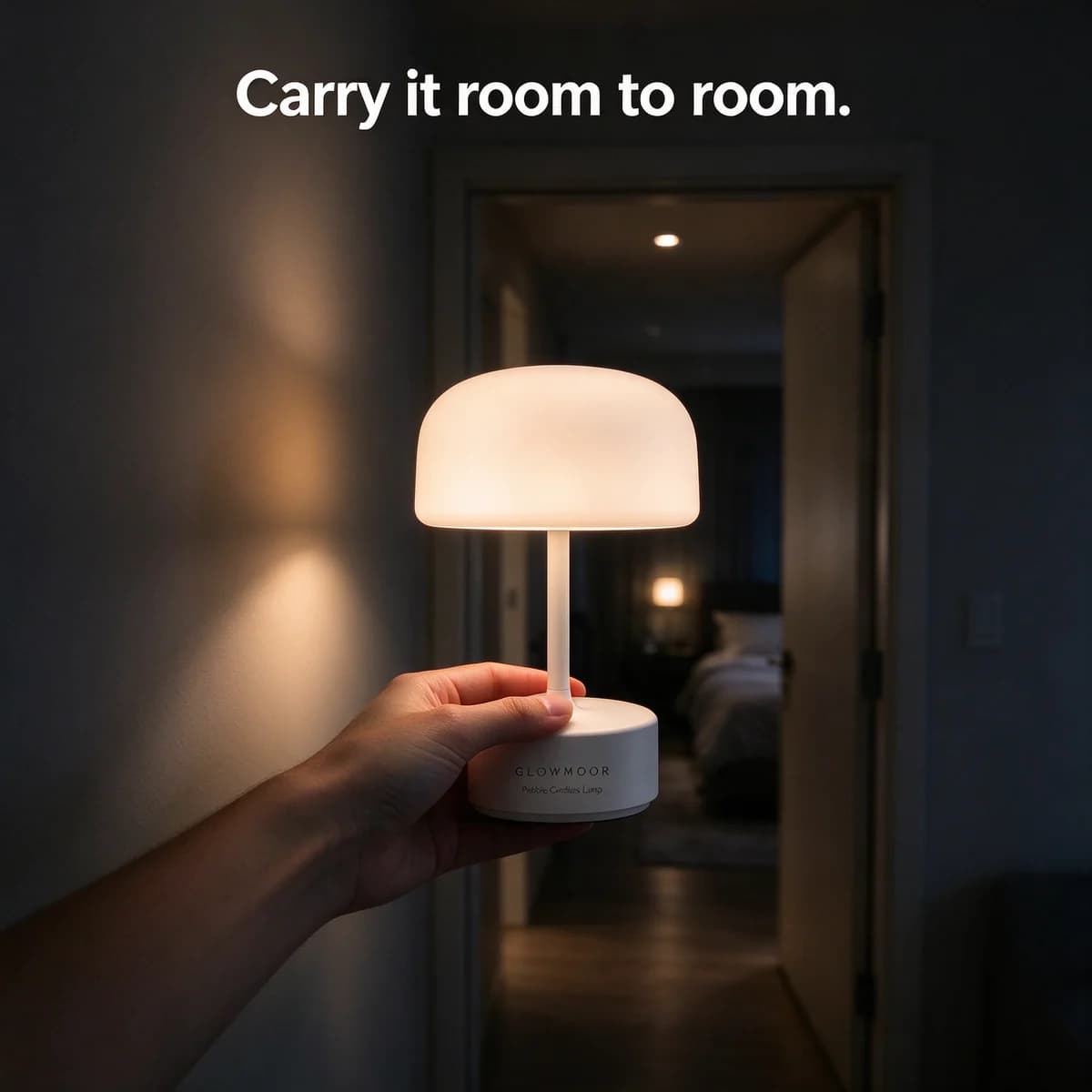
A hand carrying a glowing Glowmoor Pebble Cordless Lamp along a dim hallway towards a bedroom door, headline "Carry it room to room."

GlowmoorPortabilityFeed · 1:1 image

“Carry it room to room.”

A hand carrying the lamp tells people its size and weight faster than dimensions in the copy. It also suggests one lamp doing the work of several, which appeals to renters who would rather not buy a light for every room.

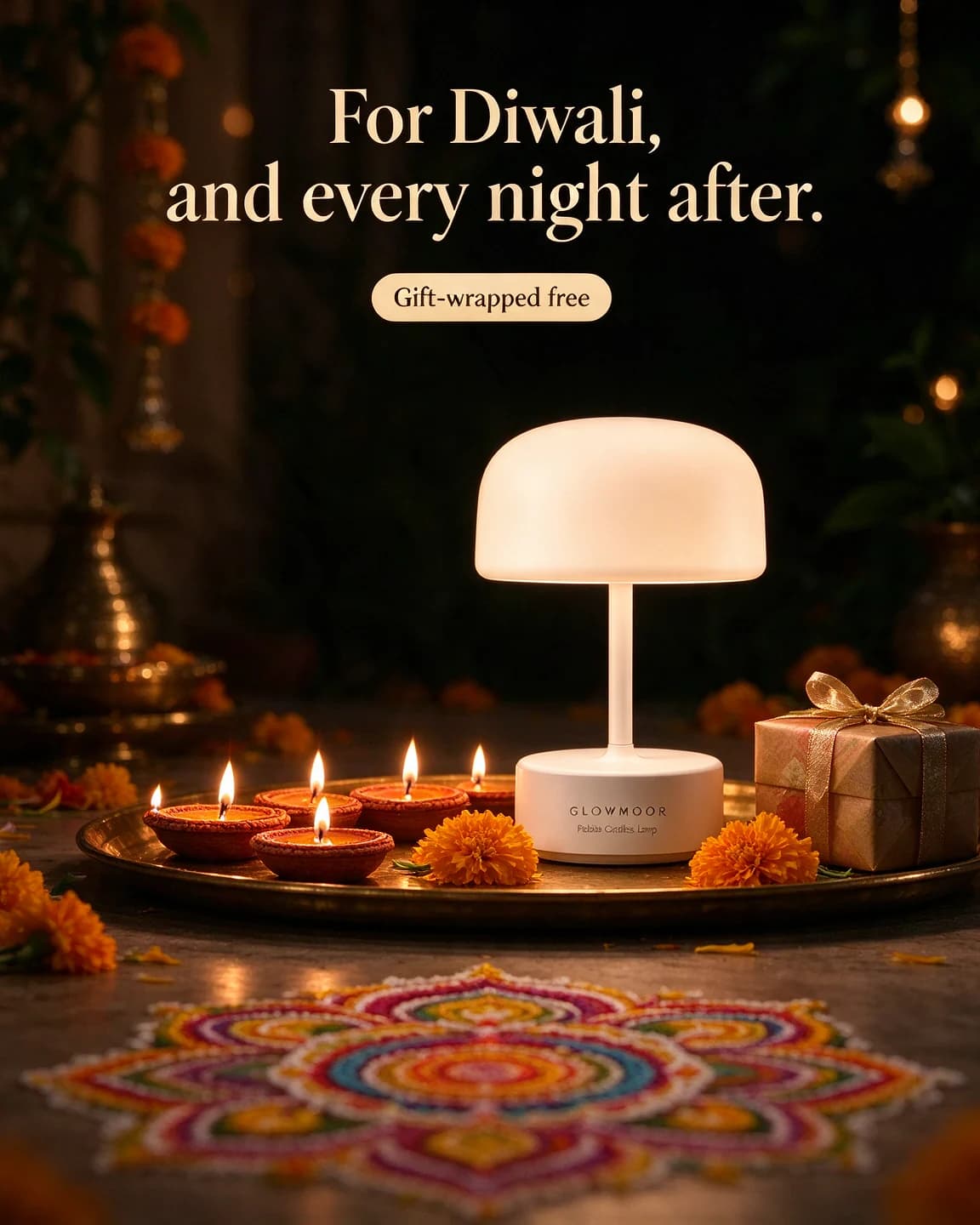
A glowing Glowmoor Pebble Cordless Lamp on a brass tray beside lit clay diyas, marigolds and a wrapped gift, headline "For Diwali, and every night after." and a "Gift-wrapped free" tag

GlowmoorFestive giftingFeed · 4:5 image

“For Diwali, and every night after.”

Homes fill with light at Diwali, and the line positions the lamp as the gift that keeps being used once the diyas are packed away. The gift-wrap tag removes one more job for the giver in the busiest week of the season.

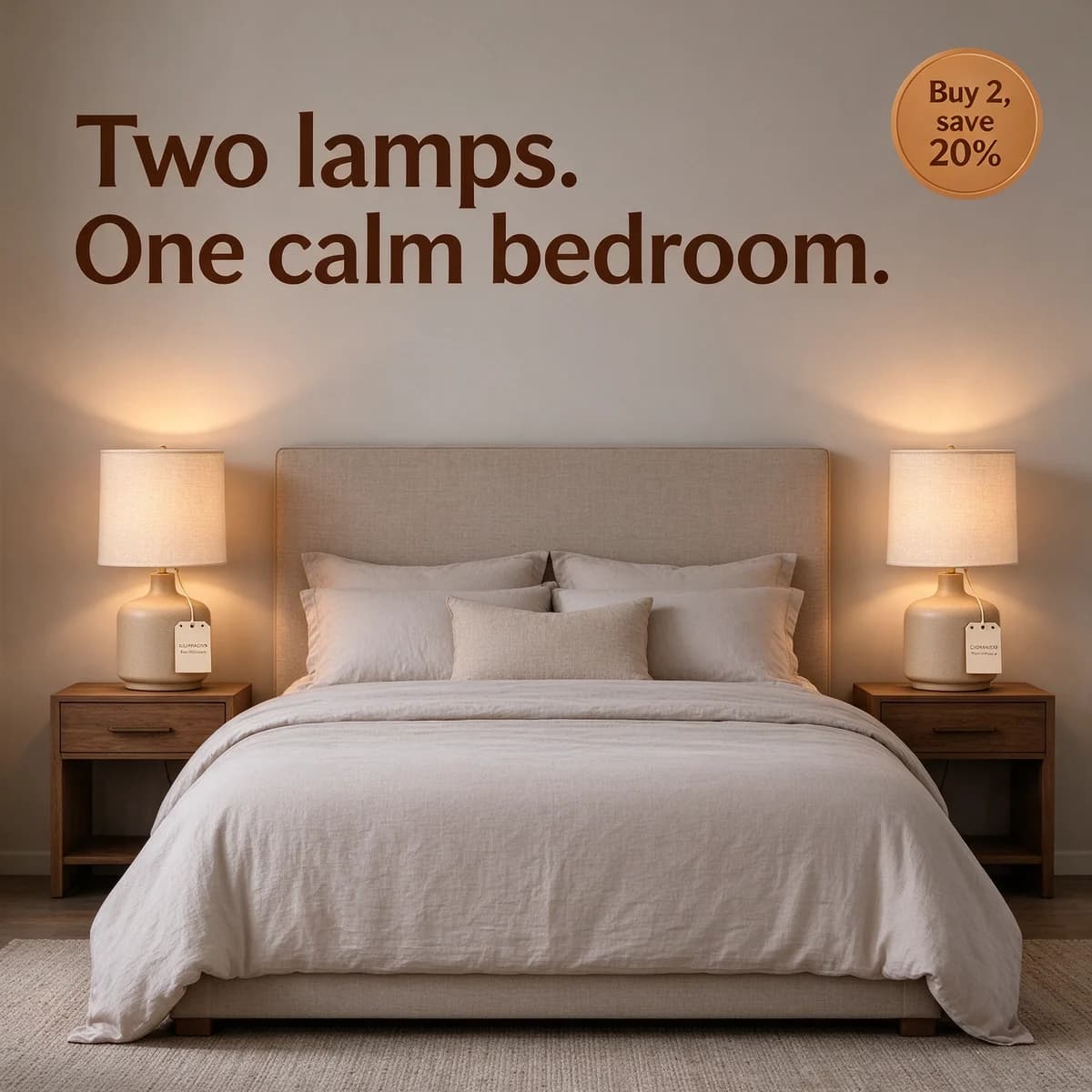
Two glowing Glowmoor Dune Table Lamps on matching bedside tables either side of a made bed, headline "Two lamps. One calm bedroom." and a round sticker reading "Buy 2, save 20%"

GlowmoorPair offerFeed · 1:1 image

“Two lamps. One calm bedroom.”

Bedside lamps are usually bought in pairs, so a two-lamp offer matches how people already shop for them. Symmetry reads instantly at thumbnail size, and the sticker does the selling without cluttering the scene.

Two more ways to try

  • GGlowmoorSponsored
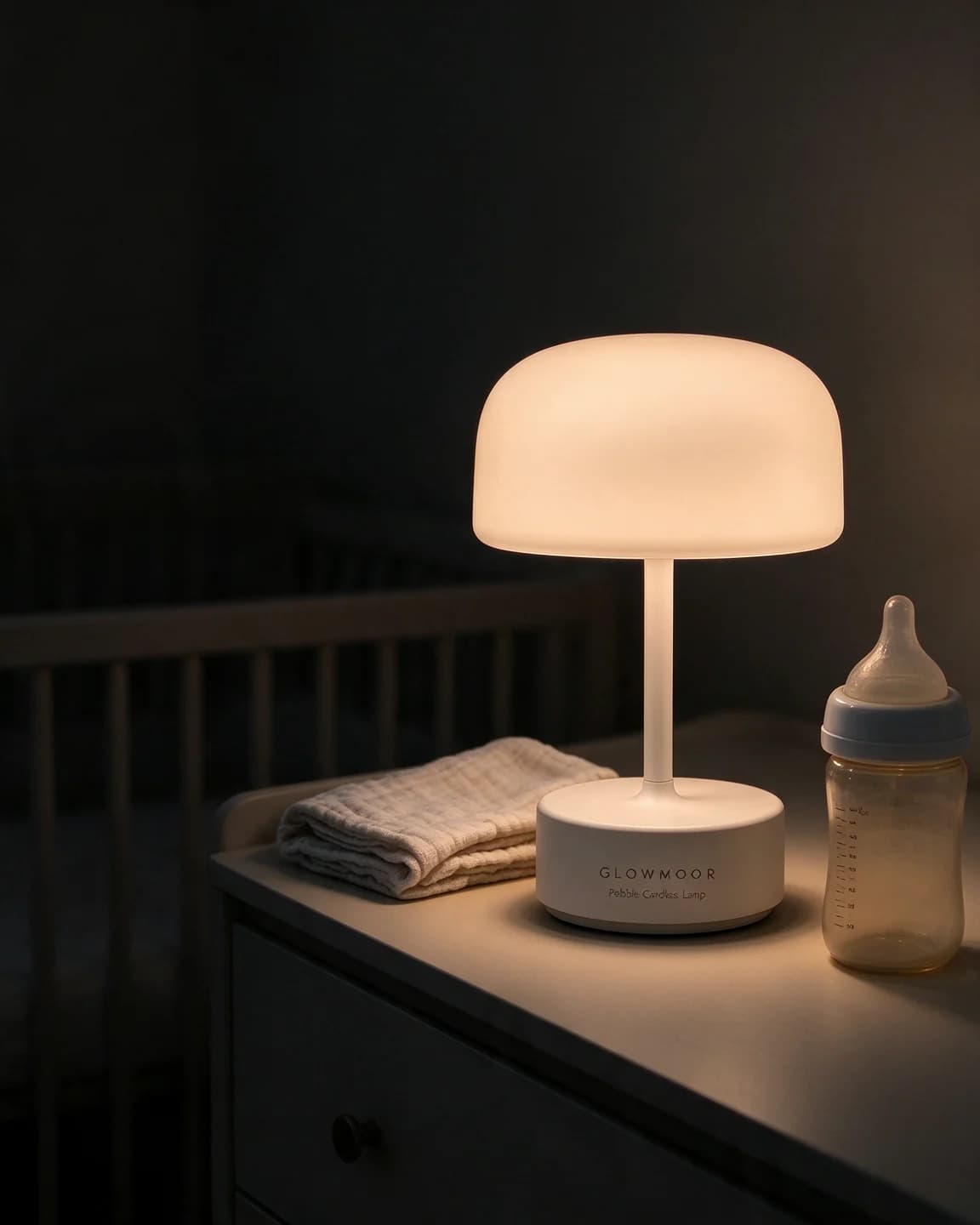
    3 a.m. feed. No big light.Cordless, dimmable, carried in from the hall
    G@glowmoor
    Pebble Cordless LampShop the lamp

    UGC ad

    Night feeds are a moment new parents know well, and the photo shows a light low enough to work by in a dark room. The phone-photo frame keeps it personal, which suits a message about keeping things quiet.

    Edit this template
  • GGlowmoorSponsored
    GGlowmoor@glowmoor

    Lighting tip: three low lamps at different heights make a room feel calmer than one bright ceiling light. Start with the corner you sit in most.

    7:40 PM

    Dune Table LampShop lamps

    Social post ad

    A useful tip in the brand's own voice reads like a post rather than an ad, and it teaches people to buy lamps as layers of light instead of one replacement bulb.

    Edit this template

Angles to test first

  1. 1

    Swap the big light

    Set your lamp against harsh overhead light. Everyone has sat under a ceiling light at night, so the comparison needs no explaining.

  2. 2

    Day and night

    Show the lamp switched off in daylight and switched on after dark. People live with the object all day and the light for a few hours, so both have to look good.

  3. 3

    Cordless and portable

    For rechargeable lamps, show places without a socket: balconies, dining tables, a hallway during a power cut. The missing cable is the product.

  4. 4

    Rituals by the hour

    Reading in bed, a night feed, a dinner that runs late. A time of night gives a lamp a job and makes its light level obvious.

  5. 5

    Honest specs

    Colour of the light, brightness levels, how charging works and how long a charge lasts at a stated setting. Lighting buyers compare these, so say them plainly and only as tested.

  6. 6

    Gifts and pairs

    Diwali, Christmas and housewarmings for gifting, bedside pairs for offers. Lamps are bought both as presents and in twos, so plan an ad for each.

15 hooks for lighting ads

  • Big light off. [Lamp name] on.
  • No socket? No problem.
  • [Dimmable]. [Cordless]. [Rechargeable].
  • Pretty at [noon]. Better at [nine].
  • One more [chapter].
  • Carry it [room to room].
  • For [Diwali], and every night after.
  • Two lamps. One calm [bedroom].
  • [3 a.m.] [feed]. No big light.
  • The [corner] you actually sit in deserves a lamp.
  • [Warm white], not [office white].
  • [Number] hours of light on one charge, at [setting].
  • Light for the [balcony] you never use after dark.
  • The lamp that still looks good [switched off].
  • Your [desk] at [6 p.m.], sorted.

Moments to plan for

  • Diwali (Oct–Nov)

    Homes fill with light for the festival, so lamps fit as gifts and as part of the festive look. Put the last order date for delivery before the day in the copy.

  • Darker evenings (Oct–Feb, northern hemisphere)

    Earlier sunsets make the swap-the-big-light angle feel timely. Shoot at dusk so the glow has some daylight to compete with.

  • Christmas and New Year (Dec)

    Gift guides and party tables. If you sell string lights, check the product rules for each market before the ads go live.

  • Exam season (Feb–Mar in India)

    Desk lamps for late study, sold on adjustable light and a tidy desk, never on claims about eyesight or concentration.

  • Monsoon (Jun–Sep)

    Stormy evenings and power cuts for cordless lamps on a dining table or in a hallway, with charge time and run time stated as tested.

  • Ramadan and Eid (dates move each year)

    Long evening tables for iftar lit low and warm, then gift sets for Eid with a delivery cut-off that allows for the date being confirmed late.

Watch out for

  • Selling in the EU? The European Commission's page on light-source labels (checked October 2026) says any visual advertisement for a specific light-source model must show its energy efficiency class and the range of classes on the label, which has run from A to G since 1 September 2021. Luminaires haven't needed their own label since 25 December 2019, but the same page notes that some luminaires can meet the definition of a light source, so check how yours is classified.
  • Selling in India? The Bureau of Indian Standards' compulsory registration list (checked October 2026) includes self-ballasted LED lamps, fixed general-purpose LED luminaires and LED lighting chains, each tied to its own Indian Standard. Confirm that the exact model in your ad is registered before the ad goes live.
  • Don't let the AI paint a glow your lamp can't make. Image models happily add a perfect amber halo. BulkAds' pre-flight check compares the lamp's shape, label and colours with your photo, but it can't know how bright or how warm your real bulb is, so compare each lit scene with a photo of the real lamp switched on.
  • Battery and brightness claims need a test behind them. "Lasts all night" and "lights the whole room" are claims. Say how many hours at which setting, and use lumens or plain words like "soft reading light" instead of vague promises. Avoid sleep and eye-strain claims entirely.
  • Style lamps safely. No fabric shade pressed against a curtain, no cable trailing across a walkway, no cordless lamp out in the rain unless it's rated for outdoor use. Whatever an ad shows can read as a recommendation.

Practical pointers, not legal advice. Check Meta’s Advertising Standards and your local rules.

Why lighting ads sell the hour, not the object

People don't really buy a lamp. They buy the hour after sunset when the ceiling light is off and the room feels smaller and warmer. That's why a lamp photographed switched off on white makes a weak ad: it shows the object and none of what the object does.

Every ad above shows light doing something. It pools on a throw in "Big light off. Dune on." It lets a dinner run late on a balcony in "No socket? No problem." It stays low enough to read by in "One more chapter." The lamp is always sharp and clearly the hero, but the light is the pitch.

Lighting also has a problem most categories don't: the product has two looks. Shoppers live with a lamp all day as a piece of decor and only see it lit for a few hours, so an ad that only shows the glow can leave people unsure whether they'd like it at noon. The split frame in "Pretty at noon. Better at nine." answers that in one picture.

Shooting lamps switched on and switched off

Every lamp brand should have both states in its first batch:

  • Off, in daylight. The base, the shade and the materials in a real room. This is the decor shot, for people matching a lamp to a sofa or a side table.
  • On, at dusk or night. The glow, the pool of light and the shadows it throws. Blue hour is ideal, when a little daylight is left and the room still has shape.
  • Both, side by side. A split frame, a two-card carousel, or a short video that cuts from one to the other.

Watch the colour of the light. A warm white lamp should look warm white, not orange, and a cooler desk lamp shouldn't be tinted to match a cosy brand palette. If the glow in the ad doesn't match what arrives, the reviews will say so.

The scenes that sell lamps

Build scenes around a time of night and a place:

  1. The swap. A living room with the ceiling light off and the lamp on, just after sunset.
  2. The bedside. A book, a cup of tea and a dark room around the pool of light.
  3. The place without a socket. A balcony table, a garden step, a dining table far from the wall. For cordless lamps this is the whole story.
  4. The hand. A lamp being carried, switched on or set down. It shows scale and how easy the lamp is to use.
  5. The festival. Diwali, Christmas or Eid, with the lamp among diyas, candles or a laid table, as a gift or as part of the look.

A first batch for a lamp brand

Pick one hero lamp and split the batch between its two states. Six lit scenes cover the big-light swap, a ritual by the hour and a place without a socket. Six daylight or product-led ads cover the spec stack, the day-and-night split and a pair offer. If the lit half wins clearly, your buyers are paying for the glow. If the daylight ads hold their own, the shape and the materials are doing more of the selling than you thought, and the next batch should show more of them.

Keep most ads 4:5 for feeds, make the day-and-night split in 9:16 for Reels and Stories with the text inside the safe area (the safe zone checker shows where), and save square for offers. The lit and unlit versions of one scene are two takes on one idea, so read them the way the guide to concept and iteration testing suggests. For a sense of what a two-lamp start uses, 24 image ads, 12 for each lamp, come to 48 credits, and turning the two best into short videos adds 40 more.

Night scenes hide one technical trap. A dark frame that looks moody on a laptop can turn to mud on a phone held at half brightness, so check every dusk and bedside ad on a phone before it goes live, and lift the shadows until the room around the lamp is still readable.

Bedside lamps are usually bought in pairs, which makes a pair offer the natural price-led ad. On a $46 lamp, "buy 2, save 20%" takes the pair from $93 to $74, a saving of $19. Put two lit lamps in the frame rather than one, so the offer is visible before anyone reads the sticker.

Specs belong in the caption, not on the lamp

On the image, keep to one line. In the primary text, give lighting buyers what they compare: the colour of the light in words (warm white, neutral, daylight), the number of brightness levels, the bulb type and fitting if it takes one, how charging works, how long a charge lasts at a stated setting, and the height and shade width. "Soft, warm light, three brightness levels, about [hours] at the lowest setting on a full charge" is clearer than "all-night glow".

If you sell in the EU or India, read the labelling and registration notes in the watch-outs above before the first ad goes live. The EU rule covers the advert itself, not only the box.

Turning one lamp photo into lit scenes

Start with one clear photo of the lamp on a plain background, switched off, so the base, the shade and any printed name are easy to read. Then take a second photo of it switched on in a dim room. The batch doesn't need it, but it's the reference you'll hold every AI glow up against.

BulkAds builds your brand kit from your website, including your products, prices and the proof points you state, and product photo ads places your real lamp into each scene. Ask for scenes in plain words ("dusk living room, ceiling light off, lamp on, warm light on a sofa throw"), choose 4:5, 1:1 or 9:16 and make up to 12 ads in a batch. Every ad comes with a headline, primary text and description for its own angle, and the pre-flight check flags lamps that drifted from your photo and on-image words that are misspelled. It judges the object, so the warmth and reach of the light are the part you check by eye.

When a scene sells, a short video ad with a slow push-in towards the glowing shade is the obvious next format. The motion is gentle on purpose, so the lamp and the headline stay steady. For anything more involved, like a real hand turning the dimmer, film it yourself and run that clip from Meta Ads Manager, with the BulkAds stills and AI videos alongside it.

Keeping a winning lamp ad going

If this wins Make this next
The dusk living room The same room an hour later, with only the lamp lit
A bedside scene The same light in a reading corner, on a desk or on a dining table
"Big light off." on the table lamp The same line on the cordless lamp
The balcony dinner An indoor table during a monsoon power cut
A 4:5 still A short video with a slow push-in towards the shade

For the rest of the room, see the bedding ad examples, and the home decor examples for candles and planters.

Questions people ask

What makes a good lamp ad?

The lamp switched on in a real room at the time of day it's used, with the glow clearly visible and the lamp itself still sharp. Add a daytime shot so people can judge it as decor as well.

Should lighting ads show the lamp on or off?

Both. Use the lit version to sell the mood and the unlit version to show the design, or put them side by side in one frame.

Do lighting ads need to show an energy label?

In the EU, a visual advert for a specific light-source model must show its energy efficiency class and the range of classes on the label, according to the European Commission's guidance checked in October 2026. Rules differ by market and by product type, so check yours.

Can AI make lamp ads without a night-time photoshoot?

Yes. BulkAds can place your real lamp into dusk and night scenes from one product photo. Check that the glow in each scene matches your lamp's real colour and brightness before you launch.

Is Glowmoor a real brand?

No. Glowmoor is fictional, and every ad on this page was made with AI for illustration.

Keep going

Every brand on this page is fictional and every ad was made with AI for illustration — they’re examples, not case studies.

BulkAds AI is an independent product and is not affiliated with, endorsed or sponsored by Meta Platforms, Inc. Facebook and Instagram are trademarks of Meta Platforms, Inc.

More ad examples

Your next fifty ads are one link away.

Paste your website, meet your brand kit and see your first batch in minutes. 7 days for $9.99 — cancel anytime.

yourbrand.comMake my ads

See pricingExplore featuresBrowse the library