What makes fashion ads work
Clothes are bought on three questions: will it look good on me, will it fit, and will it feel right? A beautiful photo only answers the first. The fashion ads worth copying answer all three — the look with a full-length shot, the fit with honest details, the feel with fabric and climate.
The examples above cover the main jobs:
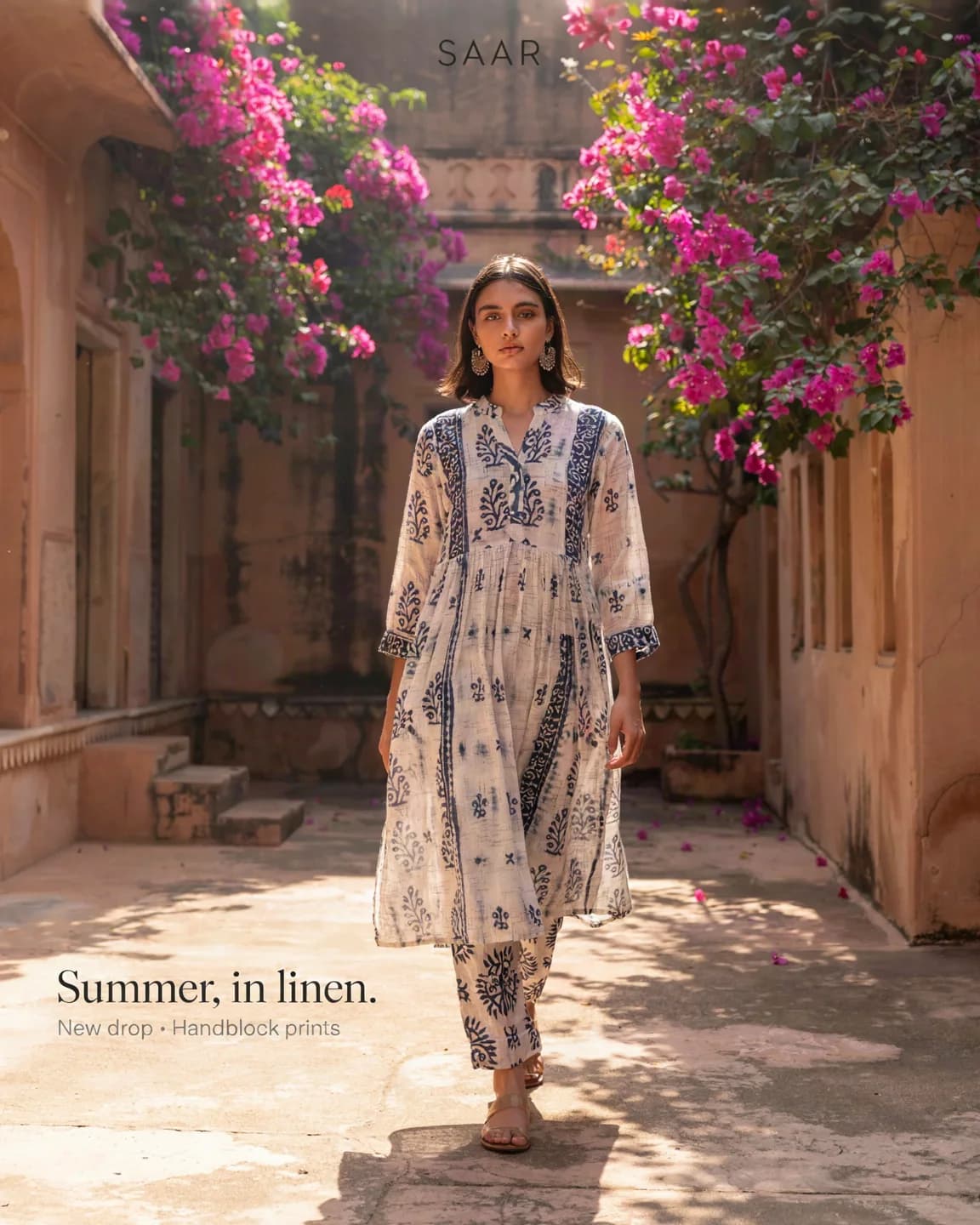
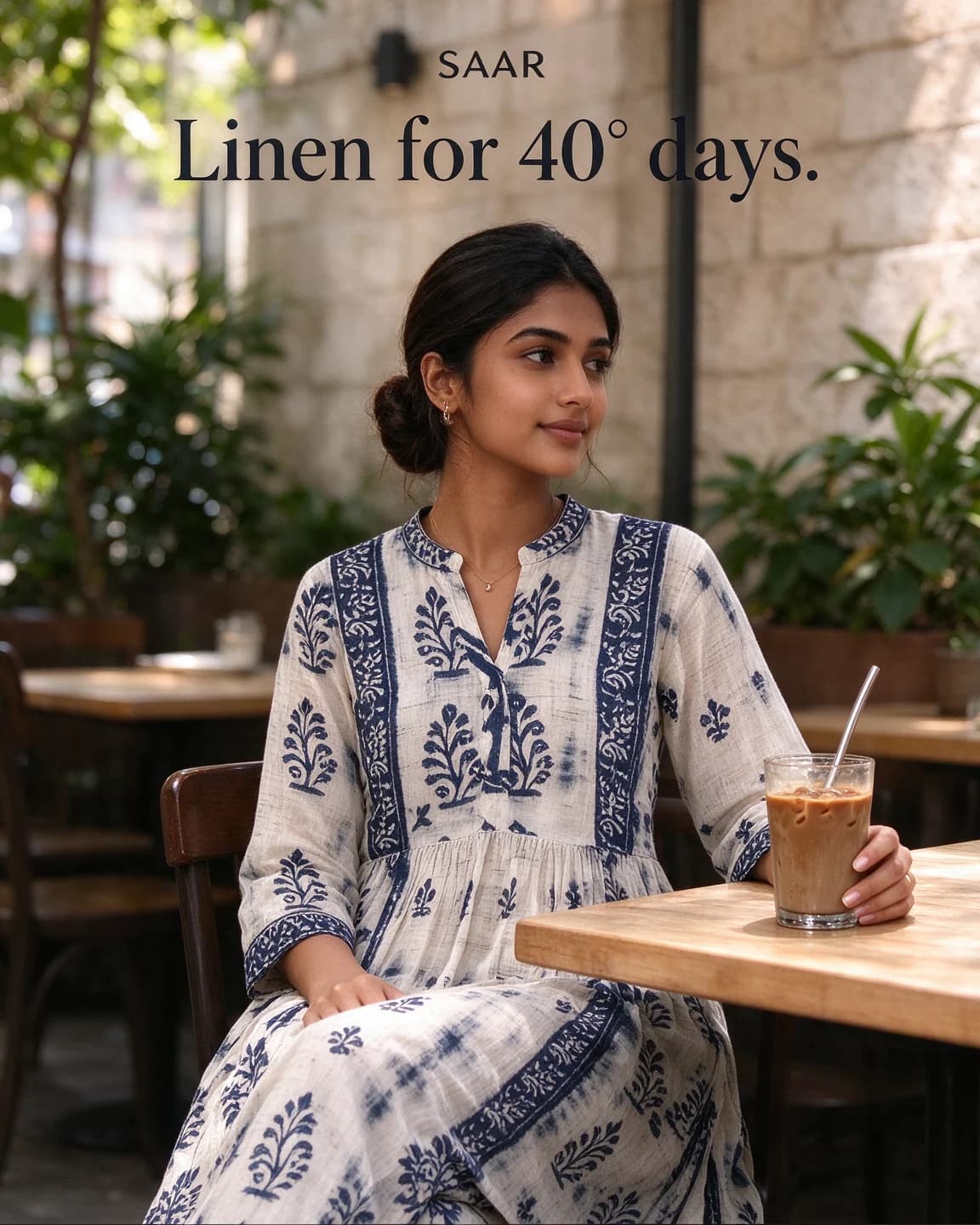
- Season and fabric. "Summer, in linen." and "Linen for 40° days." make the material the reason to buy.
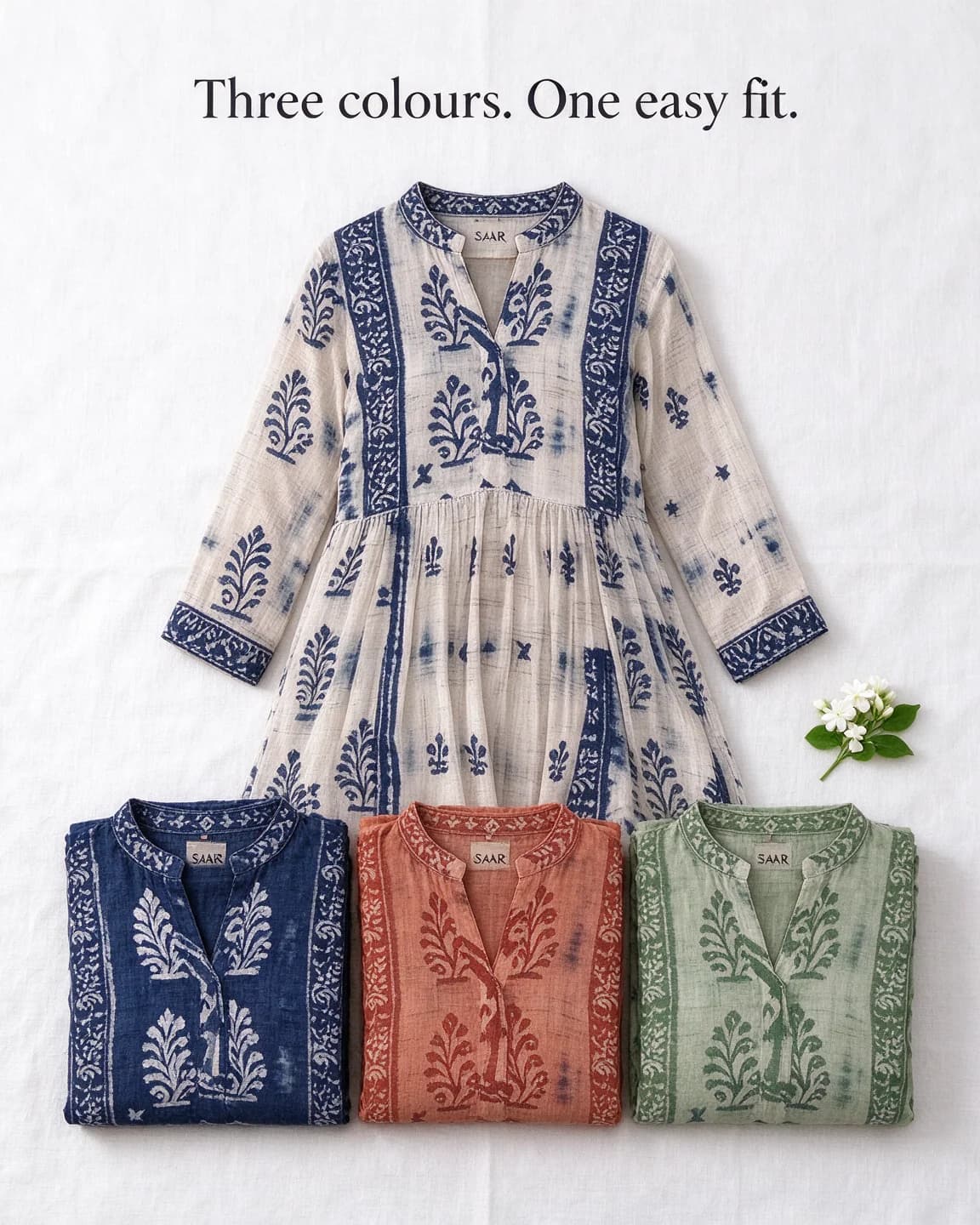
- Choice. "Three colours. One easy fit." answers "does it come in my colour?" before anyone taps.
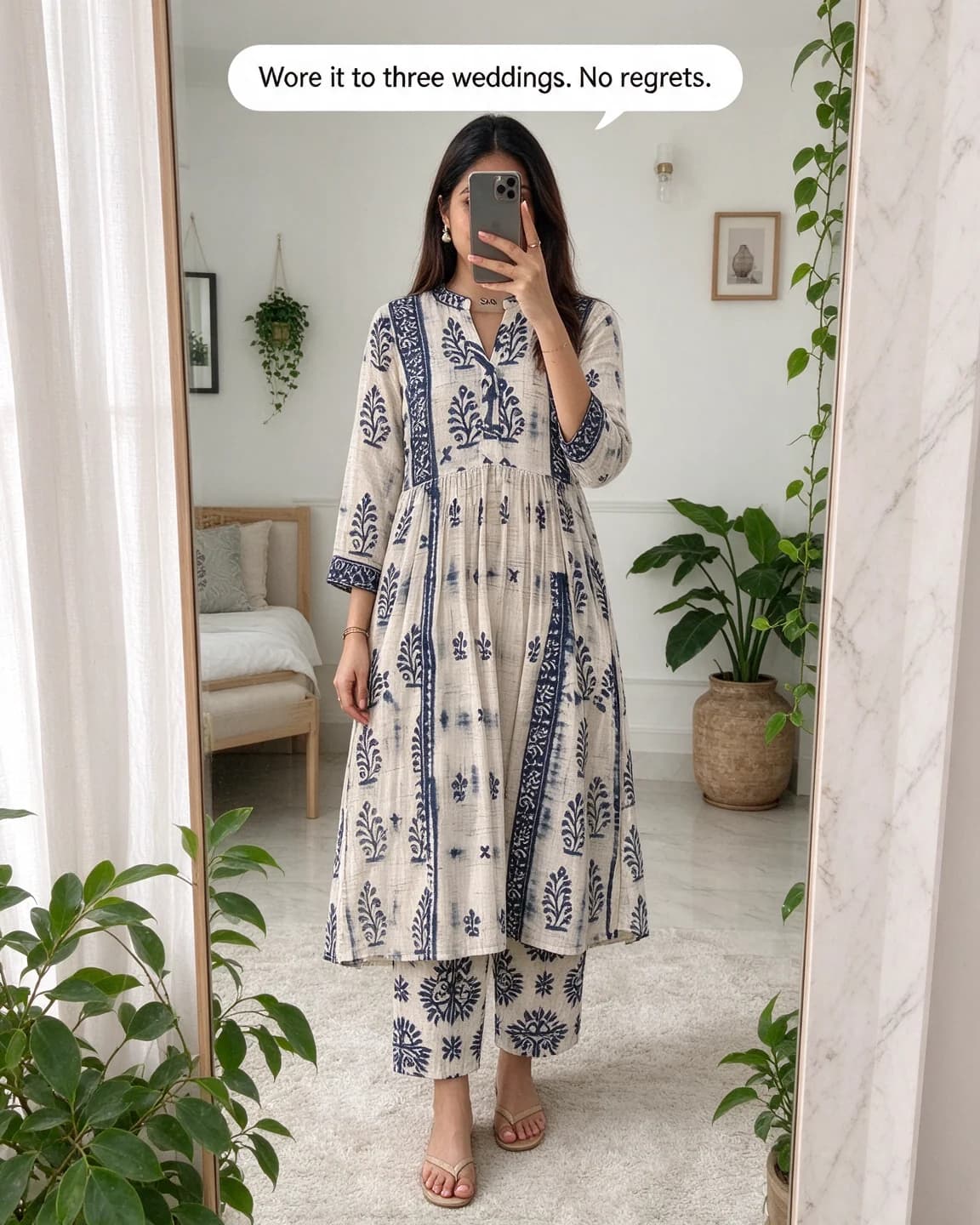
- Real wear. A mirror selfie captioned "Wore it to three weddings. No regrets." shows the piece on a person, in an ordinary room.
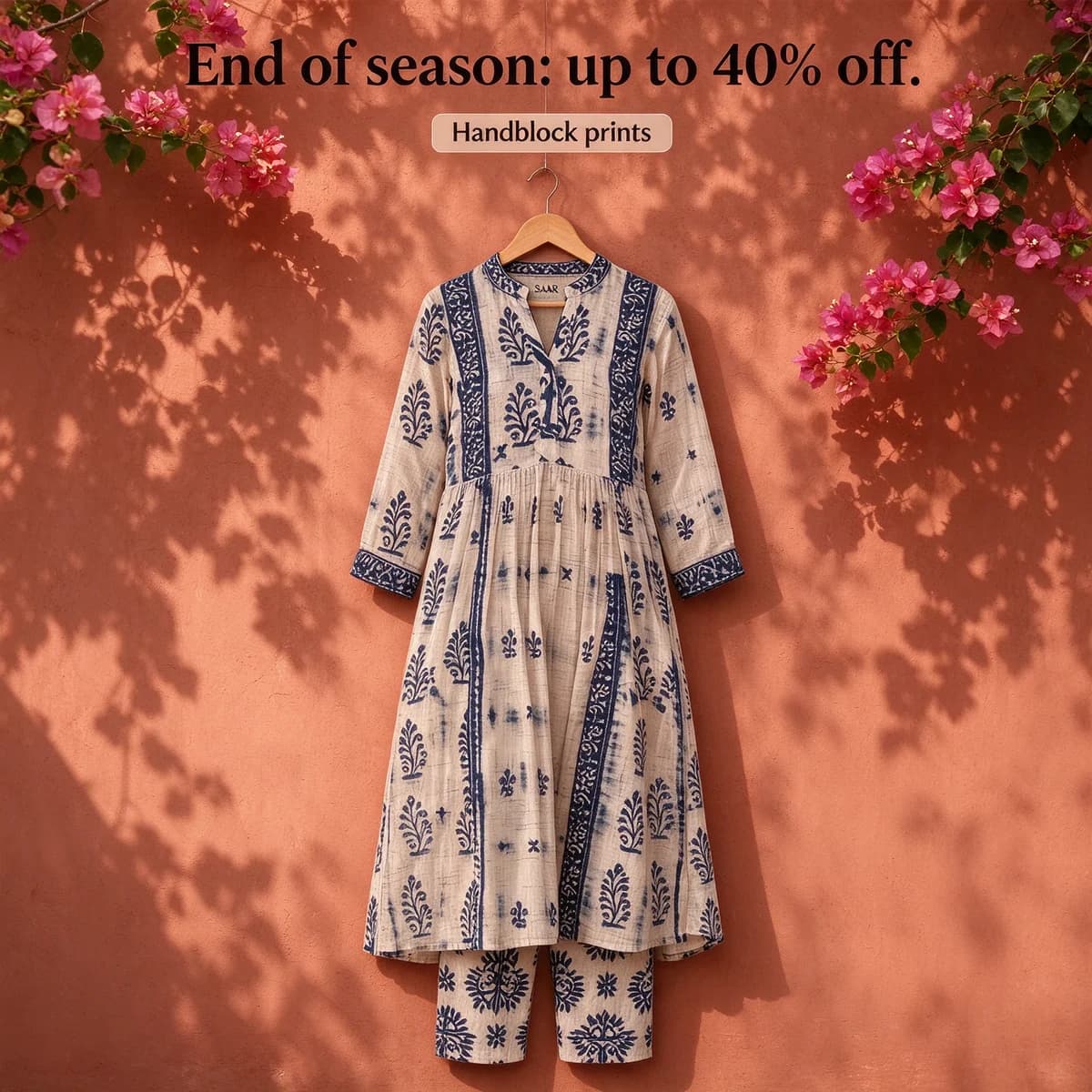
- A reason for the discount. "End of season: up to 40% off." feels honest because it explains itself.
In India, where the same kurta might be worn to the office, a family lunch and a friend's mehendi, showing more than one occasion can be one of the most persuasive things an ad does.
Fashion also tends to wear out creative quickly. Shoppers see new styles every day, and the same shot starts to feel familiar fast. Plan for a steady flow of new ads rather than one big shoot per season — our creative refresh schedule guide covers the rhythm.
A two-week testing plan for clothing brands
Test angles on one hero product first — the piece you'd most like to sell — before rolling winners out across the range. Five angles make a good start:
- New drop or season — full-length, on location.
- Lifestyle or occasion — the piece where it'll actually be worn.
- Range and choice — colourways in one frame.
- UGC review — a mirror selfie with a first-person caption.
- Fit, answered — model height and size, fit notes and exchange terms.
Keep sales and seasonal offers for retargeting. Two or three versions of each angle gives you 10 to 15 ads. Our guide on how many ad creatives to test explains how to size the batch, and the creative test calculator shows what each ad needs to spend before you judge it.
If you sell a large range, don't let testing turn into one near-identical product shot per item. Practitioners report that Meta treats very similar ads as largely the same, so a few genuinely different angles on your best-sellers teach you more — see our guide to creative diversity.
Use 4:5 for feeds — clothing looks best tall — and 9:16 for Reels, where fabric moving in a breeze or a quick turn shows drape better than any still. Save 1:1 for flat lays and sale posters.
Creative tips for clothing ads
- Pair a full-length shot with a detail. The silhouette sells the look, a close-up of the print or weave sells the quality.
- Movement shows drape. A walk, a turn or a breeze tells people how the fabric hangs.
- Match the location to the customer. A courtyard for festive wear, a café for everyday, an office for workwear.
- Show more than one body. If the range fits many sizes, prove it.
- Put fit facts in small text. "Model is 165 cm, wears S" costs nothing and prevents returns.
- Check colour against the real garment. Filters and AI edits can shift a shade, and buyers notice when the parcel arrives.
Use the primary text for what the image can't show: fabric weight and feel, care instructions, the fit in words ("relaxed through the body, falls just below the knee"), delivery time before an occasion and the exchange policy. For festive and wedding pieces, an order-by date in the first line often matters more than any adjective.
Turning a winning fashion ad into variants
- Same pose, new colourway. Every colour gets its own version of a proven frame.
- Same piece, new occasion. The kurta that sold at the café, now at a wedding lunch or on a work trip.
- Same angle, new product. If UGC reviews sell the kurta, try them on the next best-seller.
- New format. A short vertical video of the fabric moving.
Keep a note of which angle each winner used. Over a season, that record tells you whether your customers buy on fabric, fit, occasion or price — which is worth more than any single ad.
BulkAds works from your real product photos — clean flat lays or on-model shots are ideal — and checks each ad against them so the print and colour stay true. See product photo ads.
Questions people ask
What makes a good fashion ad on Instagram?
It shows how the piece looks, fits and feels: a full-length shot, a fabric close-up, and fit details such as model height and size. A clear occasion or season gives people a reason to buy now.
Should clothing ads use models or flat lays?
Test both. On-body shots show fit and drape, while flat lays show colour and detail and work well for ranges.
How often should fashion brands refresh their ads?
Usually more often than most categories, because the same audiences see new styles constantly and familiar shots wear out. Plan a steady flow of new creatives rather than one big batch per season.
Can I use AI-generated models in fashion ads?
You can, but the garment must look exactly as it does in real life — colour, print, fit and length. Misrepresenting the product leads to returns and complaints, whatever tool made the image.
Is Saar a real brand?
No. Saar is fictional, and every ad on this page was made with AI for illustration.
Keep going
- Features
Product photo ads
Your real packshot, in every scene
- Guides
How often to refresh Facebook ads: a schedule that fits your budget
Ads wear out at different speeds. A starting refresh schedule by monthly budget, what makes ads tire sooner, three kinds of refresh and a short weekly routine.
- Guides
How many ad creatives should you test? The number, and the maths.
A straight answer, then the simple sum that sets your real number, how many new ads to launch each week at your spend, and when to stop testing and scale.
- Ad templates
Listicle ad template
A numbered headline and three to five reasons, strongest first
- Ad templates
Feature callout ad template
Your product in the middle, short labels pointing at what matters
- Ad examples
Jewelry ad examples
Gold jewelry ads for gifting, everyday wear and honest plating
Every brand on this page is fictional and every ad was made with AI for illustration — they’re examples, not case studies.
BulkAds AI is an independent product and is not affiliated with, endorsed or sponsored by Meta Platforms, Inc. Facebook and Instagram are trademarks of Meta Platforms, Inc.