Why bedding is a touch problem
A sheet set is one of the hardest things to sell in a feed. It's flat, it's usually pale, and the thing people care about most, how it feels in the middle of the night, can't be seen. A packshot of a folded stack on white tells a shopper the colour and very little else.
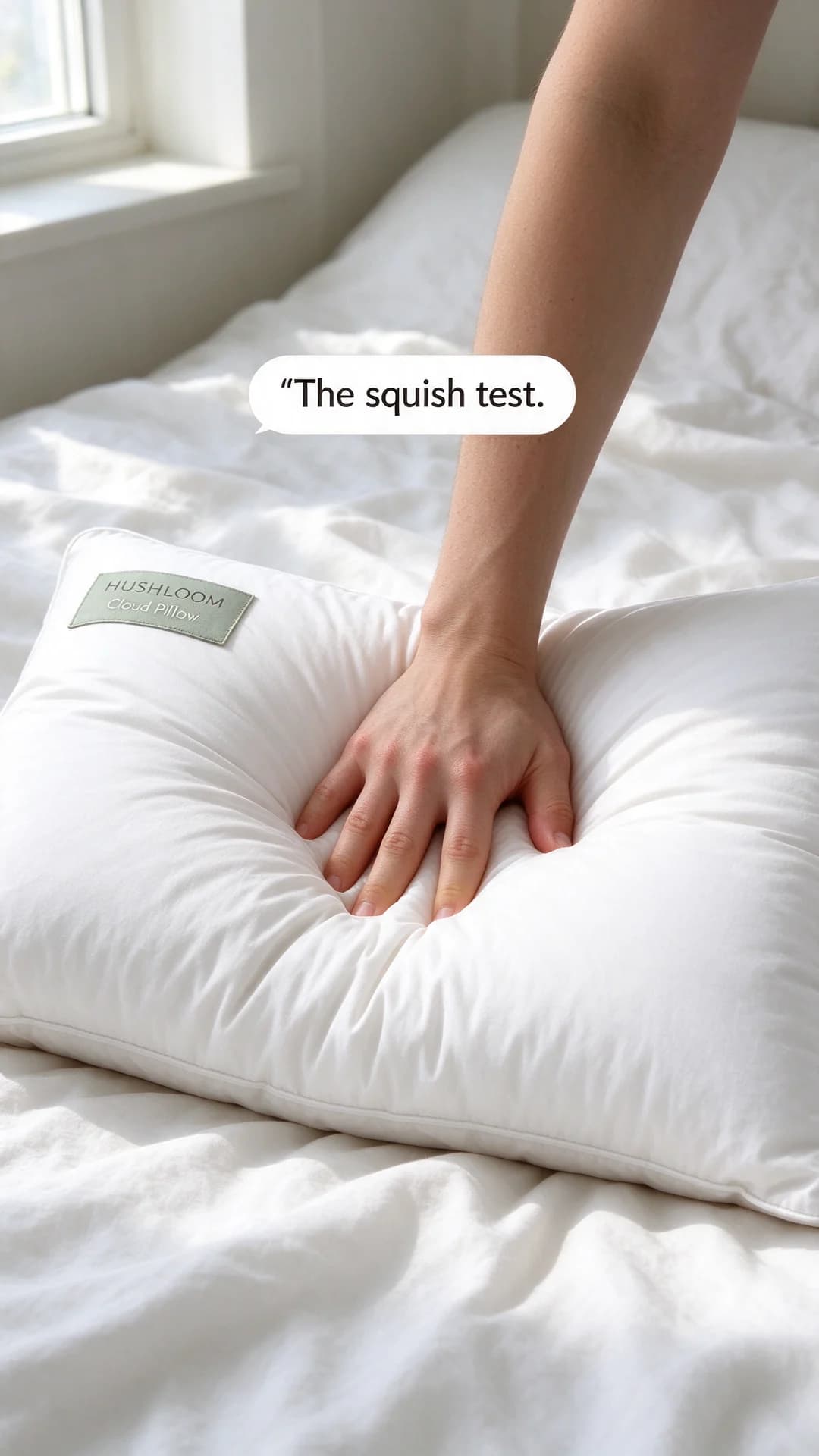
So good bedding ads borrow the senses a photo can carry. Light grazing across linen shows the slub of the weave. A hand pressing into a pillow shows the loft. Sheets drying on a rooftop line hint at how the fabric behaves after washing. None of these make a claim about sleep, and all of them answer a question a shopper would otherwise ask in the comments.
Each of the eight ads above picks one of those questions and answers it with the picture:
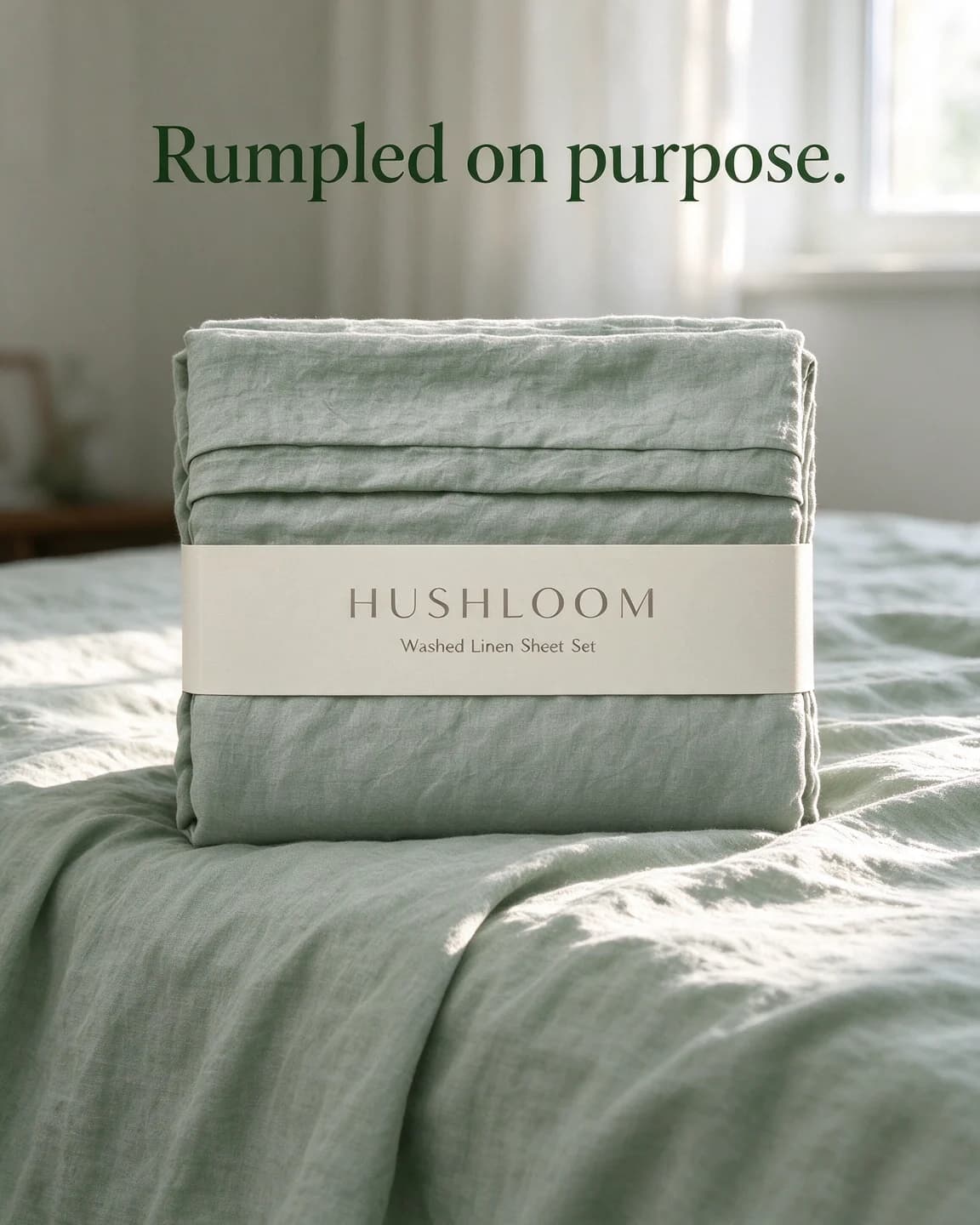
- Does it crease? "Rumpled on purpose." turns the answer into the look.
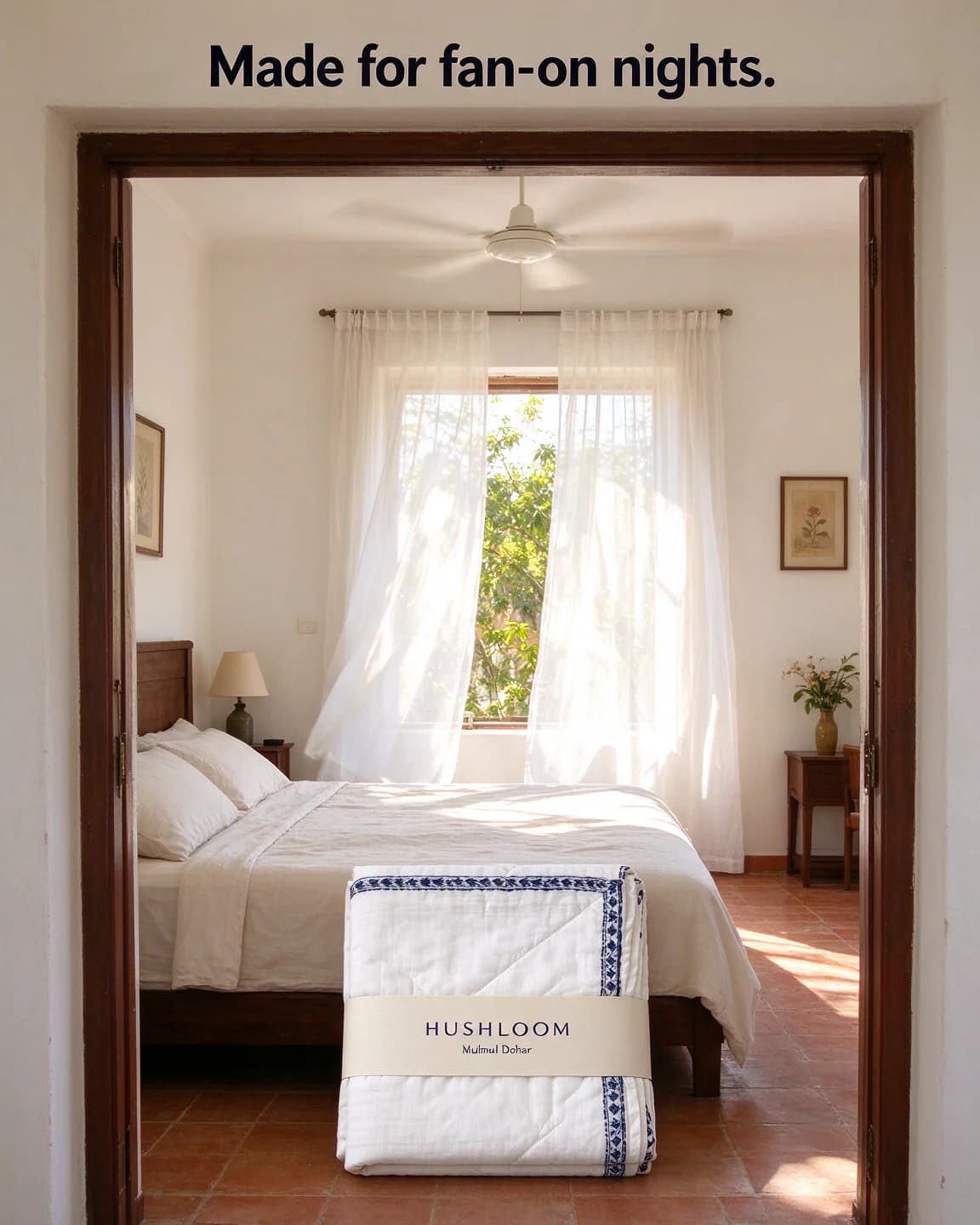
- Is it too warm for summer? "Made for fan-on nights." puts the dohar in a hot room under a spinning fan.
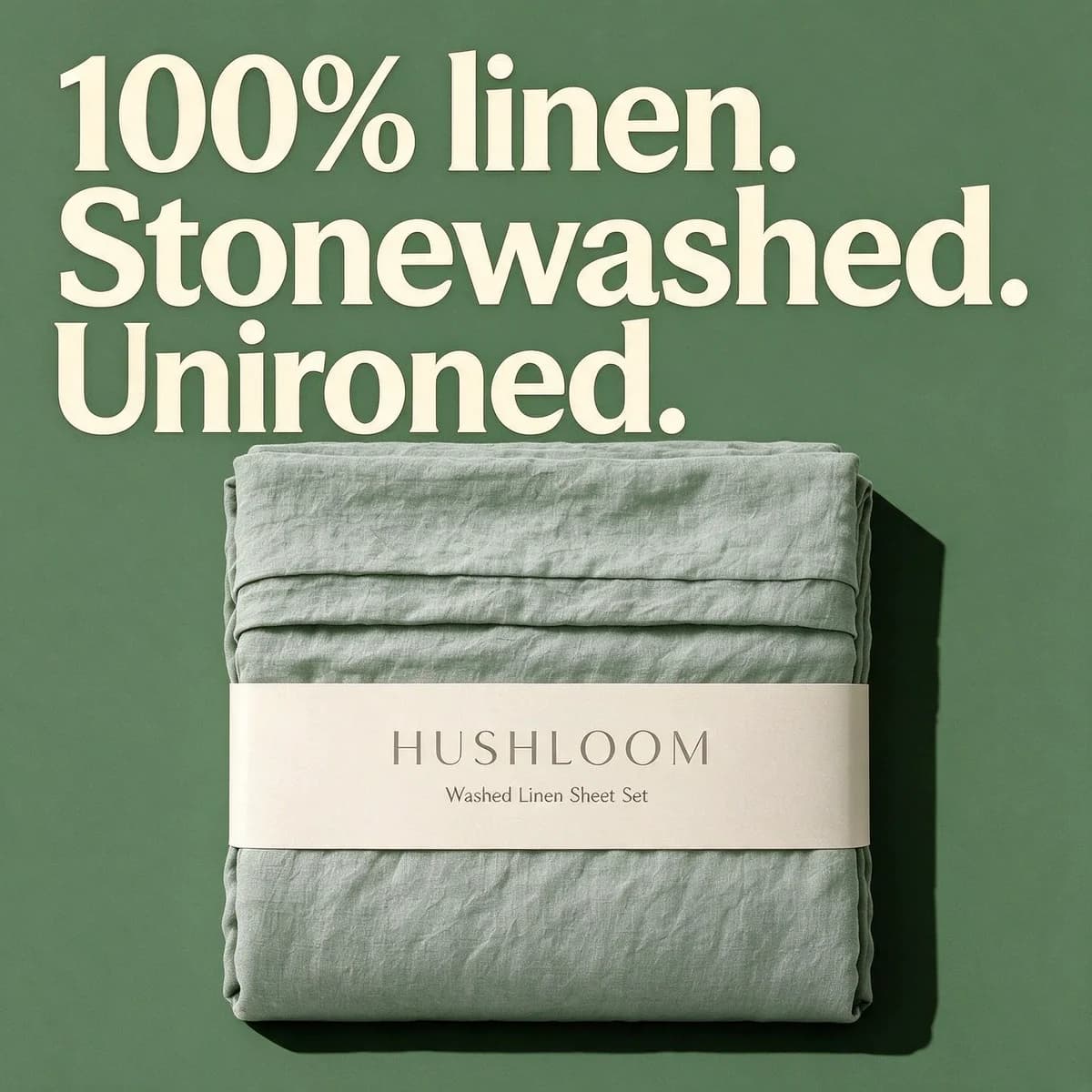
- Is it really linen? "100% linen. Stonewashed. Unironed." puts the facts first.
- Is the pillow soft or firm? "The squish test." lets a hand show it.
The shots that sell sheets, dohars and pillows
Most bedding brands can cover a first round with five kinds of shot:
- Texture macro. A tight crop of the fabric in low side light. Linen, mulmul and sateen each catch light differently, so this is where your fibre shows its character.
- The made bed in a believable room. A real bedroom rather than a hotel suite, with the product folded at the foot of the bed or turned down. A window, a fan or a lamp in the frame makes the season and the time of day obvious.
- The hand test. A hand on the fabric, pinching a corner or sinking into a pillow. It's the closest a screen gets to the shop floor.
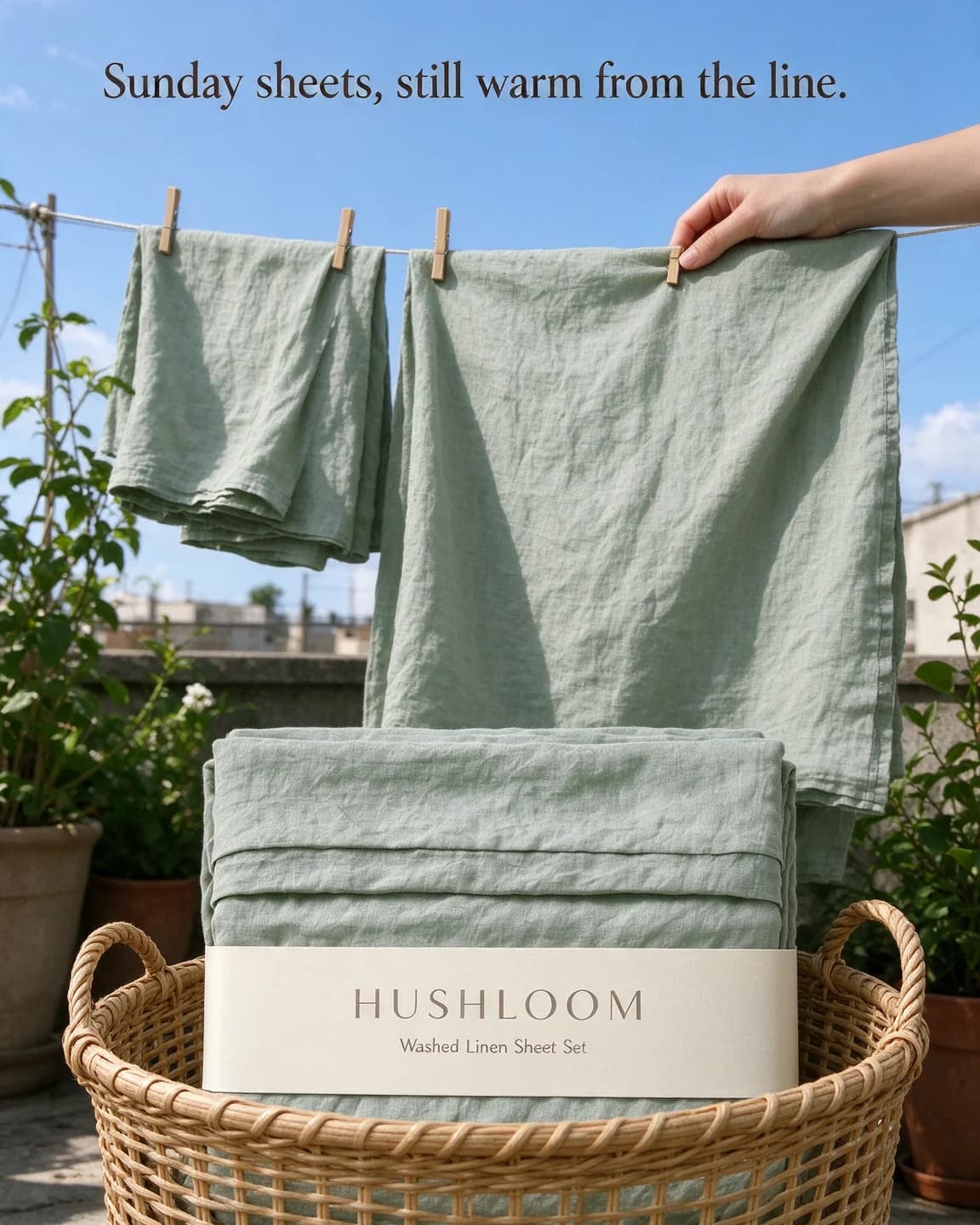
- Care in action. A washing line, a drying rack, a basket of folded laundry. It answers "can I wash this at home?" without a care label on the image.
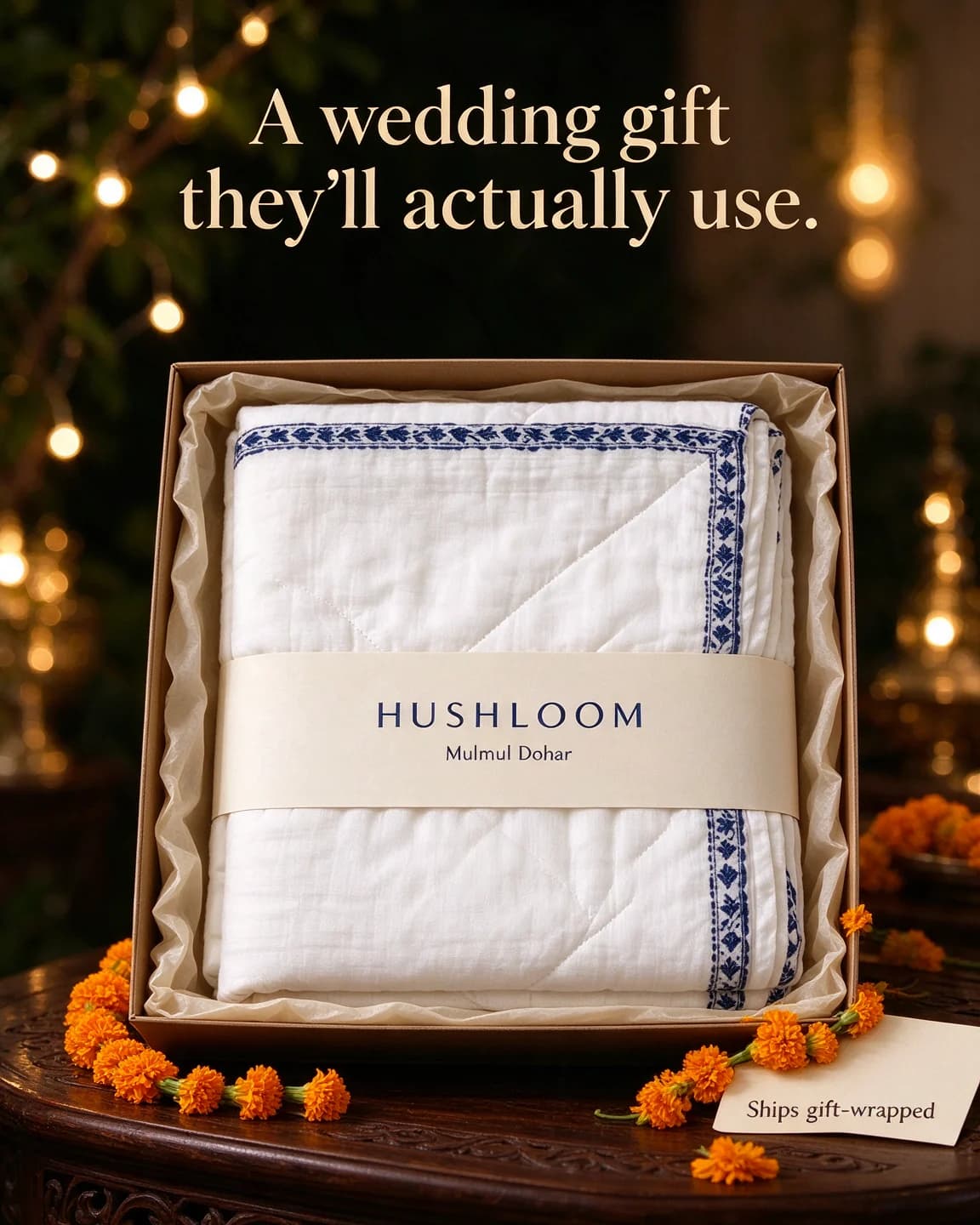
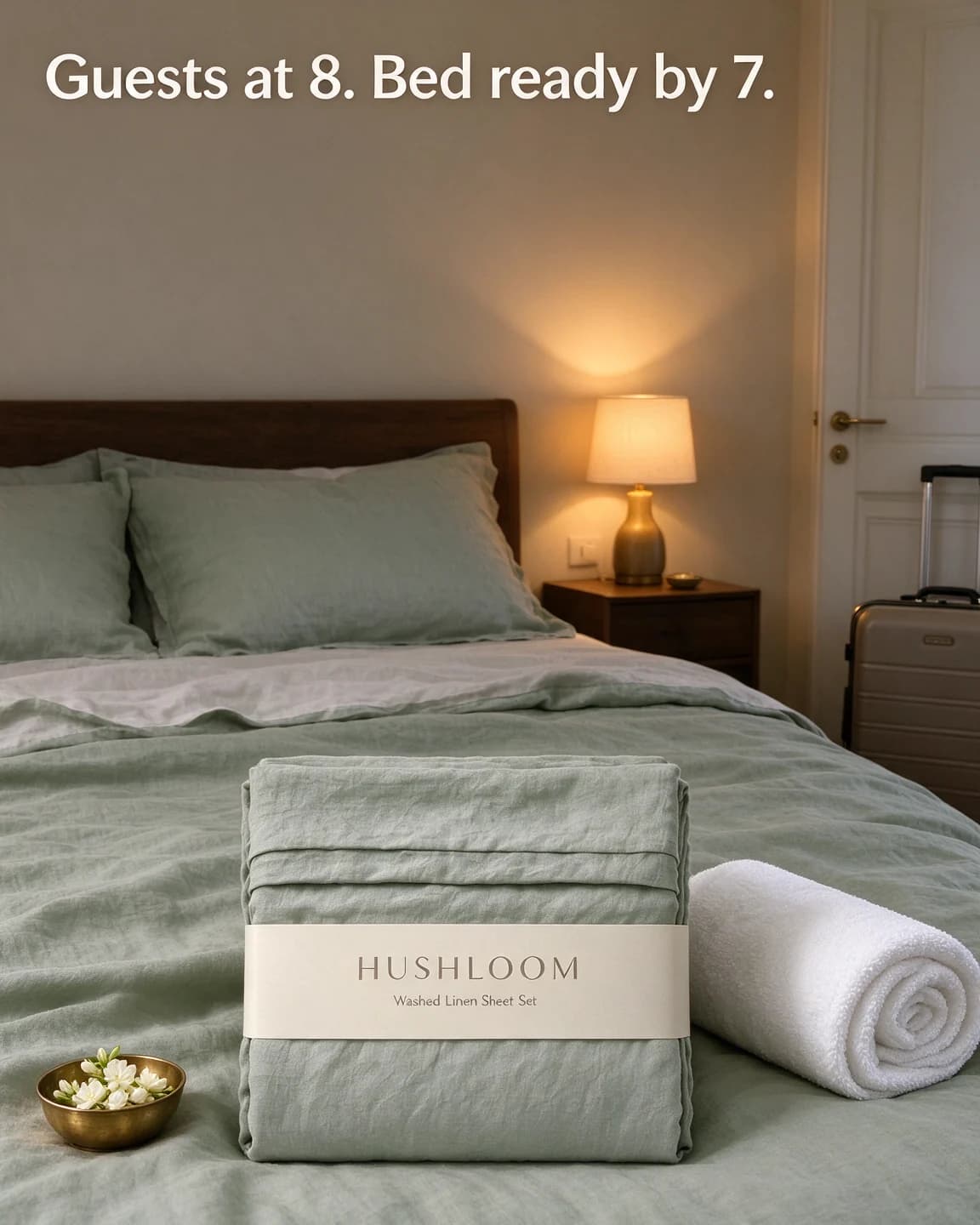
- The occasion. A gift box for weddings, a guest room before a visit, a hostel bed in August. These are for buyers who aren't shopping for their own bed.
Pale bedding on a pale background disappears in a busy feed, so give each frame one point of contrast: a dark wooden bed frame, a terracotta floor, a sage wall. Then protect the product's true colour. A white sheet that turns cream under warm lamp light in the ad will look wrong when the parcel is opened.
A first round of bedding ads
Start with one hero product and four angles, three versions of each:
- Texture (macro and hand shots)
- Climate fit (which nights or which season it's for)
- Fibre facts (the honest spec, said boldly)
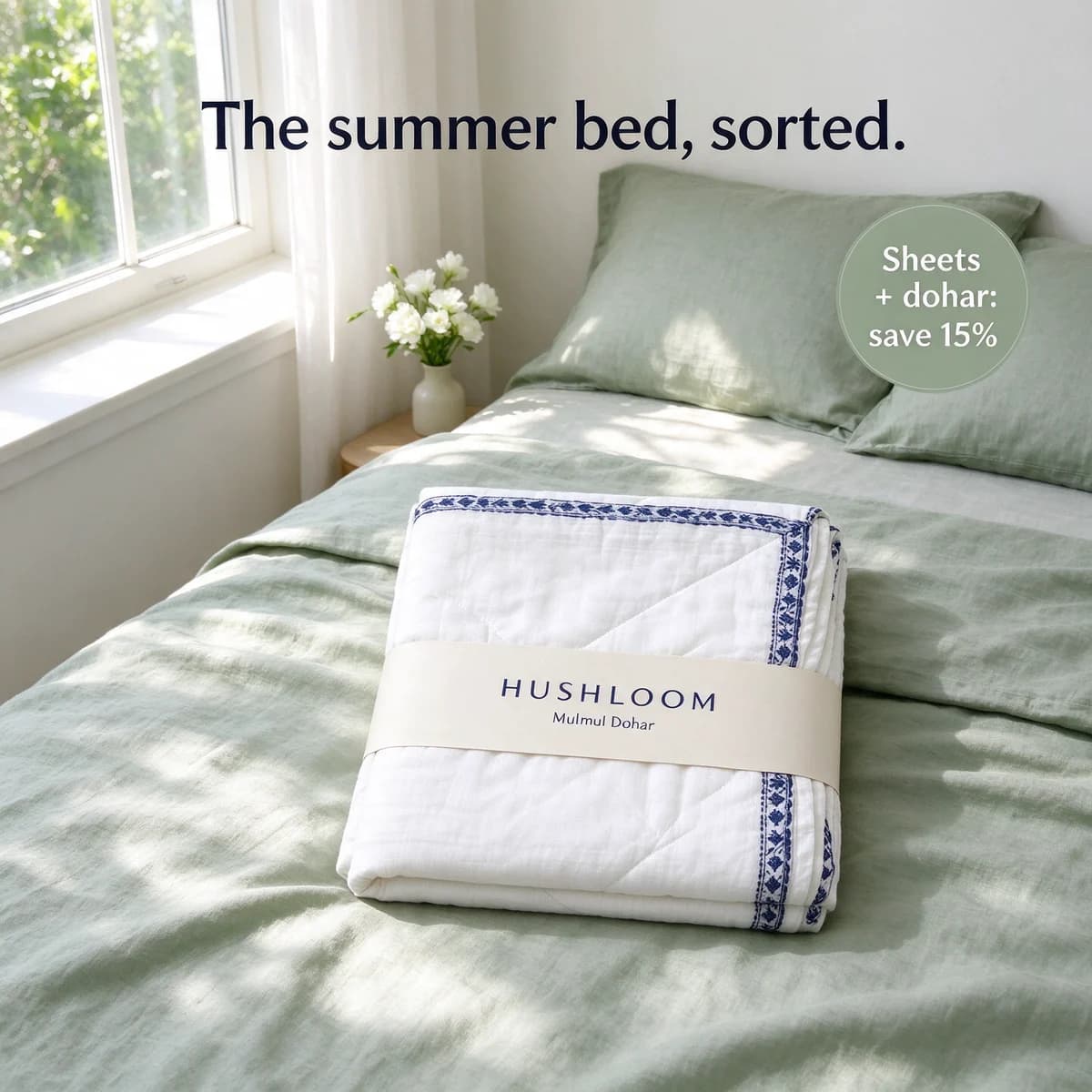
- An offer built on a real set (sheets with a dohar, pillows in pairs)
That's 12 ads, which is one full BulkAds batch. Make most of them 4:5 for feeds, where a tall bedroom photo fills more of the screen, and one or two 9:16 for Stories, where the hand-test shot feels at home. The guide to how many ad creatives to test covers how many to run at once, and the creative test calculator works out how much each ad should spend before you judge it.
Bundles deserve a worked example, because bedding is so often bought as a set. Say the sheet set sells at $37 and the dohar at $21, so $58 together. Fifteen percent off makes the bundle $49, a saving of $8.65. Test the sticker both ways, as the percentage and as the amount saved, because the two can land differently once the price climbs.
Judge the round on purchases. Pretty bedroom ads often collect saves from people decorating in their heads, which is pleasant but doesn't pay for the cotton.
Words on the image, words in the caption
Keep the overlay to one idea and a handful of words. "Rumpled on purpose." works because it says exactly one thing. The detail belongs in the primary text: the fibre and the weave, the thread count stated honestly, the sizes in centimetres or inches, how to wash it, and how the fabric changes over the first few washes if you've tested that.
A simple caption pattern for bedding is one feel sentence, one fact sentence and one practical sentence. For example: "Stonewashed linen that feels lived-in from the first night. [Fibre and origin], woven in a loose plain weave. Fits mattresses up to [your depth] deep, machine wash warm." The brackets are deliberate. Fill them only with facts you can show.
Making the batch from one folded set
You don't need a bedroom shoot to make any of this. In BulkAds each product in your brand kit carries its own photo, so the sheet set, the dohar and the pillow each need one clean shot. Pale fabric on a white backdrop loses its edges, so photograph a white or ivory set on light grey instead, fold it so the weave faces the camera, and keep the band or label readable.
The kit also holds your colours, fonts, voice and the proof points your website states. The AI is told to use those and not to invent new claims, and you still review every ad, so check that a line like "100% linen" only appears on the products where it's true.
Pick up to 12 ads per batch, choose 4:5, 1:1 or 9:16, and either describe the scenes you want ("hot afternoon bedroom, ceiling fan, dohar folded at the foot of the bed") or let the batch spread across angles. Product photo ads places your real product into each scene, and the pre-flight check compares every ad with your original photo and flags any where the product drifted. For bedding, look hard at the two things buyers notice the day the parcel arrives: the weave and the exact colour.
Each ad arrives with a headline, primary text and description written for its own angle, in any of 95+ languages if you sell to Hindi or Tamil readers as well as English ones. A 12-ad image batch uses 24 credits at 2 per image ad. When an angle starts selling, turn the still into a short video ad with gentle motion, such as light moving across the creases.
Variants that keep a winning bedding ad fresh
- Same line, new fabric. If "Rumpled on purpose." sells the linen, try it on the dohar's softer crinkle.
- Same scene, new season. The fan-on bedroom becomes a winter bed with the dohar layered under a heavier quilt.
- Same angle, new buyer. The guest-room ad for Diwali hosts becomes a hostel-bed ad for parents in July.
- Same still, new format. Rebuild a 4:5 winner in 9:16, with the headline inside the safe zone.
For other rooms in the same home, see the rug ad examples, the lighting ad examples and the home decor examples.
Questions people ask
What should a bedding ad show?
What a hand would notice in a shop: the weave in close-up, a hand on the fabric, a pillow being pressed, a made bed in a believable room. Pair it with one plain fact, such as the fibre or the season it's made for.
Can I put thread count in a bedding ad?
Yes, if it's measured honestly. Count each yarn once, plied or not, the way the ASTM test method does. If the yarn is two-ply, say so in words like "300 thread count, 2 ply yarn" rather than doubling the number, which is the example US FTC staff gave in a 2005 advisory letter.
Which ad format works best for sheets and quilts?
Use 4:5 images to compare angles in feeds and a 9:16 still or short video for Stories and Reels, where a hand-test shot feels natural. Square suits offers and bundles.
Do I need a bedroom photoshoot to make bedding ads?
No. A clear photo of the product on a plain background is enough for BulkAds to place it into bedroom, laundry and gift scenes. Check each scene for colour and texture before it goes live.
Is Hushloom a real brand?
No. Hushloom is fictional, and every ad on this page was made with AI for illustration.
Keep going
- Features
Product photo ads
Your real packshot, in every scene
- Ad templates
Listicle ad template
A numbered headline and three to five reasons, strongest first
- Ad templates
Problem–solution ad template
Name a problem people recognise, then show the fix
- Ad templates
Bundle ad template
Every item in the set, counted out, with one reason to buy them together
- Ad examples
Rug ad examples
Rug ads that sell scale, texture and how easy they are to live with
- Ad examples
Lighting ad examples
Lamp ads that sell the glow and the evening it makes
Every brand on this page is fictional and every ad was made with AI for illustration — they’re examples, not case studies.
BulkAds AI is an independent product and is not affiliated with, endorsed or sponsored by Meta Platforms, Inc. Facebook and Instagram are trademarks of Meta Platforms, Inc.