What garden tool ads need to show
A garden tool is judged in the middle of a job: the hundredth cut on a rose bush, the trowel in heavy clay, the moment a cheap spring gives up. A product photo of a tool on a shed wall shows none of that, which is why so many tool ads look like catalogue pages.
The eight Tillwick ads above take the opposite approach. Each one shows the tool doing something:
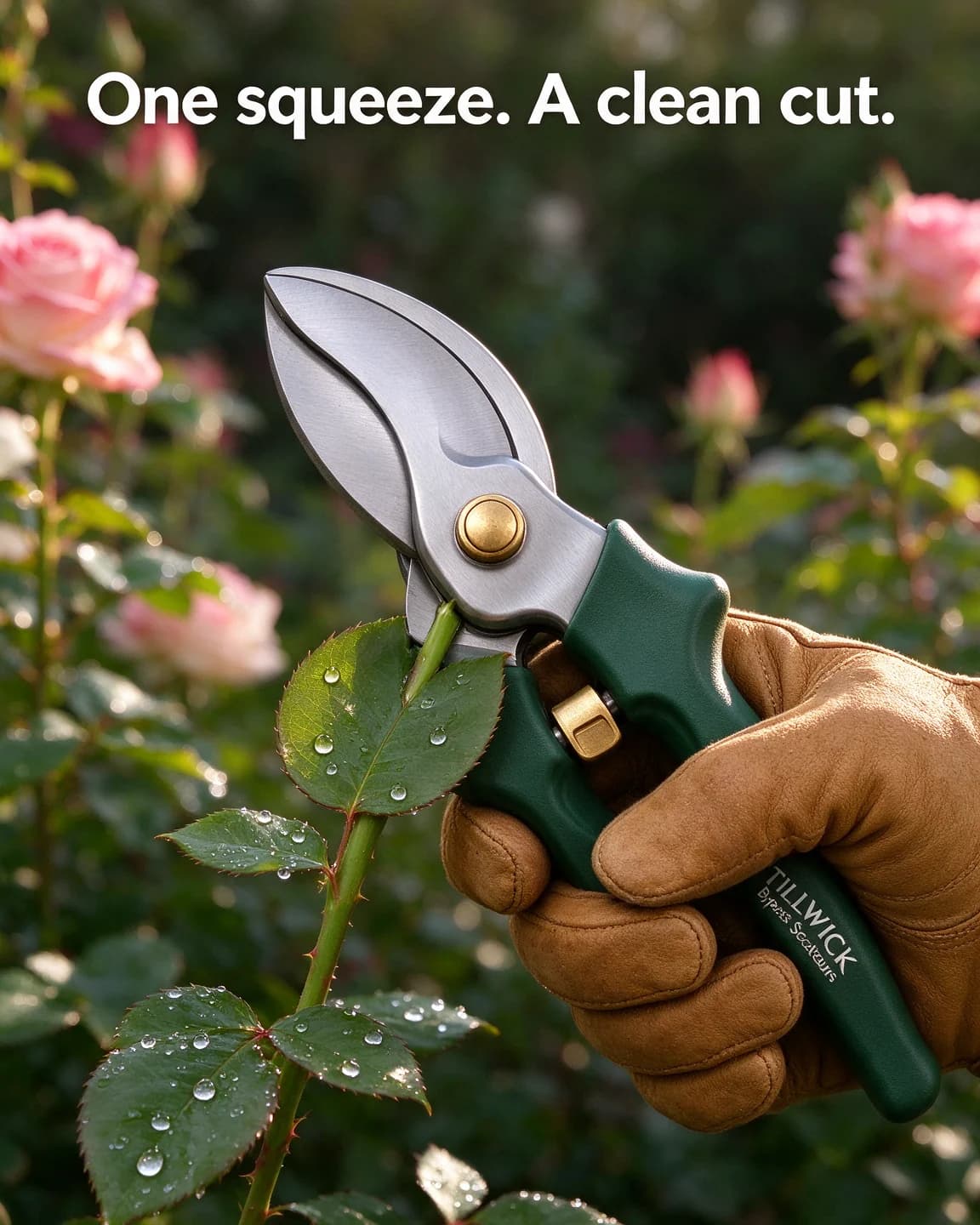
- Cutting, in macro, with a gloved hand on the handles.
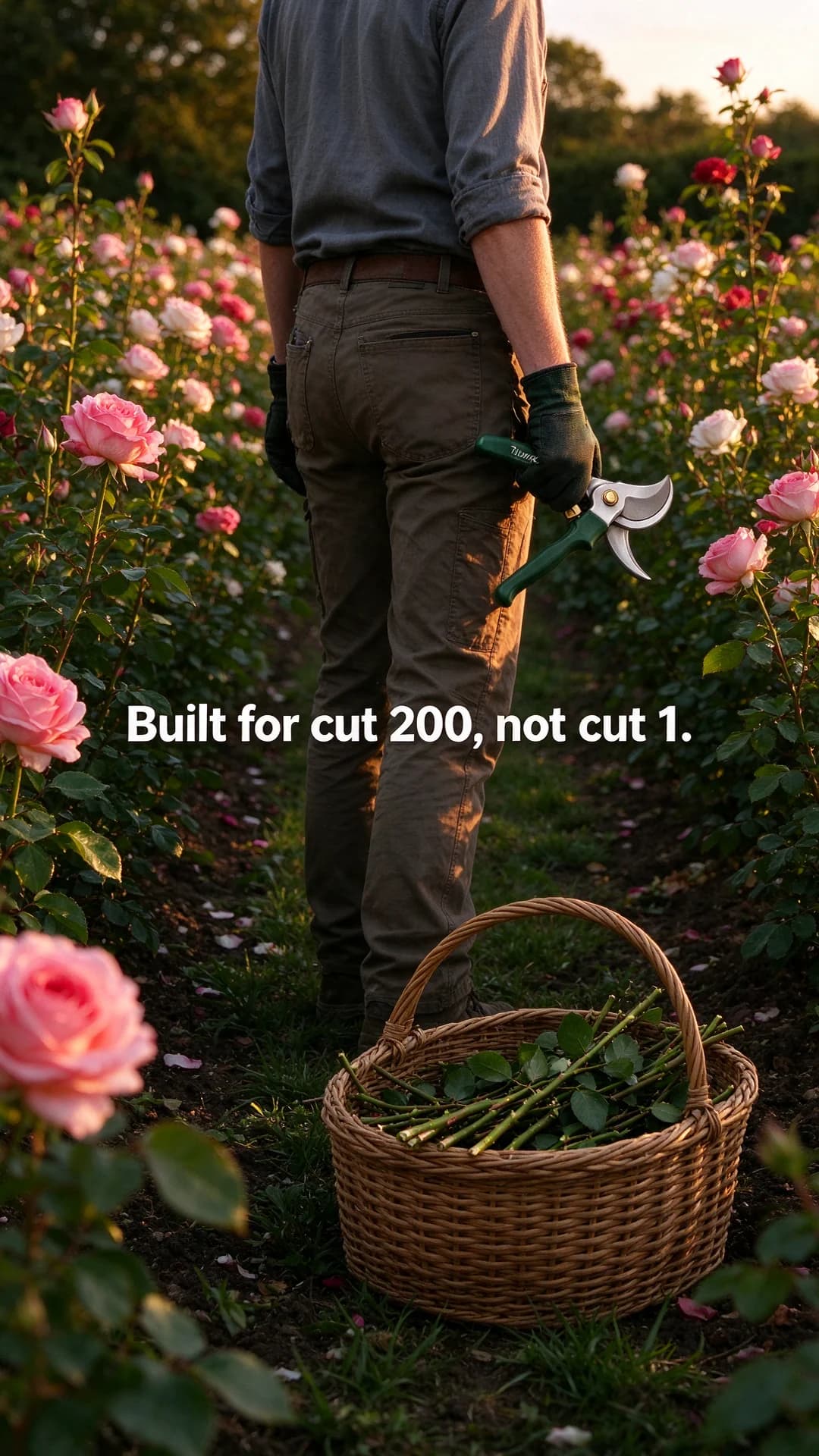
- Working through a long job, with a basket of cuttings for scale.
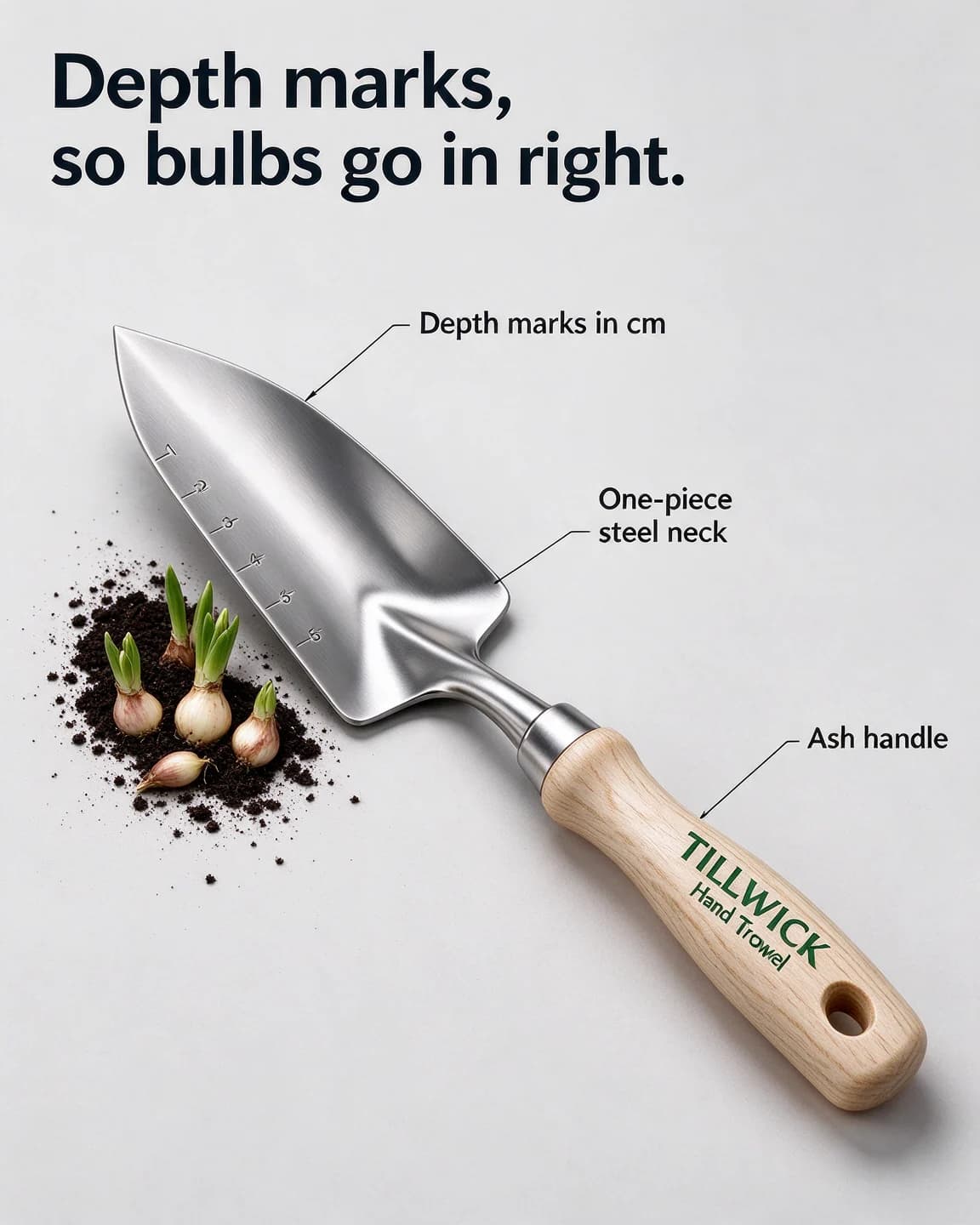
- Planting at the right depth, with the feature that makes it easier labelled on the blade.
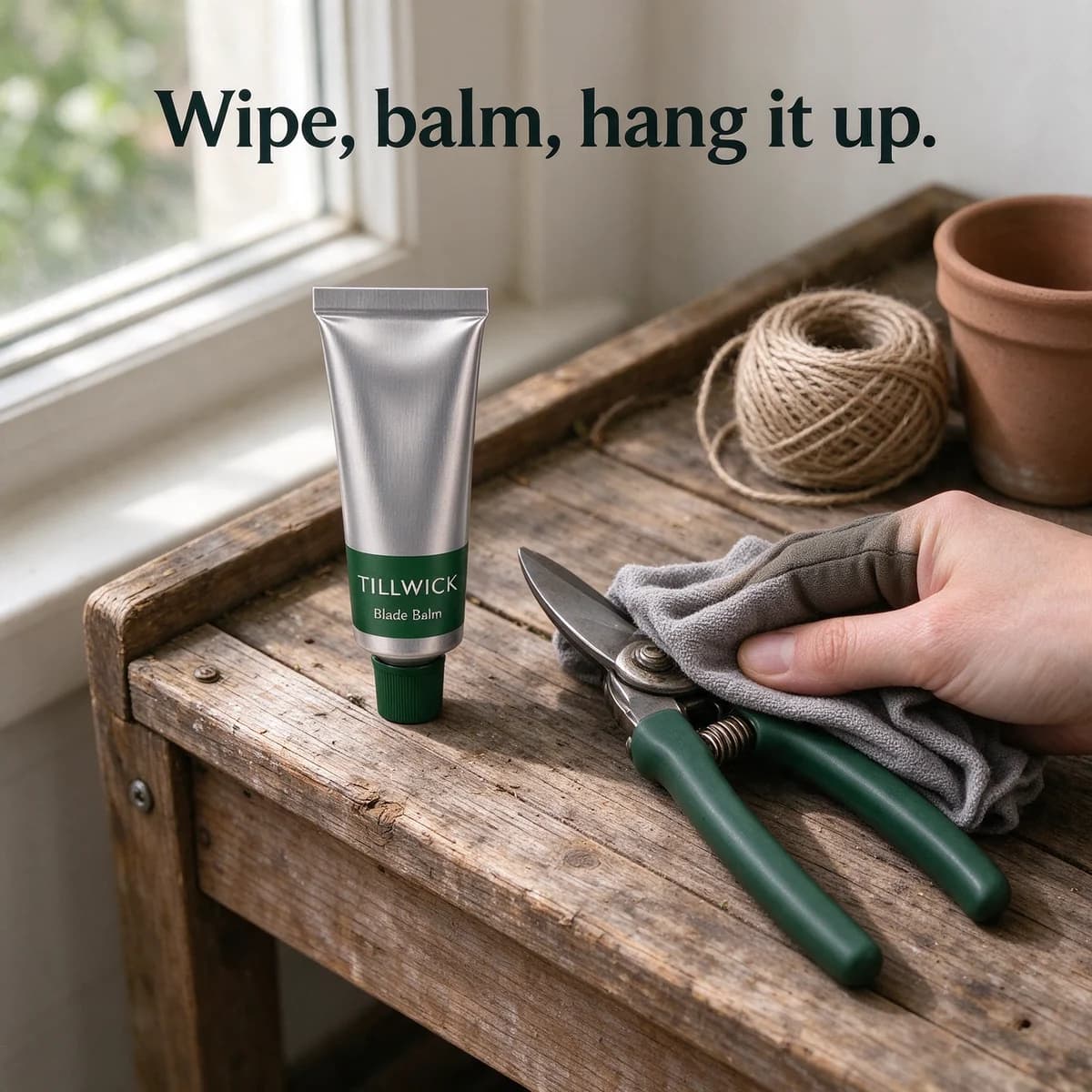
- Being looked after, wiped and balmed on a potting bench.
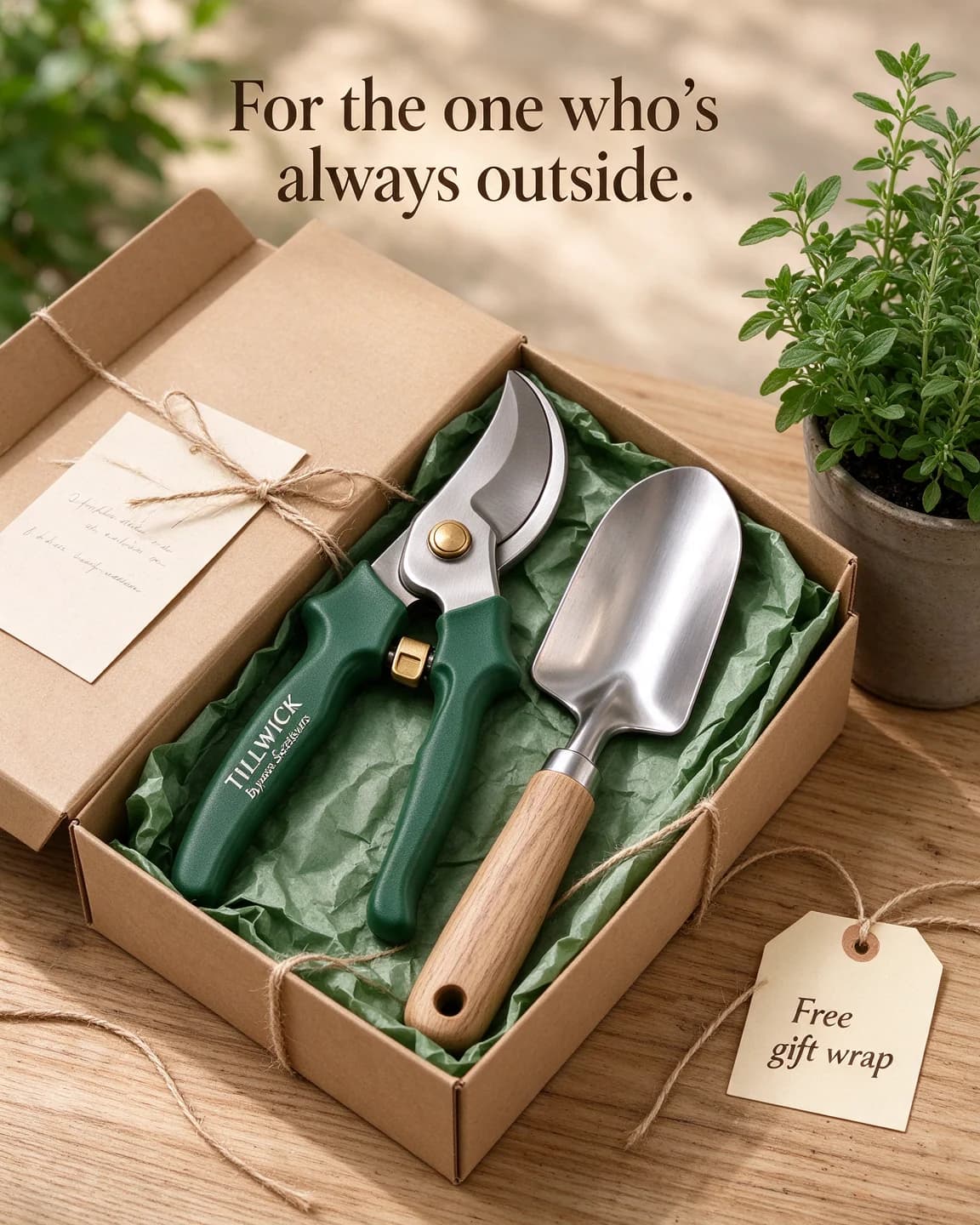
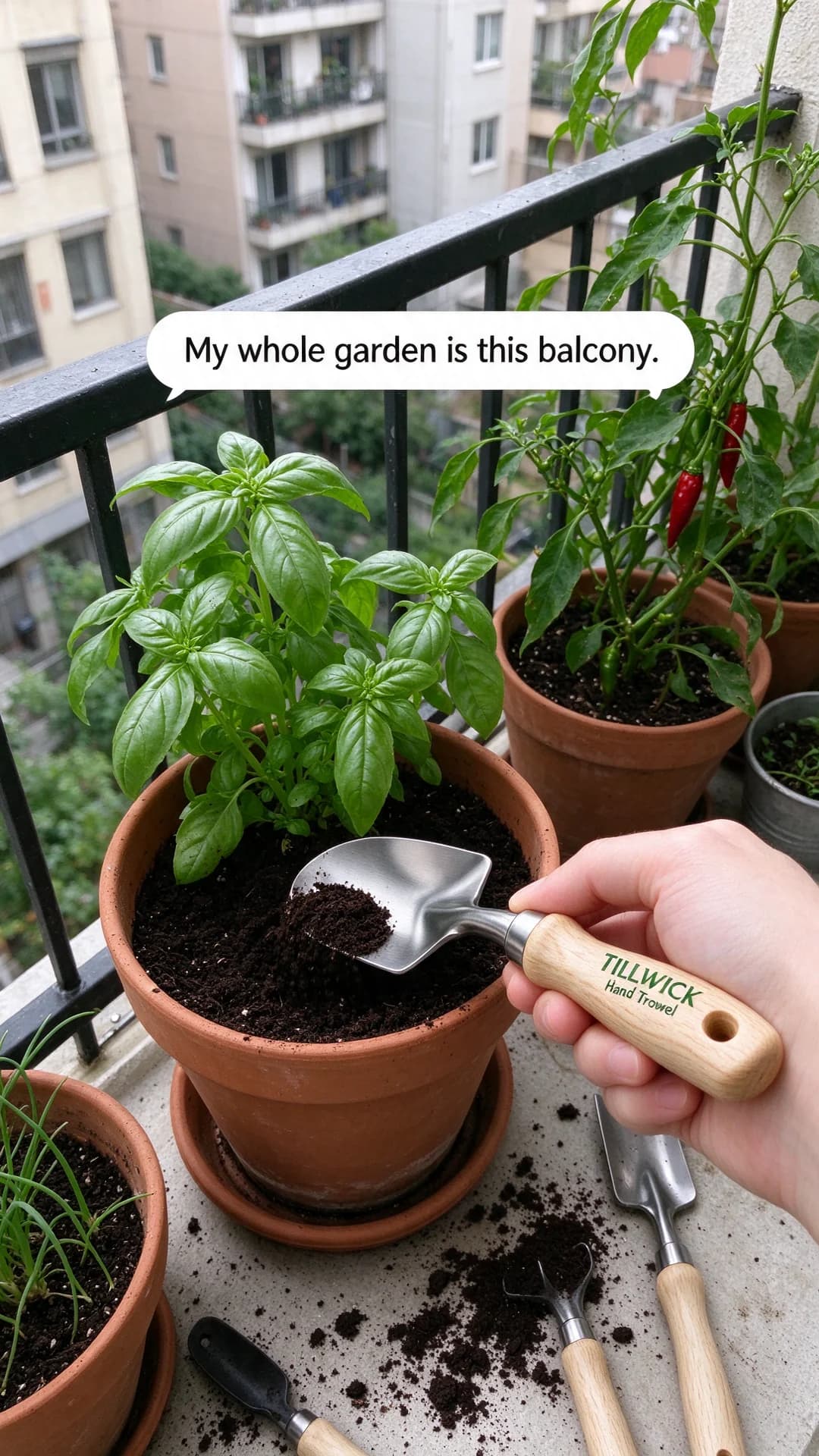
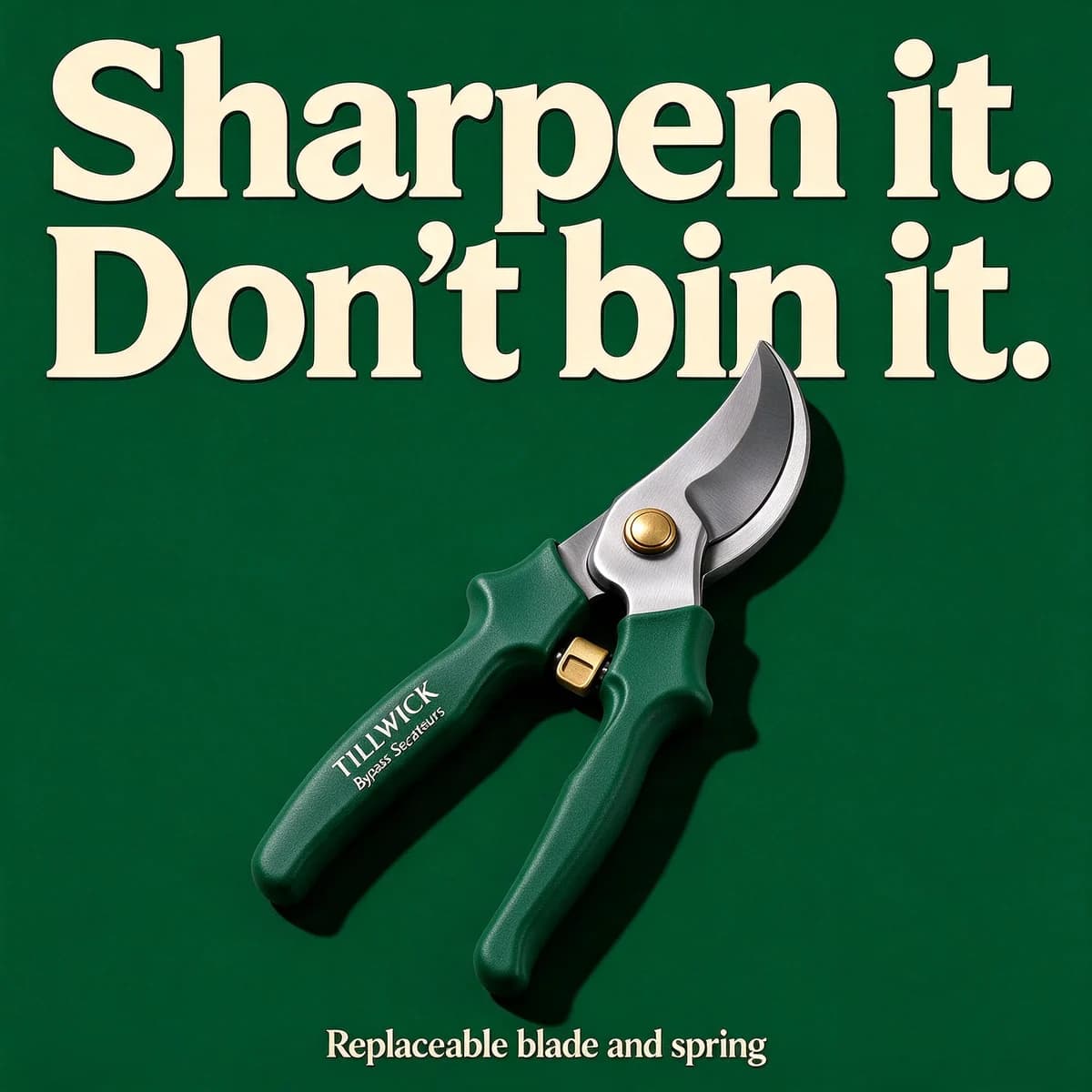
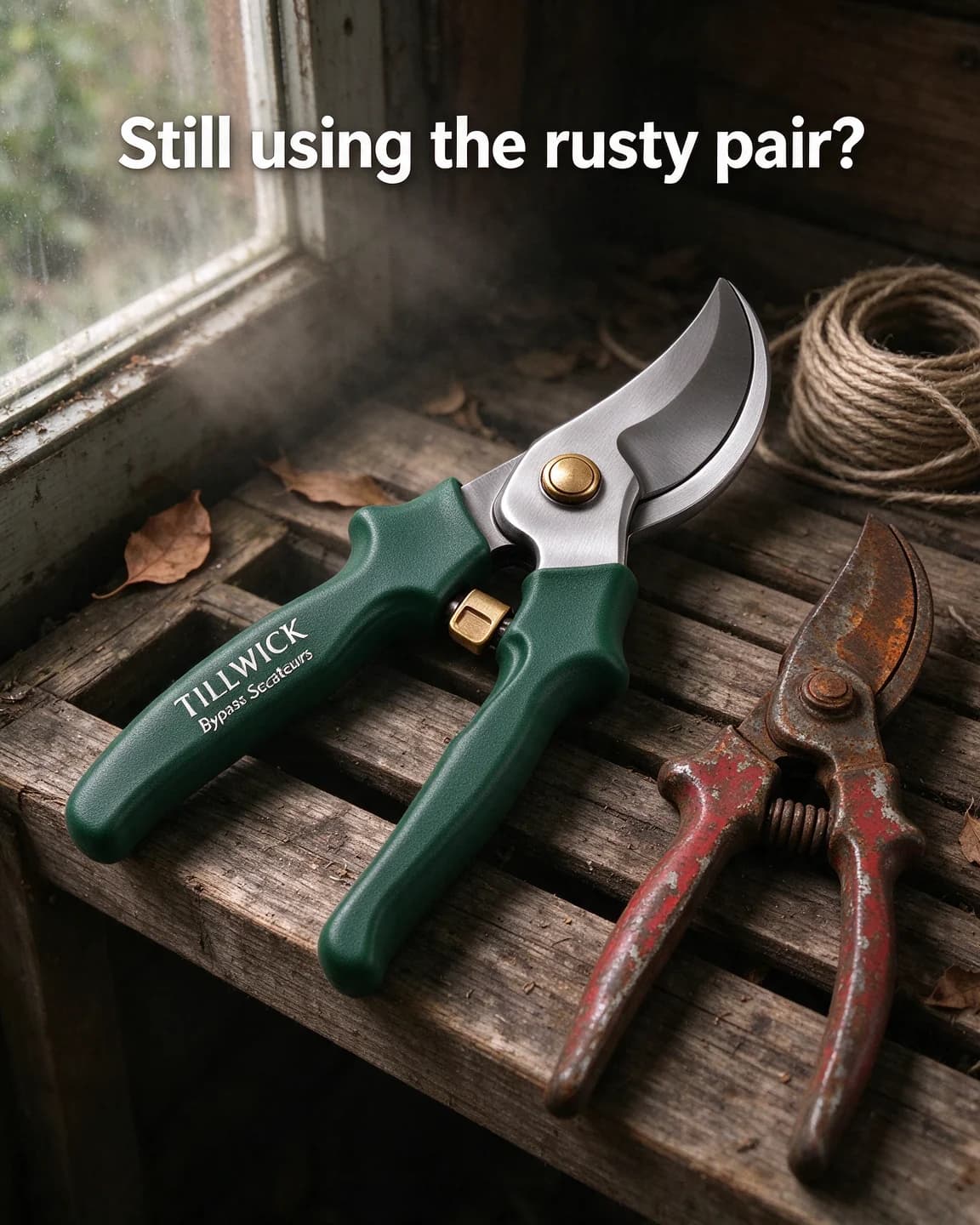
The other four speak to the buyer's situation: a balcony instead of a garden, a gift for someone else, a rusty pair already in the shed, a tool they'd rather mend than replace. Tool buyers split along those lines, and a single hero shot can't speak to all of them at once.
Shots that work for tools
Metal, wood and soil are hard to photograph well, and they're also what makes a tool ad feel real. These setups earn their place:
- The macro cut. Blades closing on a green stem, shallow depth of field, dew or sap visible. It's the scroll-stopper for cutting tools.
- The gloved hand. A hand in a work glove holding the tool mid-task. It shows grip size and signals careful use in one frame.
- The dirt test. A trowel blade in wet soil or clay. Spotless tools in fluffy potting mix look like props.
- The potting bench. Tools, string, a pot and a cloth in shed-window light, which is where gardeners picture themselves on a Saturday.
- The balcony. Terracotta pots, a railing and a city view. It widens the ad to people without a lawn.
- The flat lay. A set laid out on a wooden table for gift and bundle ads. The flat lay template covers the layout.
Reflections are the usual problem. Polished steel mirrors whatever is around it, so soft light from the side keeps the blade readable and the printed name on the handle sharp. A matte work glove next to bright steel also helps the eye find the tool.
A first batch built around one job
Tools sell when the job is due, so plan the first batch around the next job on the calendar rather than around the tool. If rose pruning is a month away, a full batch of twelve might look like this:
| What changes | The options |
|---|---|
| Angle | The cut itself, the long job, the upgrade from a rusty pair |
| Shape | 4:5 for feeds, 9:16 for Stories and Reels |
| Hook | One about the result ("One squeeze. A clean cut."), one about the date ("Pruning season starts this weekend.") |
Three angles, two shapes and two hooks make twelve ads, which is exactly one BulkAds batch. Because every ad differs from its neighbours in a known way, the results can answer three separate questions: which picture, which frame and which kind of line. A creative testing matrix is the tidy way to record it. Save the depth-marks callout for bulb season and the gift box for the weeks before Father's Day, Diwali or Christmas, when they have a job of their own.
Garden tools also come with a natural add-on. Say the secateurs sell at $25 and free delivery starts at $30. Blade balm at $5 closes that gap exactly, so a care ad shown to people who already have secateurs in their basket does two jobs: it teaches them to look after the tool and it earns them free delivery. Put that sum in the primary text rather than on the image, where it would crowd the shot.
How BulkAds keeps the tool the same tool
Tools are where AI images go wrong in small, telling ways. A brass lock slides to the other handle, the spring between the blades disappears, a bypass blade turns into an anvil blade, or the depth marks on a trowel rearrange themselves. A gardener spots all of these at a glance, so the starting point matters.
Every ad on this page began as a single packshot of each product on white: the secateurs closed, the trowel flat, the tube upright. Product photo ads place that exact tool into new scenes, such as a rose bed, a balcony or a gift box. A product-match check then compares each finished ad with your photo, its shape, label and colours, and flags the ones that drifted so you can regenerate them or drop them.
For the cleanest results:
- Shoot the tool closed and open if both views matter, and add both photos to the product.
- Keep the printed name readable on the handle or the hang tag, because the label is one of the things the match check compares.
- Add your real specs as proof points in the brand kit, such as blade material, weight or spare parts, so headlines repeat facts rather than inventing them.
- Brief the scene in plain words when you build a batch from your own instructions, for example "monsoon balcony, trowel in a pot of basil, phone photo, lead with depth marks".
The pre-flight check also flags likely Meta policy risks before anything launches, which is worth having for any product with a blade. You still decide what goes live, and the bulk ad launcher creates every ad paused until you approve it.
Keeping winners fresh through the year
A garden tool ad can often be refreshed with the season rather than a new idea. The clean-cut ad works on roses in October and on fruit trees in late winter. The balcony ad works with herbs in the monsoon and with chillies in summer. Keep the angle, swap the plant, and ask for variants of the winner in the new setting. The result is a year of ads built on one proven idea, each one arriving when the job it shows is about to start.
Questions people ask
What should a garden tool ad show?
The tool doing its job: blades closing on a stem, a trowel in real soil, a gloved hand mid-task. A tool hanging on a wall looks like a catalogue and says nothing about how it feels to use.
Can garden tool ads get rejected on Meta?
They can if a blade looks like a weapon. Meta's weapons policy, as of October 2026, lists non-culinary knives, blades and spears among the weapons ads can't promote, so show cutting tools at work in a gloved hand and take extra care with pruning knives, machetes and axes. BulkAds' pre-flight check flags likely policy risks before launch, but the final call is Meta's review.
When should garden tool brands run seasonal ads?
A few weeks before the job is due: ahead of pruning season, monsoon planting and autumn bulbs, and ahead of gift dates such as Father's Day. People buy tools while they're planning the weekend's work.
Do garden tool ads need people in them?
Hands are usually enough. A gloved hand shows grip and scale, and a gardener seen from behind shows the size of a job without needing a face.
Is Tillwick a real tool brand?
No. Tillwick is fictional, and every ad on this page was made with AI for illustration.
Keep going
- Features
Product photo ads
Your real packshot, in every scene
- Guides
The creative testing matrix: plan every round on one grid
Cross angle, persona and format on one grid, then test a few cells at a time. A worked matrix, four ways to pick cells, round-by-round moves and a checklist.
- Ad templates
Feature callout ad template
Your product in the middle, short labels pointing at what matters
- Ad templates
Listicle ad template
A numbered headline and three to five reasons, strongest first
- Ad templates
Notes app ad template
A plain phone note whose last line happens to be your product
- Ad templates
Gift guide ad template
Gift picks matched to people, so the shopper finds theirs at a glance
Every brand on this page is fictional and every ad was made with AI for illustration — they’re examples, not case studies.
BulkAds AI is an independent product and is not affiliated with, endorsed or sponsored by Meta Platforms, Inc. Facebook and Instagram are trademarks of Meta Platforms, Inc.