What sports gear ads are selling
Nobody buys a racket for its own sake. They buy the next game: a faster reaction at the net, a Sunday match with friends, a first session that doesn't end in embarrassment. So the strongest sports gear ads point at a moment on court and let the gear be the way there.
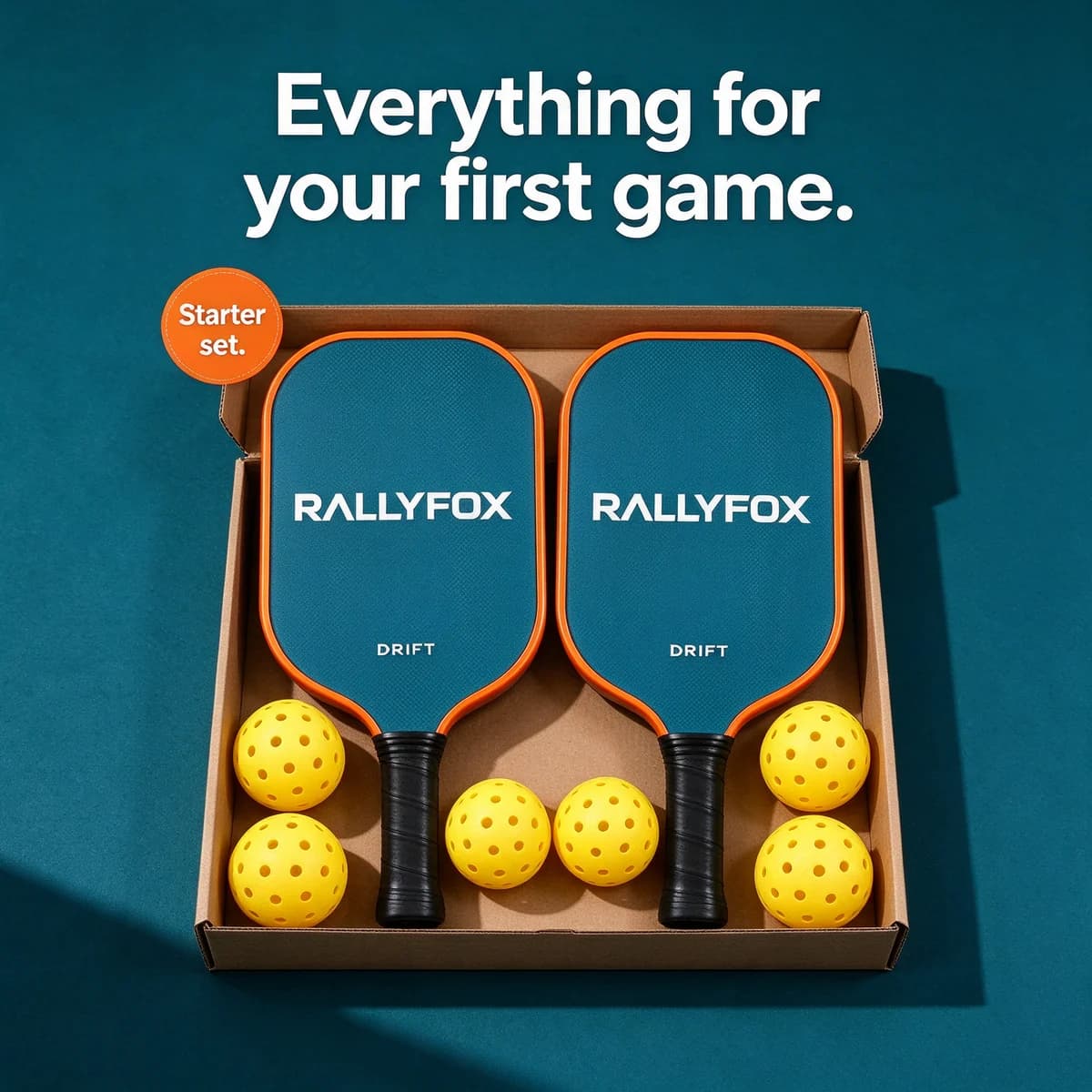
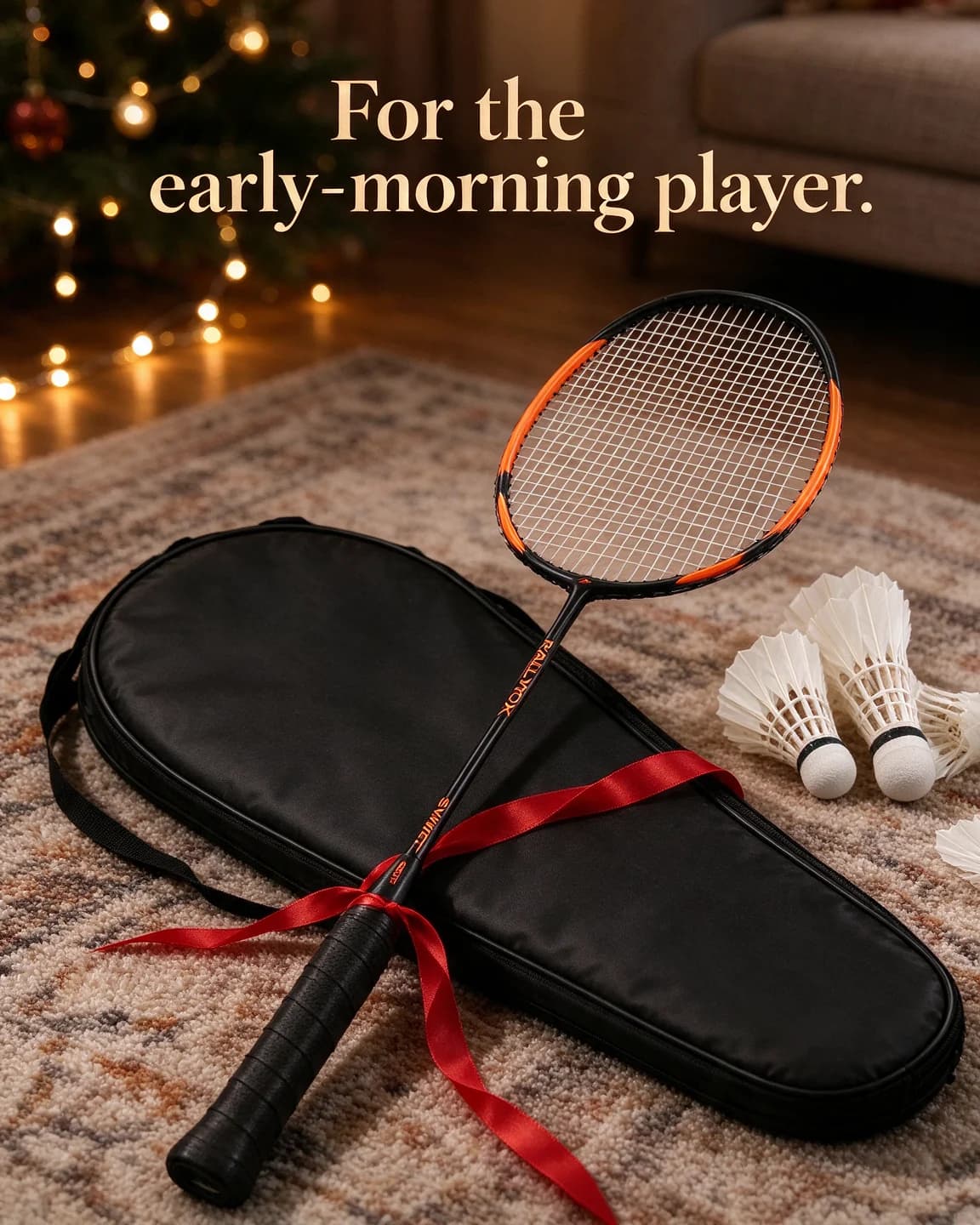
The eight ads above cover three kinds of buyer. Serious players get specs and tips: the head-light callout and the shuttle-speed advice. Newer and social players get belonging and starter kits: Sunday doubles and the boxed set. Gift buyers get a person, not a spec sheet: "For the early-morning player." Running across all three is the split between hardware, like rackets and paddles that people buy every year or two, and consumables, like shuttles, balls and grips that they buy every few weeks. Hardware ads have to justify a decision. Consumable ads mostly have to arrive at the right moment.
The shots that work for rackets, paddles and shuttles
| Product | What to show | Angle it suits |
|---|---|---|
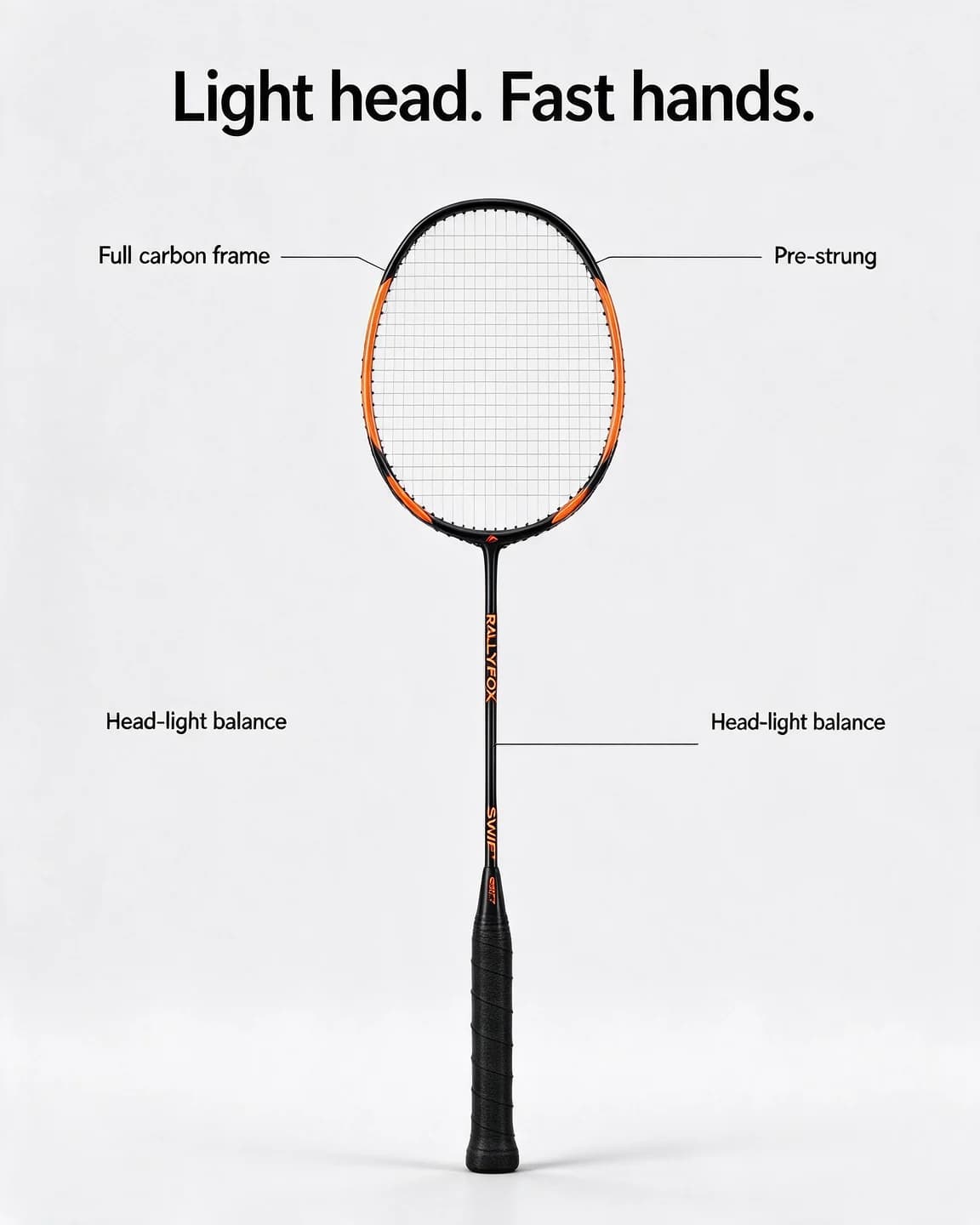
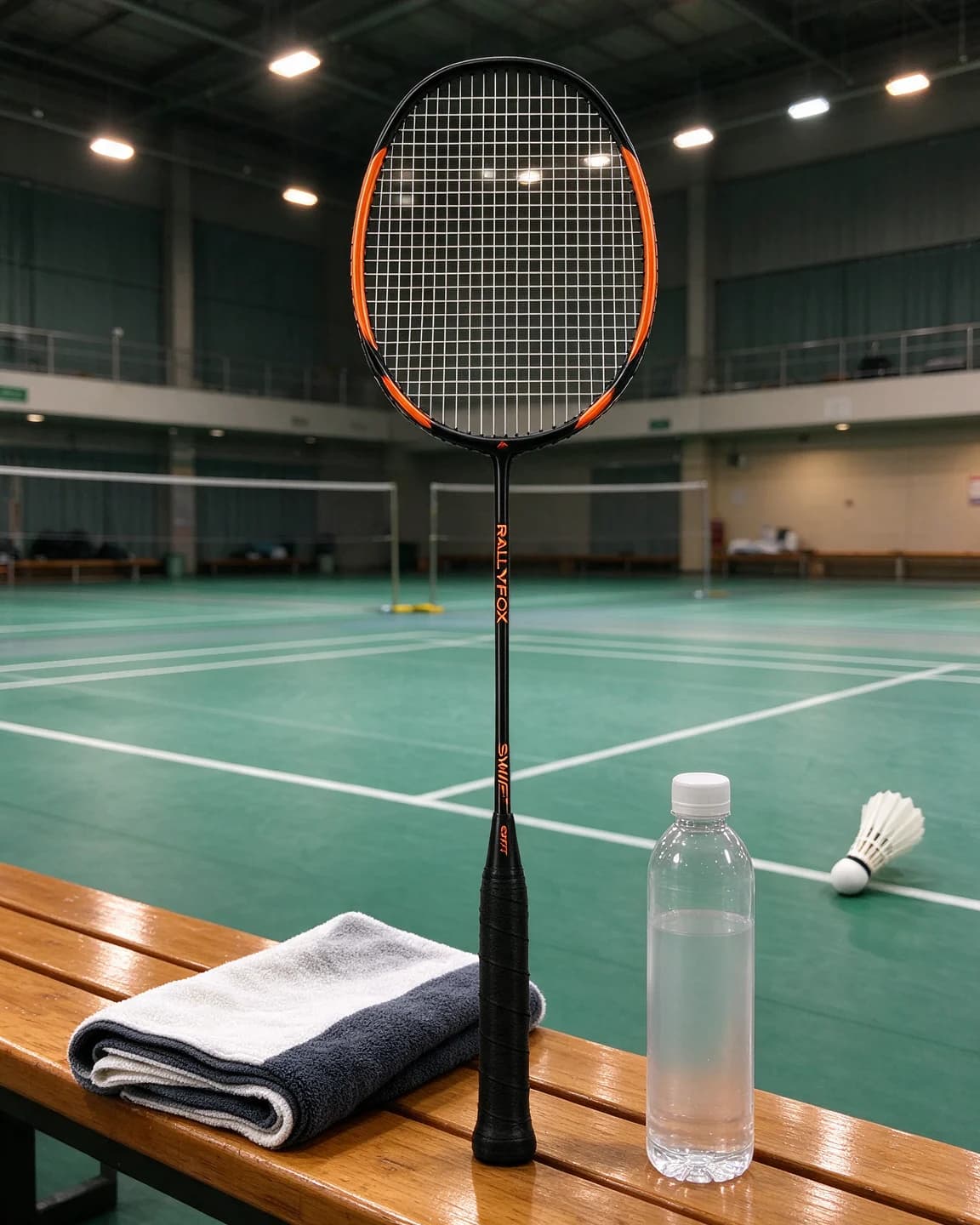
| Rackets | The full frame on a clean background with callouts, or on a court bench | Specs, gift, the next game |
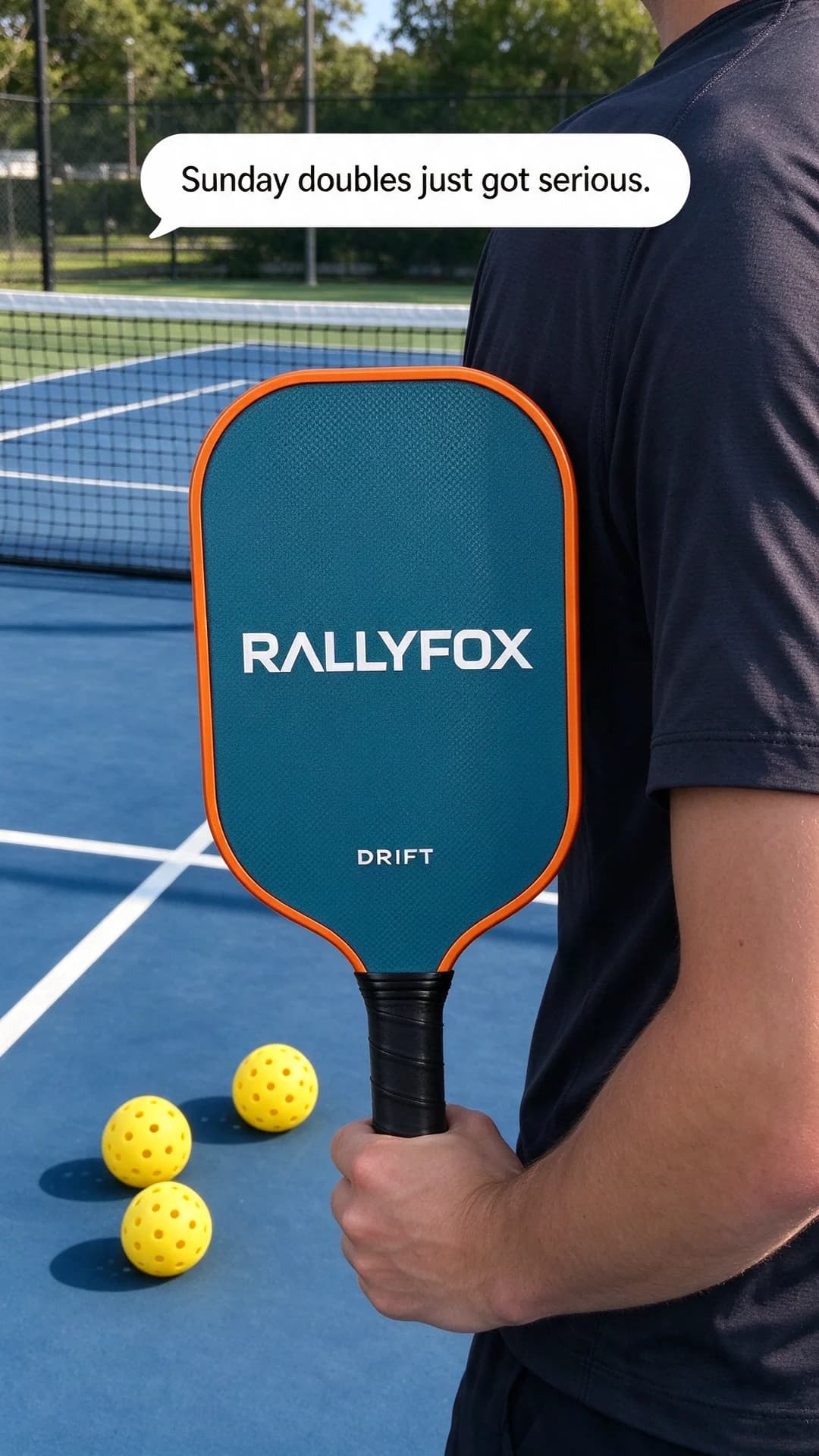
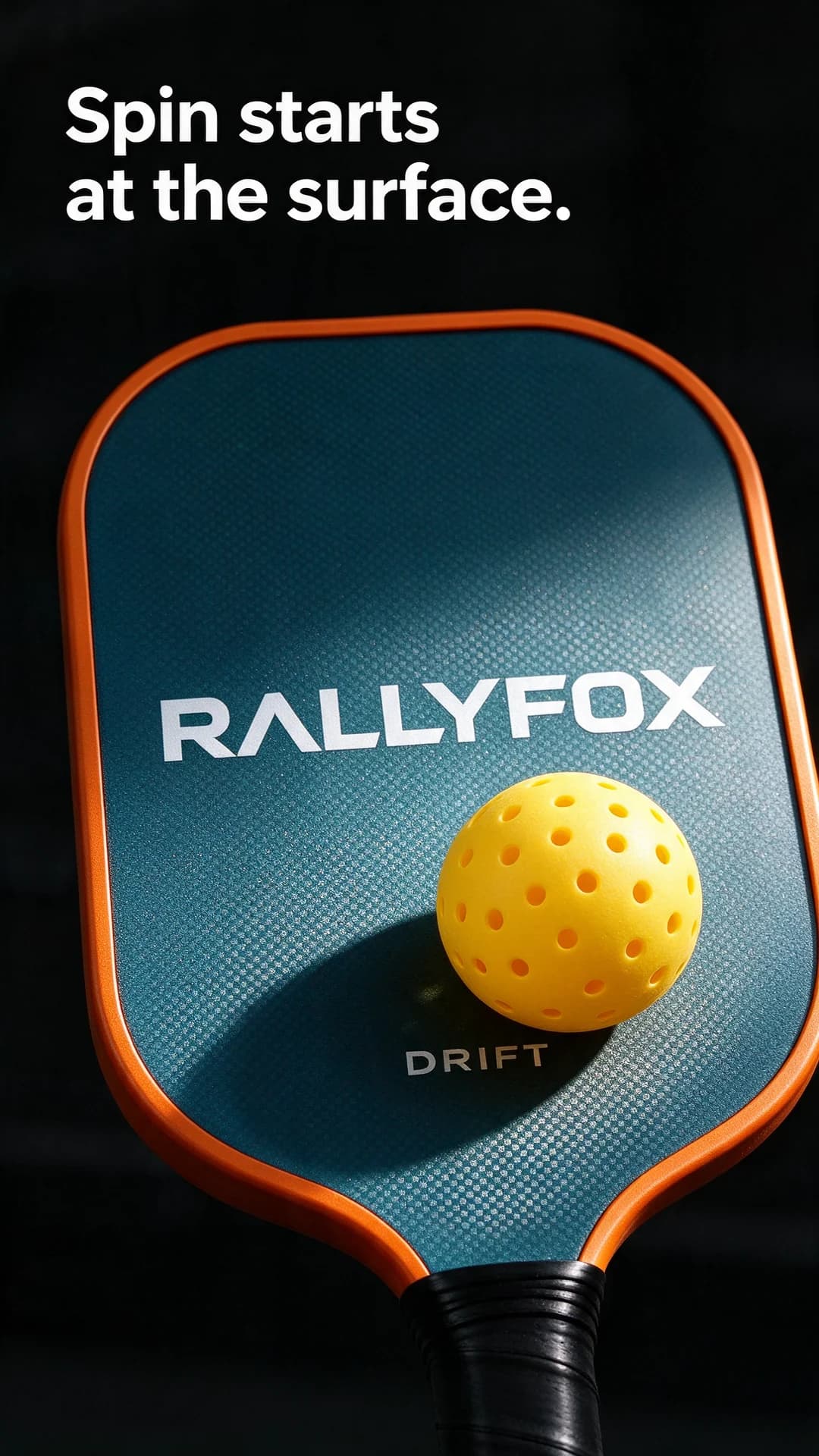
| Paddles | A close-up of the face texture, or the paddle in a player's hand from behind | Spin and control, social play |
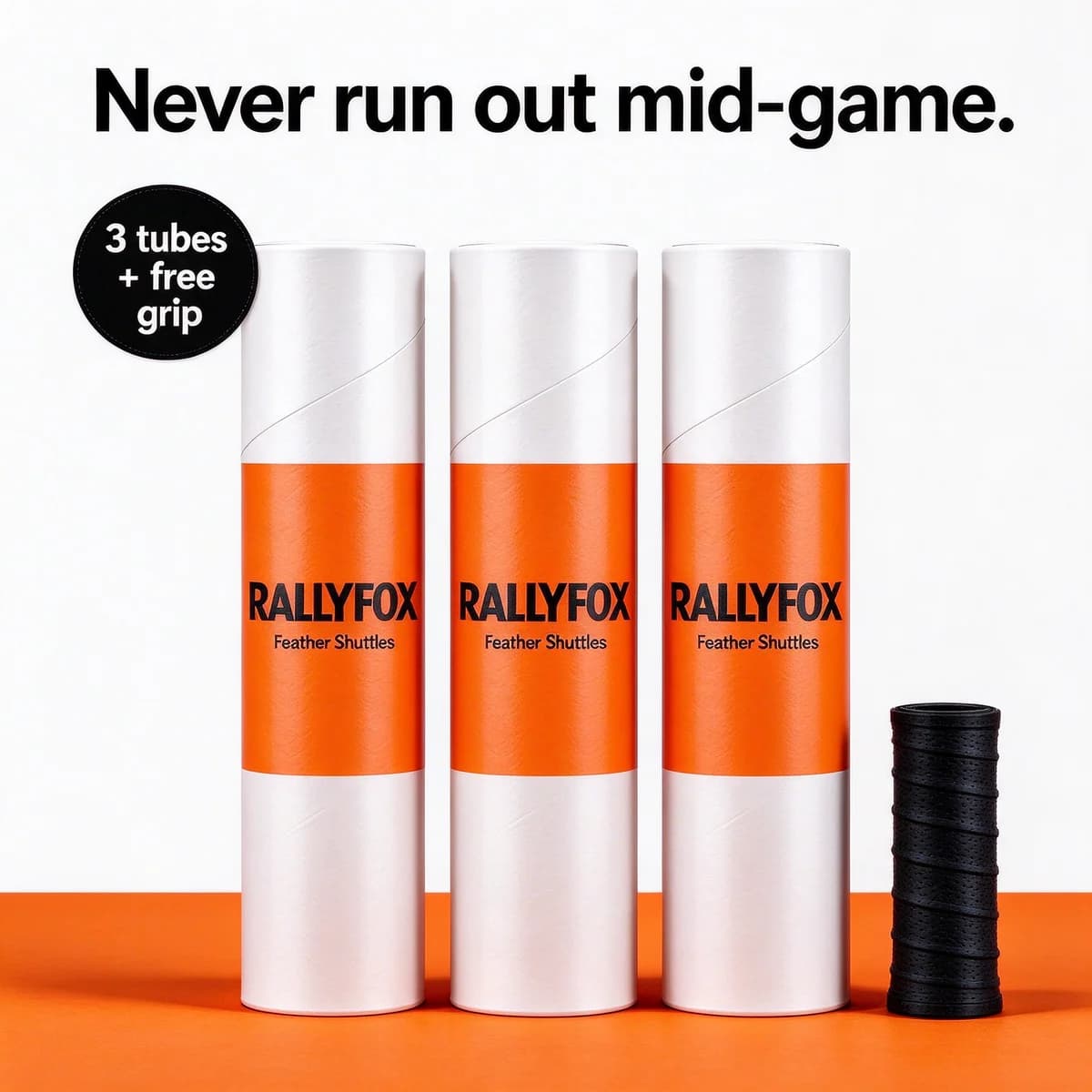
| Shuttles and balls | The tube or can, a few loose shuttles, a stack for multipacks | Expert tips, restock offers |
| Starter sets | Everything in one open box | First game, gift |
A few habits make sports ads look like sport rather than a catalogue:
- Use real court cues. Floor lines, a wooden bench, a net post, high gym windows. Generic "sporty" backgrounds read as stock.
- Let light do the texture. Low side light shows the grit on a paddle face and the weave of a carbon frame. Flat light hides both.
- Show play from behind. A player seen from behind, or a pair of legs mid-step with a bit of motion blur, gives energy without a face. It also keeps you clear of anything that looks like a real athlete.
- Keep the product in focus. In action scenes the gear should be the sharpest thing in the frame, not the player.
For 9:16, tight close-ups work best, because the tall frame suits a single object. Our guide to the video ad first frame explains why the opening frame of a Reel has to work as a still.
Spec codes need plain words
Racket sports are full of shorthand. Many badminton rackets carry a weight class and a grip size as short codes, such as 4U or G5, and shuttle tubes carry a speed number. Club players read those at a glance. A newcomer or a gift buyer reads them as noise. So when a callout uses a code, say what it means in the same breath, such as "a lighter frame" beside the weight code, or the kind of hall a shuttle speed is made for. Use the codes your own product really carries, take their meaning from your own size chart, and check both against the label before they go on an ad.
Hardware and consumables: what to test first
For a racket or paddle, start with five angles in two or three versions each: the next game, the spec callout, the expert tip, belonging and the gift. That's 10 to 15 ads. For consumables, two angles usually carry the test: the restock reminder and the multipack. The how many ad creatives to test guide shows how to size each batch.
Make the season do some work. Monsoon ads for an indoor sport should be made and tested in May, so the winning version is ready when the rain arrives. The same goes for gift ads ahead of Diwali and Father's Day.
A worked example for a restock offer: if a tube of 12 feather shuttles sells for $15, three tubes come to $45. Adding a grip that sells for $2.60 as a free extra gives the club player something they need anyway, and it keeps the shuttle price intact for everyone else. Put the extra on the image as a sticker and the money in the primary text.
Judge the hardware ads and the consumable ads separately. A shuttle restock ad asks for a small, familiar purchase, so it will often look better than a racket ad asking for a bigger decision, and that comparison tells you nothing about either.
Keeping AI sports images honest
AI makes sports scenes easy to stage, which is also where the risks come from. Three rules cover most of them:
- No real athletes, teams or events. Not their names, kits, crests or faces, and no lookalikes either.
- Get the gear right. Badminton rackets have small heads and thin shafts. Feather shuttles have a cork base and a ring of feathers. Pickleball paddles have a solid face with no strings, and pickleballs are perforated plastic. Models sometimes blend sports, and players notice.
- No results you can't prove. "Hit harder" and "win more" are promises about the player. "Head-light balance" is a fact about the racket.
Building a sports gear batch in BulkAds
Start with one clean photo of each product: the racket upright and fully in frame, the tube facing the camera with its label sharp, the paddle face square to the lens. BulkAds builds every ad around that photo rather than drawing a new racket. Its pre-flight check then scores each ad on product match against the original, on-image spelling, brand fit and visual quality, and flags likely policy risks such as before-and-after body framing, which matters if a fitness-flavoured angle creeps into a racket ad.
Your brand kit holds the proof points you can back up, like the real weight, the balance point or a genuine approval, and the copy uses only those. Make a batch of up to 12 ads in 1:1, 4:5 or 9:16, with a different angle in each, then fix any single element, such as a headline, without remaking the whole ad. Each image ad uses 2 credits, and turning a winning still into a short video ad uses 20 credits.
The bulk ad launcher then sends the whole batch to your own Meta ad account, paused until you approve it. If you'd rather hand the seasonal batches above to Autopilot, it launches them as its own tests within your caps, stops the ads that don't sell and drafts fresh variants of the ones that do.
Three next moves for each kind of winner
Each kind of sports ad has its own natural follow-ups. Change one thing per variant, so you can tell what made the difference.
| If this wins | Try next | What it tells you |
|---|---|---|
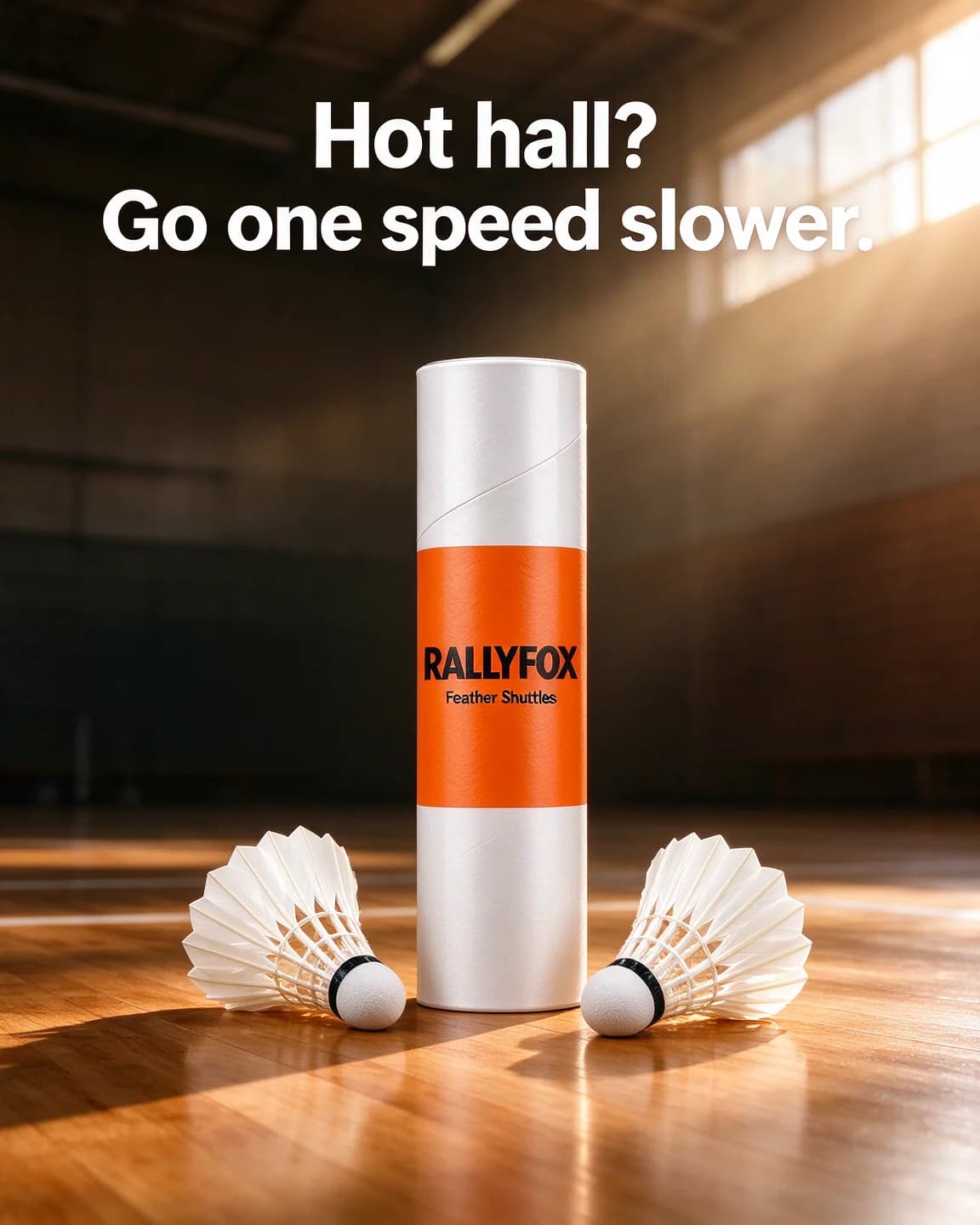
| "Hot hall? Go one speed slower." | A grip-size tip for the racket, then a "cold hall" version for winter | Whether people want advice from you, or only that one tip |
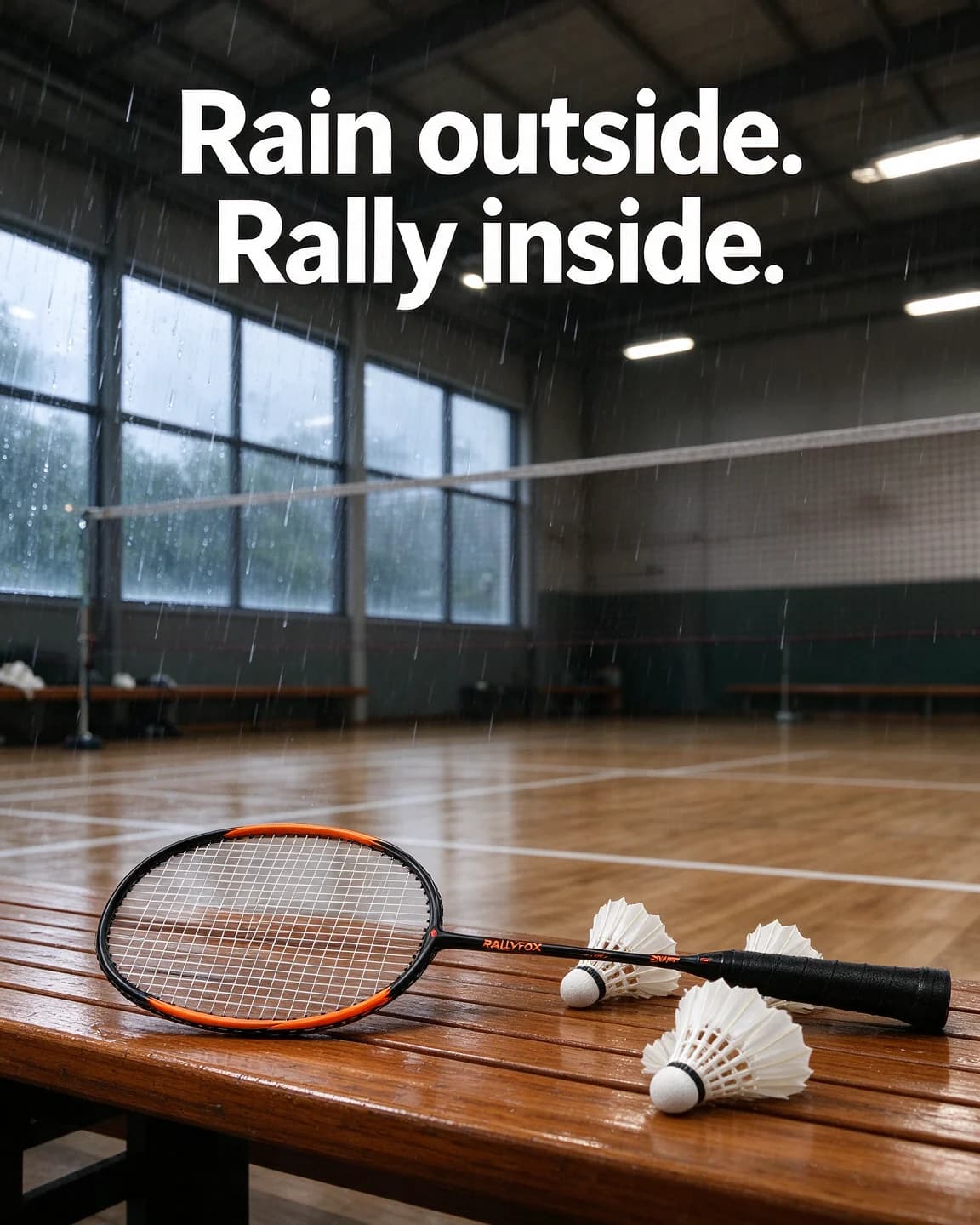
| "Rain outside. Rally inside." | The same line on an indoor pickleball court, then a winter-morning park scene | Whether the weather sells, or the sport |
| "Never run out mid-game." | The same tube stack before coaching camps, then with balls and grips for pickleball | Whether restock timing works across your consumables |
| "Spin starts at the surface." | A short vertical clip with light sliding across the grit | Whether motion adds anything to a close-up that already works |
The guide to iterating on a winning ad covers how far a variant can drift from the original and still count as a test of it.
Questions people ask
What makes a good sports gear ad?
A real moment on court, the gear sharp and correct, and one idea: the next game, a spec players check, a useful tip, a gift or a restock. Keep claims about the product, not about how well the buyer will play.
Can I say my shuttles are BWF approved?
Only if that exact shuttle and grade has passed the BWF's equipment approval. An approval belongs to the product that was tested, so it doesn't carry over to a new grade, a cheaper line or your rackets. If you can't show the approval, leave the line out and sell the feathers, the cork and the speed instead.
Can I call a pickleball paddle tournament approved?
Only if it's on USA Pickleball's approved paddles list, or the list of the body that runs the events your buyers play. As of October 2026, USA Pickleball's equipment site lists approved paddles and balls and notes that a paddle taken off the list can't be used in sanctioned tournaments. Check the list on the day you write the ad.
Should sports gear ads show people playing?
Yes, but from behind, at a distance or cropped to hands and legs. It brings energy without faces, and it keeps AI images away from anything that looks like a real athlete.
When should seasonal sports ads go live?
Make and test them a few weeks ahead, so the winner is ready when the season starts: May for monsoon indoor play, late May for Father's Day, September for Diwali gifts and November for winter-morning games.
Is Rallyfox a real brand?
No. Rallyfox, the Swift racket and the Drift paddle are fictional, and every ad on this page was made with AI for illustration.
Keep going
- Features
Product photo ads
Your real packshot, in every scene
- Guides
The first frame of a video ad: what to show, and how to test it
The opening frame is all many viewers see. What to put in it, five openings that suit product ads, the ones that waste a second, a checklist and a cheap way to test them.
- Guides
Iterating on a winning ad: what to change first, and what to keep
Keep the idea that won and change the layers around it. How to find why an ad won, the order to change things in, eight worked iterations and how to launch them safely.
- Ad templates
Feature callout ad template
Your product in the middle, short labels pointing at what matters
- Ad templates
UGC ad template
A phone-camera moment and one honest, first-person line
- Ad examples
Shoe & activewear ad examples
Running shoe ads that sell lightness, proof and a risk-free trial
Every brand on this page is fictional and every ad was made with AI for illustration — they’re examples, not case studies.
BulkAds AI is an independent product and is not affiliated with, endorsed or sponsored by Meta Platforms, Inc. Facebook and Instagram are trademarks of Meta Platforms, Inc.