What a subscription box ad has to do
A box ad sells the first box and quietly asks for the next ones. The first sale runs on excitement: what's inside, what box day feels like. The second runs on trust: what it costs once the offer ends, and how easy it is to stop. Ads that only do the first half can bring in sign-ups who leave at the first renewal.
The two Kitlo boxes on this page show how different the buyers of one business model can be:
| Snack Trail buyer | Little Makers buyer | |
|---|---|---|
| Buying for | Themselves, or a gift | Their child |
| Wants to see | What's inside and where it's from | A busy, happy child and a complete kit |
| Worries about | Being locked in, repeats | Missing supplies, the right age |
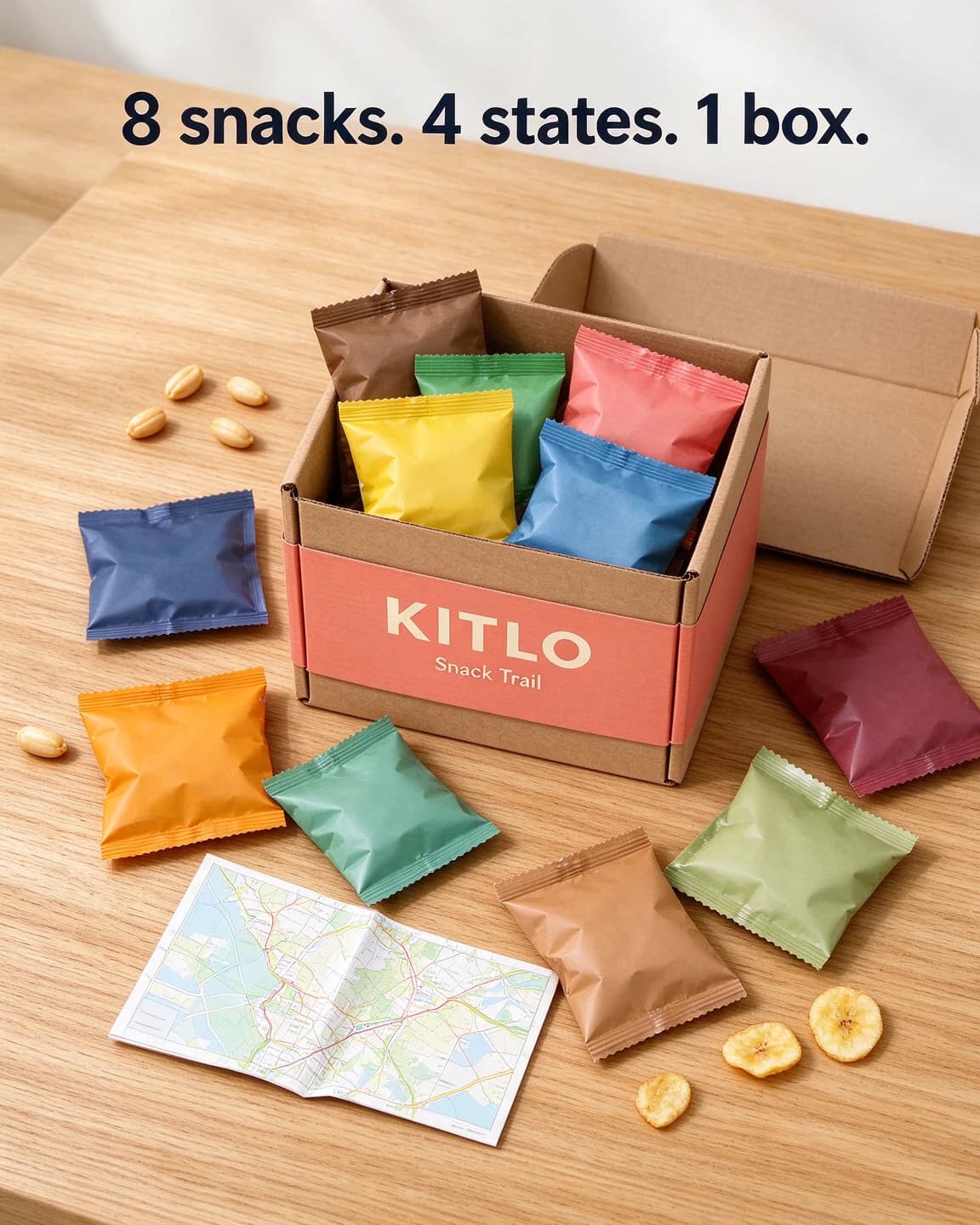
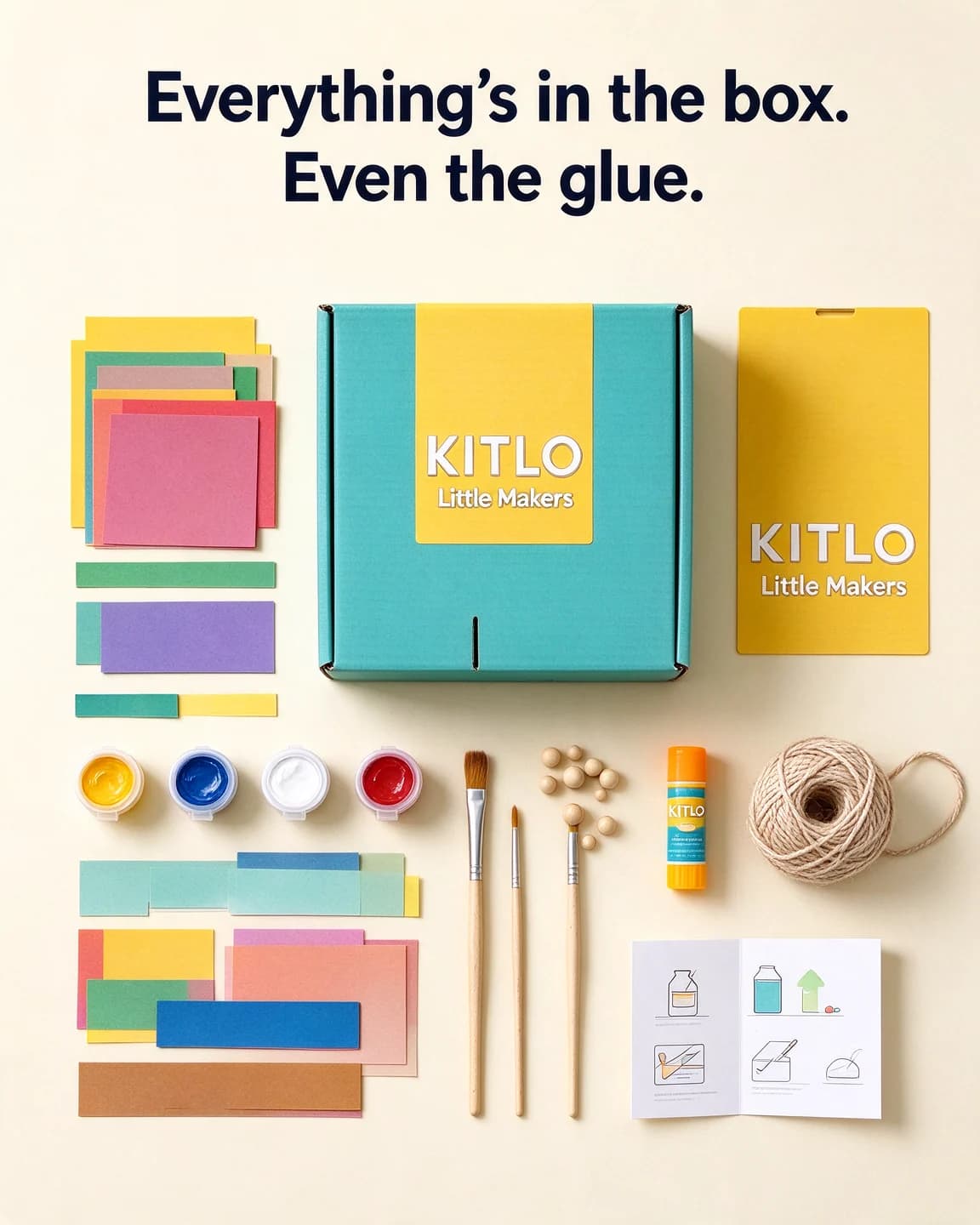
| A hook that fits | "8 snacks. 4 states. 1 box." | "Everything's in the box. Even the glue." |
Show the inside, honestly
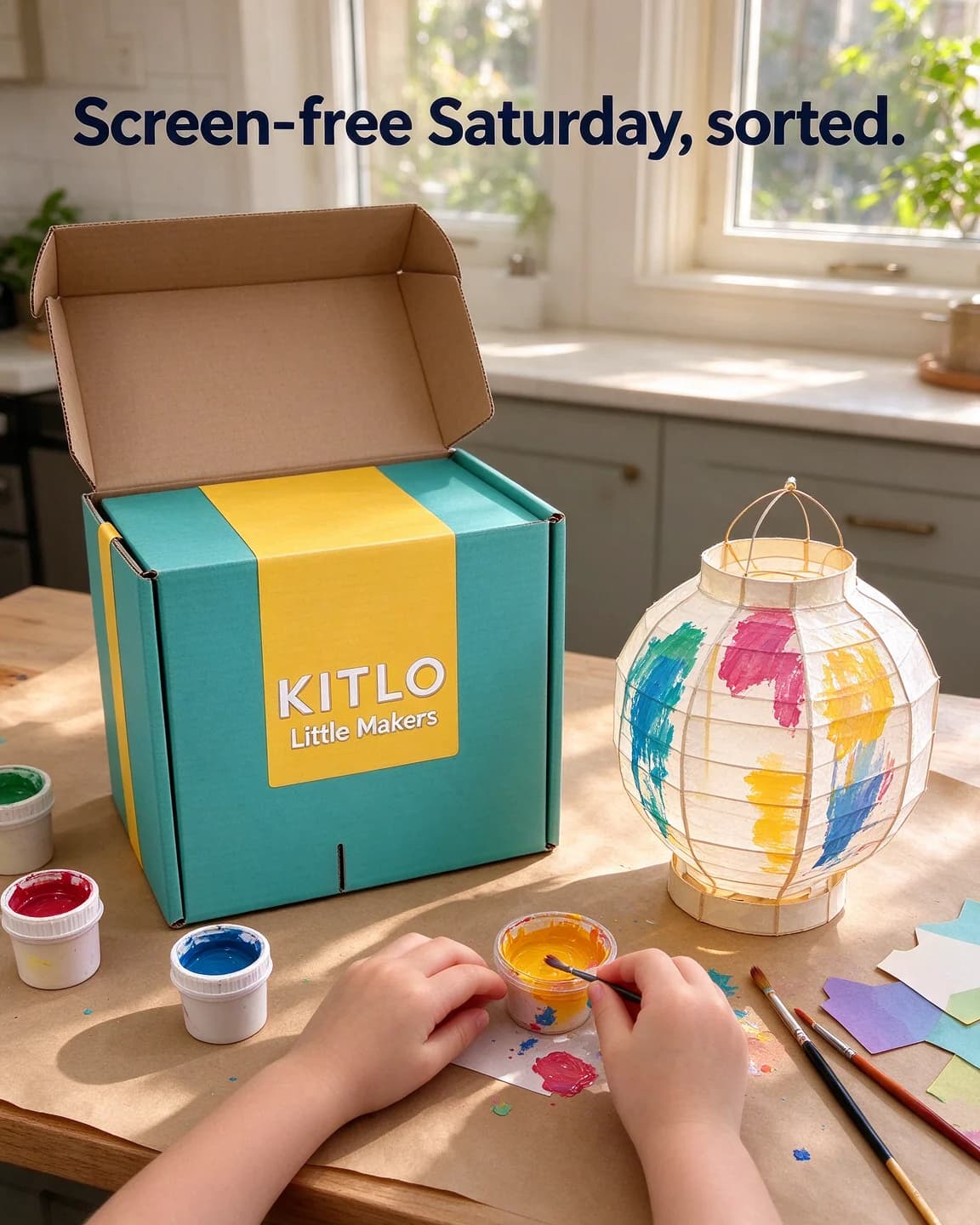
A closed box on its own is just cardboard, so pair it with the inside, the arrival or the moment of use. Four shots carry the category:
- The top-down reveal. Lid off, contents visible, a count in the headline.
- The flat lay. Every item laid out in rows around the box, the clearest answer to "what do I actually get?". Our guide to flat-lay product photography covers the setup.
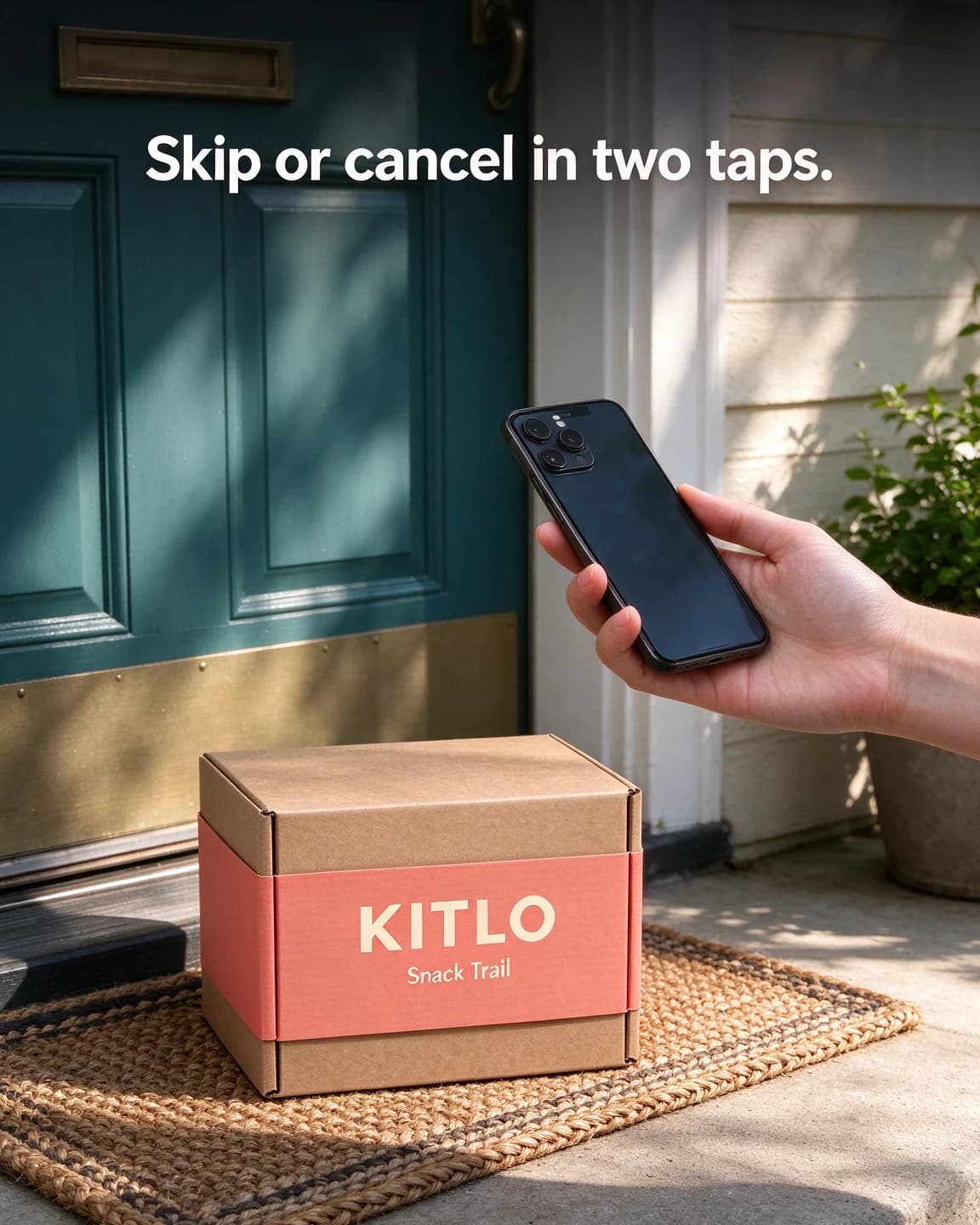
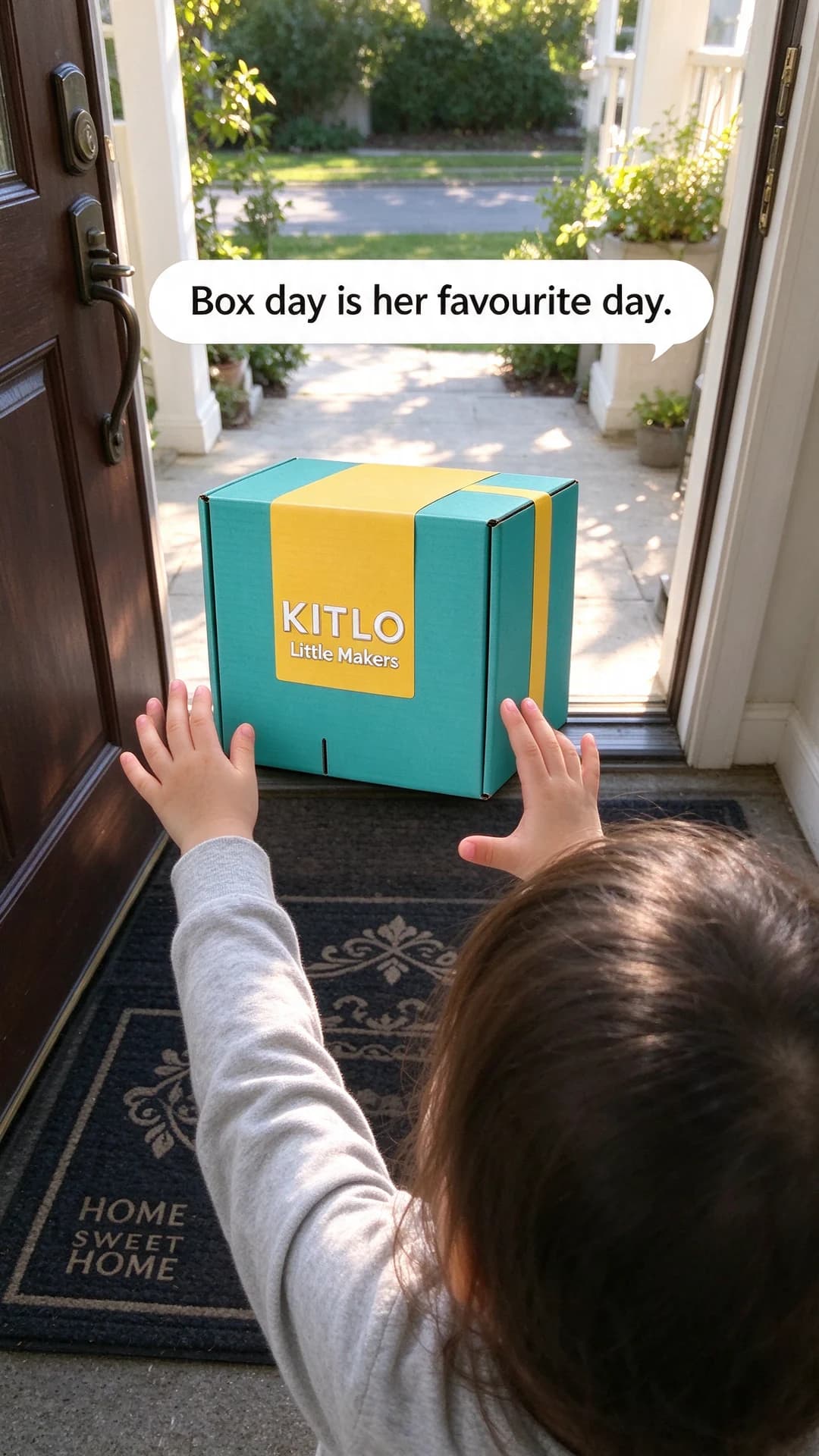
- The doorstep. The box arriving, for ads about rhythm, gifting and box day.
- The use. Small hands painting, a snack on a desk at 4pm. The outcome, not the packaging.
The catch is that contents change. A photo of March's box presented as "what you'll get" in May is a promise you can't keep. Label it as a past box or say the contents vary, and refresh your reveal ads whenever a new box ships, so the newest box is always the one on screen. That monthly change is also a gift: it hands you fresh creative every month without having to invent a new idea. The creative refresh schedule guide covers the rhythm, and the unboxing template gives you a layout to refill.
Here's an honest limit of AI in this category. BulkAds builds new scenes around your real box photo and flags any ad where the sleeve, colours or logo drifted from it. Ask for an open box and the model will fill it with generic, unbranded items, which is fine for a mood shot. Those items are illustration, not your real contents. For any ad that says "here's what's inside", photograph the real contents, then use that photo as it is or as the product photo for a batch of flat-lay ads.
Price framing that stays honest
A subscription price looks different depending on how you slice it, which makes framing powerful and easy to abuse. A worked example for Snack Trail at $10 a month:
- Intro offer. "First box half off" means $5 for box one. Put "then $10 a month" in the same place as the offer, on the image or in the first line of copy, never only in the small print.
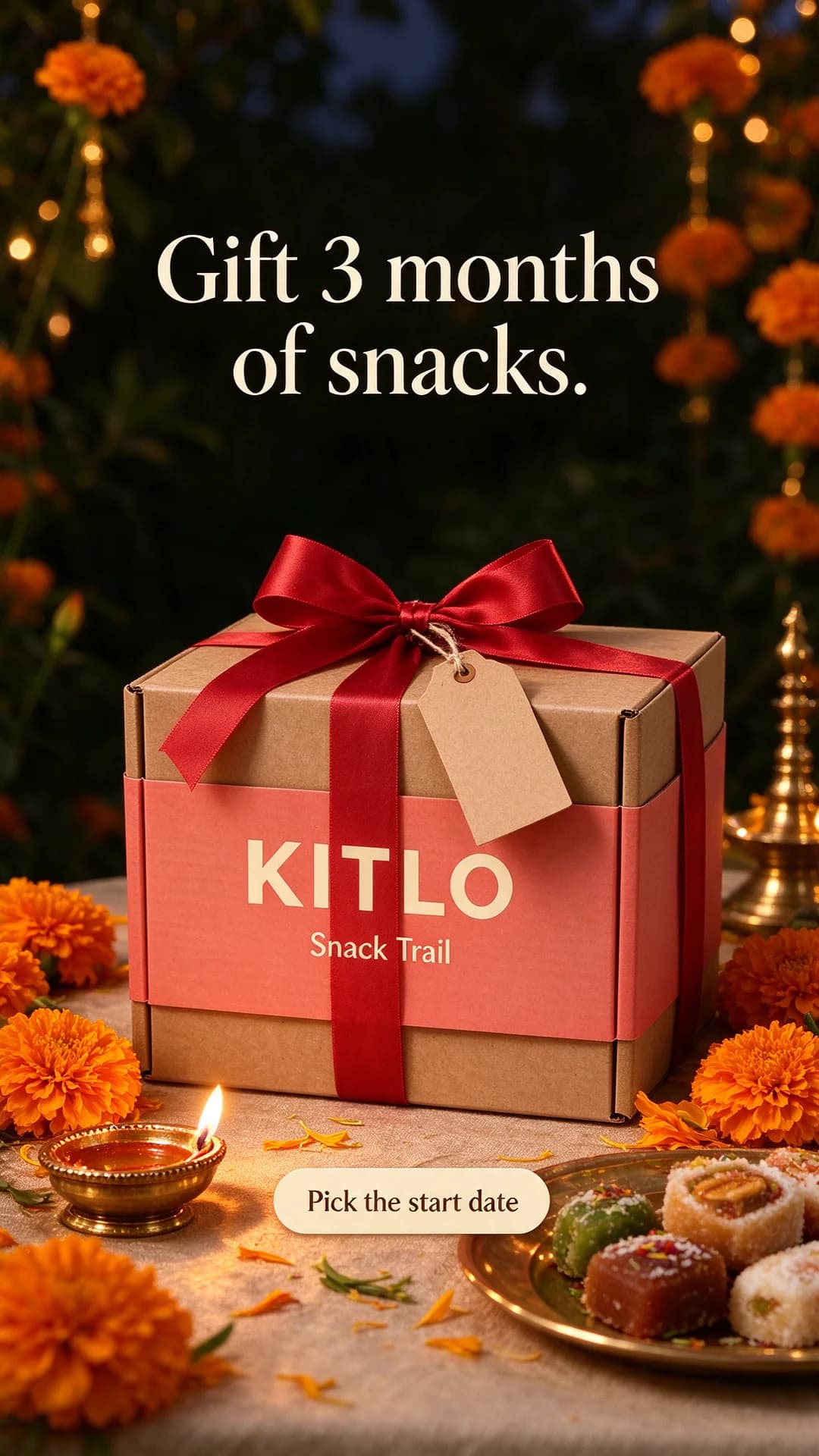
- Gift plan. Three months for $27 reads as a big number. "$9 a box, three boxes" is the same price in a form people can judge.
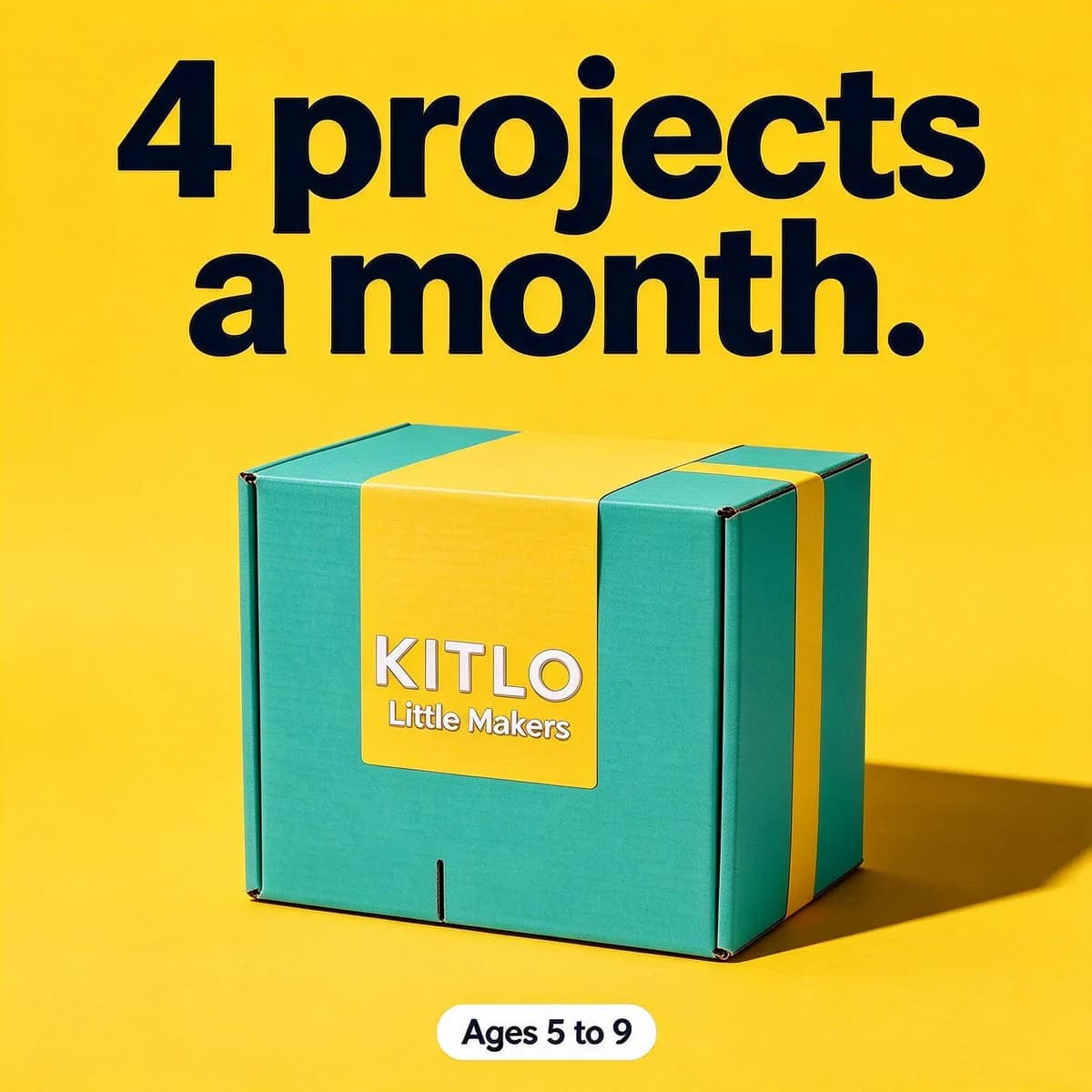
- Value per use. For Little Makers at $12 a month with four projects, "$3 a project" is accurate and easier to weigh up than the monthly figure.
Avoid "worth" claims, such as a box "worth twice the price", unless you can show what each item sells for on its own.
Terms that make the ad trustworthy
The easy-exit angle only works if the exit is real, and the rules in your markets set the floor. In the US, the Restore Online Shoppers' Confidence Act (opens in a new tab) (December 2010) requires sellers using an online negative option to disclose all material terms before taking billing details, get express informed consent and provide simple ways to stop recurring charges. In India, the Central Consumer Protection Authority lists "subscription trap" among the dark patterns in its guidelines of 30 November 2023, and the RBI's Digital Payments E-mandate Framework, 2026 (opens in a new tab) (21 April 2026) requires issuers to send a pre-debit notice at least 24 hours before each recurring charge made with cards, prepaid wallets or UPI. All three are as of October 2026.
None of that is a reason to hide the terms. It is a reason to put them in the ad. "Skip or cancel in two taps" and "you'll get a reminder before every charge" are hooks in their own right, for exactly the people who would otherwise scroll past.
A first test for a new box
Pick five angles and make two or three versions of each:
- The reveal, with a count of what's inside.
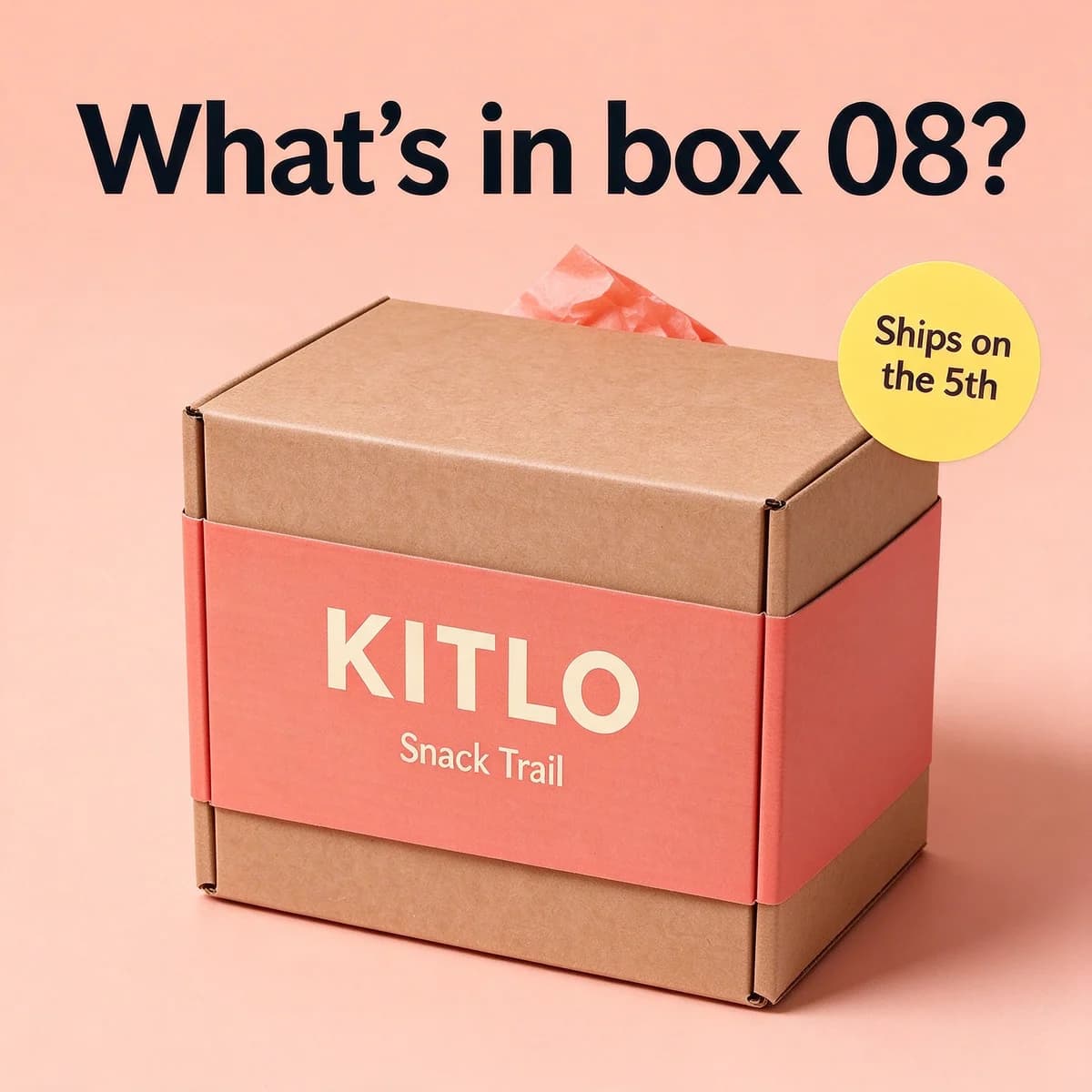
- Curiosity, with the box closed and the next ship date.
- The easy exit, with skip and cancel stated plainly.
- The outcome, the snack moment or the child busy at the table.
- The gift plan, for festivals and birthdays.
That's 10 to 15 ads per box. Read the gift-plan ads on their own, because they speak to the giver rather than the eater, and a fixed gift plan has no renewal to judge it by. When you read the rest, look past the first box: an angle that brings in people who stay for box two beats one that brings in people who leave after box one. "Skip or cancel in two taps" may sign up fewer people than "First box half off" and still keep more of them.
Build each concept in 4:5 for feeds and 9:16 for Stories, where gift ads and doorstep shots have room to breathe. For unboxing video, film real hands opening the real box on your phone and run the clip from Meta Ads Manager next to the stills, since generated motion can't show your actual contents coming out.
How BulkAds builds a month of box ads
Paste your website and BulkAds builds a brand kit from it: colours, fonts, voice and the claims your site actually makes, like "ships on the 5th" or "skip any month". Those proof points are what the ads may say, and the AI is told not to invent new ones.
From one clean photo of each box, a batch makes up to 12 ads, each on a different angle, for 24 credits at 2 credits an ad. Every ad is compared with your photo, and any ad where the sleeve, colours or logo drifted is flagged before you see it. Copy can be written in 95+ languages, which matters for a regional snack box: a box of Gujarati snacks may land better pitched in Gujarati.
Launch the batch to your own Meta ad account, paused until you approve it, or let Autopilot launch it as its own test and stop ads that spend without selling. When an ad in that test wins, Autopilot drafts four fresh variants of it for your approval. When next month's box ships, start a new batch from its photo with the winning angle written into your instructions, so the idea carries over and the contents stay current. The product photo ads page explains how the box photo is kept honest along the way.
Questions people ask
What should a subscription box ad show?
The inside of the box or the moment it's used, plus one line that makes the commitment feel safe, such as how to skip or cancel. A closed box on its own says very little.
Should a subscription box ad show the price?
If the ad leads with an intro offer, show what the price becomes afterwards, in the same place as the offer. Price per box or per project is often easier to judge than a monthly or yearly total.
How do I advertise a box when the contents change every month?
Use a past box and label it as one, then refresh the reveal ads each time a new box ships. Ads about the rhythm, the gift plan or the outcome don't depend on the contents and can run for longer.
Do subscription box ads need to mention cancellation?
Saying it in the ad is a strong angle in its own right. The full terms still need to be clear before anyone pays, and in the US, ROSCA requires clear material terms, express informed consent and a simple way to stop recurring charges.
Are Kitlo, Snack Trail and Little Makers real?
No. All three are fictional, and every ad on this page was made with AI for illustration.
Keep going
- Features
Product photo ads
Your real packshot, in every scene
- Features
Brand kit
Colours, fonts and voice from your website
- Guides
How often to refresh Facebook ads: a schedule that fits your budget
Ads wear out at different speeds. A starting refresh schedule by monthly budget, what makes ads tire sooner, three kinds of refresh and a short weekly routine.
- Guides
How many ad creatives should you test? The number, and the maths.
A straight answer, then the simple sum that sets your real number, how many new ads to launch each week at your spend, and when to stop testing and scale.
- Ad templates
Unboxing ad template
The box open, everything inside named, the viewer on the receiving end
- Ad templates
Offer ad template
The deal, the product and the condition — readable in a second
Every brand on this page is fictional and every ad was made with AI for illustration — they’re examples, not case studies.
BulkAds AI is an independent product and is not affiliated with, endorsed or sponsored by Meta Platforms, Inc. Facebook and Instagram are trademarks of Meta Platforms, Inc.