What makes handmade ads work
Every handmade piece is up against a cheaper factory version, in the shopper's head if not on the same screen. The ad doesn't need to win that price fight. It needs to show where the extra money goes, and craft gives you four kinds of proof to work with:
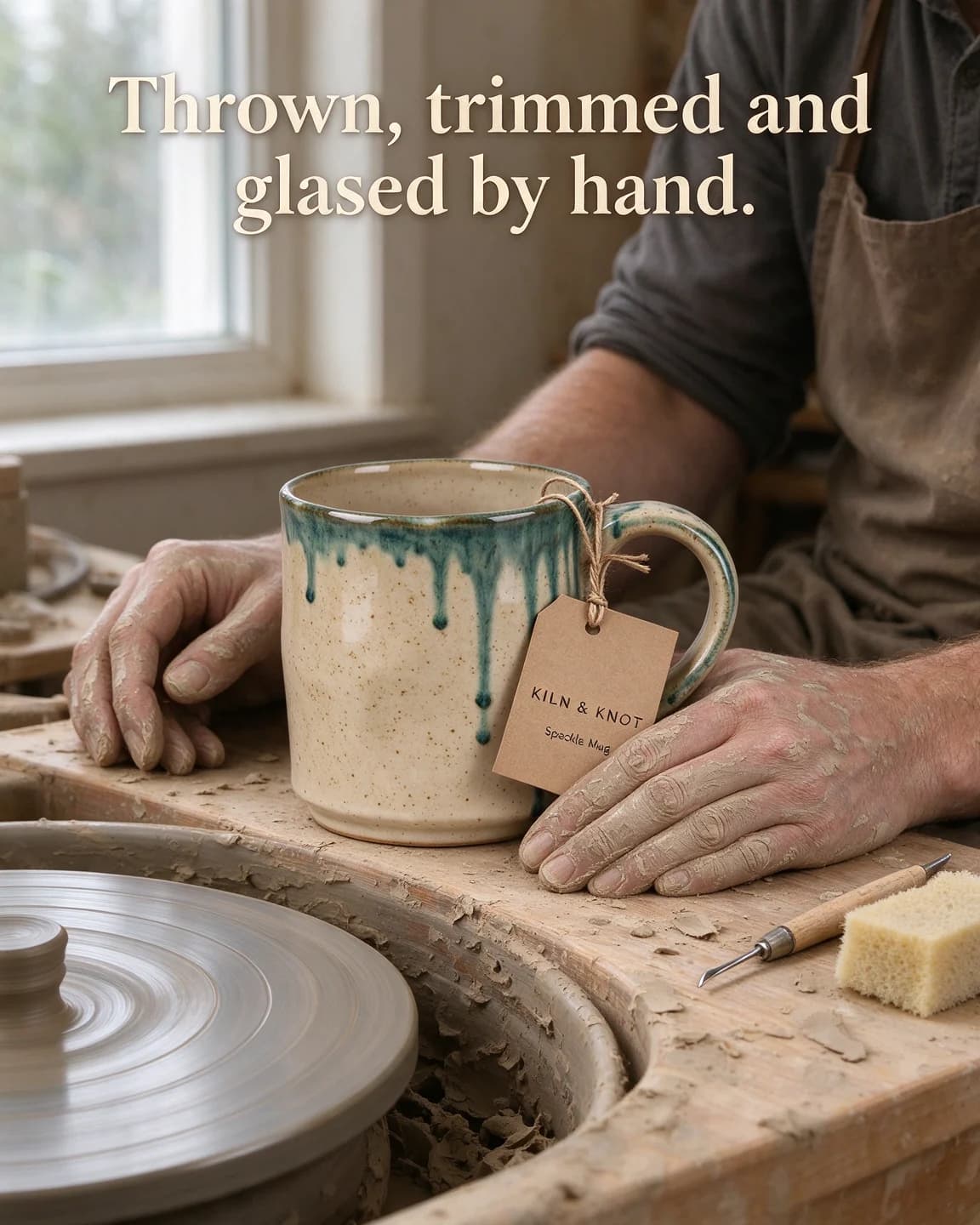
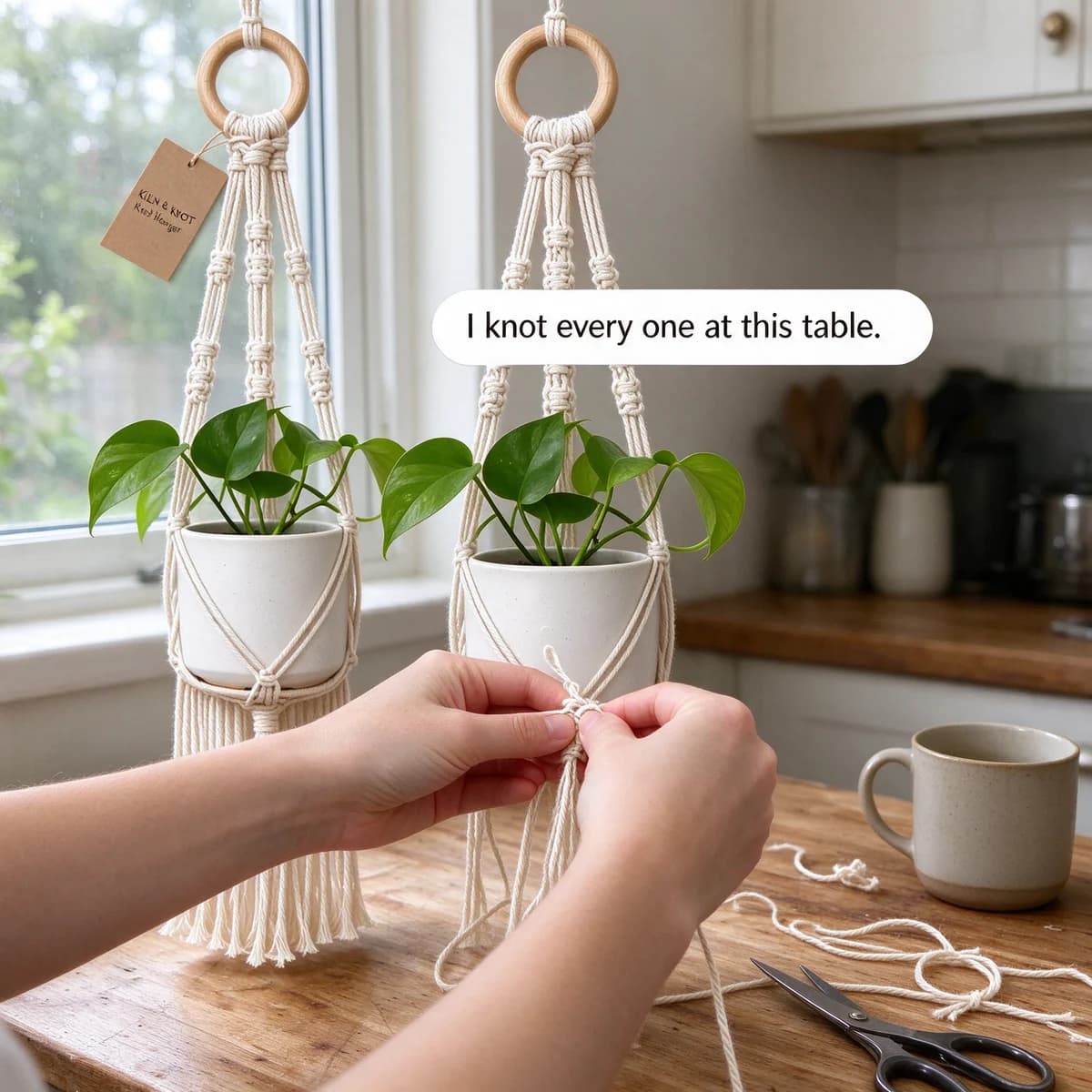
- Hands. Clay on the fingers, cord wrapped round a knuckle. Process makes the word "handmade" believable.
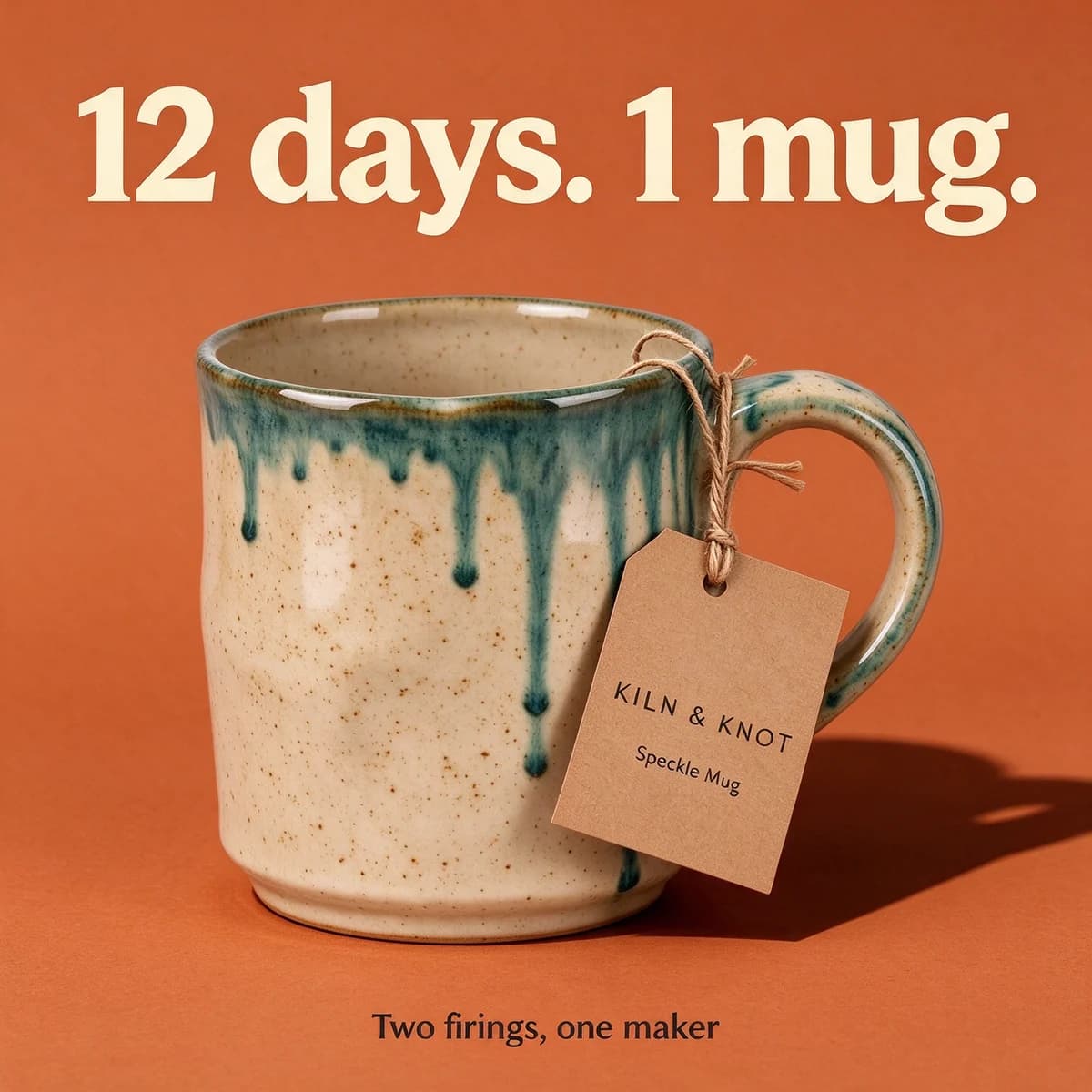
- Time. How long a piece takes, stated as a number.
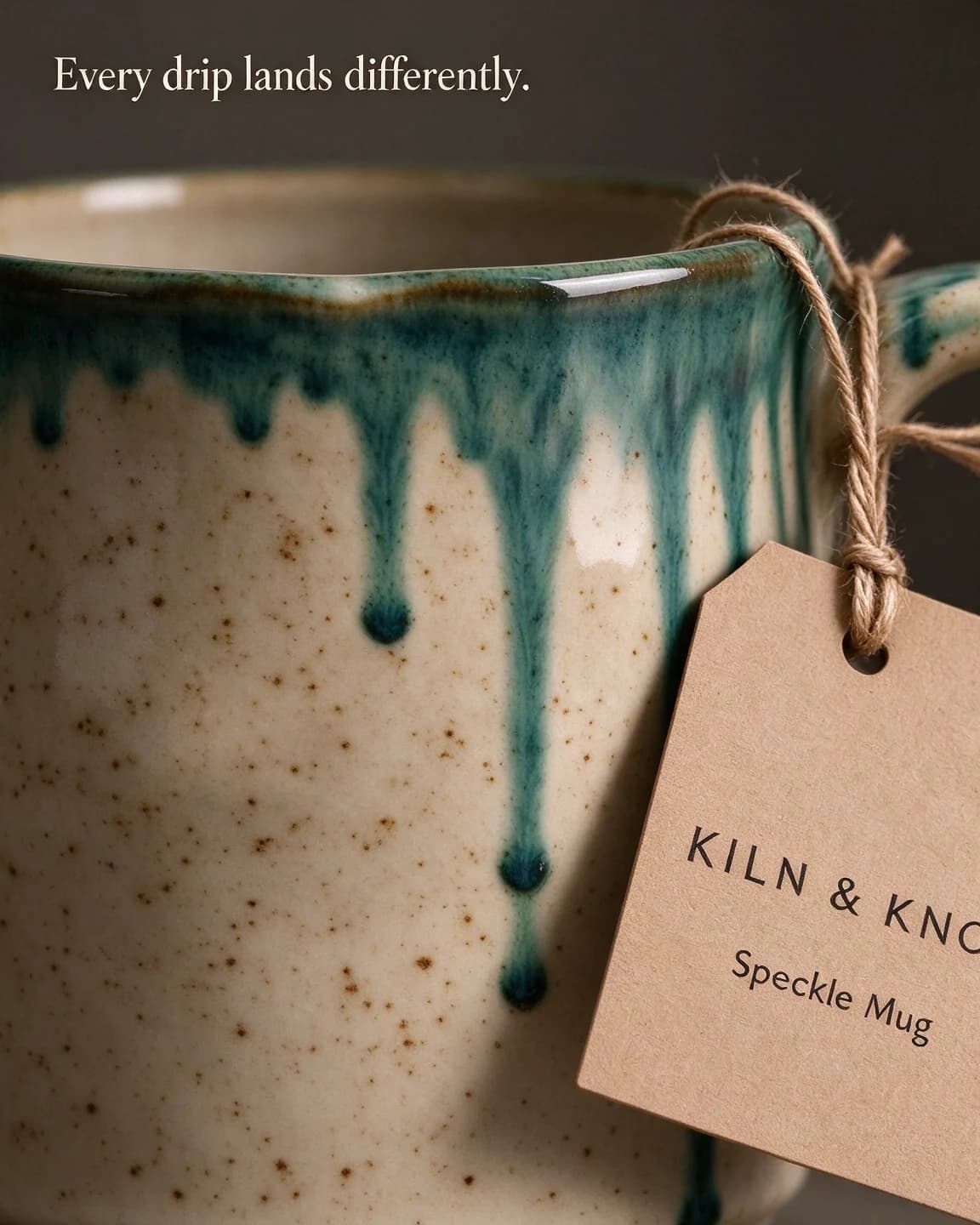
- Variation. Glaze that runs differently on every mug, knots that are never quite identical.
- The maker. A first-person line from the person at the bench.
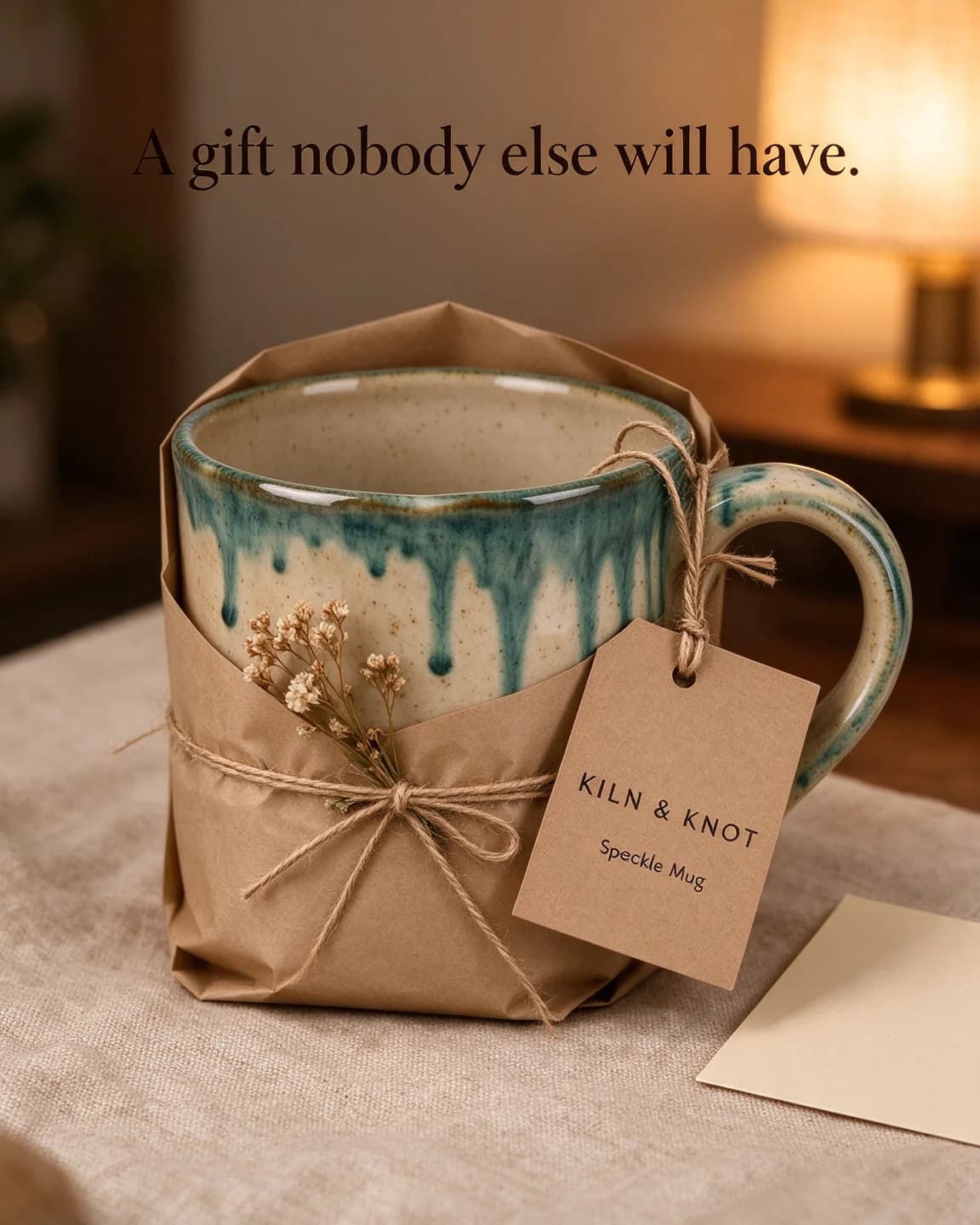
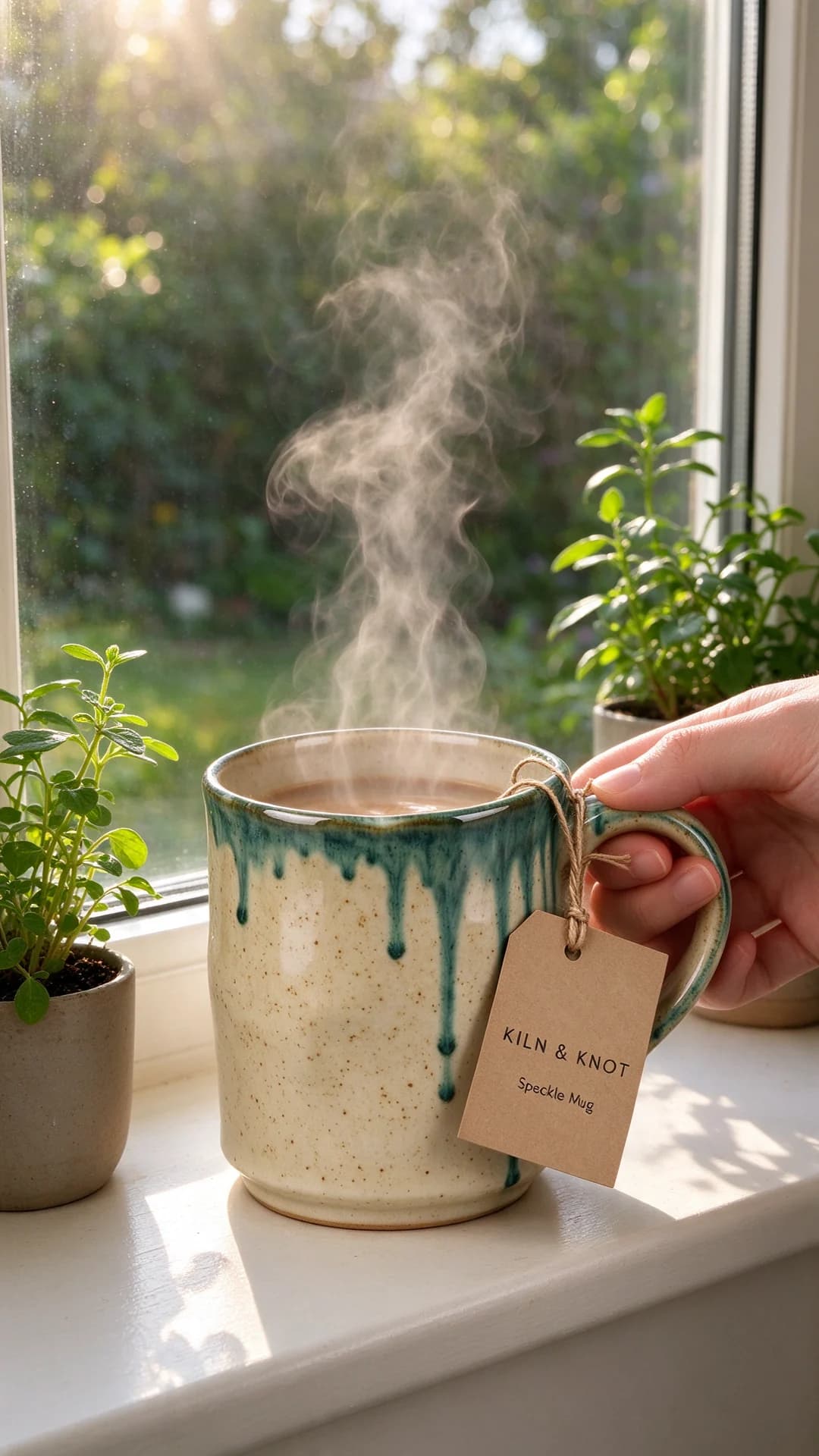
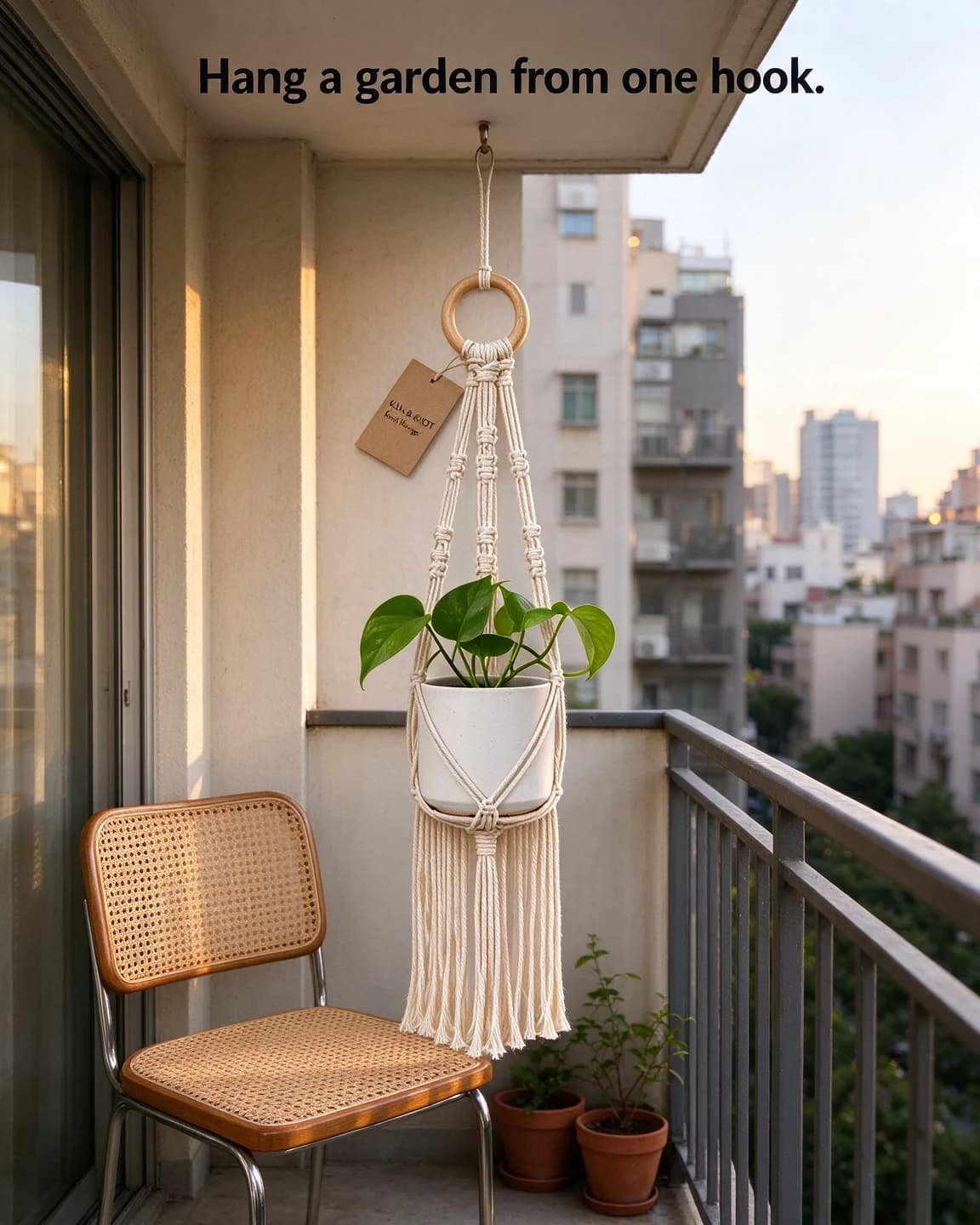
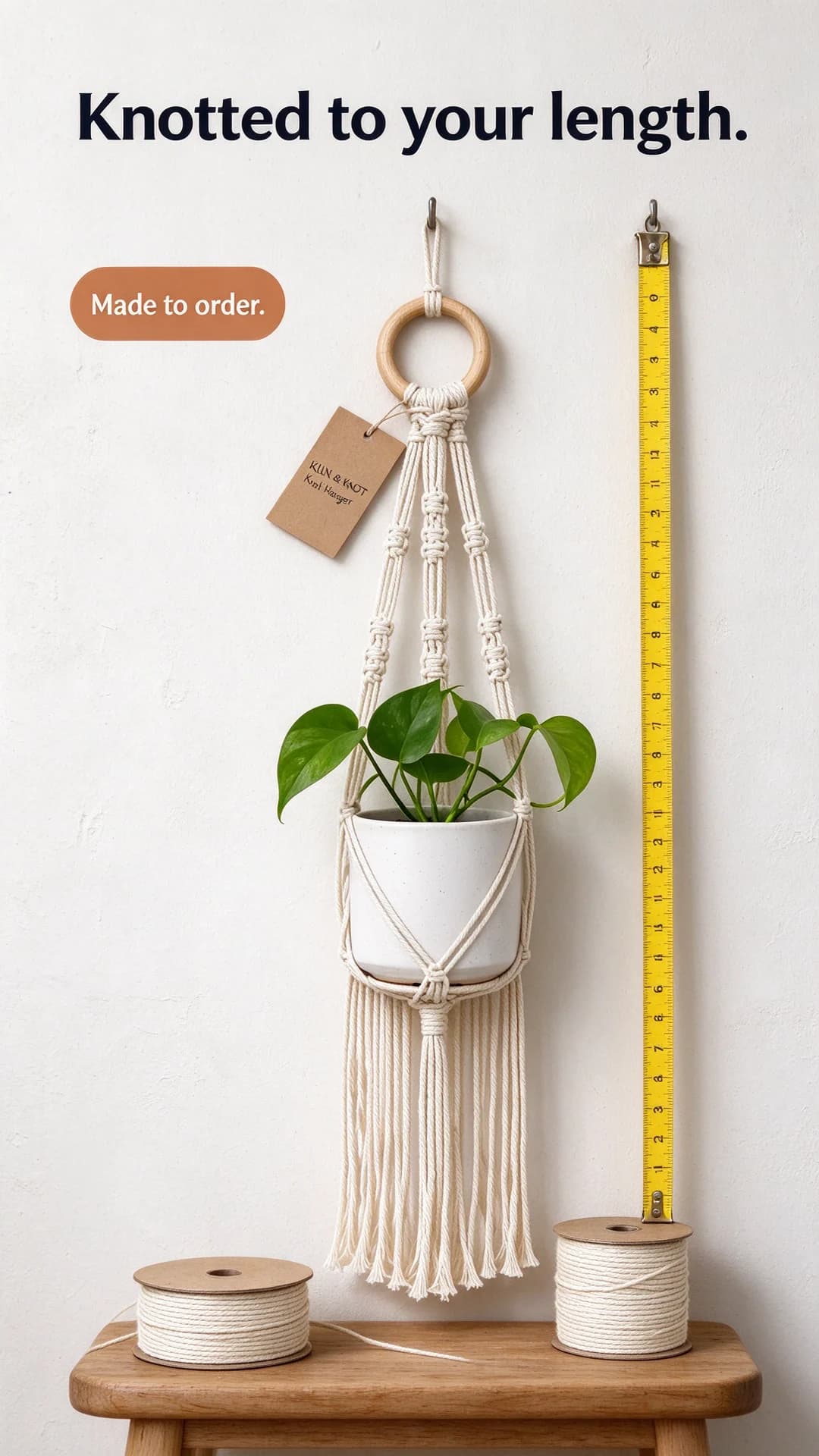
The Kiln & Knot examples above use all four: five ads for the Speckle Mug and three for the Knot Hanger.
The shots a craft brand needs
Some shots are best made with AI from your packshot. Others should stay real, because they are the proof.
| Shot | Make it with AI? | Why |
|---|---|---|
| Packshot on white | No, shoot it | It is the reference every other ad is built from |
| Styled in a home | Yes | A balcony, a shelf or a kitchen you don't have to borrow |
| Gift-wrapped | Yes | Kraft paper and twine are easy to stage around a real piece |
| Macro detail | Shoot it if you can | Real glaze and knot texture is the evidence of handwork |
| Process at the bench | Shoot it | An invented workshop undercuts the claim |
| The maker | Shoot it, hands only is fine | It is the one thing a factory can't fake |
BulkAds is built for the AI rows: give it your packshot and it places the real piece into new scenes. For the real rows, upload your photo as it is with Upload ad, add its headline and primary text (BulkAds can rewrite them) and launch it next to the AI-made ads, so one campaign can include both. The behind-the-scenes template shows a layout for real studio photos.
One-of-a-kind pieces and AI scenes
AI scenes raise a fair question for craft sellers: is the piece in the ad the piece that ships? Three rules keep the answer yes.
- Start from a real photo of a real piece. Daylight, a plain background, the maker's tag readable. Our guide to product photos for AI ads covers the setup.
- Keep the variation honest. If every mug differs, the ad shows one representative mug and says each piece varies, near the image or in the first line of copy.
- Retire ads for one-offs. A unique wall hanging gets its own small batch of ads, and they are paused the day it sells.
BulkAds compares each ad with your original photo and flags ads where the product drifted, such as a glaze that changed colour or a handle that moved. Regenerate those or drop them. A mug that looks better in the ad than in the box is a refund request waiting to happen.
Putting the price in context
Handmade prices need context, not an apology. A worked example: the Speckle Mug sells at $20, and the shopper is quietly comparing it with a $4 mug from a homeware chain. Don't argue with the difference, explain it:
- Put time on the image. "12 days. 1 mug." makes the case without a price in sight.
- Name the steps. Throwing, trimming, drying, a bisque firing, glazing, a glaze firing. Each one is a reason, and the list is checkable.
- Make the price feel complete. Gift wrap, a care card and a note from the maker, listed in the copy beside the price.
- Offer a pair. Two mugs for $38 instead of $40 is a modest saving that suits gifting without cheapening the work.
Be careful which kind of time you quote. Days from clay to box include drying and the kiln, and they are easy to account for. Hands-on hours are a stronger claim and harder to defend, because a potter throwing a batch of fourteen mugs splits those hours across all of them. If you want to use hours, count them for one batch and divide.
Leave out pricing tricks that clash with craft. Big "70% off" banners and stickers about stock you don't have make a studio look like a discount warehouse.
A first test for one hero piece
Start with one hero piece and five angles, with two executions of each:
- Process, hands and tools in shot.
- Variation, a macro of the glaze or the knots.
- The time, a bold number on a flat colour.
- Gifting, wrapped and ready to send.
- The maker's voice, a first-person caption.
That's 10 ads, or 20 credits at 2 credits each, mostly in 4:5 with 9:16 versions of the strongest two for Stories and Reels. Craft ads collect compliments easily, so judge them on sales rather than on how many people call them pretty.
Every kiln firing or batch is a natural moment for fresh creative. A studio post with how many pieces came out and when they go live, like the mock-up above, turns each batch into a small launch of its own. If you also sell on a marketplace, see BulkAds for Etsy sellers.
How BulkAds fits a one-person studio
A craft studio is often one or two people, and the ad work competes with the making. BulkAds is set up for that:
- A brand kit from your website. Colours, fonts, voice and the claims your site makes, like "two firings" or "made to order", with nothing added that your site doesn't say. See brand kit.
- One packshot, a full batch. Up to 12 ads per batch, each on its own angle, in 1:1, 4:5 or 9:16. See product photo ads.
- Your voice, in other languages. Copy in 95+ languages, useful when you start shipping abroad.
- Patterns, not copies. Competitor ad research sorts other studios' ads by how long they have run, and BulkAds rebuilds the pattern with your own photos.
- Nothing goes live by accident. Ads launch paused, so you check each one before it spends anything.
Questions people ask
What should a handmade product ad show?
Proof of the handwork: hands at the bench, a close-up of the texture or the time a piece takes. Pair one of those with the finished piece in a real setting.
Can I use AI images to advertise handmade products?
Yes, for styled scenes and gift shots built from a real photo of the piece, as long as the piece looks the way it ships. Keep process and maker shots real, because they are the evidence that it is handmade.
How do I advertise one-of-a-kind pieces?
Make a small batch of ads for each unique piece from its own photo, and pause them the day it sells. For pieces made in small runs, show one and say that each one varies.
How do I justify a higher price in a handmade ad?
Show the time and the steps behind the piece instead of defending the number. 'Twelve days, two firings' explains a price better than a discount does, as long as the number is one you can account for.
Is Kiln & Knot a real studio?
No. Kiln & Knot, the Speckle Mug and the Knot Hanger are fictional, and every ad on this page was made with AI for illustration.
Keep going
- Features
Product photo ads
Your real packshot, in every scene
- Features
Brand kit
Colours, fonts and voice from your website
- Use cases
BulkAds for Etsy sellers
Turn your own photos of handmade or vintage pieces into on-brand Meta ads. How Etsy sellers set up BulkAds, which angles suit makers and the honest limits.
- Use cases
BulkAds for small businesses
Paste your website, add a product link and get batches of ads built from your real product photos. Check them, launch them paused and keep the ones that sell.
- Guides
Product photography for ads: how to shoot it on a phone
A phone, a window and a sheet of white card are enough. How to shoot product photos that make good ads — and that AI tools can put in new scenes without mangling your label.
- Guides
Flat lay product photography: top-down photos that work as ads
How to shoot straight down without distortion, light a flat lay from one side, pick a layout that leaves room for a headline, and turn a packshot into flat lays with AI.
Every brand on this page is fictional and every ad was made with AI for illustration — they’re examples, not case studies.
BulkAds AI is an independent product and is not affiliated with, endorsed or sponsored by Meta Platforms, Inc. Facebook and Instagram are trademarks of Meta Platforms, Inc.