

Ad examples

Home decor ad examples: 8 ideas that sell how a room feels

People buy home decor with their imagination: they picture it in their own room first. These eight candle and planter ideas for fictional brands show how to sell a mood, a gift and a solved problem, each with its hook and why it works.

6 ads2 live templates15 hooks

The swipe file

Each ad with its angle, its hook and why it works. Every brand is fictional. The ads were made with AI to show the idea.

A lit Nook & Wick Cedar & Fig candle in an amber glass jar on a linen-draped side table beside a stack of books, a lamp glowing behind, headline "Your evening, bottled."

Nook & WickMoodFeed · 4:5 image

“Your evening, bottled.”

Scent can't travel through a screen, so the ad sells the evening the scent belongs to: warm lamp, books, a quiet table. The serif headline and amber tones match the calm it promises, which suits people making a cosy corner rather than hunting a bargain.

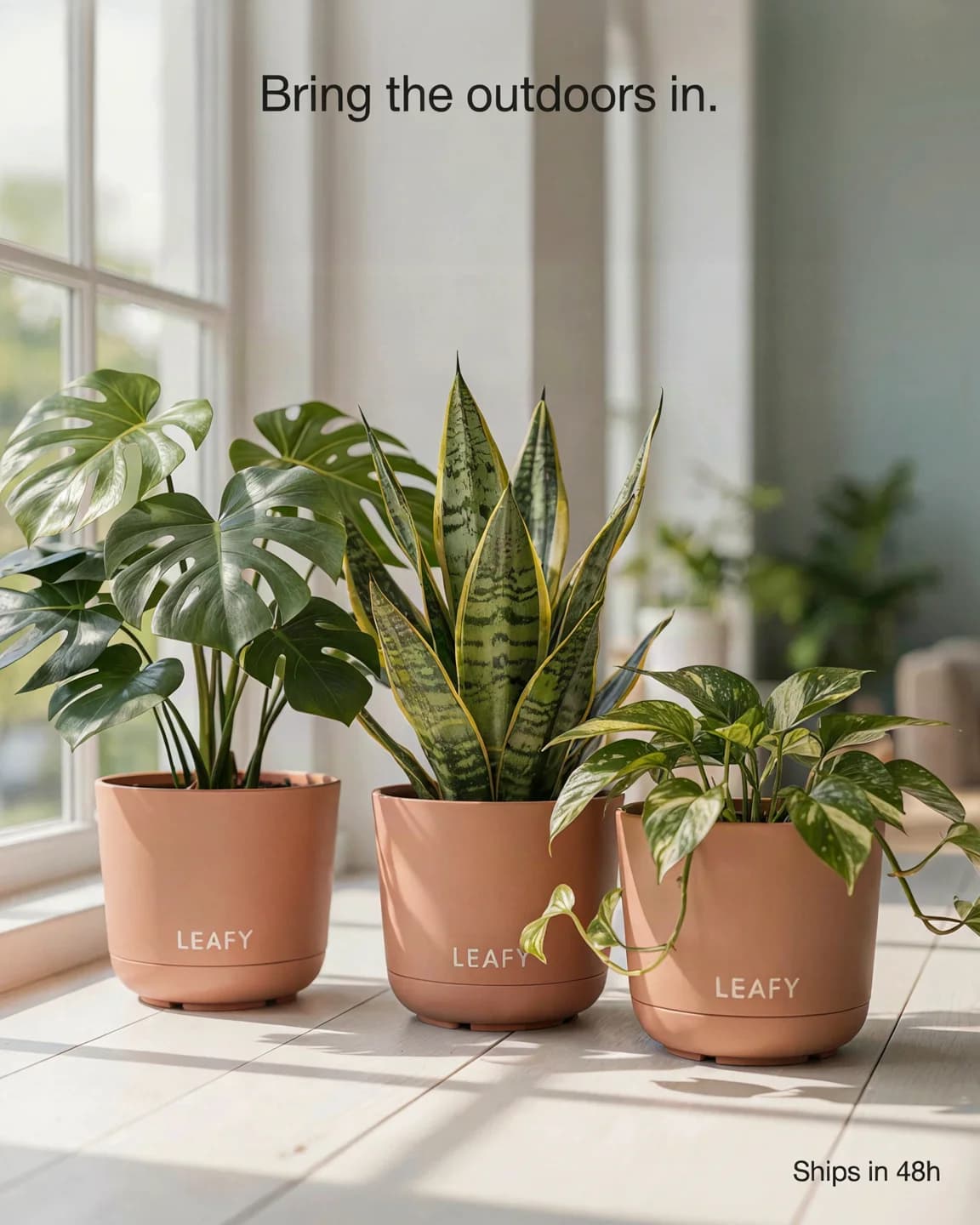
Three terracotta Leafy self-watering planters holding a monstera, a snake plant and a pothos on a sunny windowsill, headline "Bring the outdoors in." with "Ships in 48h" in the corner

LeafyLifestyleFeed · 4:5 image

“Bring the outdoors in.”

A bright, full windowsill lets flat-dwellers picture their own room greener, and three matching pots suggest a set rather than a single purchase. The small 'Ships in 48h' line answers a practical worry without crowding the mood.

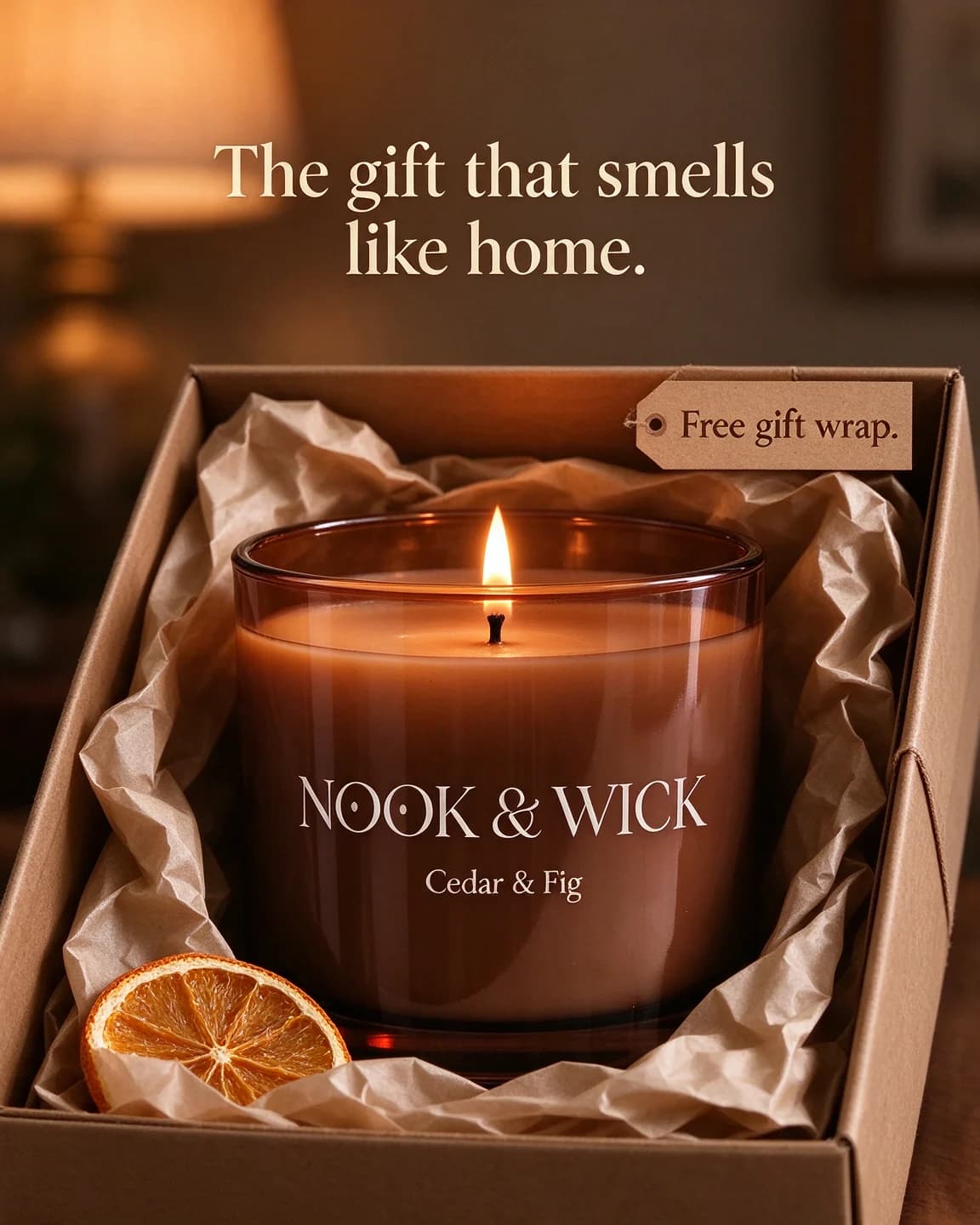
A lit Nook & Wick candle in an open kraft gift box with tissue paper and a dried orange slice in soft lamp light, headline "The gift that smells like home." and a "Free gift wrap" tag

Nook & WickGiftingFeed · 4:5 image

“The gift that smells like home.”

It reframes the candle as the answer to the buyer's real problem — what to give — and the open box shows exactly what arrives. 'Free gift wrap' removes one more job before a birthday, housewarming or festival.

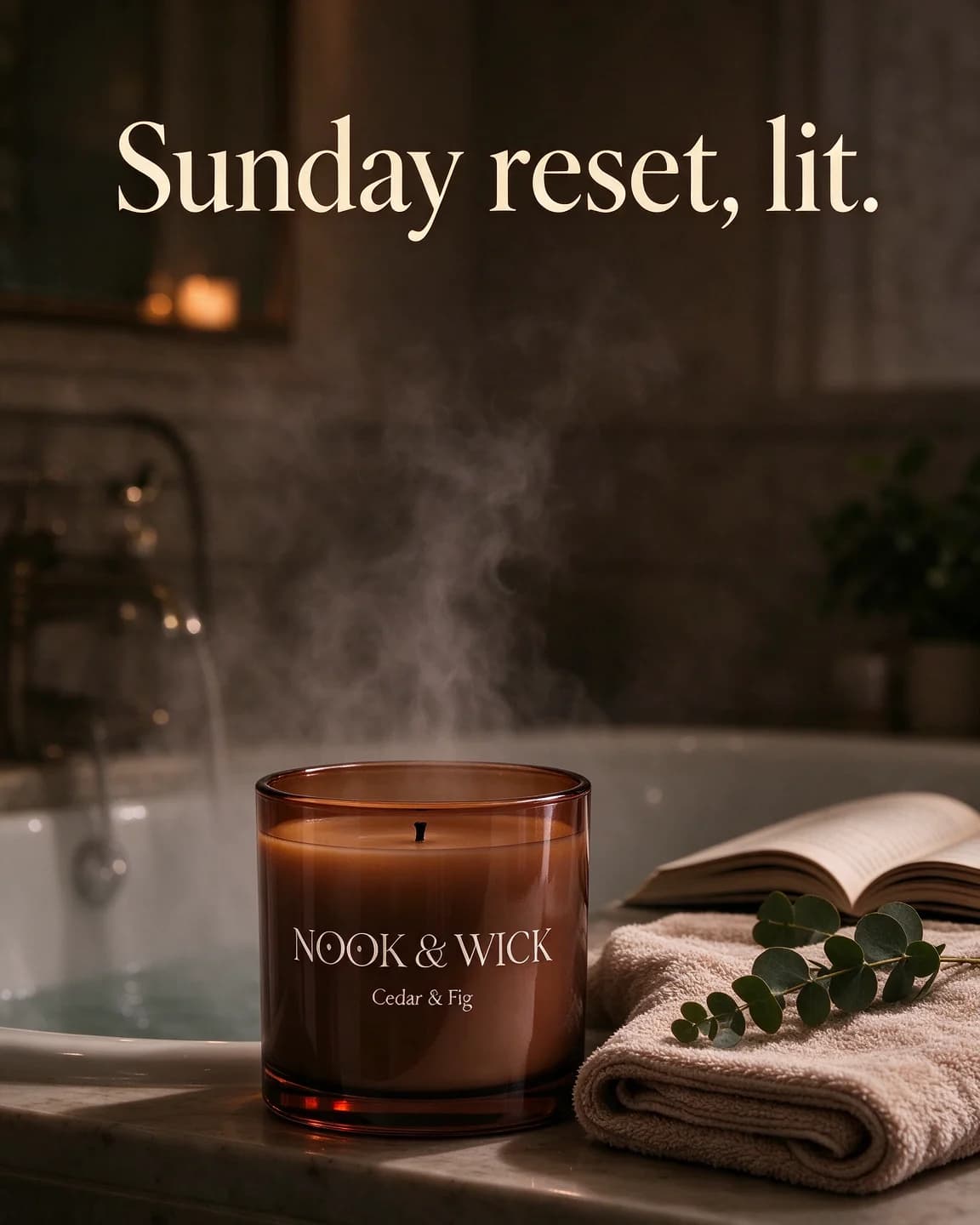
A lit Nook & Wick candle on the edge of a bathtub with a folded towel, a eucalyptus sprig and an open book in a calm, steamy evening scene, headline "Sunday reset, lit."

Nook & WickMoment of useFeed · 4:5 image

“Sunday reset, lit.”

Naming a weekly ritual gives the candle a job and a time slot, and the bath scene feels aspirational without being out of reach. The pun in 'lit' keeps the tone light for younger renters and first-home buyers.

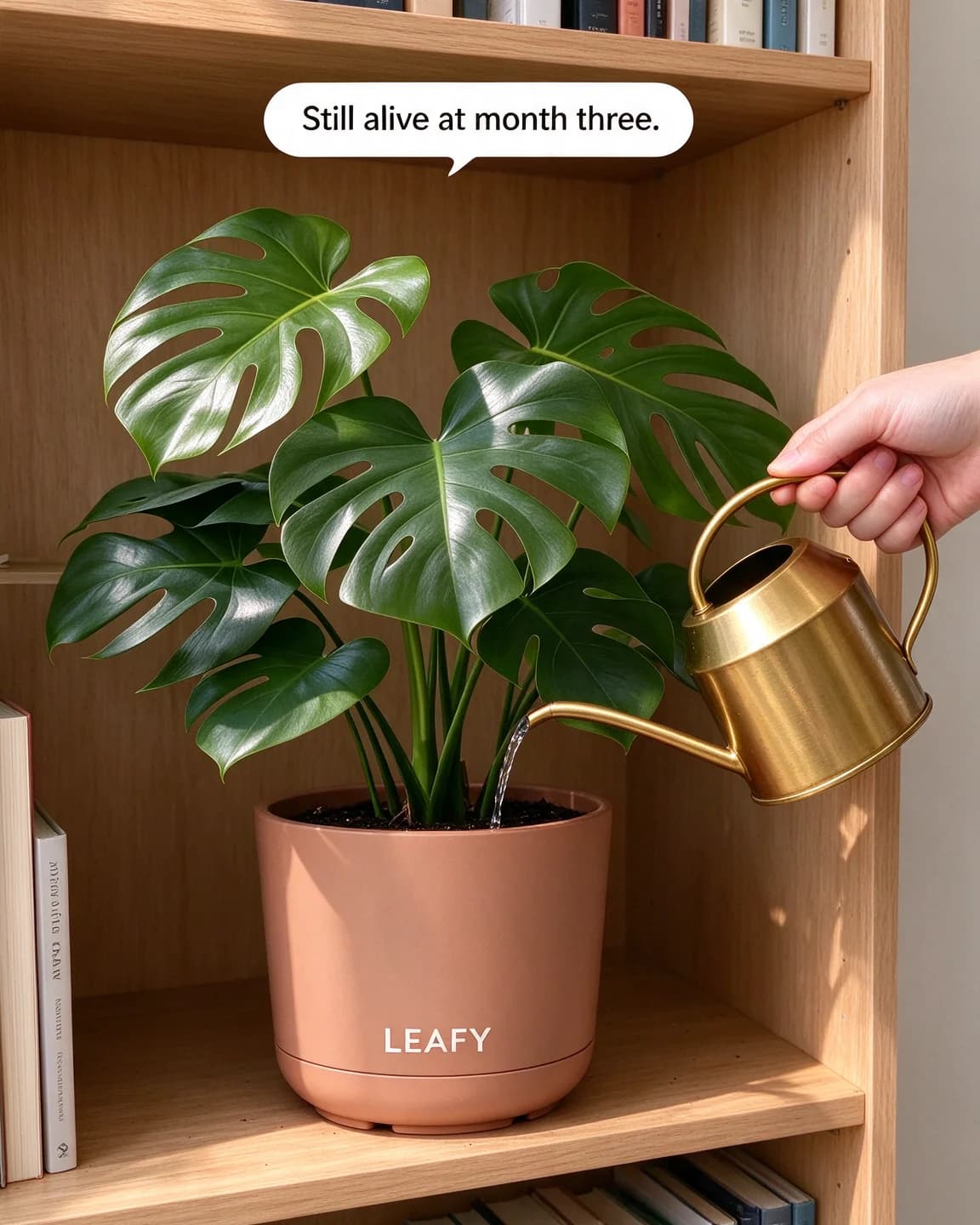
A Leafy planter with a monstera on a sunny bookshelf being watered from a small brass can, with a speech-bubble caption reading "Still alive at month three."

LeafyUGC proofFeed · 4:5 image

“Still alive at month three.”

It jokes about the fear every self-confessed plant-killer has, which makes the proof feel honest rather than boastful. The phone-photo look and a real shelf make it read like a customer's update, aimed squarely at nervous first-time plant owners.

A Leafy planter centred on a flat sage-green background with a hard shadow, headline "Self-watering. Zero guilt." and the small line "Ships in 48h"

LeafyBold claimFeed · 1:1 image

“Self-watering. Zero guilt.”

The feature and the feeling in three words: what it does, then why you'll care. The poster style stands out among busy interior shots, which makes it a useful contrast test against the lifestyle ad.

Two more ways to try

  • LLeafySponsored
    The problem

    Forgot to water the plants again?

    The fix

    A built-in reservoir waters from below while you're busy.

    LEAFY
    Self-watering planterShop planters

    Problem–solution ad

    Naming a small, familiar failure and answering it in one line is the quickest way to explain a feature most people have never used.

    Edit this template
  • NNook & WickSponsored

    ★★★★★

    “Lit it most evenings for a month. The cedar is soft, not smoky, and it smells lovely even unlit.”

    MMeera K. Verified buyer · Bengaluru
    NOOK & WICKCEDAR & FIG
    Cedar & Fig candleShop candles

    Testimonial ad

    A review that describes the scent in plain words does what a photo can't — tell people how it smells — which helps buyers choosing a fragrance they can't sniff first.

    Edit this template

Angles to test first

  1. 1

    Sell the room, not the object

    Show the corner, the evening or the windowsill the product completes. People buy decor for how the space will feel, so the scene is the pitch.

  2. 2

    Gifting

    Candles, planters and throws are easy gifts. Show what arrives — box, wrap, card — and remove the jobs the giver dreads.

  3. 3

    The fear, answered

    Killing plants, spilled wax, 'will it suit my room?'. Name the worry lightly and show why yours avoids it.

  4. 4

    Rituals and resets

    The Sunday reset, the after-work wind-down, the first cold evening. A ritual gives an object a reason to be used, and re-bought.

  5. 5

    Styling ideas

    Show one product three ways: shelf, bedside, bathroom. It helps buyers picture it at home and gives you three genuinely different ads.

15 hooks for home & decor ads

  • Your [evening], bottled.
  • The gift that smells like [home].
  • [Sunday reset], lit.
  • Still alive at month [three].
  • [Self-watering]. Zero [guilt].
  • Bring the [outdoors] in.
  • The [corner] your [living room] was missing.
  • One [candle], [three] rooms.
  • What [cedar and fig] smells like: [description].
  • Forgot to [water] again? [Product] didn't.
  • Housewarming gift, sorted: [product].
  • Make your [rented flat] feel like [home].
  • Hand-poured in [city], in small batches.
  • For people who [kill every plant they buy].
  • From [bare shelf] to [cosy corner] in one [evening].

Moments to plan for

  • Diwali (Oct–Nov)

    Candle gift sets among diyas and marigolds, with every flame kept clear of fabric in the shot.

  • Housewarmings and griha pravesh (year-round)

    A 'housewarming gift, sorted' bundle with free gift wrap and a card.

  • Monsoon (Jun–Sep)

    Cosy indoor evenings with rain on the window. For plants, lush green corners while it pours outside.

  • Christmas (Dec)

    Warm spice scents, wrapped gifts and stocking-filler price points.

  • Spring (Mar–Apr)

    Fresh-start plant bundles and 'bring the outdoors in' shots full of window light.

  • Mother's Day (May)

    A candle-and-card gift set with a handwritten note in the frame.

Watch out for

  • Style lit candles responsibly: a stable surface, clear space around the flame, nothing like curtains or loose fabric nearby, and never a scene that looks unattended.
  • Scent and wellbeing claims — 'relieves stress', 'helps you sleep', 'purifies the air' — are health claims. Sell the mood instead unless you can back them up.
  • Plant claims need care: 'impossible to kill' or 'never water again' overpromise, and 'pet-safe' must be true — many popular houseplants, including monstera, are toxic to cats and dogs.
  • Show real sizes. A candle or planter styled with tiny props can look bigger than it is. Put dimensions in the copy to avoid 'smaller than expected' returns.

Practical pointers, not legal advice. Check Meta’s Advertising Standards and your local rules.

What makes home decor ads work

Nobody buys a candle or a planter for what it is. They buy the evening it creates, the corner it finishes or the gift it solves. Home decor ads work when the viewer can picture the product in their own space — so the scene matters more here than in almost any other category.

That creates two practical problems: scent can't travel through a screen, and plant care can't be seen in a photo. The examples above get around both:

  • Sell the moment the product belongs to. "Your evening, bottled." sells the lamp-lit evening, not the wax.
  • Name the fear, lightly. "Still alive at month three." jokes about killing plants, then shows it hasn't happened. The problem–solution template is built for this kind of ad.
  • Solve the gift. "The gift that smells like home." speaks to the buyer's real problem: what to give.
  • Say the feature plainly. "Self-watering. Zero guilt." — what it does, then why you'll care.

There are usually three buyers in the room: the person treating themselves, the gift-giver and the problem-solver. Each needs a different ad, which is why a single beautiful image rarely carries a whole account.

A two-week testing plan for decor brands

Start with five angles, with two or three versions of each:

  1. Mood or lifestyle — the product finishing a real-looking room.
  2. Moment of use — a ritual such as a Sunday reset or an after-work wind-down.
  3. Gifting — the box, the wrap, the card.
  4. UGC proof — a phone-camera shot that answers the main fear.
  5. Bold claim — the key feature on a flat brand colour.

That's 10 to 15 ads per hero product. See how many ad creatives to test for how to size it. Decor is often a more considered purchase than everyday groceries, so each ad may need more spend before you can judge it. The creative test calculator works that out from your target cost per purchase.

Use 4:5 for feeds — interiors look best tall — and 9:16 for Stories and Reels, where a flickering flame or a watering can in motion gives the scene life. Save 1:1 for poster-style claims and offers.

For gifting seasons, start testing a few weeks before the peak. You want your winners found and running at full budget while people are still shopping, not after the last delivery date has passed.

Styling tips for candle, plant and decor ads

  • Light sets the mood. Warm lamp light for candles, soft window light for plants. Mixed colour temperatures look muddy.
  • Show scale. A book, a mug or a hand beside the product prevents "smaller than I expected" returns.
  • Style real homes, not showrooms. A slightly lived-in shelf is easier to picture than a perfect set. For Indian audiences, cane, brass, terracotta and jharokha-style windows feel local.
  • Describe the scent in words. "Cedar, fig and a little smoke" belongs in the primary text, because the photo can't say it.
  • Keep flames safe in shot. Clear space around lit candles, with no curtains or loose fabric touching the jar.
  • Use texture. Linen, wood grain, terracotta and wax catch the light and make a flat image feel tactile.

Keep the words on the image short and calm. A serif line of four or five words suits most decor brands. Let the primary text do the describing: the scent notes, the size of the jar or pot, a burn time you've actually tested, or how the reservoir in a self-watering planter works. One sensory sentence, one practical sentence and one reason to buy now — free gift wrap, delivery before a festival — is a simple pattern to start from.

Turning winners into new variants

Decor winners can often be refreshed without changing the idea:

  • New season, same scene — the same candle with rain on the window for monsoon, or with diyas for Diwali.
  • New room, same product — shelf, bedside, bathroom, desk.
  • New scent or plant, same layout — a proven frame is the quickest way to launch a range.
  • New format — the still becomes a short vertical video with a flickering flame.

Decor audiences can be fairly niche, so the same people may see your ads again and again. Refresh on a rhythm rather than waiting for results to fall. Our creative refresh schedule guide covers how often.

BulkAds places your real product photo into new scenes and checks each ad against it, so the jar in the ad is the jar that arrives — see product photo ads.

Questions people ask

What should a candle ad show?

Sell the moment the candle belongs to — an evening, a bath, a gift — because scent can't come through a screen. Describe the scent notes in plain words in the primary text and show the jar at a believable size.

What makes a good home decor ad image?

A real-looking room in natural or warm light, the product clearly the hero, and something for scale such as a hand, a book or a mug. Showroom perfection is harder for buyers to picture at home.

Should home decor brands use UGC-style ads?

They're worth testing, especially for products with a fear to overcome, like plants people worry about killing. If the photo isn't from a real customer, don't present it as a real review.

When should I launch gifting ads for Diwali or Christmas?

Early enough that your test has spent and settled before the peak. A common approach is to start two to four weeks ahead. Leave room for delivery times in any offer deadline.

Are Nook & Wick and Leafy real brands?

No. Both are fictional, and every ad on this page was made with AI for illustration.

Keep going

Every brand on this page is fictional and every ad was made with AI for illustration — they’re examples, not case studies.

BulkAds AI is an independent product and is not affiliated with, endorsed or sponsored by Meta Platforms, Inc. Facebook and Instagram are trademarks of Meta Platforms, Inc.

More ad examples

Your next fifty ads are one link away.

Paste your website, meet your brand kit and see your first batch in minutes. 7 days for $9.99 — cancel anytime.

yourbrand.comMake my ads

See pricingExplore featuresBrowse the library