What gift hamper ads have to prove
A hamper is bought by one person and opened by another, usually somewhere else and usually close to a date. So the ad has three things to prove before anyone taps: what's inside, that it will arrive on time, and that the person receiving it will be pleased.
The default hamper ad is a closed basket under a big bow. It looks pretty and answers none of those questions. The examples above each pick one question and answer it in a single image:
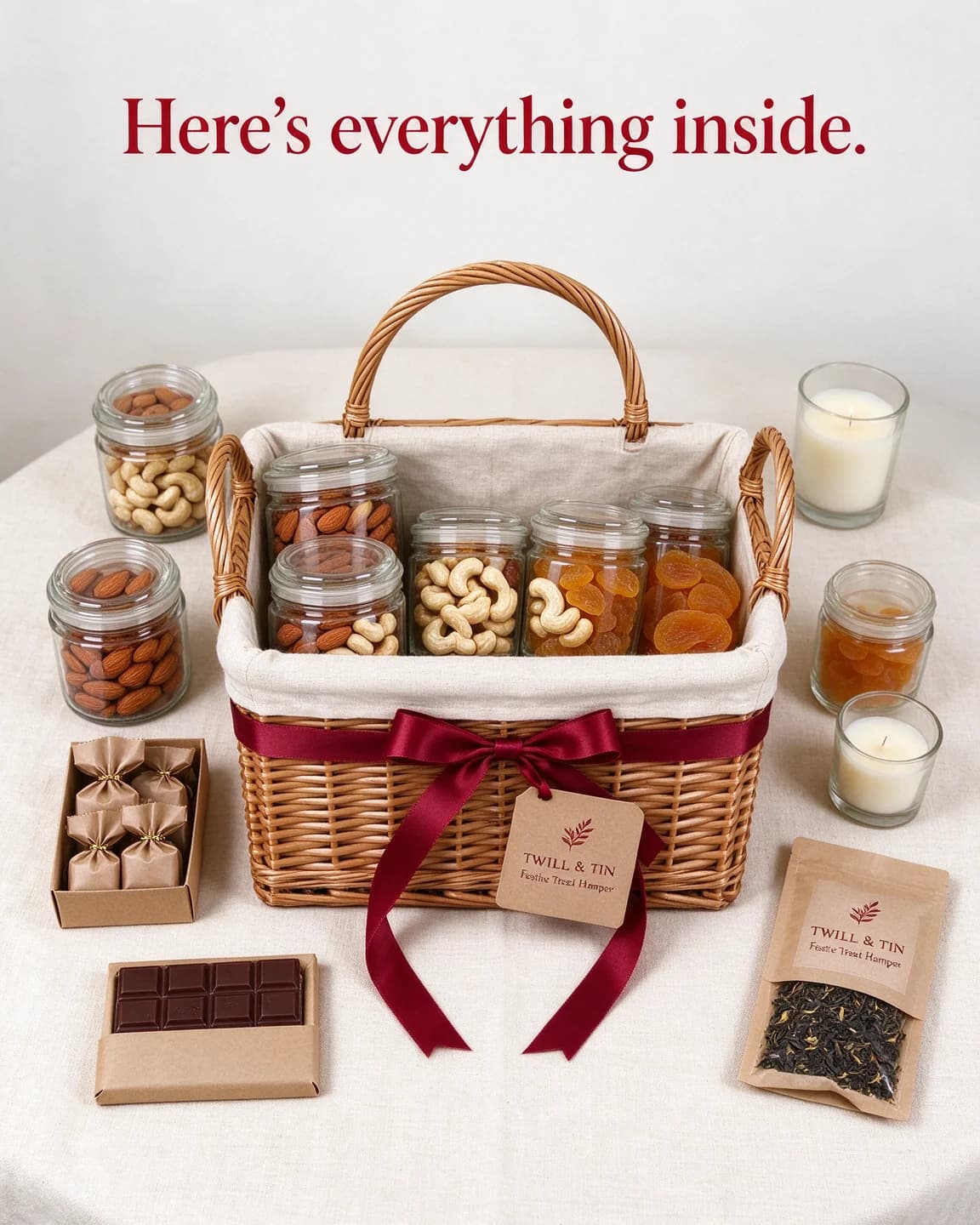
- What's inside: the flat lay with every item laid out around the basket.
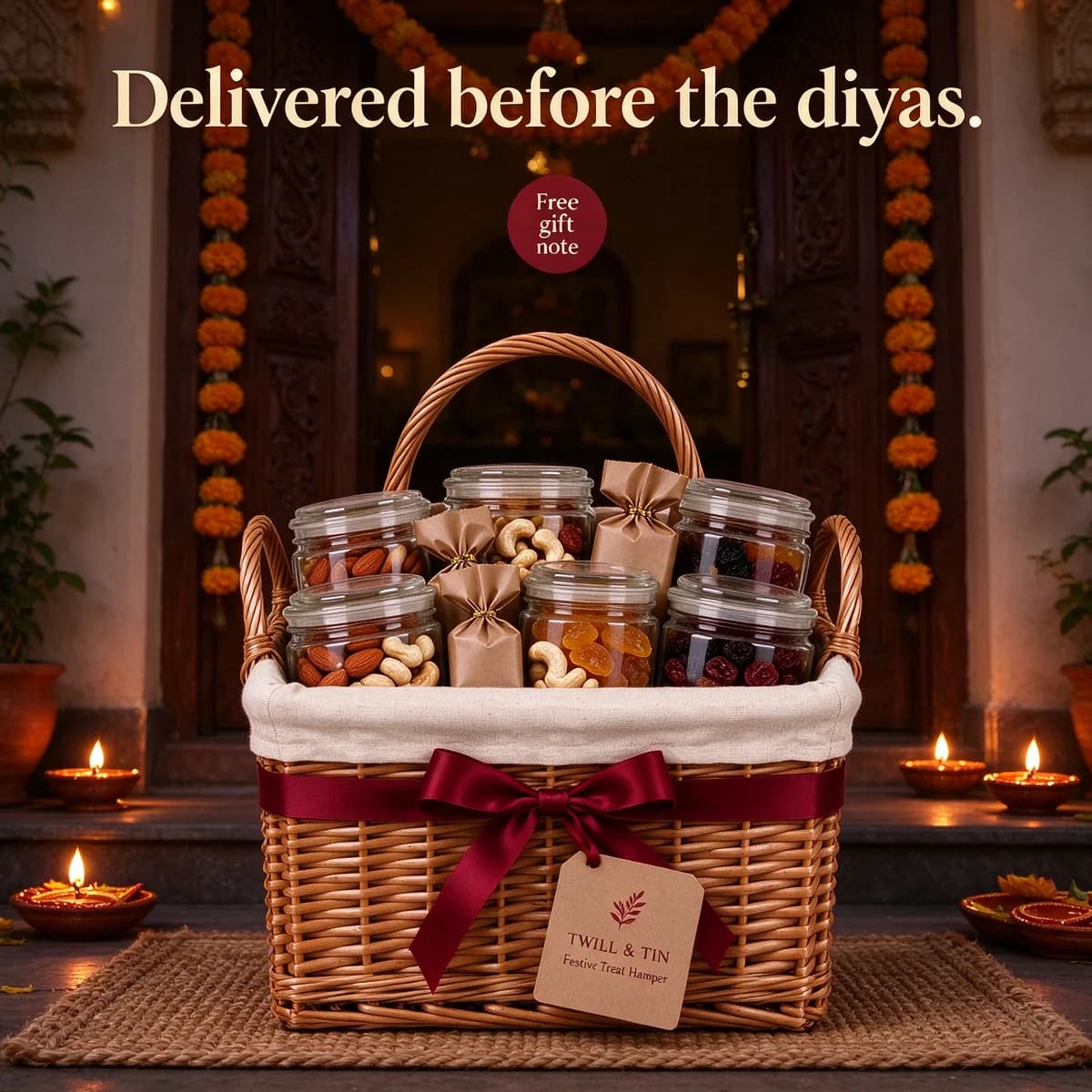
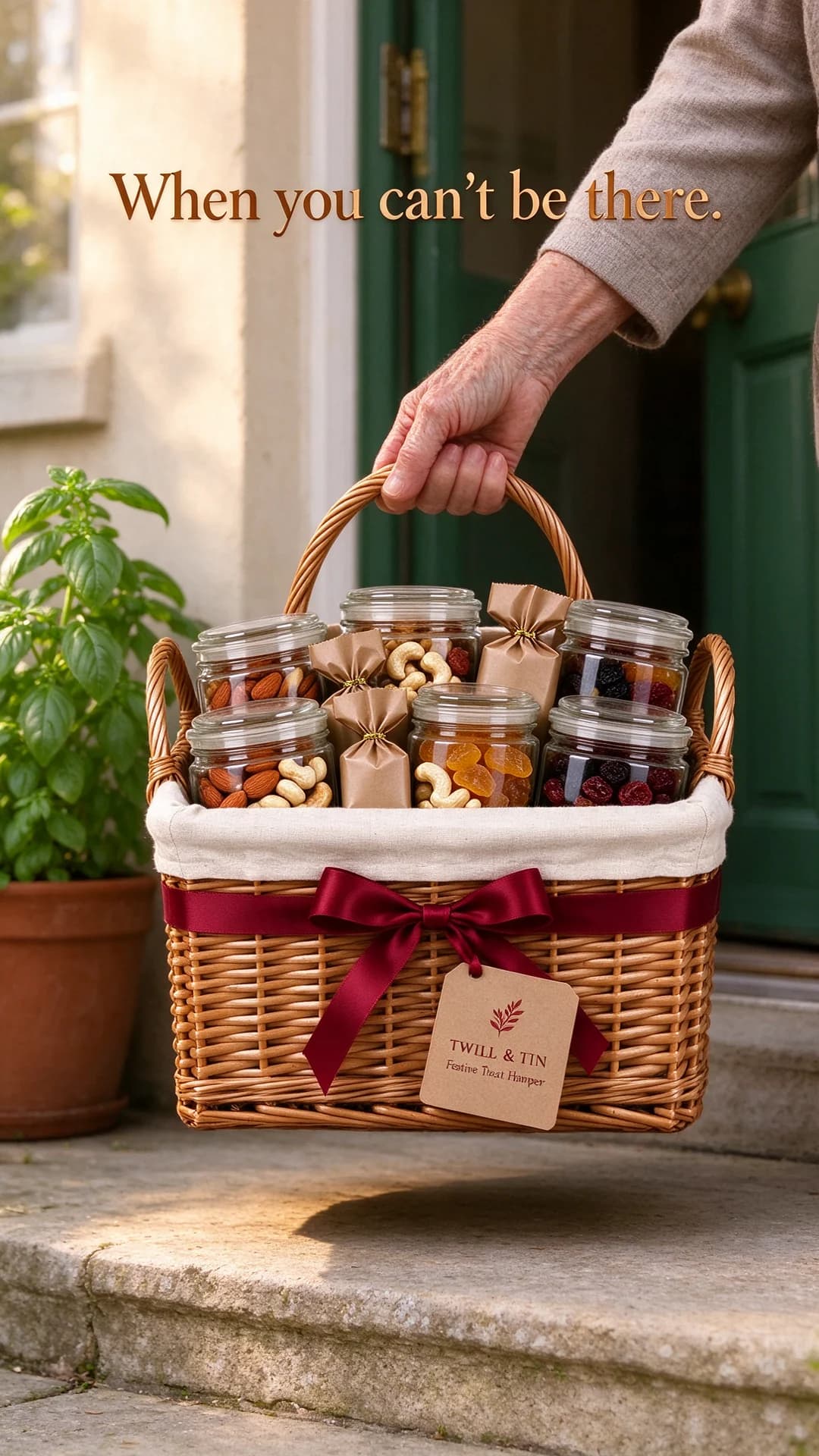
- When it arrives: the doorstep with the diyas already lit.
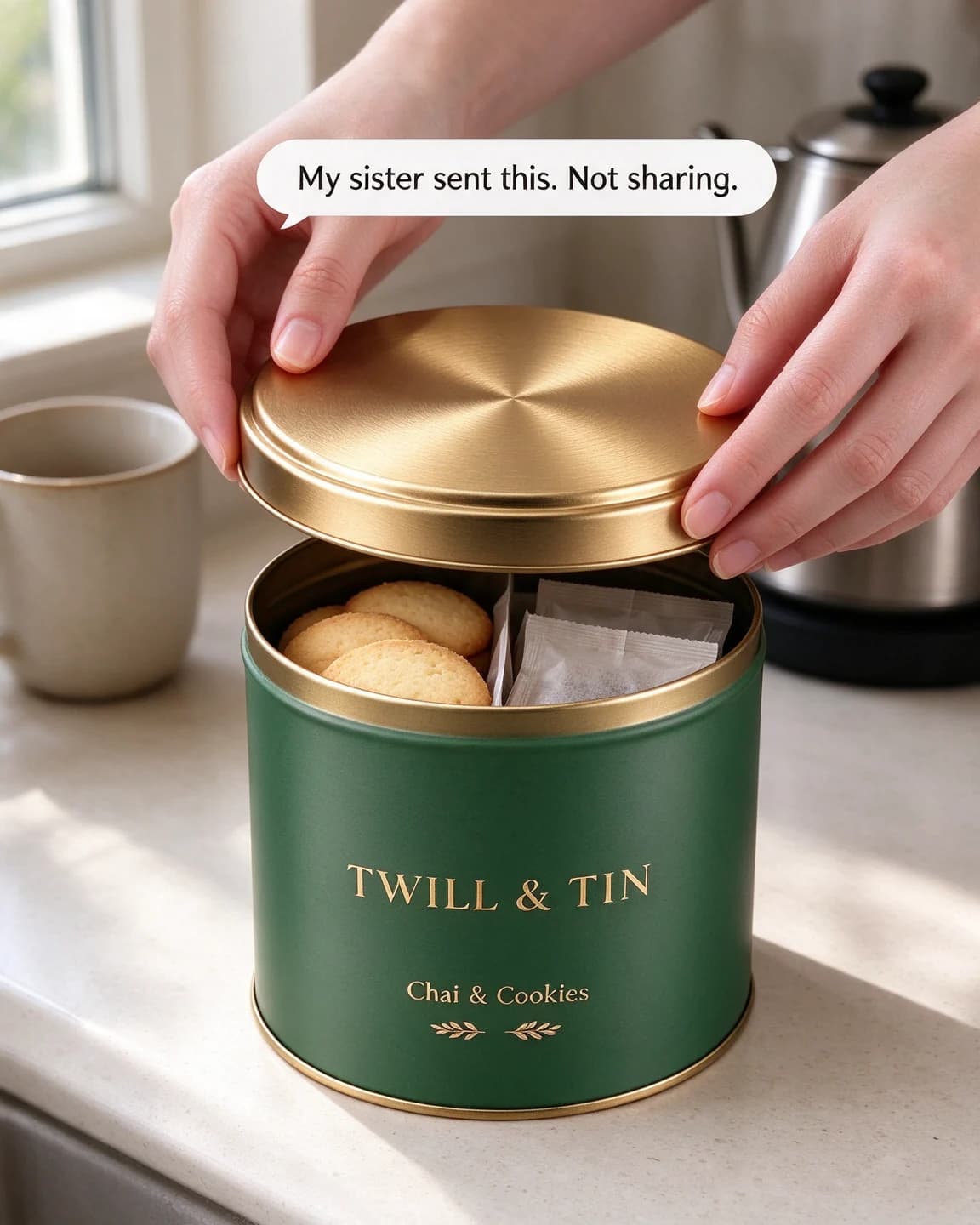
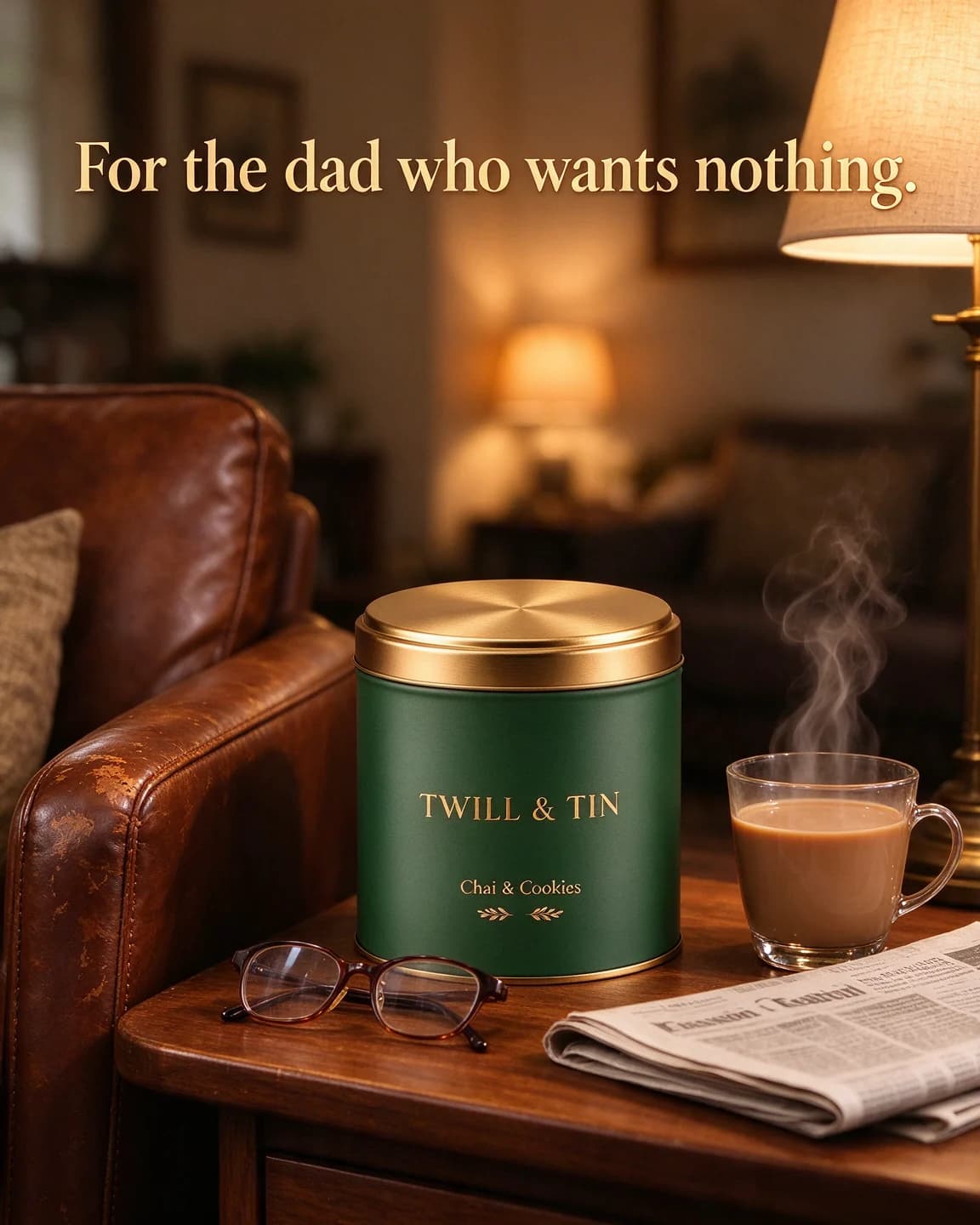
- Who it's for: the dad's side table, the sister's kitchen counter, the office reception desk.
The buyer is also judged by the gift. A hamper that turns up looking smaller than the photo reflects on the sender, which is why honest framing matters more here than in most categories.
Photos that answer a hamper buyer
Plan photos around the buyer's questions, not around your product list. A small hamper brand can cover most of them in one afternoon with a phone and a window:
- Closed packshot on white. The base for every AI-made ad and for your product page, with the tag and ribbon facing the camera.
- Open, top layer showing. Lid off or ribbon loose, so the first treats are visible.
- Everything laid out. Each item outside the basket, in rows, nothing hidden. This is the picture buyers screenshot and send to a sibling to split the cost.
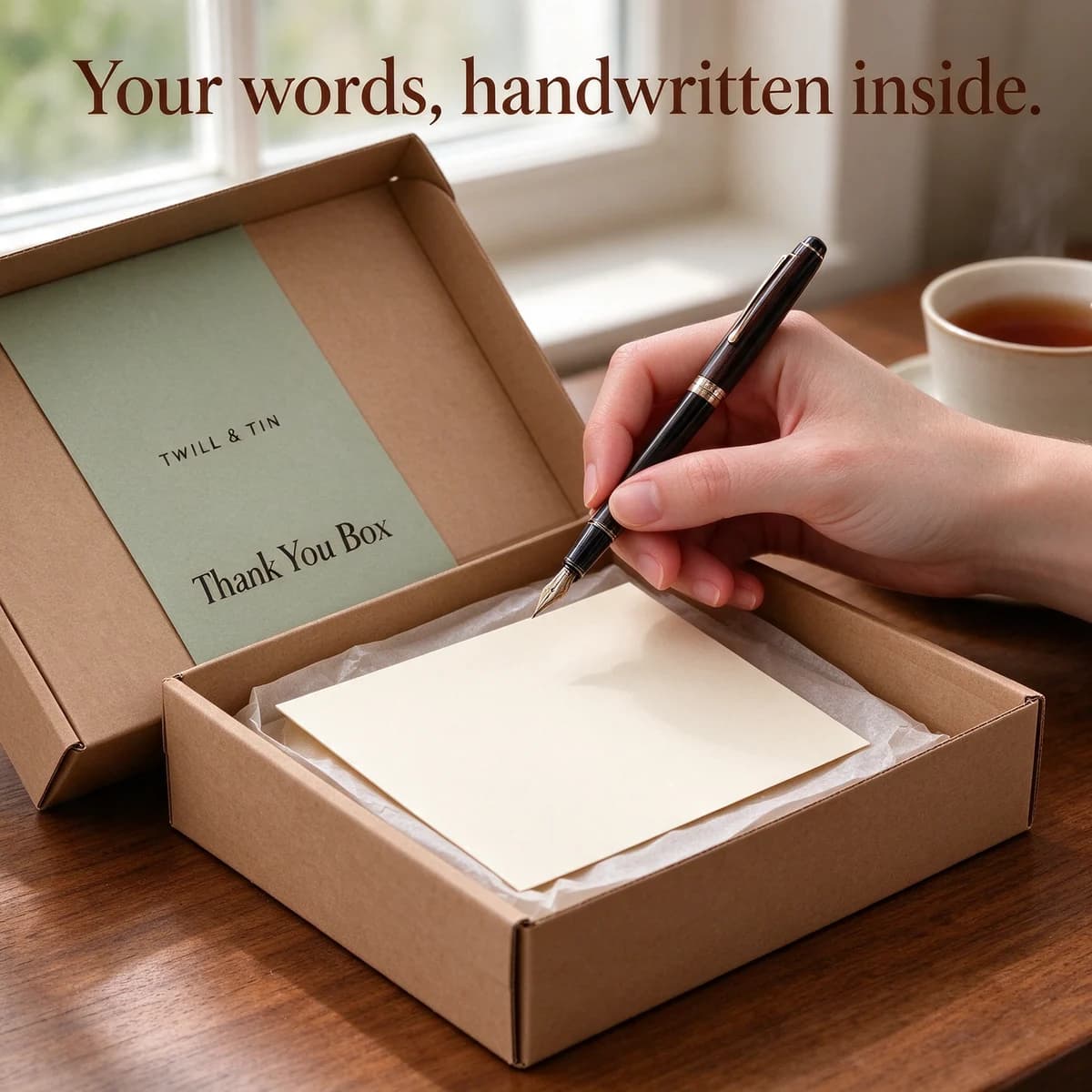
- The note. A close-up of the card, so people sending gifts from far away see the personal part.
- In someone's hands. Hands lifting the lid, shot from above. It shows scale without needing a face.
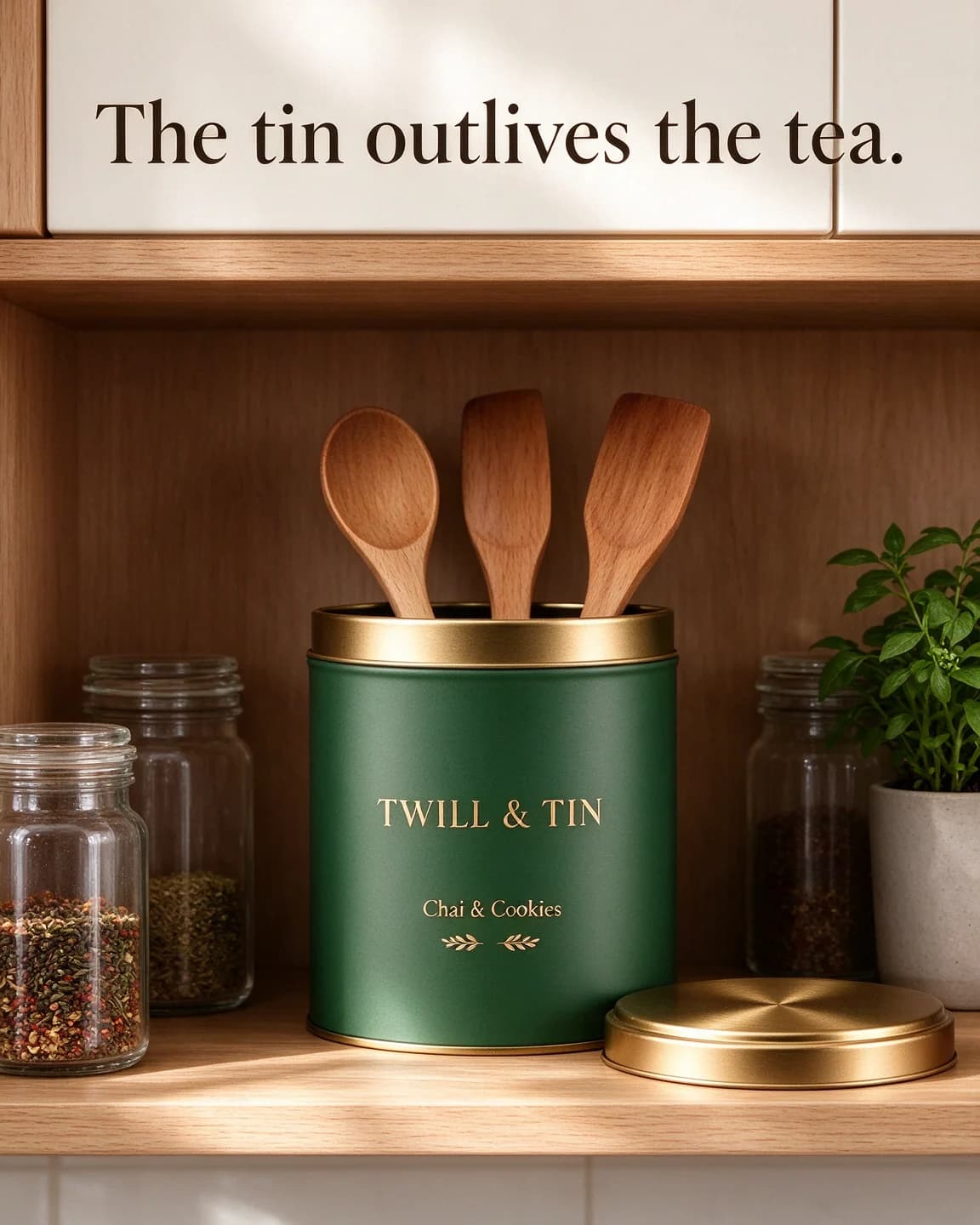
- Afterwards. The basket holding fruit, the tin on a kitchen shelf. It shows value that lasts past the treats.
Photograph every hamper size the same way, from the same height and distance, so a shopper comparing sizes isn't misled by framing.
A first test for a hamper range
Hampers usually come as a price ladder, and the ladder shapes the test. Imagine three tiers at $13, $26 and $52. The cheapest tends to attract people who weren't planning to spend much. The top tier collects admiring looks and fewer orders. The middle tier is often the one to test first, because it's the default for a buyer who wants to look generous without overspending. Treat that as a starting hypothesis and let your own orders confirm or overturn it.
For the middle tier, test five angles with two versions each:
- Contents reveal, the flat lay.
- Arrival promise, the doorstep, with the order-by date in the primary text.
- Recipient reaction, a UGC-style caption from the person who received it.
- Hard-to-buy-for, a named type of recipient and props that describe them.
- Personal note, the handwritten card in close-up.
Put the price in the primary text, not on the image. Festive offers change prices often, and an image with an old price keeps circulating long after the store is updated.
Where AI hamper scenes can mislead
In BulkAds a hamper is a product like any other. Add a clean packshot, or let the brand kit find your product photos on your website, choose a batch of up to 12 ads in 1:1, 4:5 or 9:16, and the AI ad generator places your real hamper into new scenes: a festive doorstep, a kitchen counter, a reception desk.
Two trade-offs are worth knowing before you start:
- Contents can't be invented honestly. The generator keeps your basket, ribbon and tag from the photo, and the pre-flight check flags ads where the product drifted. But if a scene adds treats that aren't in your hamper, the ad misleads even when the basket is perfect. Build the batch from your own instructions and say so plainly ("no extra food or gifts in the scene"), then check each ad for strays anyway. For the contents angle, photograph the real items yourself and use that photo as-is.
- Each size is its own product. Add the small, medium and large hampers separately, each with its own photo, so an ad never pairs the large basket with the small price.
If some of your buyers read Hindi or Marathi more easily than English, write for them. BulkAds writes the headline, primary text and description for each ad in your brand voice, and you choose the language per batch from 95+, so a Raksha Bandhan batch can run in Hindi alongside an English one. Ask a native speaker to check anything about dates and delivery before it goes live.
When an ad wins in a test Autopilot launched, it drafts four fresh variants of it, so you have new versions ready for the last stretch before a festival, when people have seen your first round many times.
Planning around gifting dates
Gifting runs on fixed dates, and every date hides a second deadline: the last day you can still deliver. Plan each festival in three phases:
| Phase | What the ads say |
|---|---|
| Early | The range and who each hamper is for, with gift-guide and contents ads. |
| Closing | The order-by date in the primary text, with arrival ads on the doorstep. |
| After the cut-off | No more delivery promises. Move to pickup if you offer it, or to the next occasion. |
The Diwali ideas and Raksha Bandhan ideas pages go deeper on those two festivals. For year-round gifting such as housewarmings, new jobs and new babies, the hook moves from the date to the relationship: "A welcome for new neighbours, ready in two days."
Corporate hampers need their own ads
A business buyer reads a hamper ad differently from a family buyer. They're sending dozens, not one, and they're buying for people they want to impress. Three things change:
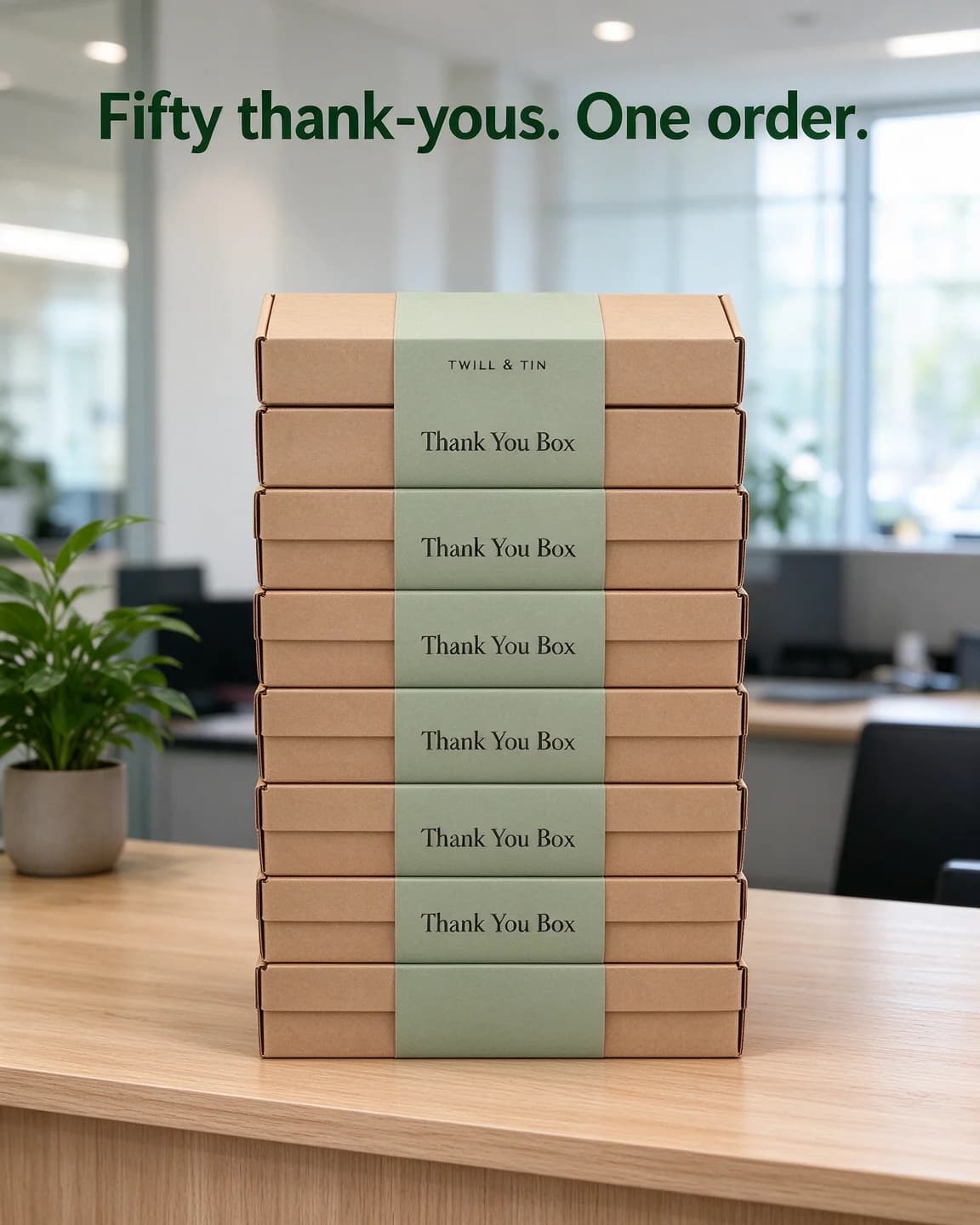
- Show volume. A neat stack, a row on a reception desk, identical boxes ready to go out.
- Show the finish. Clean packaging, a tidy card, a box that looks good unopened on a desk.
- Answer logistics in the copy. Minimum order, lead time, delivery to several addresses and invoicing.
Keep the boxes in these ads generic or carrying your own brand. A blank card or your own band does the job without implying a client relationship you can't show.
Questions people ask
What should a gift hamper ad show first?
What's inside. A flat lay of every item, or an open hamper with the contents visible, answers the buyer's first question. Arrival, recipient and note angles work best once people know what they'd be sending.
How do I advertise a hamper that includes wine?
Treat it as an alcohol ad. As of October 2026, Meta's alcohol policy requires ads to follow local laws, never reach people under 18 and not run in certain countries and five Indian states and territories, and most of the rest of India has a minimum age of 21 or 25. A non-alcoholic version is the safer choice for broad ads.
Should the price go on the hamper image?
Usually not. Festive offers change prices often, and an image with an old price keeps circulating. Put the price in the primary text and let the image show the contents and the moment.
How do I make hamper ads for corporate buyers?
Show volume and finish, such as a neat stack of identical boxes on a reception desk, and answer logistics in the copy: minimum order, lead time, delivery to several addresses and invoicing.
Is Twill & Tin a real company?
No. Twill & Tin is fictional, and every ad here was made with AI for illustration.
Keep going
- Features
Ad copy generator
Headlines and primary text in 95+ languages
- Ad templates
Gift guide ad template
Gift picks matched to people, so the shopper finds theirs at a glance
- Ad templates
Countdown ad template
A real deadline in giant type, with one version for each day left
- Ad templates
Unboxing ad template
The box open, everything inside named, the viewer on the receiving end
- Ad examples
Party supplies ad examples
Balloon, confetti and tableware ads that sell the party, not the pack count
- Ad examples
Subscription boxes ad examples
Box ads that sell box day and make the commitment feel easy to leave
Every brand on this page is fictional and every ad was made with AI for illustration — they’re examples, not case studies.
BulkAds AI is an independent product and is not affiliated with, endorsed or sponsored by Meta Platforms, Inc. Facebook and Instagram are trademarks of Meta Platforms, Inc.