What bath and body ads have to show
Bath and body products are bought with the hands and the nose, and an ad can reach neither. That is why the good ones lean so hard on texture and setting. The image has to do what the tester pot does in a shop: show the grain of a scrub, the thickness of a lotion, the way foam slides down wet tiles.
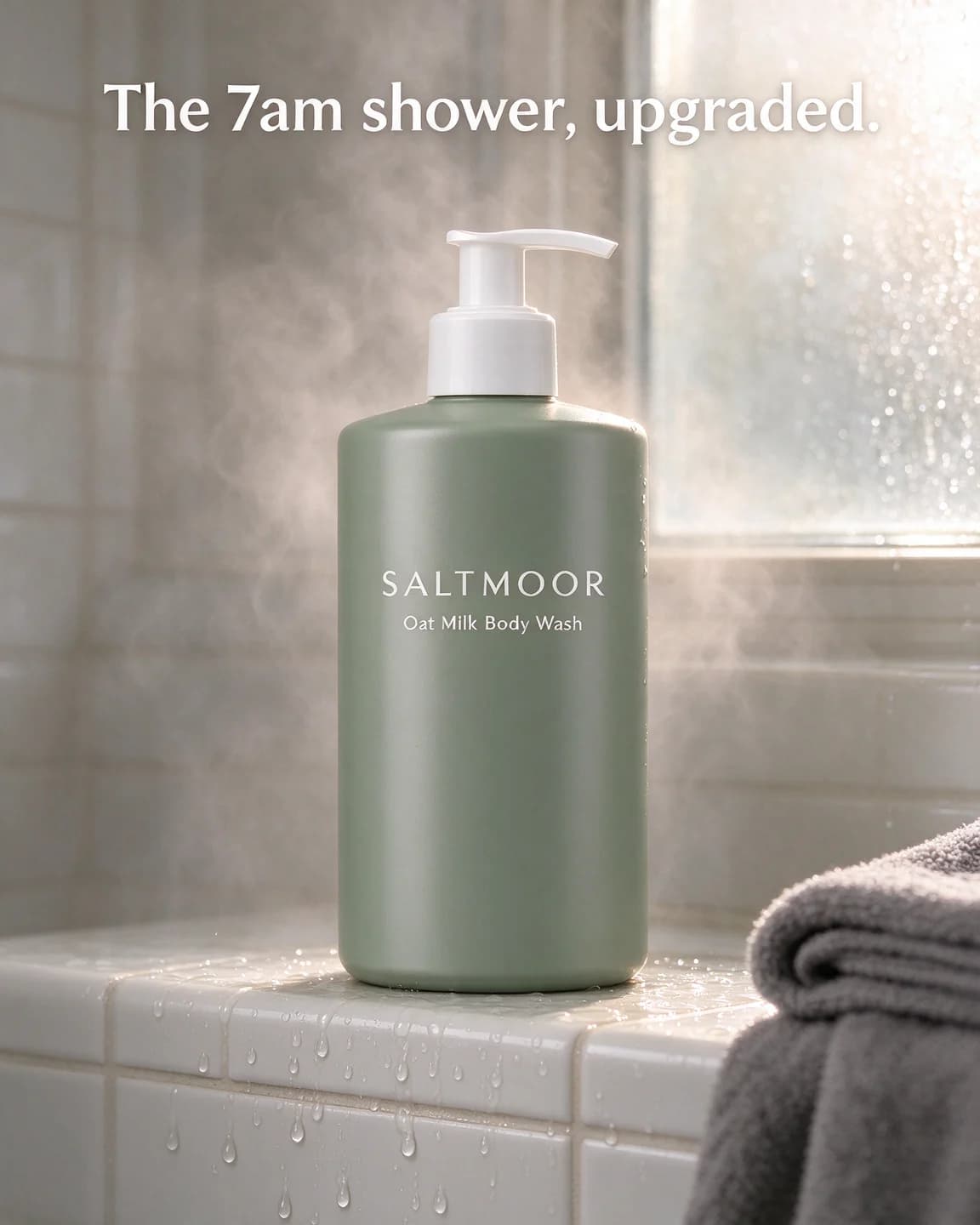
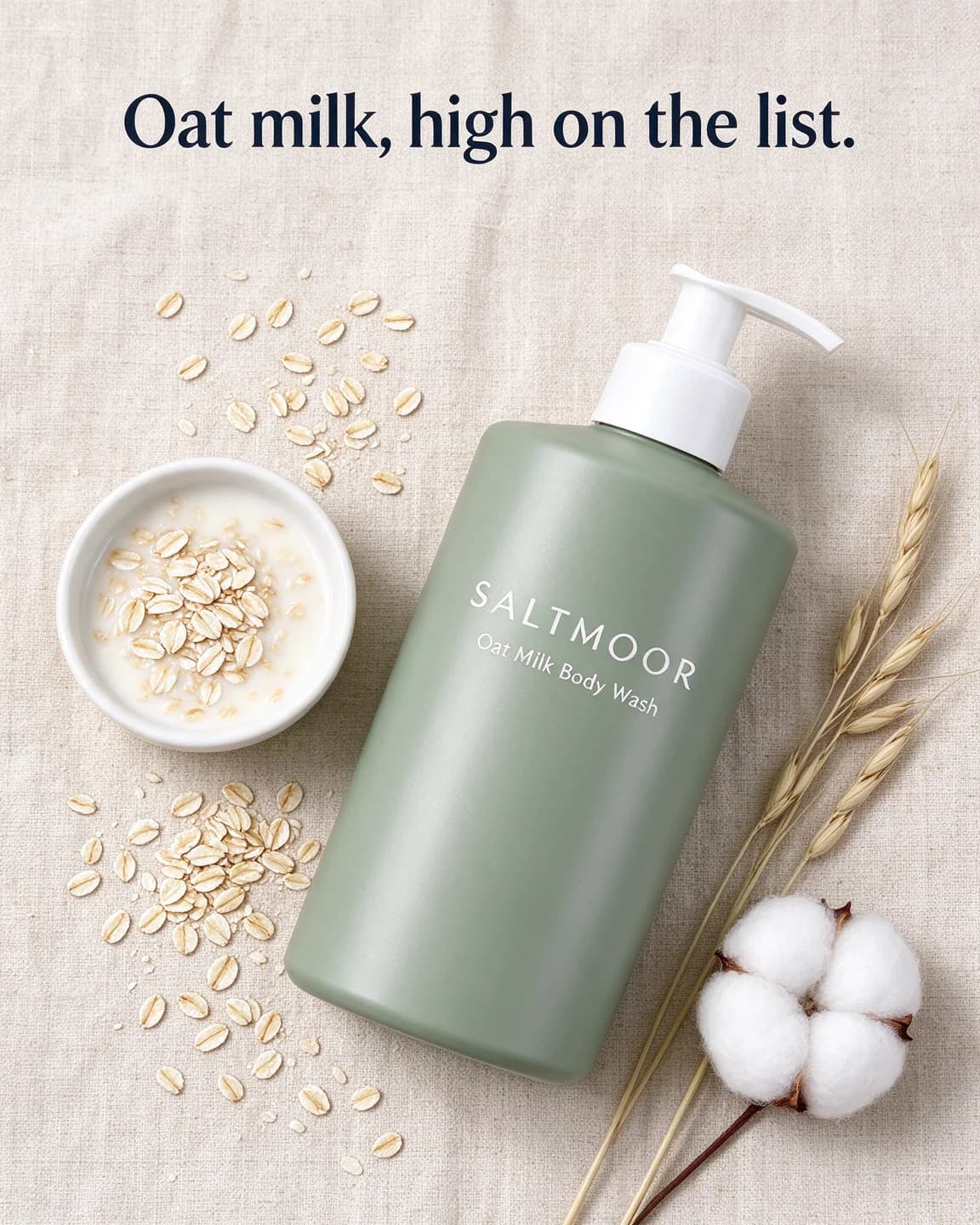
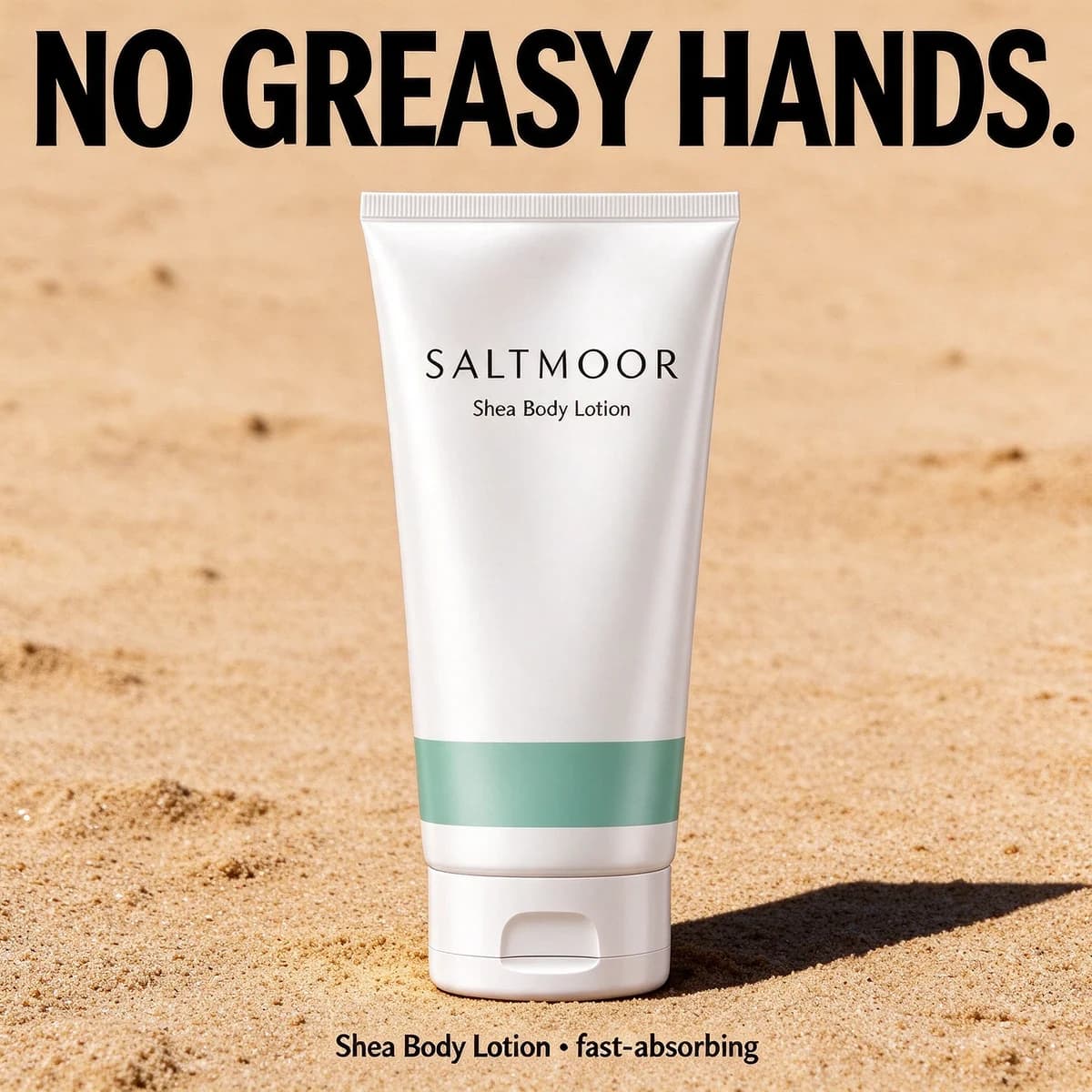
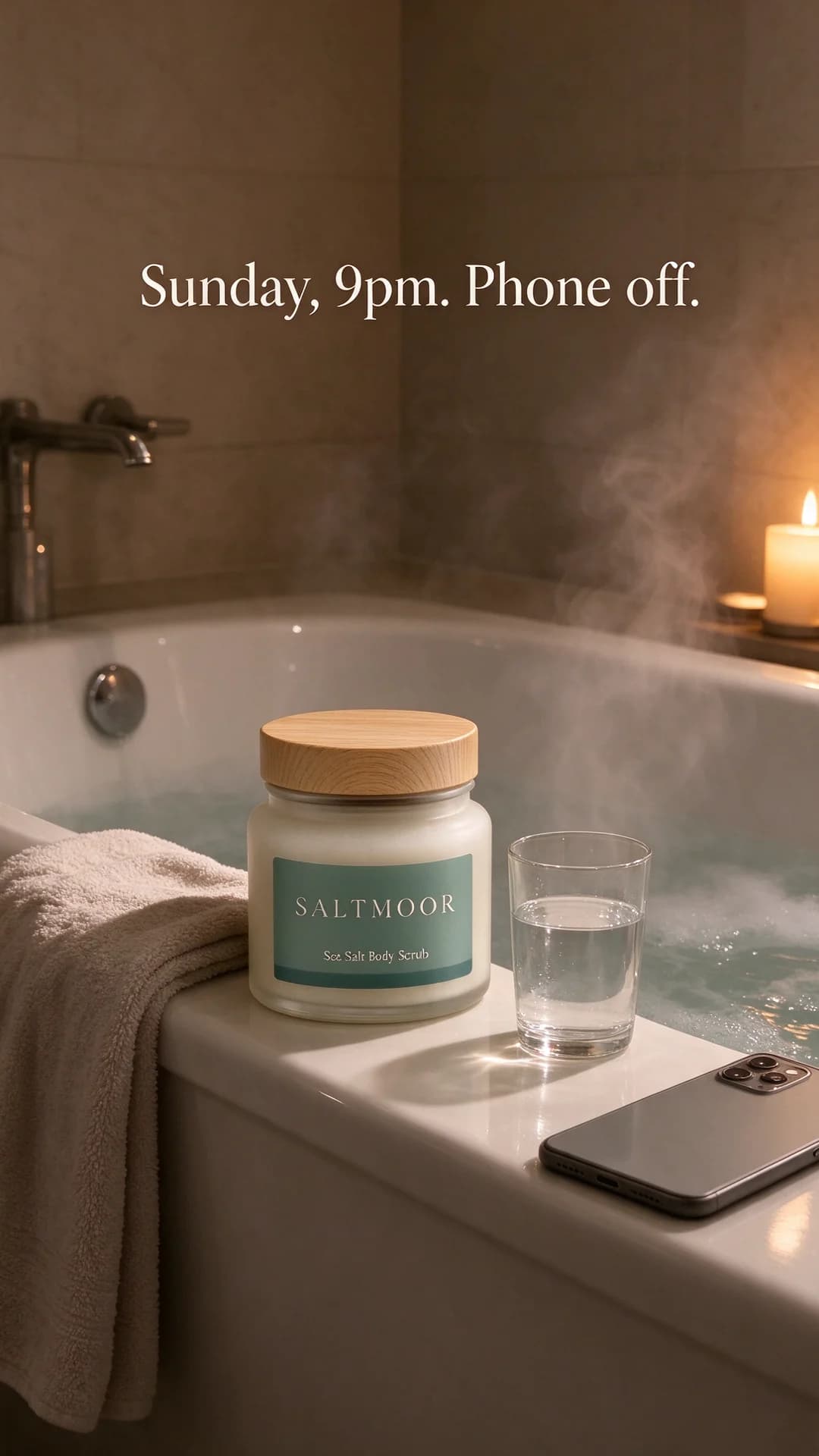
The second job is placing the product inside a routine. Body wash gets used every morning, a scrub once or twice a week, lotion after a shower. Those moments are predictable, so an ad that shows the 7am shower or the Sunday soak hands people a ready-made picture of where the product fits. Most of the eight ads above do one of those two jobs. The rest do the practical selling: a gift set, a price-per-use reframe and one honest ingredient line.
The five shots that do the selling
If you have one packshot and an afternoon, these are the shots worth making for any scrub, wash or lotion:
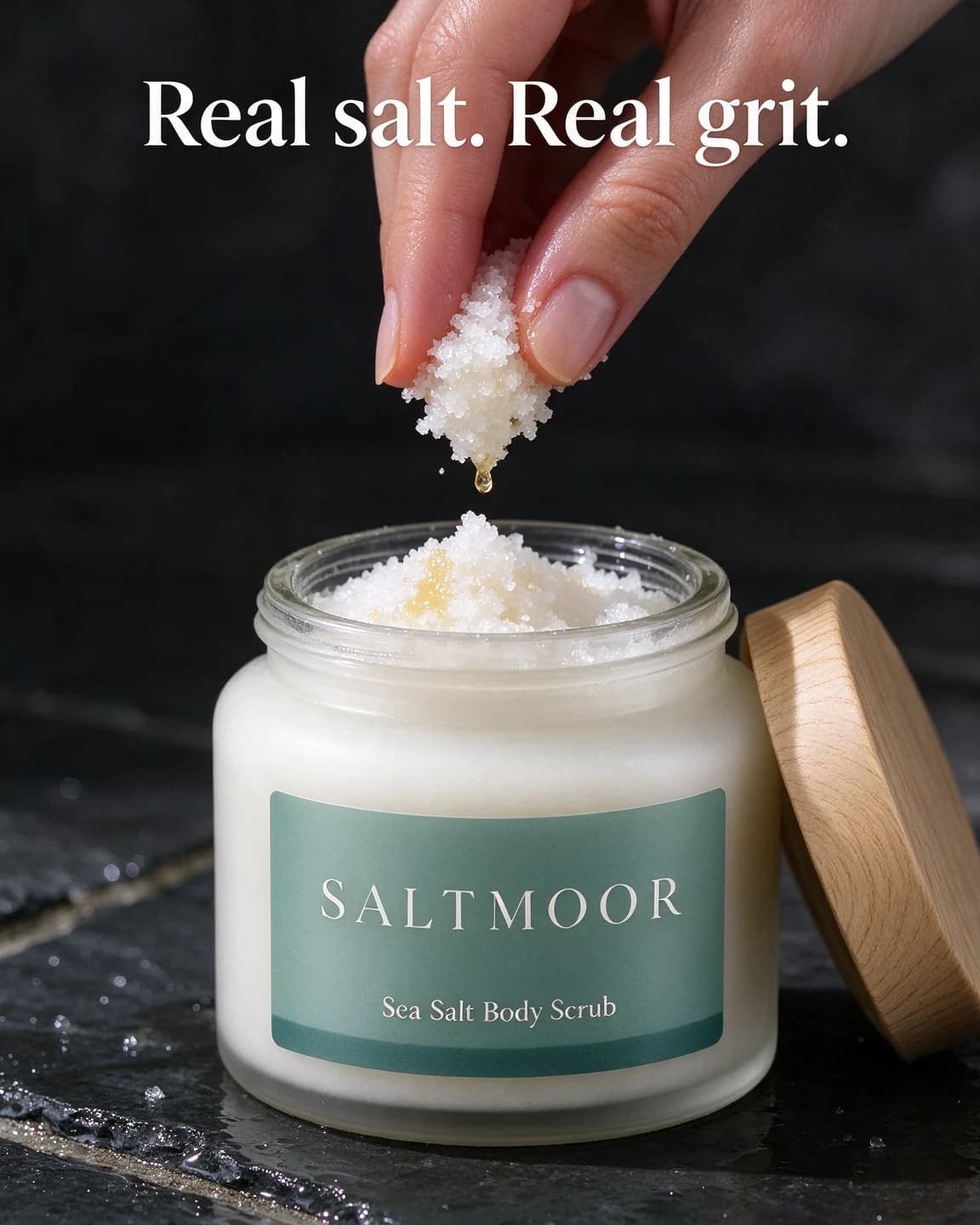
- The macro. Product out of the pack, very close: salt crystals, a lotion swirl, a fingertip of foam. It answers "what is it like?" before anyone asks.
- The wet shot. The bottle on a shower shelf with droplets and steam. It makes a plain bottle look like it belongs in a bathroom rather than a warehouse.
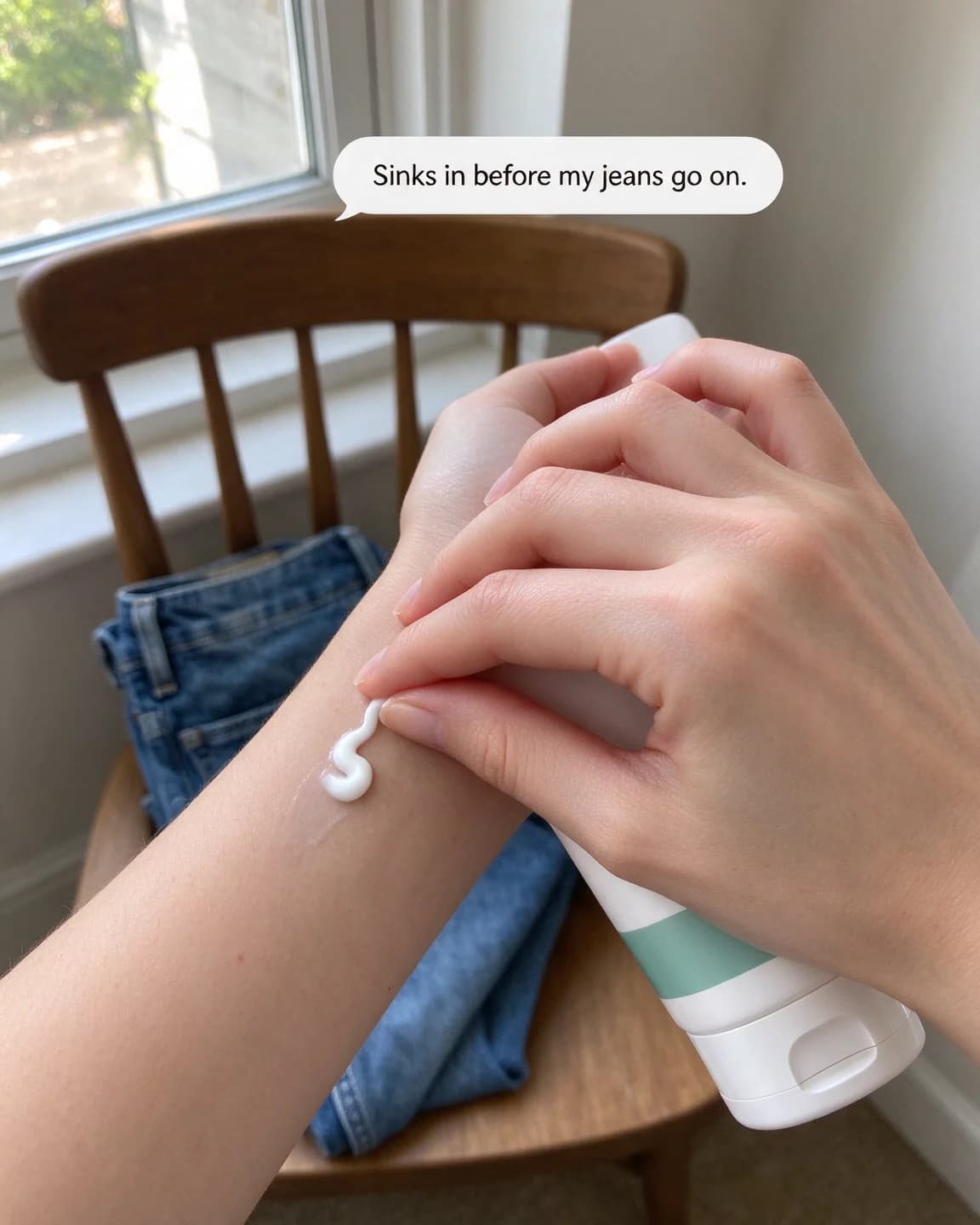
- The hand shot. A hand squeezing, scooping or rubbing in, framed like a phone snap. It works as UGC-style creative without pretending to be a real review.
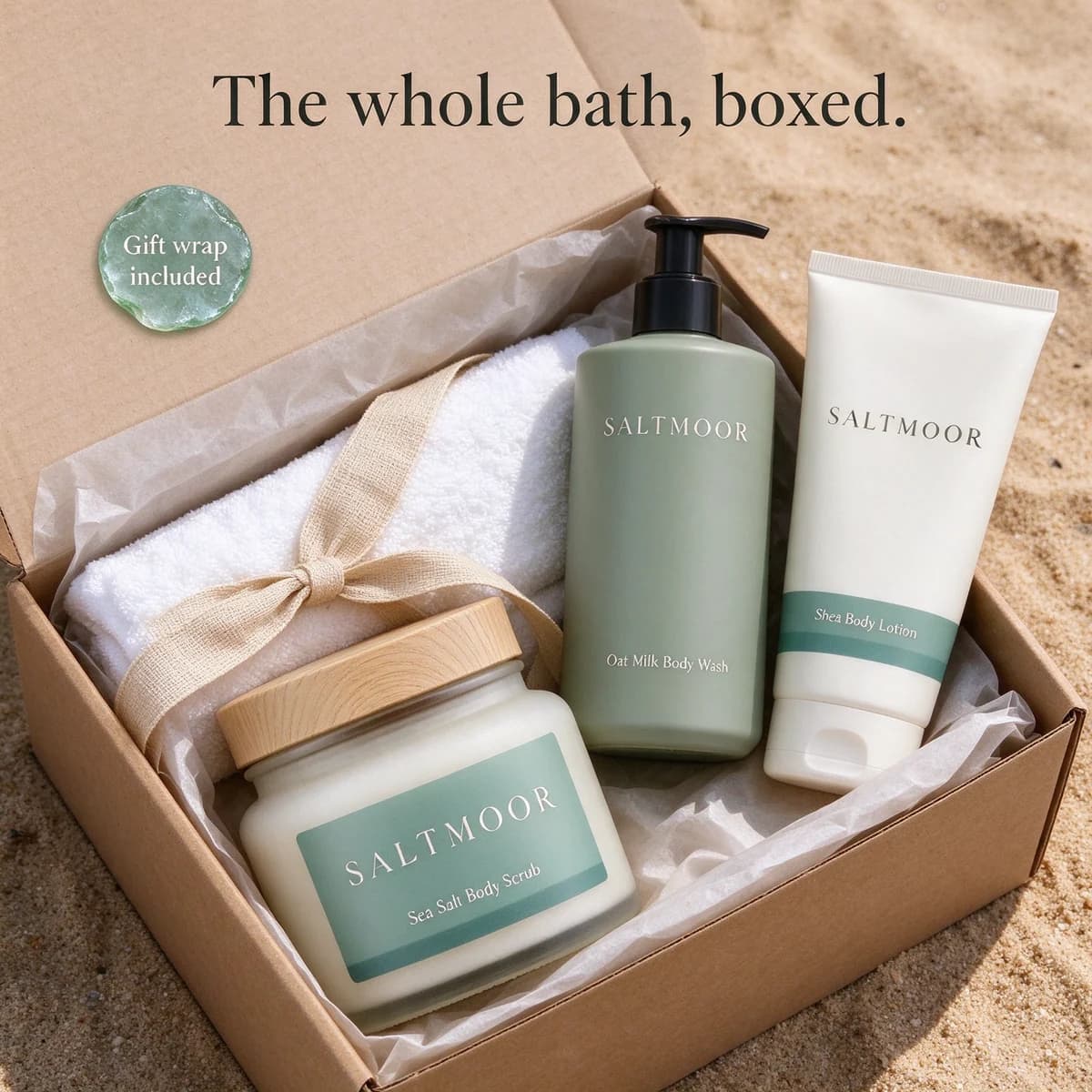
- The open set. Everything in the gift box, lid off, ribbon and card in view. Gift buyers want to see exactly what turns up.
- The colour block. The pack on one flat brand colour with a single line. It is the loudest layout and the easiest to read at thumbnail size.
The flat lay and lifestyle shot entries explain the two most common set-ups, and the lifestyle product photo prompts show the scene descriptions that produce them.
A first batch for one hero product
Start with one hero product rather than the whole range. For Saltmoor that is the scrub, because its texture is the most visual thing the brand sells. A sensible first batch is ten to twelve ads across five angles:
- Texture close-up in two or three crops: a tight macro, the jar with a scoop, a hand holding the jar.
- Moment of use, one shower version and one bath version.
- Objection killer, using the complaint that is truest for your product: grease, a slippery tub or a scent that lingers.
- Ingredient story, only when the hero ingredient genuinely sits high on the label.
- Gift set or price per use, kept for the larger sizes and the weeks before a gifting date.
Rebuild the two strongest concepts in 9:16 as well, because bath scenes look at home full screen. Put the headline in the upper third but below the account name, so it clears both the profile bar and the reply bar, and check the placement with the safe zone checker. Our guide on how many ad creatives to test covers how big the batch should be.
The scene description behind the scrub macro
If you make these by hand in an image model, the scene matters more than the adjectives. This is the scene part of the description used for the first ad on this page, sent with the plain scrub packshot as the reference image:
The open jar stands on wet dark slate tiles with its oak lid leaning against it, and two fingertips lift a small scoop of coarse white salt scrub glistening with oil just above the jar. Macro photography, shallow depth of field, crisp side light making the salt crystals sparkle, tiny water droplets on the slate.
Three choices do most of the work. Dark slate makes white crystals stand out, where a white marble shelf would swallow them. Side light picks out each grain, while light from the front flattens the texture. The fingertips set the scale, so the grains read as coarse salt and not fine sugar. Before the scene, the description asks for the jar, lid and label to stay exactly as they are in the reference, and that sentence always comes first.
How BulkAds makes these from one product photo
Every ad on this page started from a single packshot of each Saltmoor product on white. In BulkAds that photo lives in your brand kit, which can also pick product photos up from your website. You choose how many ads you want, up to 12 in a batch, and whether they are 1:1, 4:5 or 9:16. Each ad in the batch takes a different angle, and product photo ads explains how the real pack is placed into new scenes rather than redrawn.
Two things are worth doing before the first batch. Add your real proof points to the brand kit, such as "coarse sea salt" or "oat milk", and delete anything you can't back up, because headlines and captions are written from that list. Then read each ad's pre-flight report. It scores product match, on-image spelling, brand fit and visual quality, and flags likely Meta policy risks such as before-and-after body shots and medical claims. It cannot see your formula, so the texture check is still yours.
When a still wins, the shower and bath scenes make natural video ads: steam rising, a drip running down the bottle, light moving on the water, while the text and the pack stay still.
Selling scent without smell
Scent is the hardest thing to sell in this category and the easiest to oversell. Three habits keep it honest:
- Name the scent plainly. "Clean linen", "sea salt and cedar" or "unscented" tells people more than "a luxurious fragrance".
- Use props that match the formula. Oats beside an oat wash, citrus only when the scent is citrus. A prop is a claim even when nobody writes it down.
- Say how strong it is. "Fades after the shower" is useful for people who don't want to smell of their body wash all day, and it's a line you can check with a few honest testers first.
Worked example: the price-per-use ad
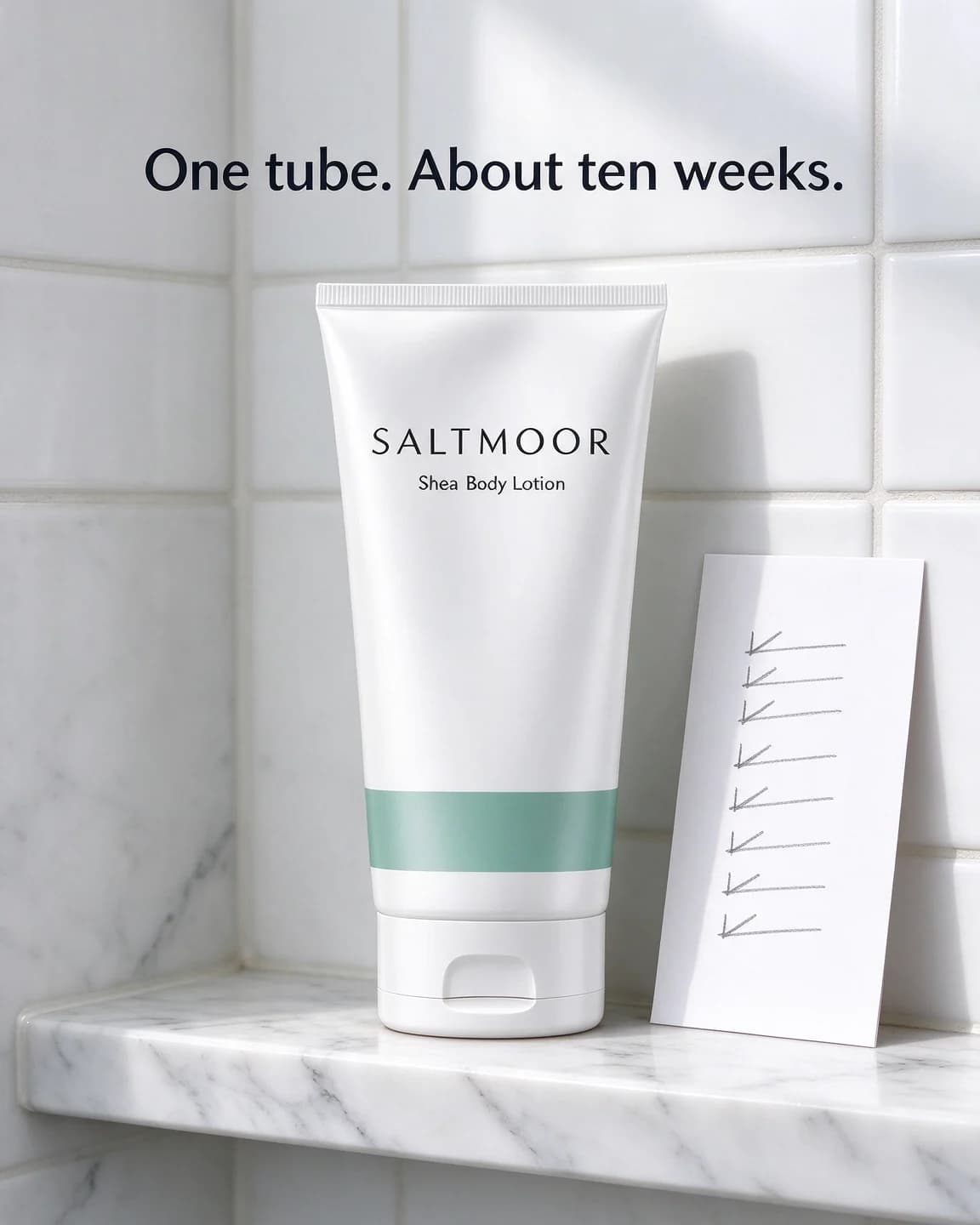
Price per use is one of the few money angles that suits bath and body, because people use these products on a schedule. Say the lotion sells for $6.70 and lasts about ten weeks at one use a day. That comes to roughly $0.10 a day. The image says "One tube. About ten weeks." and the primary text does the maths.
Sets work the same way. If the scrub, wash and lotion cost $17 bought separately and $13 in the box, put both numbers in the primary text and let the gift box ad carry the picture. Keeping prices off the image means one creative works in every market and survives the next price change.
From one winner to the next batch
When an ad clearly sells, change one thing at a time, so the next result points at a single cause:
- Same angle, new product. If the scrub macro wins, shoot the lotion swirl the same way.
- Same product, new moment. Move the winning body wash from the morning shower to a post-gym shower.
- Same scene, new format. Rebuild the winner as a Stories still or a short video.
- Same claim, louder. Turn the best line into a flat colour block.
In the tests it launches itself, Autopilot drafts four fresh variants of each winner for your approval, and the guide to iterating on a winning ad covers which variable to change first. If you also sell face care, the skincare ad examples cover the tighter claims rules there.
Questions people ask
What makes a good bath and body ad?
A picture that does the job of a shop tester. Show the texture up close, show the product in the moment it gets used, and keep claims to things a buyer can check, like the hero ingredient or how the skin feels straight after.
Can bath and body ads mention body odour or dry skin?
Describe the product, not the person. As of October 2026, Meta's ad policies bar negative statements about someone's appearance, body parts or hygiene, and copy that implies the viewer has a health condition. 'A rich lotion for winter' works, 'Embarrassed by dry skin?' doesn't.
Which format suits bath products best?
Use 4:5 feed images to compare angles quickly, and 9:16 Stories stills or short videos for bath and shower scenes. Steam, droplets and foam are natural motion, so a winning scene often makes a good short video.
How do I show a scent in an ad?
Name the scent plainly, use props that match the actual formula and say how strong or lasting it is. Leave out any prop that suggests a note the product doesn't contain.
Is Saltmoor a real brand?
No. Saltmoor and its scrub, body wash and lotion are fictional, and every ad on this page was made with AI for illustration.
Keep going
- Features
Product photo ads
Your real packshot, in every scene
- Ad templates
Ingredient breakdown ad template
The pack in the middle, each key ingredient named with its amount
- Ad templates
Bundle ad template
Every item in the set, counted out, with one reason to buy them together
- Ad templates
Notes app ad template
A plain phone note whose last line happens to be your product
- Ad examples
Skincare & beauty ad examples
Serum and SPF ads that sell texture and trust, not miracles
- Ad ideas
Mother's Day ad ideas
Mother's Day ad ideas and examples: six gift ads with notes, 15 hooks, offer ideas, the 2026 and 2027 dates by country and the tone traps worth avoiding.
Every brand on this page is fictional and every ad was made with AI for illustration — they’re examples, not case studies.
BulkAds AI is an independent product and is not affiliated with, endorsed or sponsored by Meta Platforms, Inc. Facebook and Instagram are trademarks of Meta Platforms, Inc.