Why bold claim ads work
A bold claim ad is the shortest possible argument: one big line, one product, one colour. In a feed full of photos, a block of flat colour with a few huge words stands out, and because the message is only a handful of words, it's fully read in the half-second someone gives it. That's what earns the pause before the scroll carries on — what media buyers measure as the thumb-stop ratio.
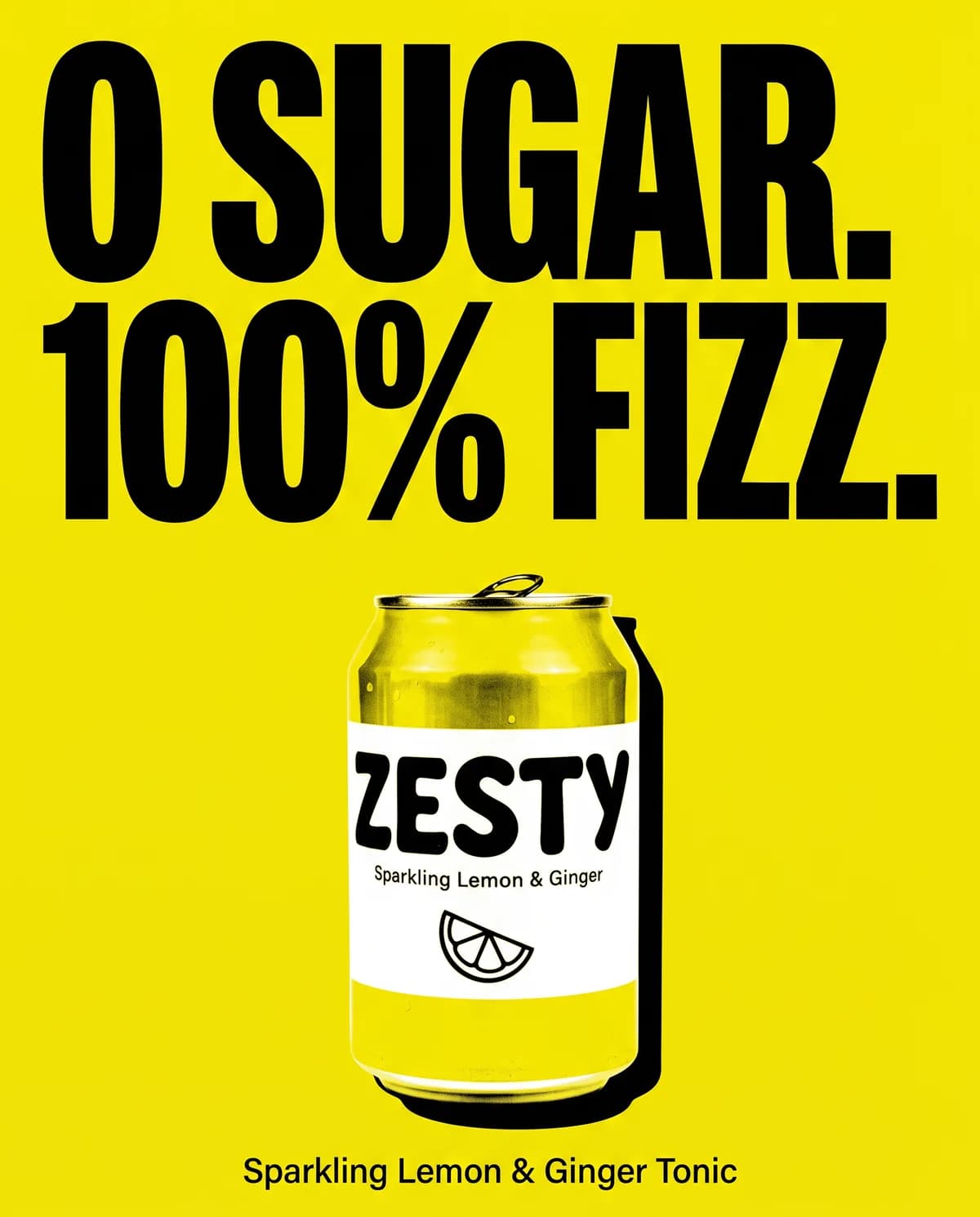
The strongest bold claims are facts that sound like boasts: "0 sugar. 100% fizz." "40 hours. One charge." Numbers help, because they're specific and checkable. A vague superlative ("the best soda ever") is exactly what people have learned to ignore. Short, stacked sentences give the claim a rhythm that sticks after one view.
There's a confidence signal too. A brand that puts one fact in giant type is saying: this is the thing, and we'll stand behind it.
Finding your claim, and proving it
Your claim is usually hiding in one of four places:
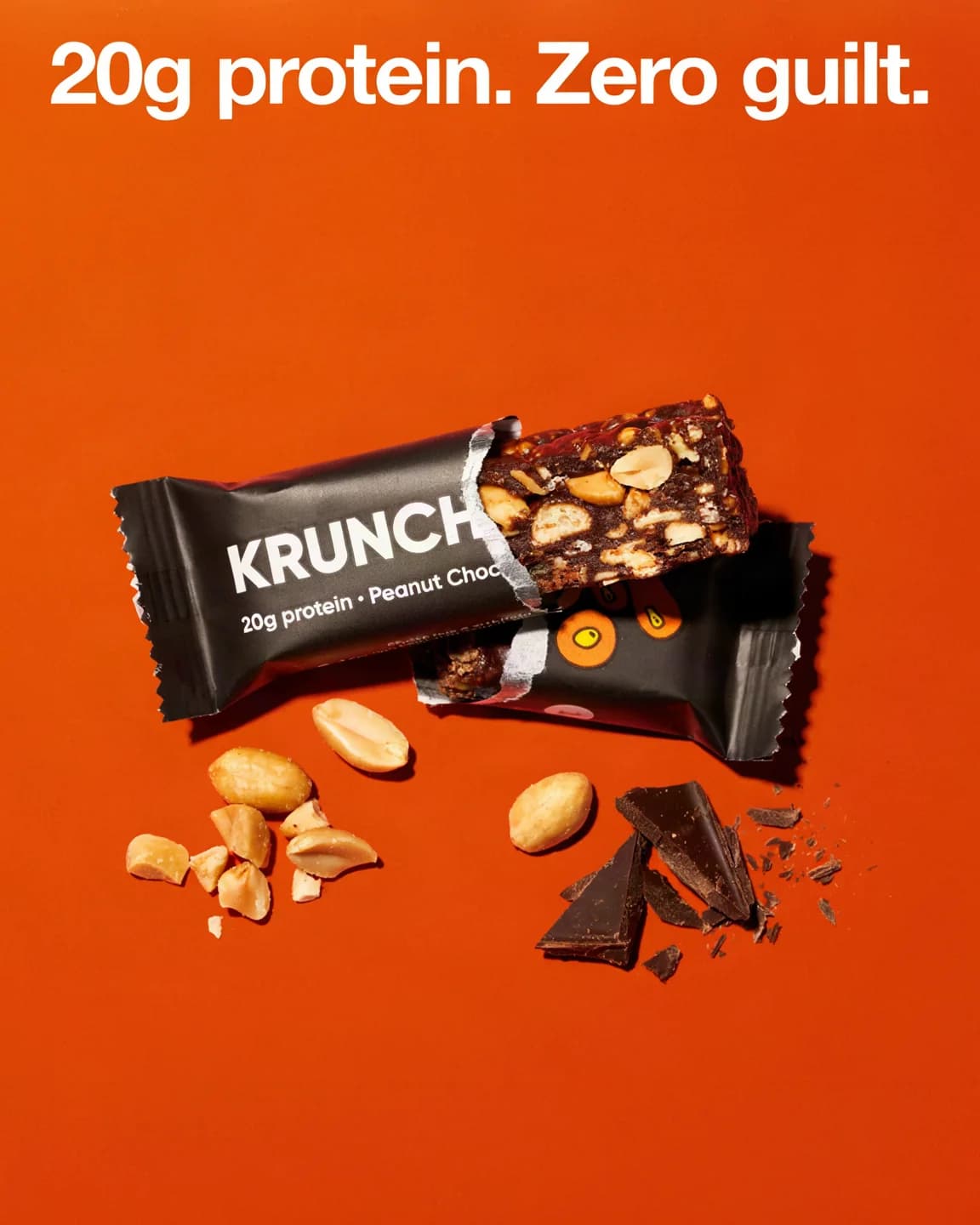
- A number on the label. Grams of protein, hours of battery, grams of weight, SPF.
- An ingredient or material. Real ginger juice, pure linen, 18k gold plating.
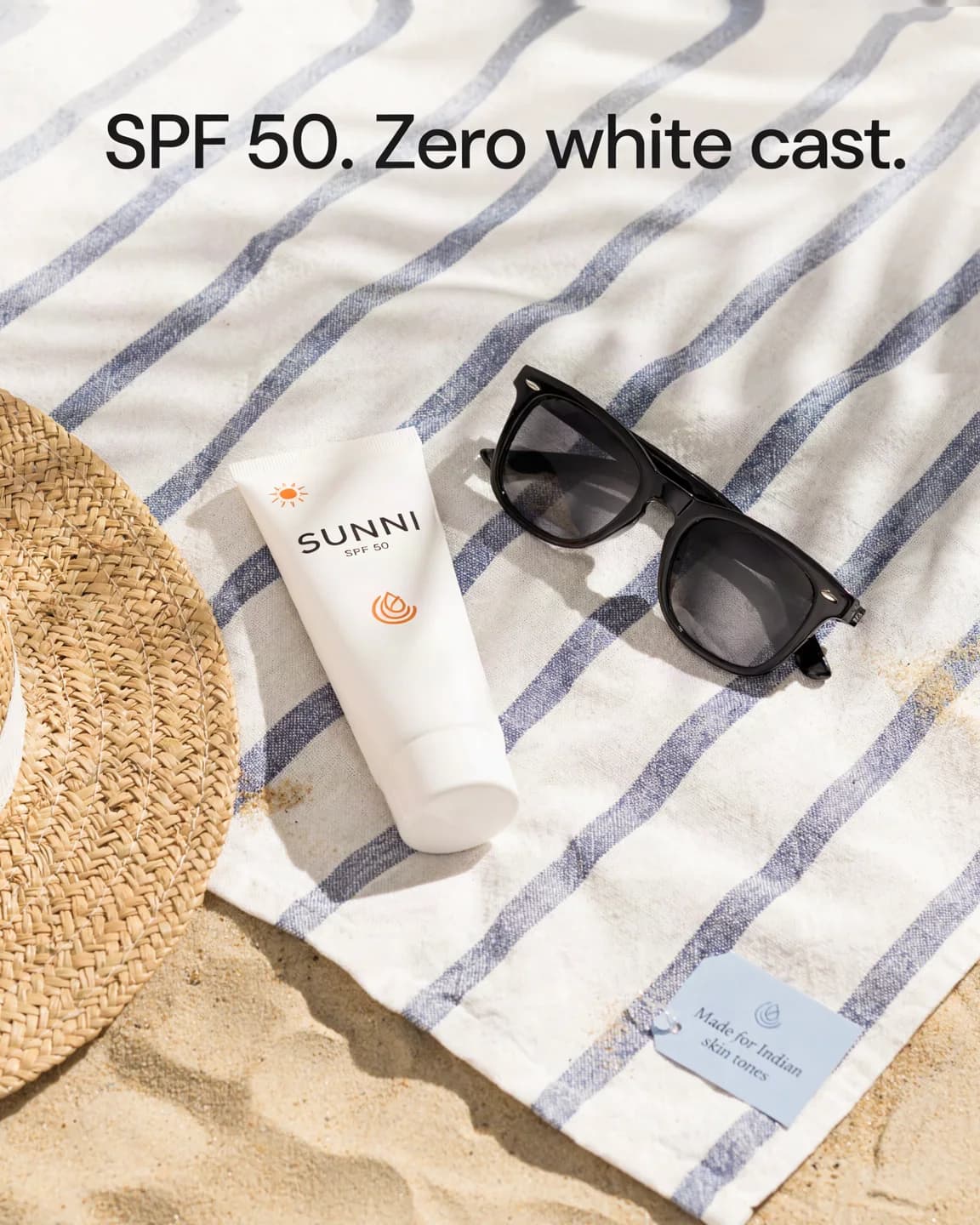
- An absence. Zero sugar, no white cast — whatever the category usually has and you don't.
- A process. Hand-block printed, small-batch roasted, single origin.
Then check it. Every word in a bold claim should be something you could show a sceptical customer on a label, a test report or a spec sheet. "0 g sugar" is fine if the nutrition panel says so, but "the healthiest soda" isn't a fact at all.
BulkAds builds ads from the proof points in your brand kit — taken from your own website, and editable — so the claims in a batch start from things you've already published and can stand behind.
How to make one, step by step
- Pick one claim. One. If you have three good facts, you have three ads.
- Cut it to six words or fewer. Short sentences, stacked. Read it aloud. It should sound like something a person would say, not a slogan written by committee.
- Add one supporting line. Around eight words that say what the product is ("Sparkling lemon with real ginger juice") or back up the claim.
- Choose one flat background colour. Your brand colour, or its strongest contrast. No gradients, no busy photos.
- Make the product big. The packshot should be the second thing people see, right after the words.
- Check it at phone size. Shrink the ad to feed size. If the claim isn't readable at a glance, the type is too small or there are too many words.
- Keep text away from the edges. In 9:16 versions, keep the claim well clear of the top and bottom of the screen, where Meta's interface sits.
Meta retired its old rule limiting text to 20% of an ad image years ago, but its guidance still leans towards images with less text — one more reason to keep the claim short.
The primary text above the image has a different job. The image makes the claim, the text explains it for people who want more — what the product is, why the claim is true, where to get it. Only the first line or two show before "See more", so make that line count, and don't just repeat the claim word for word. "Zero sugar, and you can still taste the ginger" gives a curious reader something new.
Ten variations for one test
For bold claims, the claim itself is the concept. Test several before you polish any of them:
- "0 sugar. 100% fizz."
- "Real ginger. Real bite."
- "Lemon, ginger, bubbles. That's it."
- "Sugar-free, not flavour-free."
- "Vegan. Obviously."
- The winner of 1–5 on a contrasting colour
- The same with the product much larger and the text smaller
- The same with the supporting line removed
- The same rebuilt at 9:16 for Stories and Reels
- The same claim as a short video with gentle motion
Claims 1–5 test which fact people care about, 6–10 test how best to show the winner. The ad variation calculator shows how claims × colours × sizes add up, and what testing them would cost. For more claim shapes, the hook bank has fill-in-the-blank lines by type.
How to test bold claims
Launch the claims together in one ad set, one ad per creative, with enough budget for each to spend a couple of times your target cost per purchase. Judge on cost per purchase, with click-through rate as the early signal. Keep the colour and layout identical across the claim ads in the first round, so the result reflects the message rather than the design.
The result tells you more than which ad won. If "Real ginger. Real bite." beats "0 sugar. 100% fizz.", your buyers care more about taste than sugar, and every other template — feature callouts, testimonials, UGC captions — should lead with taste. A bold claim test is one of the cheapest ways to find your strongest message, because the ads are fast to make and nothing in them distracts from the words.
Common mistakes and claims to avoid
- Superlatives without proof. "Best", "healthiest" and "number one" are either unprovable or need evidence you probably don't have.
- Several claims fighting. "0 sugar. Real ginger. Vegan. 330 ml." is a list, not a claim. A listicle handles that better.
- Tiny type. If the words need zooming, the format has failed.
- A clever line nobody gets. Wordplay that needs a second read loses the half-second you had.
- Health, body and money promises. "Burns fat", "boosts immunity", "earn $515 a month" — claims like these are restricted by Meta's policies and by advertising rules in most markets. Stick to facts about the product, and use only real numbers from your own label or data.
Questions people ask
What is a bold claim ad?
A bold claim ad is a simple static ad built around one big, short statement — usually a provable fact like “0 sugar” or “40-hour battery” — with the product on a flat brand colour.
How long should the claim be?
Six words or fewer is a good limit. Short, stacked sentences are easier to read at a glance and easier to remember.
Do bold claims need to be proven?
Yes. Any factual claim in an ad should be something you can substantiate, and health or performance claims face stricter rules from Meta and regulators. Stick to facts you could show on a label or spec sheet.
Is there still a 20% text rule for Facebook ads?
No. Meta dropped that rule years ago, though its guidance still favours images with less text — which suits bold claim ads, since they use only a few words anyway.
Should I use a bold claim or a feature callout?
Use a bold claim when one fact does the selling, and a feature callout when the product needs three or four points explained. Testing both is a quick way to find out which your buyers prefer.
Keep going
- Features
Brand kit
Colours, fonts and voice from your website
- Ad templates
Feature callout ad template
Your product in the middle, short labels pointing at what matters
- Ad templates
Listicle ad template
A numbered headline and three to five reasons, strongest first
- Ad templates
Offer ad template
The deal, the product and the condition — readable in a second
- Hook bank
The hook bank
Fill-in-the-blank opening lines, sorted by what they do.
- Glossary
Static ad
A static ad is a single still image — no video or motion — shown with a headline, primary text and call-to-action button. Statics are quick to make and quick to read, which makes them a staple of creative testing.
Every brand, person and review in these mock-ups is fictional. In your own ads, use only real reviews, real numbers and claims you can back up.
BulkAds AI is an independent product and is not affiliated with, endorsed or sponsored by Meta Platforms, Inc. Facebook and Instagram are trademarks of Meta Platforms, Inc.