What a food ad prompt has to say
A food ad sells the next bite, not the jar. Someone scrolling decides almost at once whether a thing looks good to eat, so a food prompt has to describe the moment just before eating, in words a camera could actually capture.
The moment depends on what you sell. A sauce wants a drizzle, a bar wants a snap. This table is a starting point for the action and the light to write into your prompt:
| What you sell | The action to ask for | Light that shows it | What to check in the output |
|---|---|---|---|
| Chilli crisp, sauces, oils | A spoonful drizzled over a hot dish | Low light from behind, for gloss and steam | The oil is the colour of your real product |
| Snack and protein bars | A snap or a first bite, crumbs on the wrapper | Hard side light, for crunch | The inside matches your real bar |
| Pickles and chutneys | A spoonful landing beside a paratha or a plate of rice | Warm window light from the side | The pieces are the size they really are |
| Granola and cereal | A pour into a bowl of yoghurt or milk | Bright morning light from above | Only the nuts and fruit you really use |
| Nut butters and spreads | A knife dragging a swirl across toast | Soft side light that shows the ridges | Smooth or crunchy, as the label says |
| Bakes and biscuits | A tear or a break that shows the crumb | Warm, low side light | Only the fillings you really put in |
After that, every prompt on this page runs in the same order: the product line, the dish and the action, the light, the camera, the words, then the guard rails for hands, faces, other brands and prices. Keeping the order fixed makes prompts easy to compare. When one image beats another, you can see which line changed. The image prompt entry explains the parts of a prompt in more depth.
Why a reference photo keeps packaged food honest
Text-only models are happy to invent a jar. They will give it a nicer lid, a fuller label and a chilli colour that looks great and does not exist. For a food brand that is a real problem, because the jar in the ad is the jar people look for on the shelf or in the delivery bag, and a mismatch feels like a bait and switch.
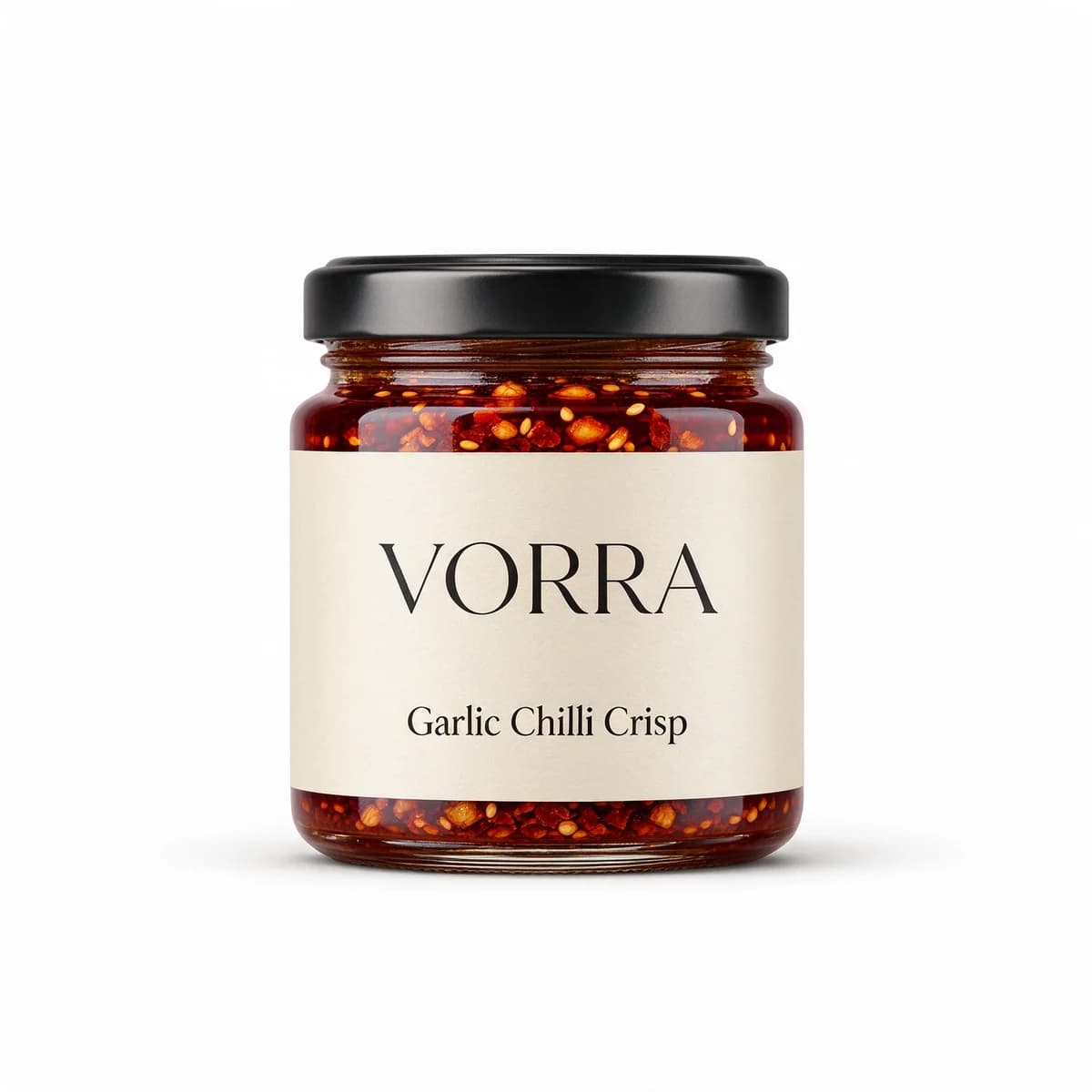
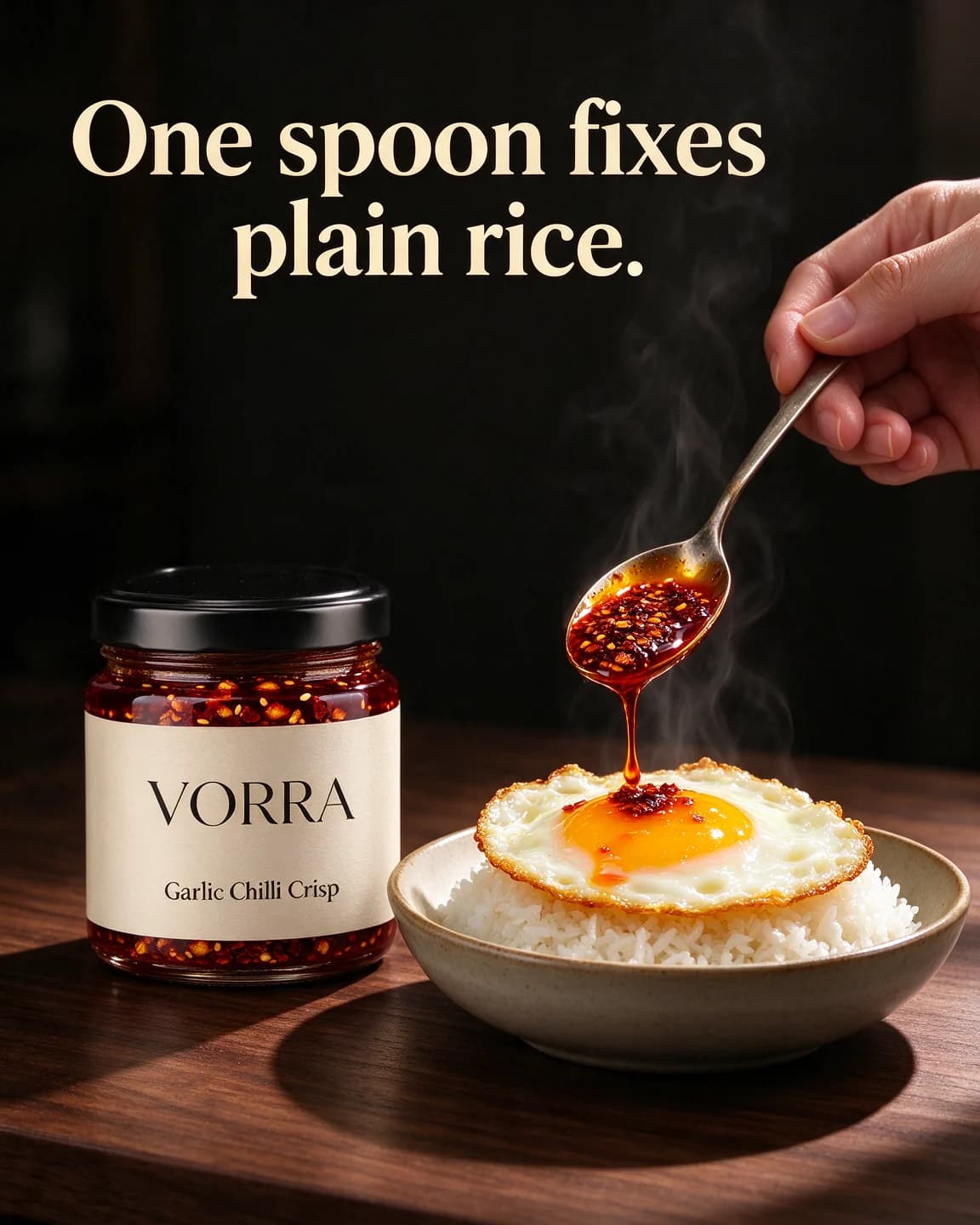
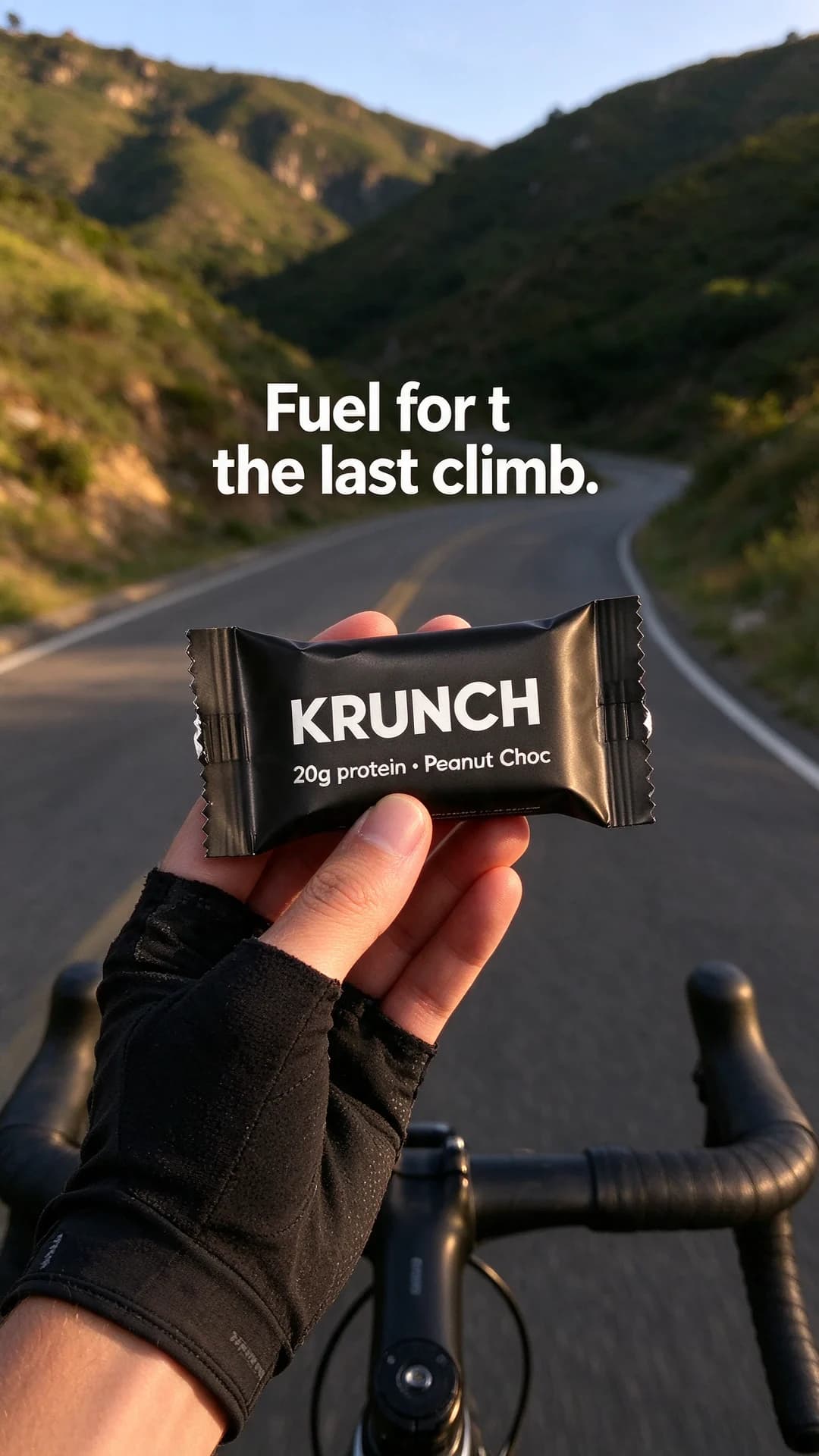
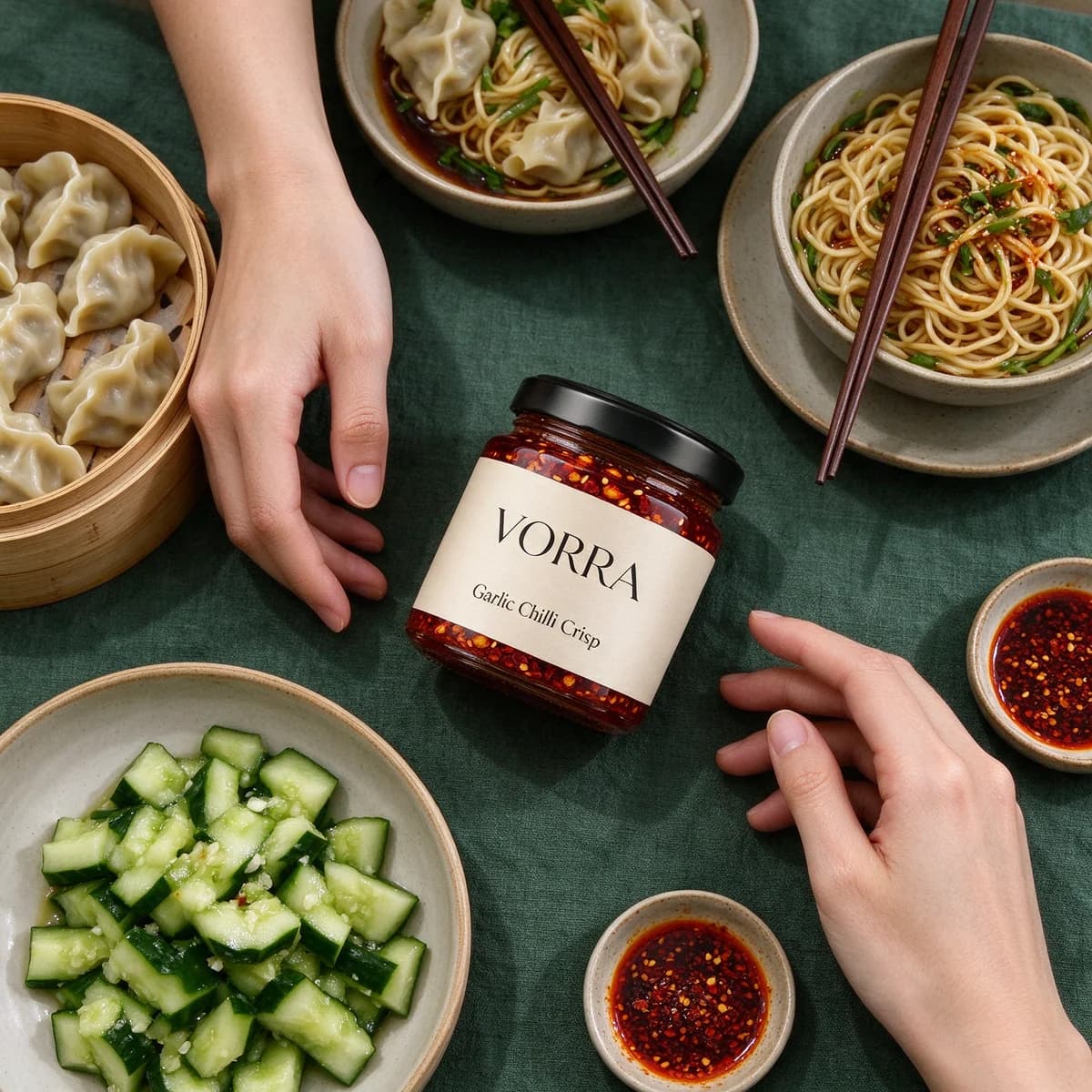
That is why three of the four prompts here are edits. The VORRA packshot from prompt 1 is the reference for prompts 2 and 4, a plain photo of the KRUNCH wrapper is the reference for prompt 3, and the first sentence of each edit tells the model to keep the pack unchanged. The scene, the food and the light are new, the jar is not. The product photo ads page explains the same idea inside BulkAds, and our guide to product photos for AI ads covers how to shoot a jar or pouch so the label survives.
Appetite appeal without faking the food
Food stylists have always helped food look its best, and a prompt can do the same with gloss, steam and a crisp edge on an egg. Where it goes wrong is substance. If the image shows chunks of garlic your crisp does not have, or a bar packed with whole nuts when the real one is smooth inside, the ad promises something the product cannot deliver.
A few rules keep the pictures honest:
- Only surround the product with ingredients it contains and dishes it really goes with.
- Show a realistic portion. A spoonful of chilli crisp on rice looks generous, half a jar looks staged.
- Keep words like guilt-free or clean off the image unless you can back them up.
- Check every output for invented text on bowls, napkins and chopsticks, which models like to decorate.
Packaged food often prints the words "serving suggestion" beside a photo that shows more than the pack holds. The same thinking helps in an ad. Prompt 4 sets the jar among dumplings, noodles and cucumber that do not come in the jar, so its caption should make clear the jar is what you are selling and the dinner is an idea for using it.
How BulkAds makes food ads without a prompt
Writing prompts like these is a good way to learn what a scene needs, but it is slow when you need dozens of ads. In BulkAds you add your product once, with its photo, and the brand kit holds your colours, fonts, voice and the claims you can back up.
When you ask for a batch, each ad gets its own concept, with a scene, a composition, the lighting, a mood and a few props, and BulkAds writes the prompt from it for you. Your real product photo goes in as the reference every time. Before you see the ads, a separate check compares each one with your photo and reads the on-image text, so a drifted label or a misspelled headline is flagged rather than launched.
A worked example: a full batch of 12 image ads for the chilli crisp uses 24 credits, at 2 credits per image ad. Because each ad takes its own angle, one batch can cover the drizzle over rice, the shared table, a recipe idea and an offer, which is far more than the four scenes on this page. The AI ad generator page has the details, and the food and snack ad examples show finished ads in this category.
Questions people ask
Can AI food photos look real enough for an ad?
Yes, when the prompt describes real textures and light and the product comes from your own photo. Check the food closely before you launch, because models can add extra garnish, odd cutlery or text on plates that nobody asked for.
Should a food ad show the dish or the pack?
Both, in most cases. The dish makes people hungry and the pack tells them what to buy. Prompts 2 and 4 put the pack beside the food it is eaten with, so the product is never more than a glance away from the bite.
Why did the label on my jar come out wrong?
Usually because the prompt asked for something the reference did not show, such as an open lid or a new angle, or because the label was soft in the reference. Keep the pack as it is in your photo and use a sharp, evenly lit shot.
Is it honest to use AI images in food ads?
It can be, as long as the food shown is what the product really is. Do not show ingredients it does not contain, portions bigger than a pack makes or results you cannot back up.
Are VORRA and KRUNCH real brands?
No. Both are fictional brands made for this library, and every image on this page was made with AI from the prompt beside it.
Keep going
- Features
Product photo ads
Your real packshot, in every scene
- Features
AI ad generator
On-brand image ads in batches of up to 12
- Prompt library
Flat lay prompts
Four flat lay AI image prompts shown beside the product photos they made, with notes on top-down camera wording, prop lists, light and room for a headline.
- Prompt library
Lifestyle product photo prompts
Four lifestyle product photo prompts and their images: coffee at a dawn campsite, headphones on a late-night sofa, a dog-walk Story and a 4pm chai break.
- Ad examples
Food & snack ad examples
Protein snack ads that sell taste without health-claim trouble
- Glossary
Image prompt
An image prompt is the written instruction an AI image model turns into a picture. For an ad, it describes the subject, scene, composition, light and mood, plus any exact words that must appear on the image.
Every image on this page was made with AI from the prompt beside it. Model names are the ones BulkAds used, and results vary from run to run.
BulkAds AI is an independent product and is not affiliated with, endorsed or sponsored by Meta Platforms, Inc. Facebook and Instagram are trademarks of Meta Platforms, Inc.