How to prompt for jewelry
Jewelry is one of the harder categories for AI images because everything that sells it is small. A useful jewelry prompt pins the piece to a reference photo, controls the light so the metal reads as metal and gives the piece a sense of scale. Everything else, from the surface to the season, is mood.
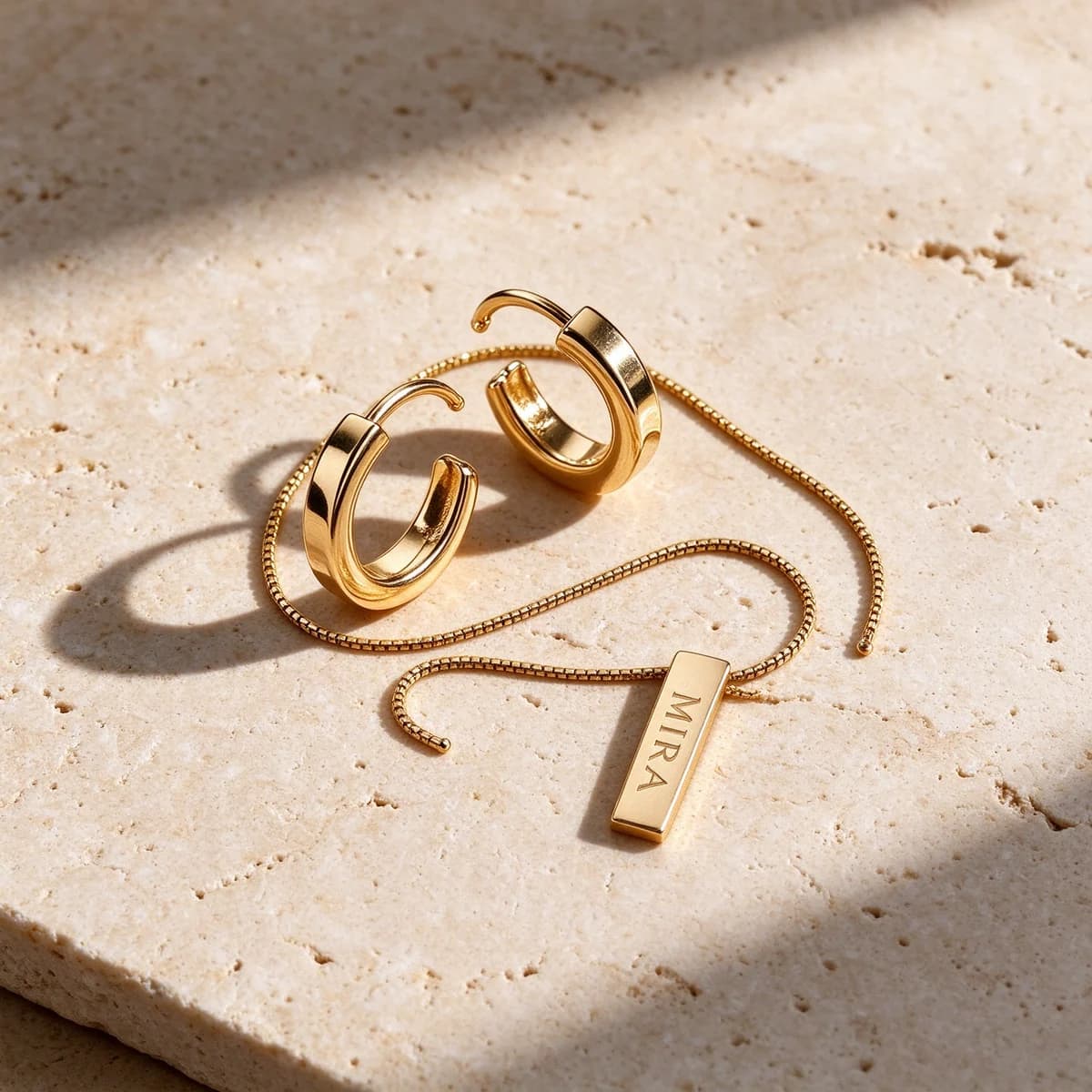
Light comes first. Polished gold looks its best under one hard light source that makes bright highlights and crisp shadows. Silver and platinum like cooler light. Pearls, opals and brushed finishes need soft, wrapped light, or they turn chalky. Write the light into the prompt as a direction and a quality, such as "hard direct morning sunlight from the top left", rather than "good lighting".
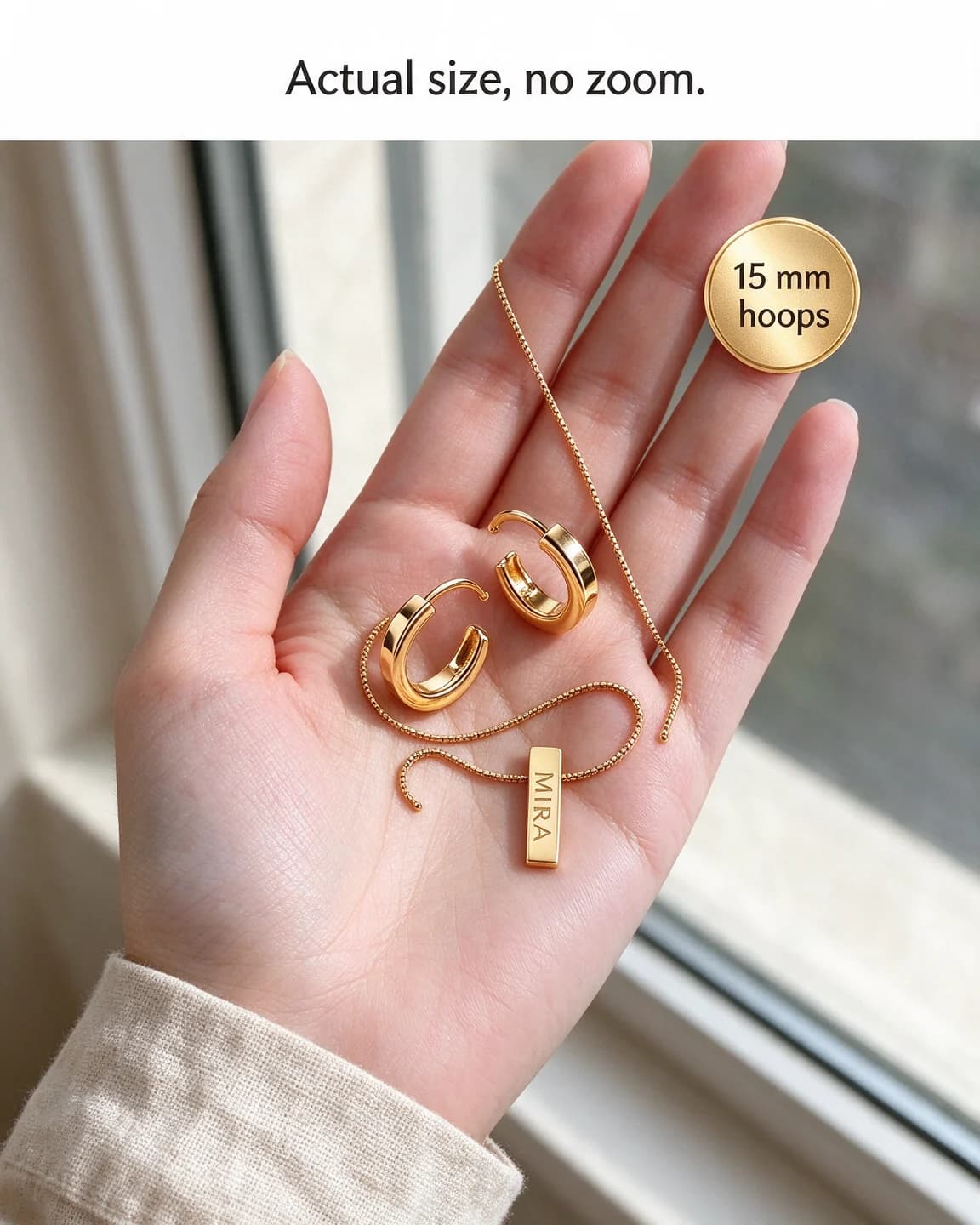
Scale comes second. On a plain background a small huggie hoop and a large statement hoop can look identical, and buyers know it. A palm, an ear or a teacup in the frame fixes that, as long as you check that the model hasn't quietly made the piece bigger. It often does.
Four scenes worth testing
- The macro. One set, hard light, no text, for a premium feel.
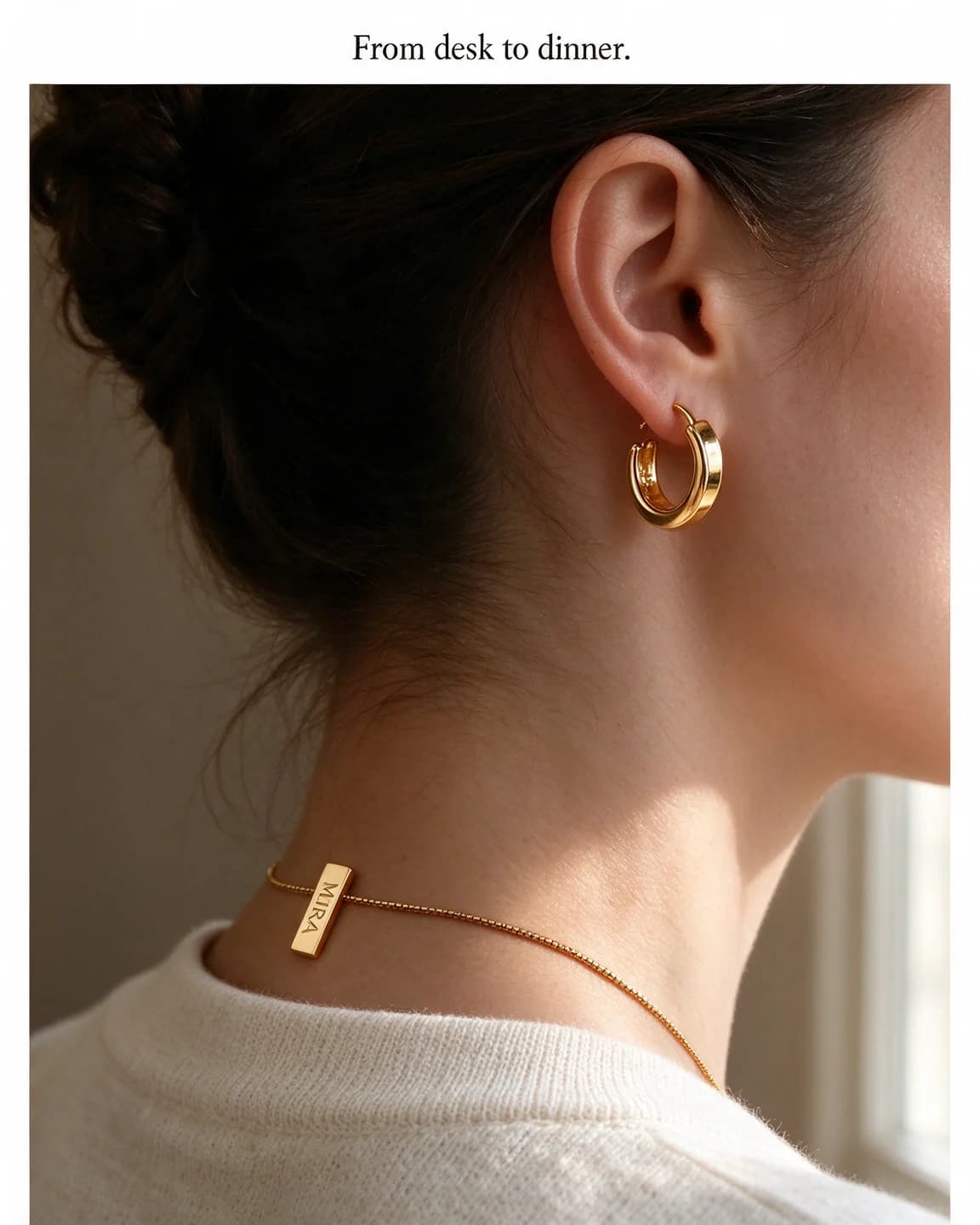
- The worn shot. Ear, neck or wrist, framed so no face appears.
- The scale shot. The piece in a hand, with its real size printed beside it.
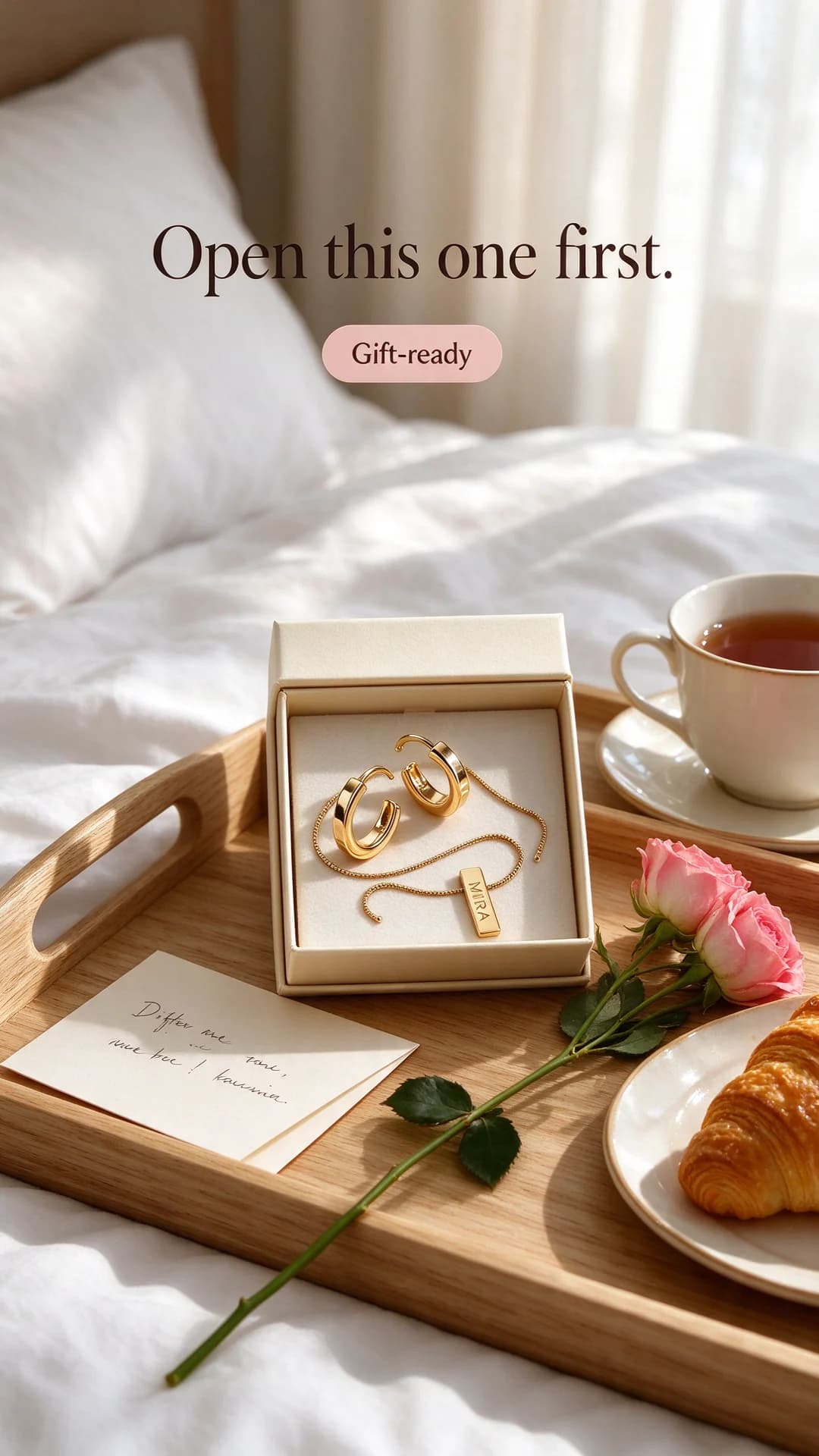
- The gift moment. A box, a tray, a card, for birthdays and anniversaries.
More scenes, matched to the metal
Swap any of these in for the scene sentence of the four prompts. Keep the light that suits your metal, hard for polished gold and soft for pearls or brushed finishes.
- Silver. "The piece rests on cool grey slate beside a sprig of olive leaves, soft overcast daylight from the right."
- Pearls. "The strand lies in a loose curve on folded ivory satin, soft wrapped window light and no hard shadows."
- Stacking rings. "The rings sit stacked on a slim white ceramic ring cone on a linen napkin, low morning sun from the left."
- Diwali. "The piece sits on a small brass plate beside a lit clay diya and a few marigold petals, warm low light."
- Wedding. "The set rests on folded deep red silk beside a small carved wooden box, warm lamp light from one side."
- Everyday wear. "The bracelet lies beside a laptop keyboard and an unprinted ceramic coffee cup, bright office daylight."
- Travel. "The set lies in an open travel jewelry roll of soft green velvet on a white hotel bedspread."
- Mirror. "The pendant hangs from the corner of a round vanity mirror with its reflection visible, soft daylight."
Fine detail is where models slip
Chain links, clasps, engravings and stone settings are exactly the fine detail a text-only model redraws from scratch. An edit model that starts from your photo keeps the link style and the engraving far more often. It still slips, especially on tiny engraved letters and on chains that pass behind fingers or hair, so zoom in on every output. Our guide to jewelry product photos for ads covers shooting reflective pieces well enough for a model to copy.
Careful with the words about metal
What the image says about the metal can carry legal weight. In the US, the FTC's Guides for the Jewelry, Precious Metals, and Pewter Industries (16 CFR 23.3 (opens in a new tab), checked October 2026) list "gold" used without qualification as a description that may be misleading unless the piece is fine 24 karat gold throughout.
The same section sets floors for the plated terms:
- Gold plated or gold electroplate. For electroplated pieces, gold of at least 10 karat, at least 0.175 microns thick throughout.
- Heavy gold electroplate. The same, at least 2.5 microns thick.
- Gold filled. Gold of at least 10 karat bonded on mechanically, making up at least a twentieth of the weight of the metal.
So a prompt for a plated piece, like the MIRA set here, should never ask for "solid gold" in the headline, and a karat number belongs on the image only when it matches the piece. In India, the Bureau of Indian Standards runs hallmarking (opens in a new tab) for gold jewelry under a Mandatory Hallmarking Order rolled out district by district (BIS, checked October 2026), so a karat in an Indian ad should match the hallmark on the piece. Anywhere else, check the rules in each country where you sell.
Jewelry ads in BulkAds, without the prompts
BulkAds writes these scenes for you. Your brand kit holds each piece with its photo and the facts your product page states, such as the metal, the karat or the plating, and the AI is told to use only those facts in the copy. Choose a product and up to 12 ads, and the batch comes back with a spread of styles, such as a flat lay, a bold claim on a colour block or a seasonal gift scene, each built on your real photo by product photo ads. A pre-flight check compares the piece in every ad with that photo and reads the on-image text, so a rewritten engraving is flagged before launch. Each image ad uses 2 credits.
Already have a macro shot you love? Upload it as it is with Upload ad (PNG, JPG or WebP), add the headline and primary text, which BulkAds can rewrite, and launch it like any other ad with the image untouched. Our jewelry ad examples show finished ads, and the Diwali ad ideas cover the festive gifting season in India.
Questions people ask
Can AI images get jewelry detail right?
From a good reference photo, mostly yes. Chains, clasps and engraved letters are where errors show up, so zoom in on every output and compare it with the real piece before you use it.
How do I stop the AI making my jewelry look bigger?
Put something of known size in the frame, such as a hand or an ear, and describe the piece as small and delicate. Then measure the result against your photo, and run the prompt again if the piece has grown.
Can I write gold on my jewelry ad?
Only in the way you can describe the piece itself. In the US, the FTC's Jewelry Guides treat an unqualified gold as possibly misleading unless the piece is 24 karat throughout, and set minimums for gold plated and gold filled. In India, a karat claim should match the BIS hallmark. Check the rules wherever you sell.
Should jewelry ads show a face?
They don't need to. An ear, a neck or a hand shows how the piece is worn, and framing from behind or below the jaw keeps the attention on the jewelry.
Can BulkAds make jewelry ads from my product photos?
Yes. Add your products and their photos, choose how many ads you want, and each ad is built around your real piece and checked against it before you see it. You can also launch a photo you already have as-is.
Keep going
- Features
Product photo ads
Your real packshot, in every scene
- Features
Brand kit
Colours, fonts and voice from your website
- Guides
Jewelry product photos for ads: the shots AI needs to keep every stone
The six photos every ring, earring, chain and bracelet needs before AI turns it into ads, how to keep metal colour and stones honest, and the jewelry claims your ad must match.
- Prompt library
Watch ad prompts
Four watch ad prompts with their AI outputs, from a clean packshot to wrist, gift and flat lay scenes, with tips for keeping the dial, hands and logo accurate.
- Prompt library
Flat lay prompts
Four flat lay AI image prompts shown beside the product photos they made, with notes on top-down camera wording, prop lists, light and room for a headline.
- Ad examples
Jewelry ad examples
Gold jewelry ads for gifting, everyday wear and honest plating
Every image on this page was made with AI from the prompt beside it. Model names are the ones BulkAds used, and results vary from run to run.
BulkAds AI is an independent product and is not affiliated with, endorsed or sponsored by Meta Platforms, Inc. Facebook and Instagram are trademarks of Meta Platforms, Inc.