


What end of season ads are for
An end of season sale has a different job from a festival sale. Nobody needs a reason to celebrate. They need a reason to buy now something they could have bought at full price a month ago, and a reason to believe the price is real. The best clearance ads give three things: what's left, why it's cheaper and when the sale ends.
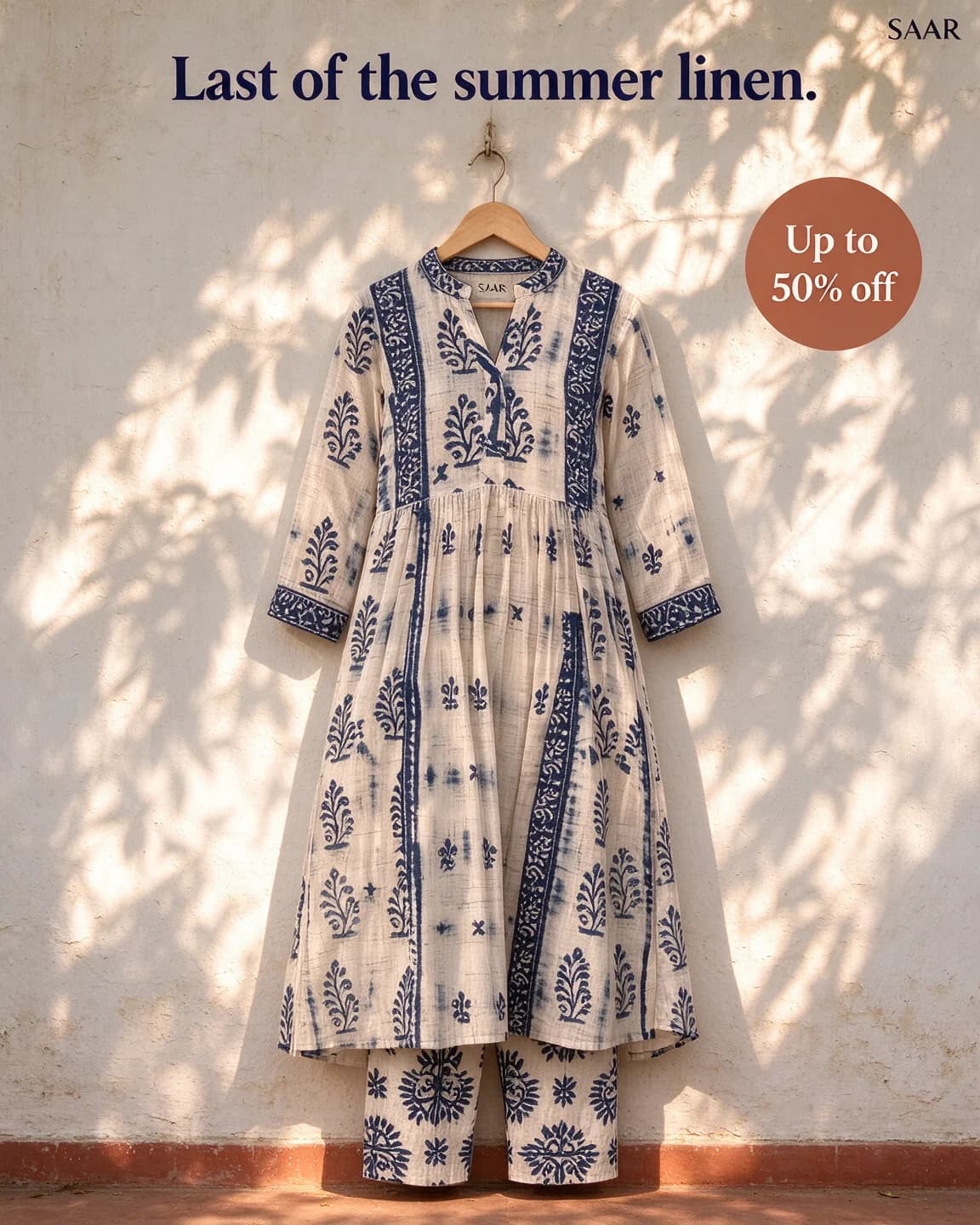
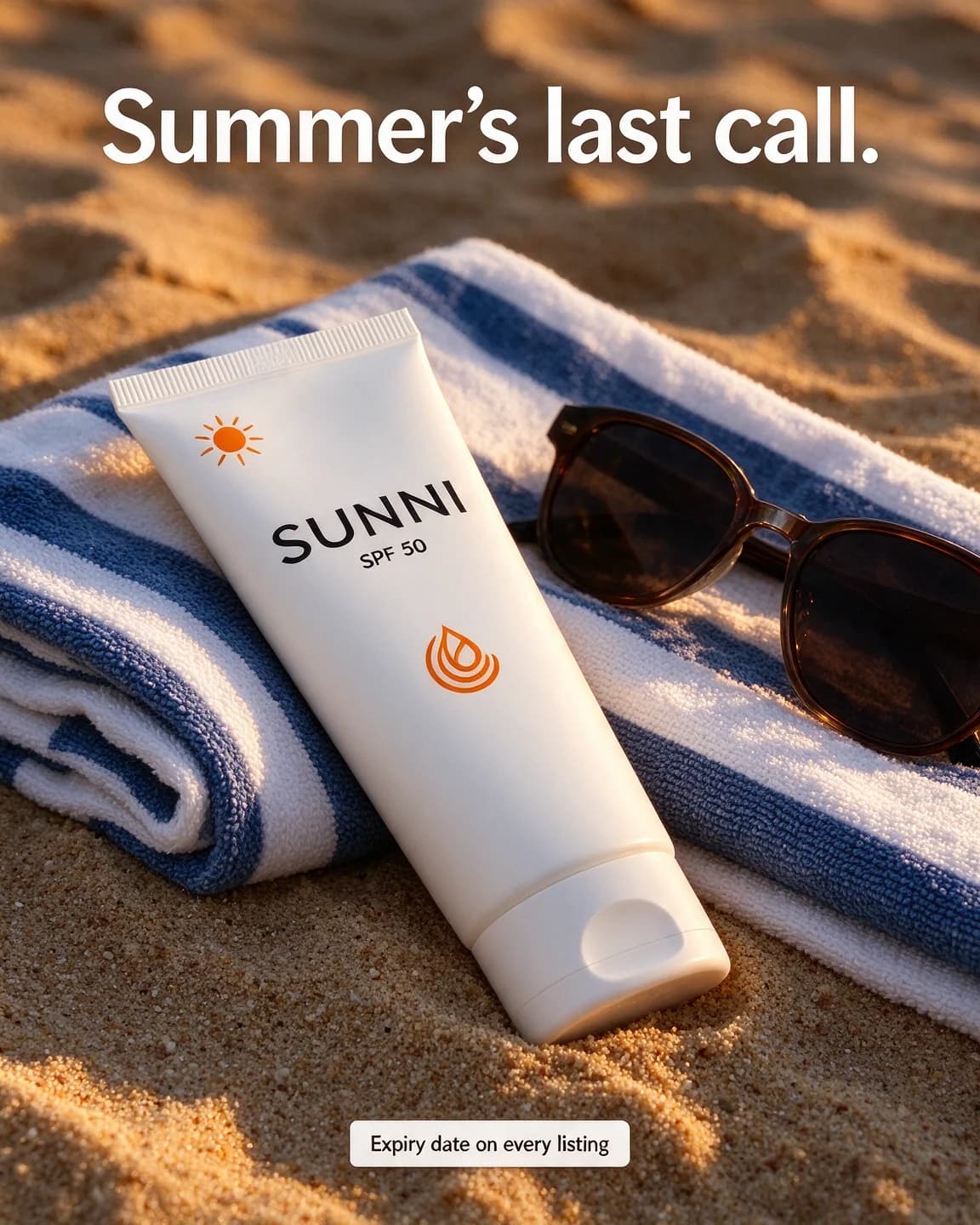
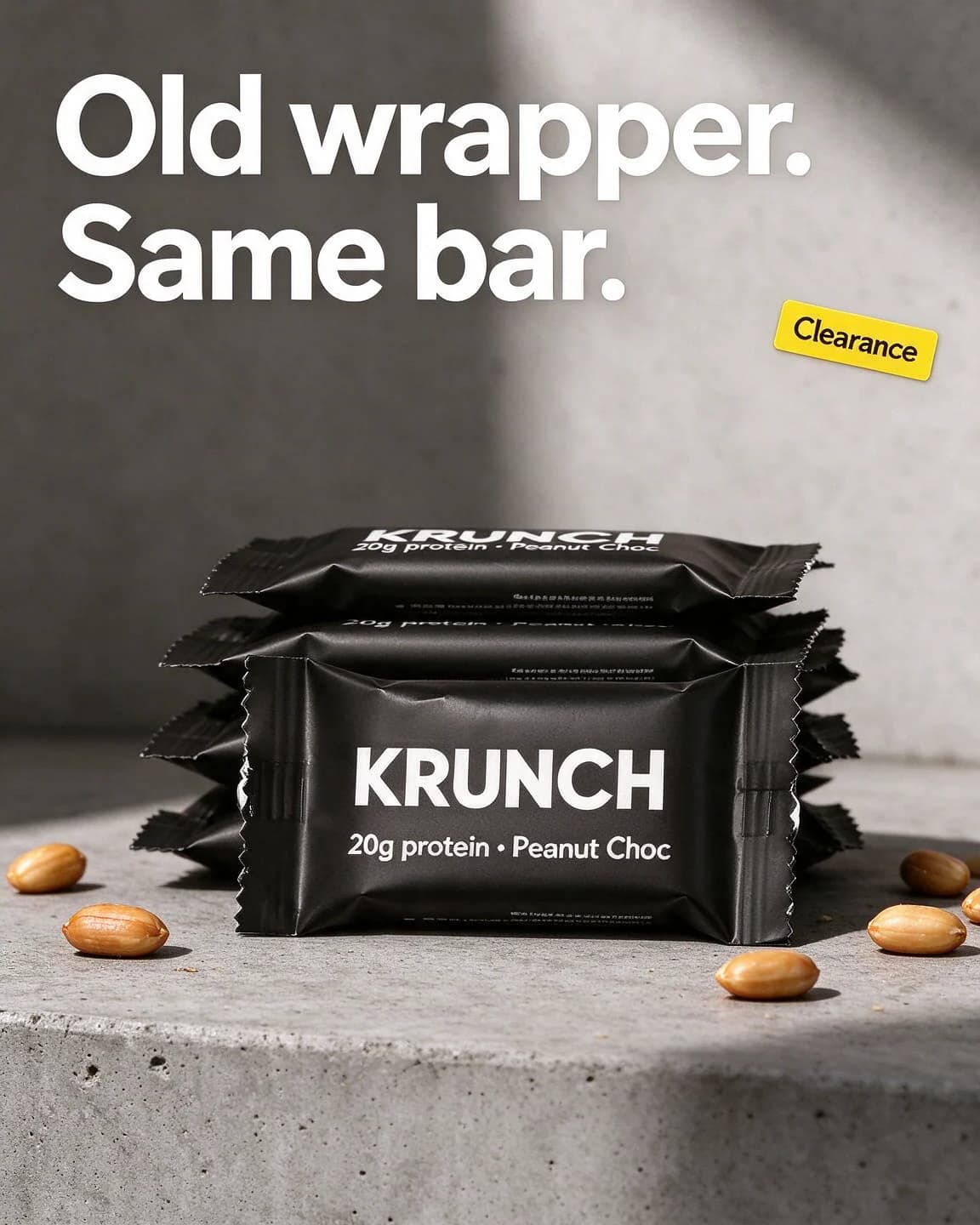
The six ads above each carry one of those:
- What's left: "Last pairs: sizes 6 to 9." and "Last of the summer linen."
- Why it's cheaper: "Last season's colour. Same sound." and "Old wrapper. Same bar."
- When it's over: "Summer's last call." and "Winter scents, last call."
When end of season sales run
Many Indian fashion and footwear brands hold two end of season sales a year: a summer one from around late June into July, and a winter one that starts around late December and runs into January. Home, beauty and electronics brands often join in with their own seasonal leftovers. There's no fixed date, so your own stock list sets the timing.
Some countries set the dates in law. Service-Public Entreprendre, the French government's site for businesses, says each sales period lasts four weeks (checked October 2026). Winter sales start at 8am on the second Wednesday of January, moved to the first Wednesday when the second falls after the 12th. Summer sales start on the last Wednesday of June, moved to the one before when the last falls after the 28th. A few departments have their own dates.
Applied to 2027, that rule gives two windows for most of France:
| Sale | How the rule applies | Runs |
|---|---|---|
| Winter 2027 | The second Wednesday is 13 January, after the 12th, so it moves to the first | Wednesday 6 January to Tuesday 2 February |
| Summer 2027 | The last Wednesday is 30 June, after the 28th, so it moves to the one before | Wednesday 23 June to Tuesday 20 July |
If you sell into France, make the clearance creative for those four weeks and have the "last days" versions ready for the final weekend of each.
The stock list is the brief
Most seasonal ads start with a mood. Clearance ads start with a spreadsheet. Before you make anything, pull the list of what's left and sort it three ways:
- Deep stock in a few sizes. One ad per size run ("sizes 6 to 9"), so the right people stop.
- Whole colours or prints you're retiring. One ad per colour, with the backdrop matched to it.
- Odd pieces. Bundle them into a mix-and-match offer and show the bundle as one picture.
For a typical range that sort gives you five to eight concepts. At two versions each, that's 10 to 16 ads, and every concept can be rebuilt as sizes sell out. With BulkAds you can write the stock list straight into a batch's instructions ("end of season, indigo kurta, sizes S and M left, up to 40% off"), and each ad is built from your real product photo, so the colour in the ad is the colour in the parcel. Each image ad costs 2 credits.
A worked example: the second markdown
Clearance rarely stays at one price, and the second step is where the percentage on the sticker can go wrong. Say a linen kurta sold at $26 for the whole season.
- Step one, opening week: 30% off, so $18. The sticker says "30% off" and the reference is the season price, which buyers really paid.
- Step two, ten days later: what's left drops to $13. Against the season price that's 50% off.
The catch is the 30-day rule. Ten days into the sale, the lowest price you charged in the last 30 days is no longer $26, it's $18. Measured from there, step two is about 29% off, not 50%. The European Commission's guidance on Article 6a deals with progressive price reductions as a separate case (checked October 2026), and national rules can differ, so check the country you sell into before you print "50% off" on the second-step ad.
The creative fix is simple. Make two versions of the step-two ad: one that shows the new price against $18 for markets where that rule applies, and one that shows it against the season price elsewhere. Either way the picture, the kurta and the "Last of the summer linen" line stay the same. Only the sticker changes.
Making clearance look like a choice, not a bin
Discount creative can make good products look cheap. A few habits keep the brand intact:
- Keep the season's best setting. The kurta still hangs in sunlight, the candle still sits on a calm shelf. The sticker carries the sale.
- Explain the discount. "Last season's colour" or "old wrapper" tells the viewer the product itself hasn't changed.
- One price signal per image. A sticker or a headline, not both shouting at once.
- Show what's real. Name sizes, colours and dates. Vague "limited stock" reads as a trick.
The price drop template and the bundle template are both built for this, and the ethnic wear ad examples page has more ideas for kurtas and other festive clothing.
Running the sale in steps
Clearance changes every few days, because the stock does. Plan the creative in steps rather than one launch:
- Opening days: the headline discount, early access for past buyers if you offer it, and the "last of the season" angle.
- The middle: size-run and colour ads, rebuilt as items sell out.
- Final days: an "ends Sunday" reminder with the real end date, and deeper markdowns on what's left.
The bulk ad launcher creates each new set paused, so the next step can be loaded before the current one ends. When a size sells out, pause its ad yourself on the same day. If the ad is in an Autopilot test, Autopilot would stop it in the end, because it pauses any ad in its tests that spends twice your target cost per purchase without a sale (you can move that line between 1.5 and 3 times), but until then the ad is paying to show shoes you can't ship.
The summer edition sits next to the summer sale and the winter one overlaps the New Year sale. Keep the clearance ads visibly different: they sell what's left, the others sell the season.
Questions people ask
When do end of season sales happen?
Many Indian fashion brands run them twice a year, in summer from around late June and in winter from around late December. Some countries fix the dates in law. Under France's start-date rule, the 2027 soldes run from 6 January to 2 February and from 23 June to 20 July in most of the country.
How big should an end of season discount be?
Big enough to move what's left, and honest about it. Lead with the discount most of the range actually has, not the deepest one on a single item, and measure it from a price you really charged. In the EU the reference is the lowest price of the previous 30 days, so check it again before a second markdown.
What should an end of season sale ad show?
What's left, why it's cheaper and when the sale ends. Name the sizes and colours, give the reason (retired colour, old pack, last season) and put the real end date on the image.
Is it fine to say 'last chance' in a clearance ad?
Yes, if it's true. When the stock is really running out or the sale really ends on the stated date, 'last chance' is fair. A countdown that resets, or 'final day' every day, is false urgency.
Are Saar, Pacer and Soniq real brands?
No. All brands on this page are fictional, and every ad was made with AI for illustration.
Keep going
- Ad templates
Price drop ad template
A lower price for good, shown against the real old one
- Ad templates
Bundle ad template
Every item in the set, counted out, with one reason to buy them together
- Ad examples
Ethnic wear ad examples
Kurta, saree and jacket ads planned around the occasion
- Ad ideas
Summer sale ad ideas
Summer sale ad ideas and examples: six hot-weather ads with notes, 15 hooks, five offers, honest discount rules and when to run a summer sale in each market.
- Ad ideas
New Year sale ad ideas
New Year sale ad ideas: 6 example ads for fictional brands, 15 fresh-start hooks, honest offer ideas and a creative checklist for the January 2027 sale.
- Ad ideas
Black Friday ad ideas
Black Friday ad ideas and examples: 6 sale ads with notes, 15 hooks, offer ideas, a creative checklist and the discount rules to check before 27 November 2026.
Every brand on this page is fictional and every ad was made with AI for illustration. Dates shift from year to year, so check this year’s date before you plan.
BulkAds AI is an independent product and is not affiliated with, endorsed or sponsored by Meta Platforms, Inc. Facebook and Instagram are trademarks of Meta Platforms, Inc.