Ad ideas

Back to school ad ideas: 6 first-week ads for parents and students

Back to school ads speak to two buyers at once: the parent with a list and a deadline, and the student who wants the new term to feel new. These six example ads for fictional brands cover the school run, the study desk, the hostel room and the dog left at home, without a child's face in sight. Each has its hook and why it works, plus 15 hooks, offers and a checklist.

April to July in India, late July to September elsewhere6 ads15 hooks5 offer ideas

When to start

April to July in India, late July to September elsewhere

There's no single date. Indian school years start in April in some states and June in others, US schools open between late July and early September, and schools in England and Wales start in early September. Make the ads three to four weeks before each reopening date you sell to, and switch each region's set on about two weeks out.

Creative checklist

  • List the reopening dates for the cities you sell to and give each date its own ad
  • Show hands, backs and bags, never a child's face or a real school's name or crest
  • Write each ad for one buyer: the parent, the student or the teacher
  • Keep the product big, with school props (tiffin, bag, notebook, track) around it
  • Label kids' products by age or class, not 'for boys' or 'for girls'
  • Put the delivery-by date on the image when the offer depends on it
  • Pair each practical ad with a lighter one, like the dog by the door, so the season isn't all lists
  • Show stock or size counts only when they are true at that moment
  • Put a hostel or campus version in 9:16, where students scroll through Stories during move-in week

The swipe file

Each ad with its angle, its hook and why it works. Every brand is fictional. The ads were made with AI to show the idea.

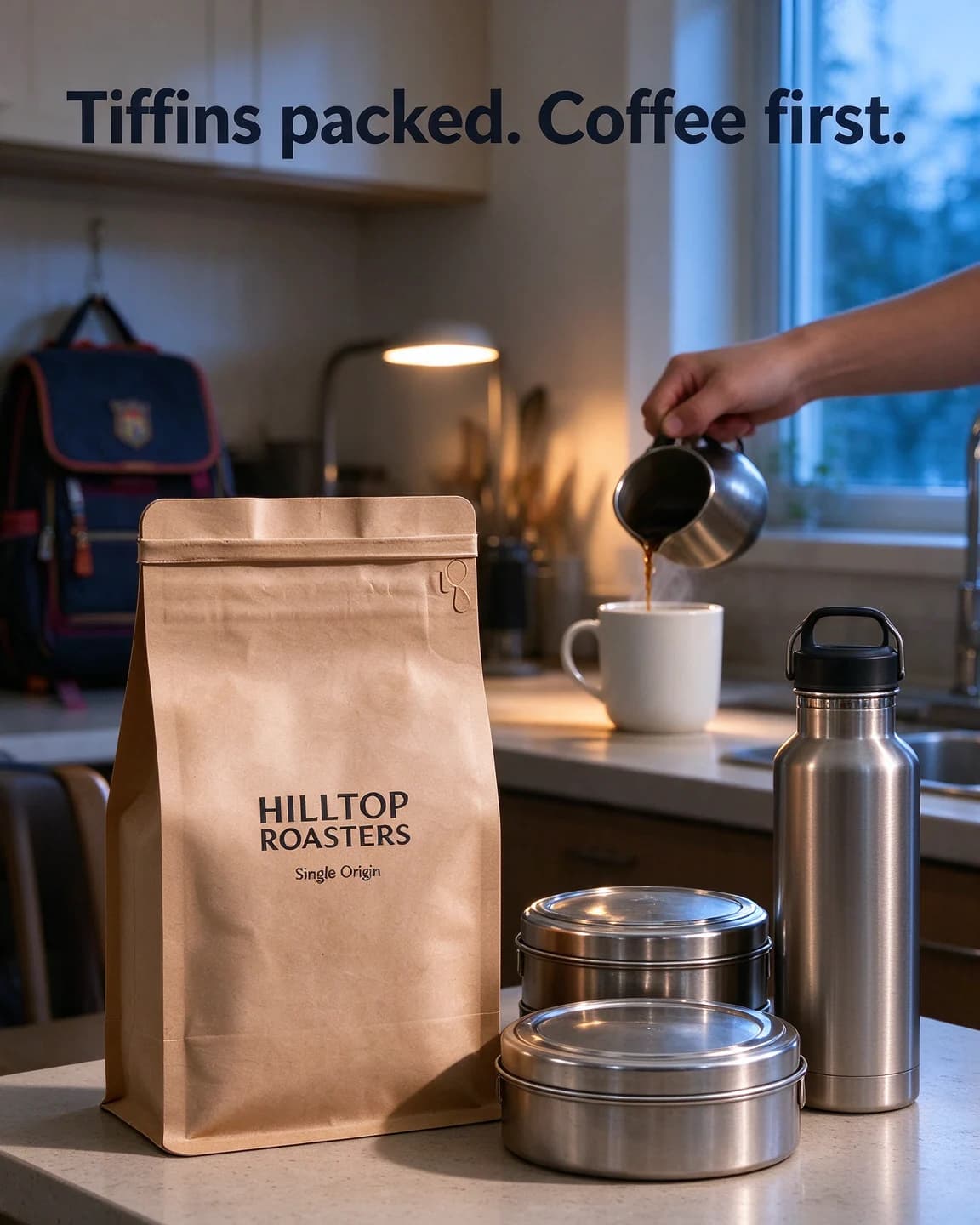
A Hilltop Roasters kraft coffee bag on a kitchen counter at dawn beside two packed steel tiffin boxes, a water bottle and a small school bag on a chair, a hand pouring coffee into a mug, headline "Tiffins packed. Coffee first."

Hilltop RoastersThe parent's morningFeed · 4:5 image

“Tiffins packed. Coffee first.”

Back to school also means 6am alarms for parents, and this ad sells to them, not the child. Packed tiffins and a school bag set the scene in one glance, and the line rewards the parent who got everything ready. It needs no discount, because the product fits a routine that starts again this week.

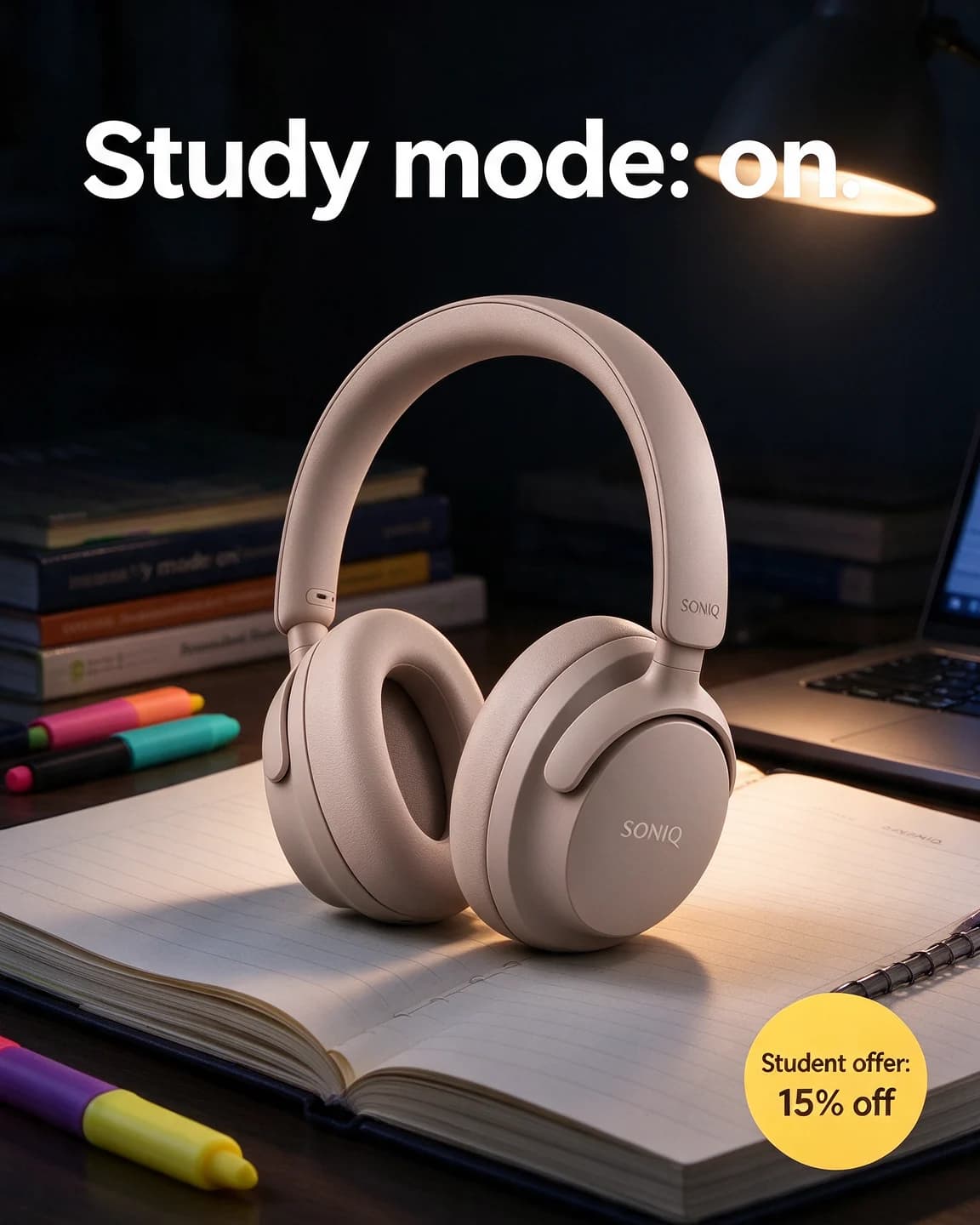
Sand-coloured Soniq headphones resting on an open notebook on a study desk at night, with highlighters, a stack of textbooks, a laptop and a warm desk lamp, headline "Study mode: on." and a "Student offer: 15% off" sticker

SoniqFocusFeed · 4:5 image

“Study mode: on.”

Older students buy for the term ahead, and quiet is what a shared room or a busy house can't give them. The line promises a mode, not marks, which keeps it away from claims about results that no pair of headphones can back up. The sticker carries the offer and the desk carries the season.

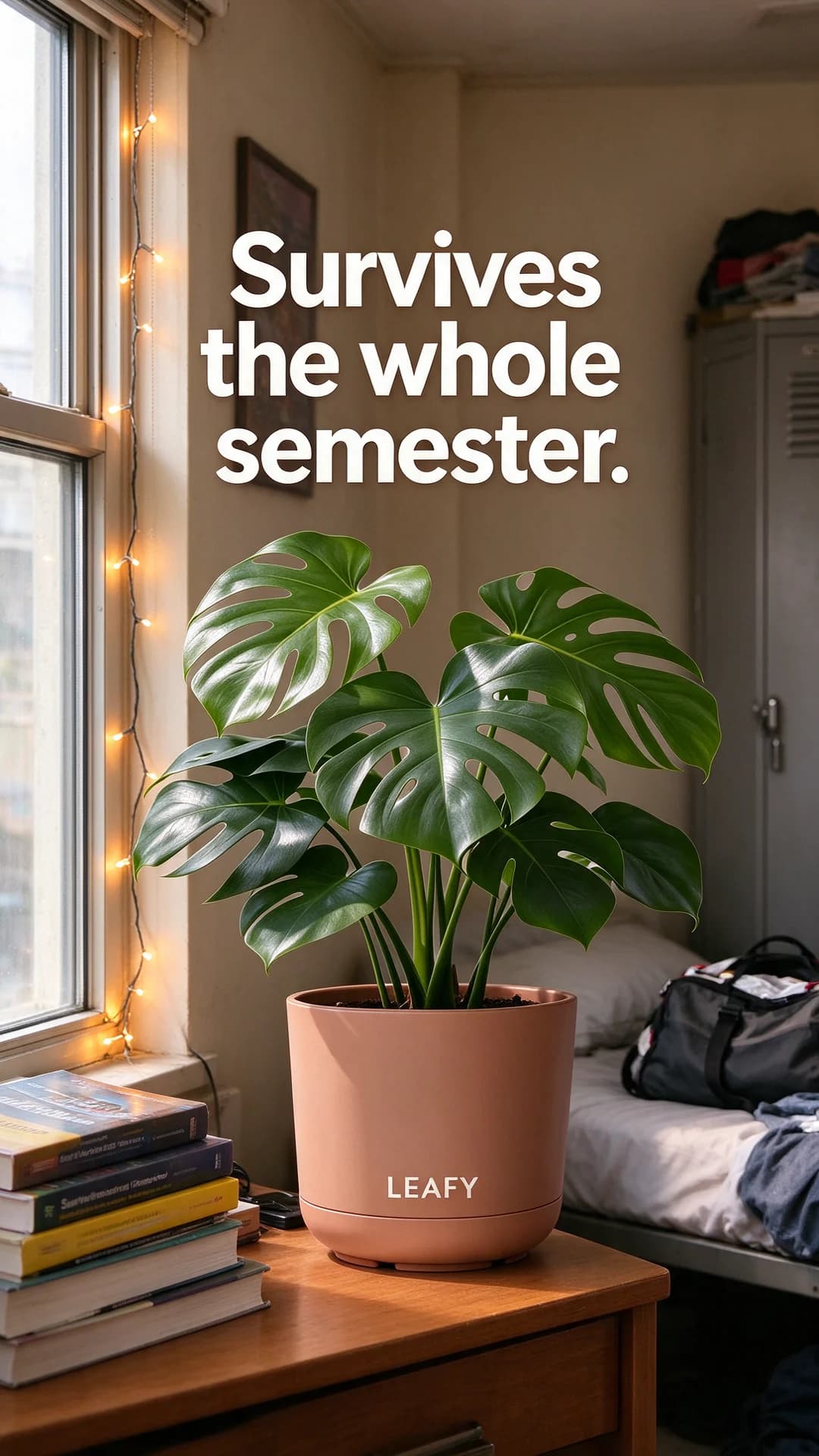
A Leafy terracotta self-watering planter with a monstera on a small hostel room desk by a window, next to a stack of textbooks, fairy lights and a half-unpacked duffel bag on the bed, vertical frame, headline "Survives the whole semester."

LeafyMoving inStories · 9:16 image

“Survives the whole semester.”

First-years setting up a hostel room want it to feel like theirs, and a plant is one of the simplest ways to do that. The line takes on the obvious doubt, that a student will forget to water it, with the planter's one real feature. The vertical frame suits Stories viewers scrolling through move-in week.

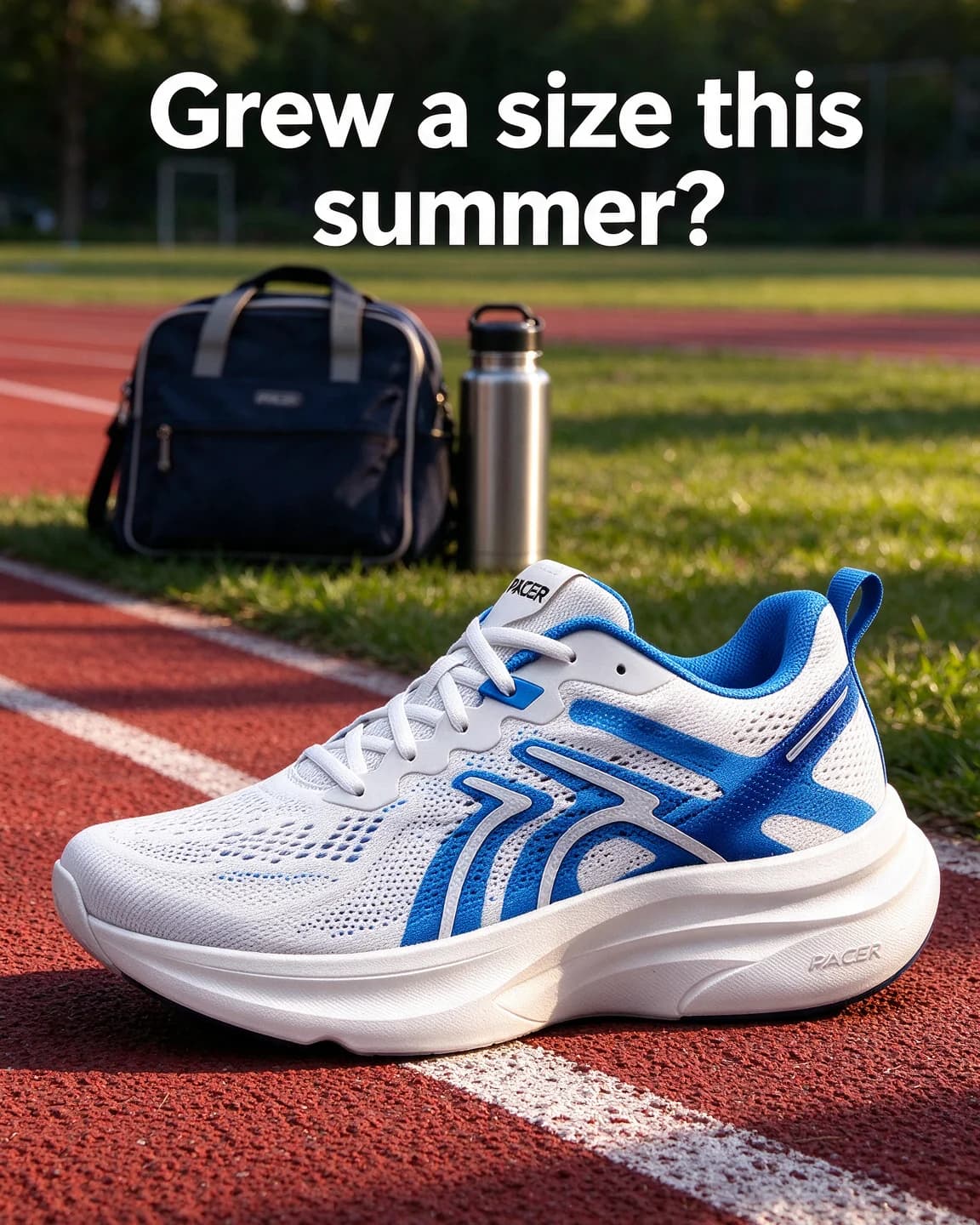
A white and electric-blue Pacer running shoe on the white chalk line of a school running track in morning light, a school bag and a steel water bottle on the grass behind, headline "Grew a size this summer?"

PacerOutgrown over the breakFeed · 4:5 image

“Grew a size this summer?”

Feet grow over the holidays, and parents often find out the night before school, when the old shoes won't go on. The question lands with exactly those parents and costs everyone else nothing. Run it only if you sell the shoe in children's sizes, and pair it with an easy size exchange.

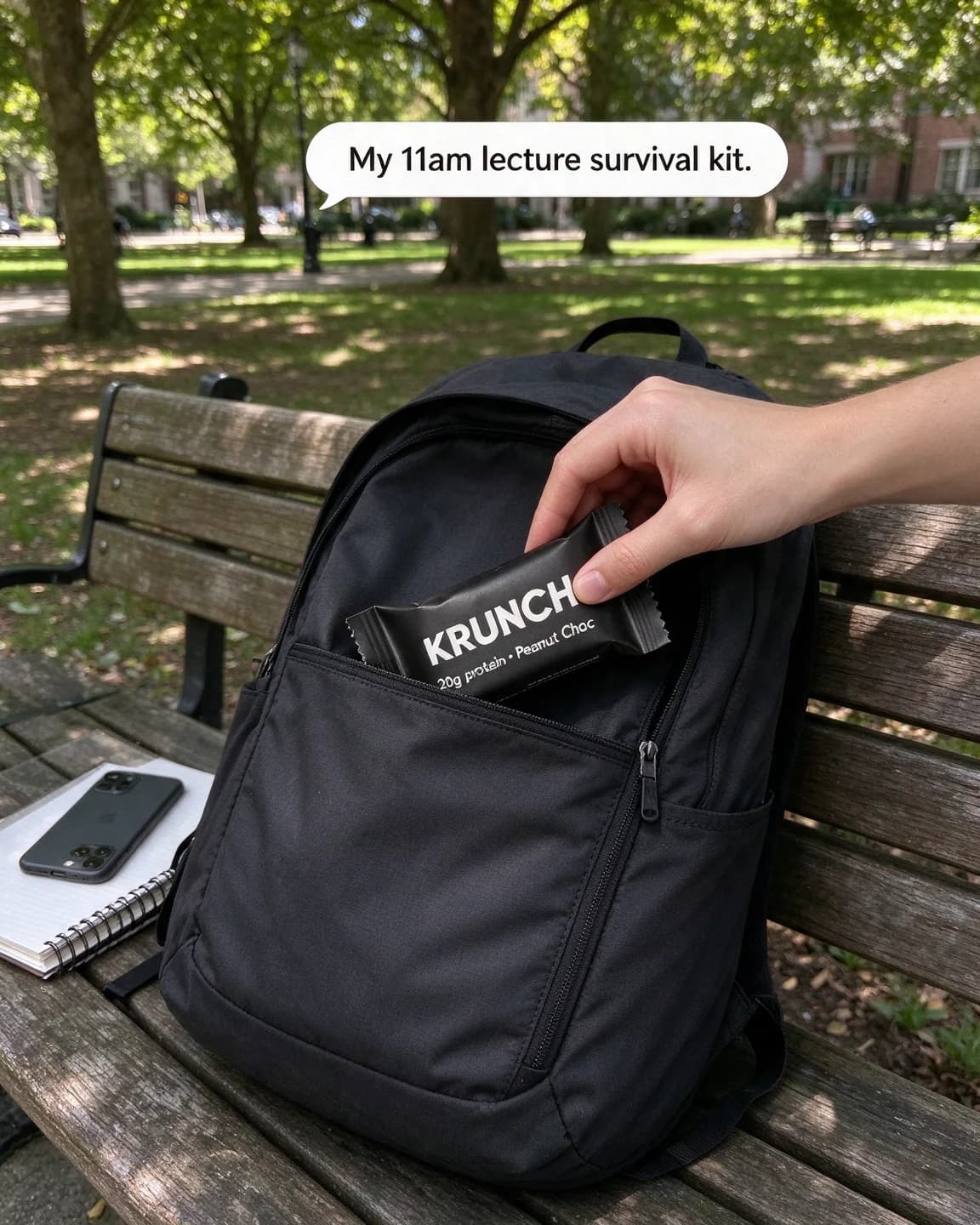
A hand pulling a black Krunch Peanut Choc protein bar out of the side pocket of a backpack on a college campus bench, with a spiral notebook and a phone beside it, casual phone photo with the speech-bubble caption "My 11am lecture survival kit."

KrunchBetween lecturesFeed · 4:5 image

“My 11am lecture survival kit.”

This one is for college students, not young children: a protein bar belongs in a backpack between lectures, not in a primary-school tiffin. The UGC caption sounds like a student talking, and naming the hour makes the moment specific enough to recognise.

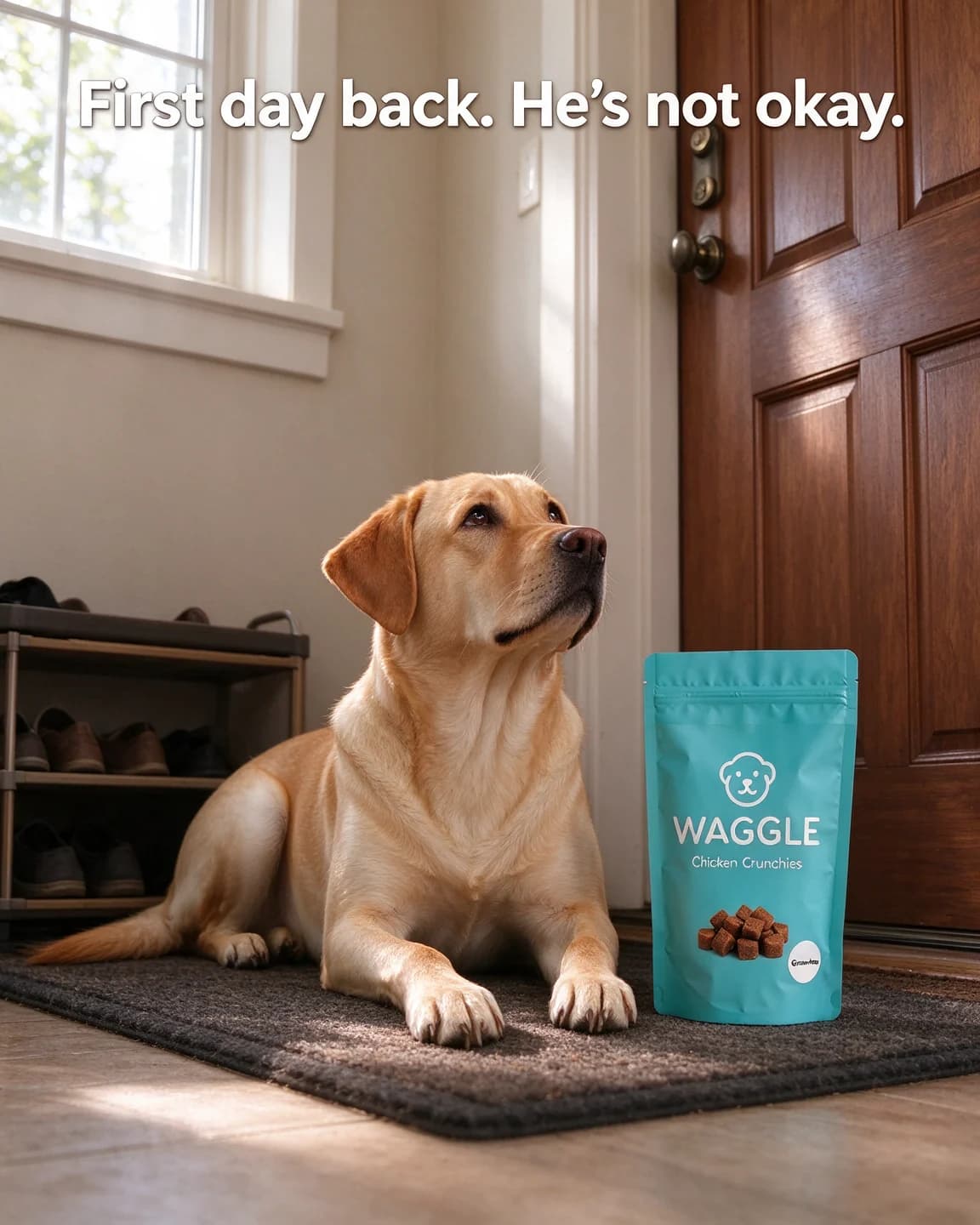
A labrador lying by a closed front door next to an empty shoe rack, with a teal Waggle Chicken Crunchies pouch on the floor beside it in soft morning light, headline "First day back. He's not okay."

WaggleThe one left at homeFeed · 4:5 image

“First day back. He's not okay.”

After a summer of company the house goes quiet on the first school day, and dog owners know exactly who notices most. The humour is gentle and the product is the comfort, a treat for an empty morning. It reaches families without showing a single child.

Angles to test first

  1. 1

    The parent's morning

    Alarms, tiffins, ironed uniforms, the 7am bus. Products that make the morning easier, like coffee, chai, breakfast snacks and lunch boxes, sell to the parent rather than the child.

  2. 2

    The school list

    Schools send lists and parents shop from them. A bundle that matches one class's list, laid out like the list itself, saves the buyer an evening of running between shops.

  3. 3

    Focus at the desk

    Headphones, lamps, notebooks and chairs, sold on the calm they bring to a study corner. Promise a quieter room, never better marks.

  4. 4

    Moving out

    College and hostel move-ins are a separate back to school with their own buyer: a student with a small room and, often, a parent paying. Starter kits and small comforts suit it.

  5. 5

    Outgrown over the break

    Shoes, uniforms and bags that stopped fitting over the summer. A question headline like 'Grew a size this summer?' picks out the parents who have just found out.

  6. 6

    The ones left at home

    The dog by the door, the younger sibling, the quiet kitchen. A gentle, funny angle stands out in a season packed with checklists.

15 hooks for Back to school ads

  • Tiffins packed. [Coffee] first.
  • Study mode: [on].
  • Survives the whole [semester].
  • Grew a [size] this summer?
  • My [11am lecture] survival kit.
  • First day back. [He]'s not okay.
  • Everything on the [Class 4] list, in one box.
  • The [hostel room] starter kit, under [price].
  • [6am] alarms are back. So is [product].
  • New term, new [laces].
  • What I packed for [first-year] [hostel].
  • Student price: [15%] off with your [college ID].
  • Delivered before [reopening day] in [Chennai].
  • For the teacher who [knew every name].
  • Back to [school], back to [the 7am bus].

Offer ideas

  • Class-list bundles

    One bundle per class, matched to a typical school list and priced as a set, for example a Class 3 bundle at $13. Lay it out on the image like a ticked-off list.

  • A student discount with clear rules

    A set discount for college students, for example 15% with a college email or ID. Say on the ad how to claim it and honour it for every student who meets the rule, so the offer doesn't turn into a surprise hurdle at checkout.

  • Free size exchange

    For shoes, uniforms and bags, a free exchange if the size is wrong. Parents buying for growing children worry about fit as much as price, so put the promise on the image.

  • Delivery before reopening day

    A ship-by date for each city, set from that city's reopening date. Rebuild the ad as each date passes, so the promise on screen is always one you can keep.

  • Hostel and first-flat kits

    A starter set for students moving out, such as a plant, a lamp, a mug and a coffee bag at one price, for example $21. Show everything in the kit in one frame so the value is visible.

Watch out for

  • Don't sort children's products by gender. Clause 1.1 of ASCI's guidelines on harmful gender stereotypes (launched in June 2022, checked October 2026) says ads aimed at or showing children may feature a specific gender but should not convey that a children's product, pursuit or activity, including choice of play or career, is inappropriate for one gender. A 'science kit for boys' line is the kind of thing it warns against.
  • Use photos of real children only with written consent from a parent, and never show a real school's name, crest or uniform without permission. AI-made scenes avoid both problems, as long as they keep faces out and invent nothing that looks like a real school.
  • Promise what the product does, not what the child will achieve. 'Blocks out the noise' is a claim you can test, 'better marks this term' is not. For snacks and drinks the line is written down: ASCI's food and beverage guidelines say ads should not suggest that eating a product will directly change a person's intelligence or physical ability unless scientific evidence backs it (checked October 2026). 'Brain food for exam season' fails that test.
  • Don't borrow an endorsement. 'CBSE approved', 'NCERT recommended' or a school's name used as a seal is a claim you have to prove in writing. A book can say which syllabus it follows, but not that a board chose it. For food and drink, ASCI's guidelines rule out implying endorsement by a government agency or professional body unless it consented, the claim is current and verifiable and the body is named.
  • Keep protein bars, energy drinks and coffee in teen, college and parent scenes, out of primary-school tiffins. A product made for adults that appears in a young child's lunch box makes a promise you didn't mean to make.

Practical pointers, not legal advice. Check Meta’s Advertising Standards and your local rules.

Two buyers, one first morning

Back to school is the season where the person paying and the person using the product are usually different people. Parents buy from a list and a deadline: the school sends the list, the reopening date sets the deadline, and the ad has to fit both. Students, especially in college, buy for how the new term should feel: a calmer desk, a room that looks like theirs, a snack for the long morning.

The six ads above split along that line:

  • For parents: "Tiffins packed. Coffee first." and "Grew a size this summer?"
  • For students: "Study mode: on.", "Survives the whole semester." and "My 11am lecture survival kit."
  • For the whole family: "First day back. He's not okay.", about the dog who misses everyone.

When back to school actually happens

There isn't one back-to-school date. There are dozens, and the ads have to follow them.

  • India. School years run April to March in some parts of the country and June to May in others (Wikipedia's academic term entry, checked October 2026). CBSE holds its Class 10 and 12 board exams in February and March (Wikipedia's CBSE entry, same date). That gives India two selling moments: the new session in April, and the return after the summer break, which for many schools falls in June or July. State, board and city all move the dates, so check the calendar for each place you sell to.
  • United States. The traditional start is the Tuesday after Labor Day, which is 7 September in 2027, but many schools now begin in late August or even late July (Wikipedia's academic term entry, checked October 2026).
  • England and Wales. The school year generally runs from early September to late July, and GOV.UK sends parents to their local council's website for exact term dates.

Next to these sits a gifting moment many brands miss. Teachers' Day in India falls on 5 September, the birthday of Sarvepalli Radhakrishnan, and has been marked on that date since 1962. A "for the teacher who knew every name" gift ad can run in the week before.

Write for one buyer per ad

A back-to-school ad that tries to speak to the parent, the student and the teacher at once ends up speaking to nobody. Pick one per ad and let the scene say who it is for:

Buyer Scene that says it Line that fits
Parent Kitchen at dawn, packed tiffins, school bag on a chair "Tiffins packed. Coffee first."
College student Hostel desk, campus bench, backpack pocket "My 11am lecture survival kit."
Teacher, or the parent buying for one A desk with a card and a small gift box "For the teacher who knew every name."

In BulkAds that means one batch per buyer rather than one mixed batch, because a batch made from your own instructions follows a single clear brief ("back to school, parent's morning, kitchen at dawn, no children shown"). The ad creative brief for AI guide covers writing those instructions. If one ad's on-image line misses, regenerate just that element instead of the whole ad.

A worked example: the class-list bundle

Say a fictional stationery brand, Quillo, sells notebooks at $0.60 each, a geometry box at $2.60 and a pencil set at $1.85. A Class 4 list asks for eight notebooks, one geometry box and one pencil set, which comes to $9.40 bought separately. Quillo sells the whole list as one bundle at $8.25, delivered before reopening day.

The ad doesn't lead with the saving. It leads with the evening the parent gets back: "Everything on the Class 4 list, in one box." The image lays the bundle out like a ticked list, and the saving and the delivery date sit on a sticker. Make one version per class, because a parent with a Class 4 child skims past a Class 7 ad, and the bundle template gives you the layout. Give each class bundle its own product page and photo on your store, because the brand kit reads products from your site and a BulkAds batch is made for one product. Six classes at two versions each is six small batches and 12 ads, at 2 credits per image ad.

Keeping children safe in the creative

Real photos of children bring consent, privacy and safety questions that most small brands aren't set up to answer, and you rarely need them. Every ad above sells to families without a child in the frame:

  • Objects tell the story. A tiffin, a school bag, a chalk line on a running track.
  • Hands and backs are enough. A small hand on a shoelace, a backpack seen from behind.
  • Invent nothing real. No real school names, crests or uniforms in AI-made scenes.

BulkAds builds every ad around your real product photo and runs a pre-flight check for product match, on-image spelling and likely Meta policy risks before you see it. You still decide what's right to show, so read each ad the way a parent would before it goes anywhere near a launch.

Running the season city by city

Because reopening dates differ, back to school is a rolling launch rather than one big one. Build a set per region, load each one paused with the bulk ad launcher, and switch it on about two weeks before that region's reopening day. If you hand each region's set to Autopilot as its own test instead, it pauses an ad that spends twice your target cost per purchase without a sale (you can move that line between 1.5 and 3 times), so an early region's weak ads stop quickly. When an ad in its test wins, Autopilot drafts four fresh variants of it, which gives the next region's set a head start.

Winners carry into later moments too. A parent's-morning ad turns into a festive breakfast ad, and the hostel kit fits Diwali gifting for students living away from home. The summer sale page covers the weeks before schools reopen, and the stationery ad examples page has more ideas for notebooks, pens and desks.

Questions people ask

When is back to school?

It depends on where you sell. Indian school years start in April in some parts of the country and June in others, US schools open between late July and early September, and schools in England and Wales start in early September.

When should I start back-to-school ads?

Make them three to four weeks before the reopening dates of the cities you sell to, and switch each region's set on about two weeks out, with the delivery-by date on the image. Run the season as a rolling launch, one region at a time, rather than a single national push.

Should back-to-school ads show children?

They rarely need to. Tiffins, school bags, desks and a hand on a shoelace say back to school without a child's face. If you do use real children, get written consent from a parent first.

What offers work for back to school?

Class-list bundles, student discounts with clear rules, free size exchanges and delivery before reopening day. Each one removes a specific worry for the parent or the student, which a plain discount doesn't.

Are Quillo, Pacer and Waggle real brands?

No. All brands on this page are fictional, and every ad was made with AI for illustration.

Keep going

Every brand on this page is fictional and every ad was made with AI for illustration. Dates shift from year to year, so check this year’s date before you plan.

BulkAds AI is an independent product and is not affiliated with, endorsed or sponsored by Meta Platforms, Inc. Facebook and Instagram are trademarks of Meta Platforms, Inc.

Your next fifty ads are one link away.

Paste your website, meet your brand kit and see your first batch in minutes. 7 days for $9.99 — cancel anytime.

yourbrand.comMake my ads

See pricingExplore featuresBrowse the library