
A summer sale is a date you pick
No calendar sets a summer sale. That's freedom, and it's also the easiest way to run one at the wrong time. Pick dates that follow the weather your buyers are actually living in:
| Market | When the heat peaks | Sale window to consider |
|---|---|---|
| India | April until the monsoon arrives | Late April to June |
| UK, Europe, US, Canada | From the June solstice into August | Mid June to July |
| Australia, New Zealand, South Africa | December to February | December or January, not June |
For India, the India Meteorological Department's normal dates put the monsoon over Kerala on 1 June and across the whole country by 8 July (as of October 2026). So a buyer in Delhi can still be in peak heat while a buyer in Kochi is already in the rains, and a national sale may want two sets of scenes. In the northern hemisphere, EarthSky gives the next June solstice as 21 June 2027 at 14:11 UTC (as of October 2026).
Summer sale or end-of-season sale?
They look alike and work differently. A summer sale sells the season buyers are in right now: it's hot, and they'll use the product this week. An end-of-season sale clears stock as the season closes, and its ads lead with the range and the size of the discount. The end-of-season sale ad ideas cover that one.
So summer sale creative should look hot. Hard midday shadows, bright skies, ice and condensation. A percentage on a flat background can come later, once the reason to buy now is clear.
Three jobs for six ads
The swipe file splits into three kinds of ad, and a good summer sale uses all three:
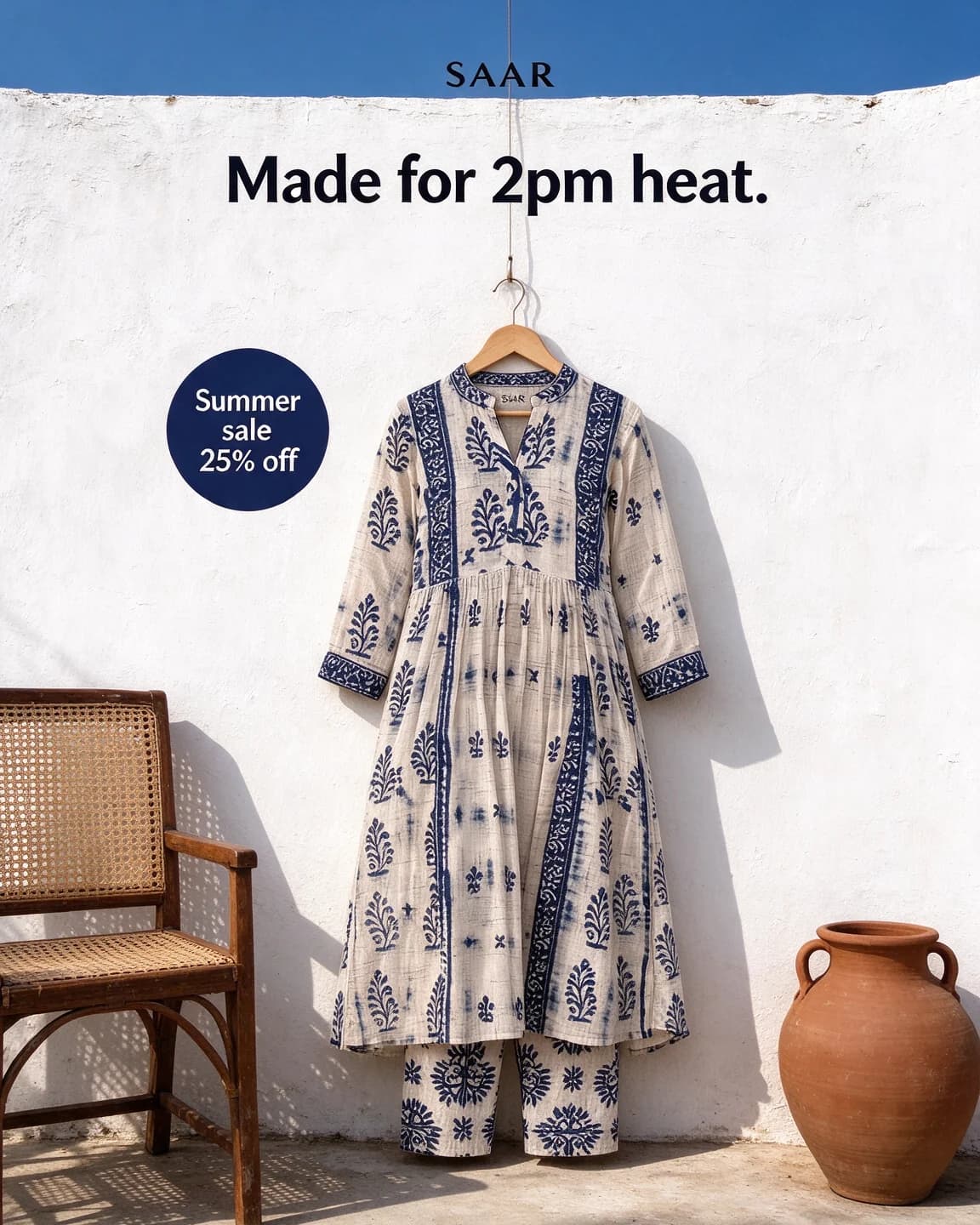
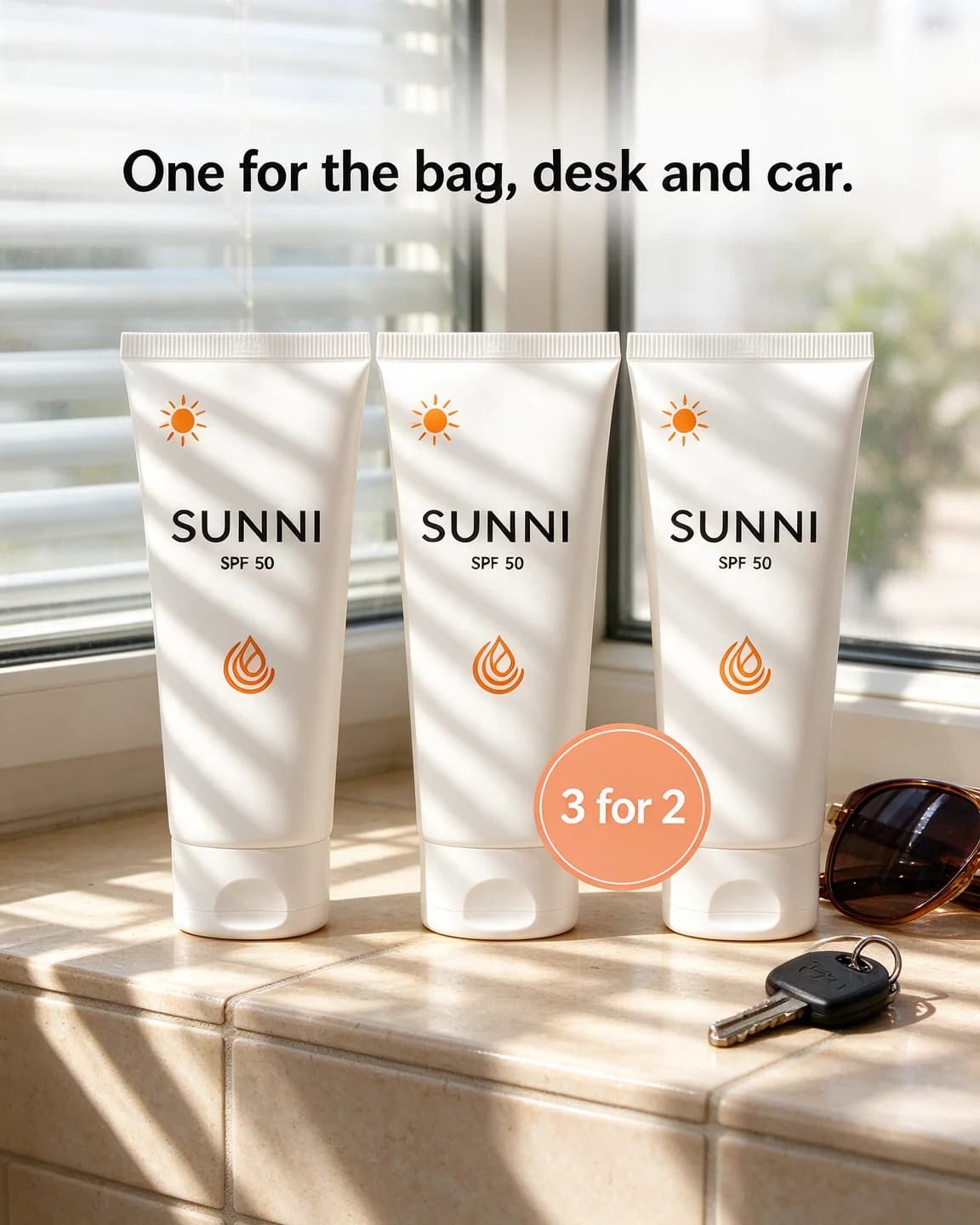
- The heat is the reason. The Saar kurta and the Sunni multi-buy sell relief from a specific hot moment.
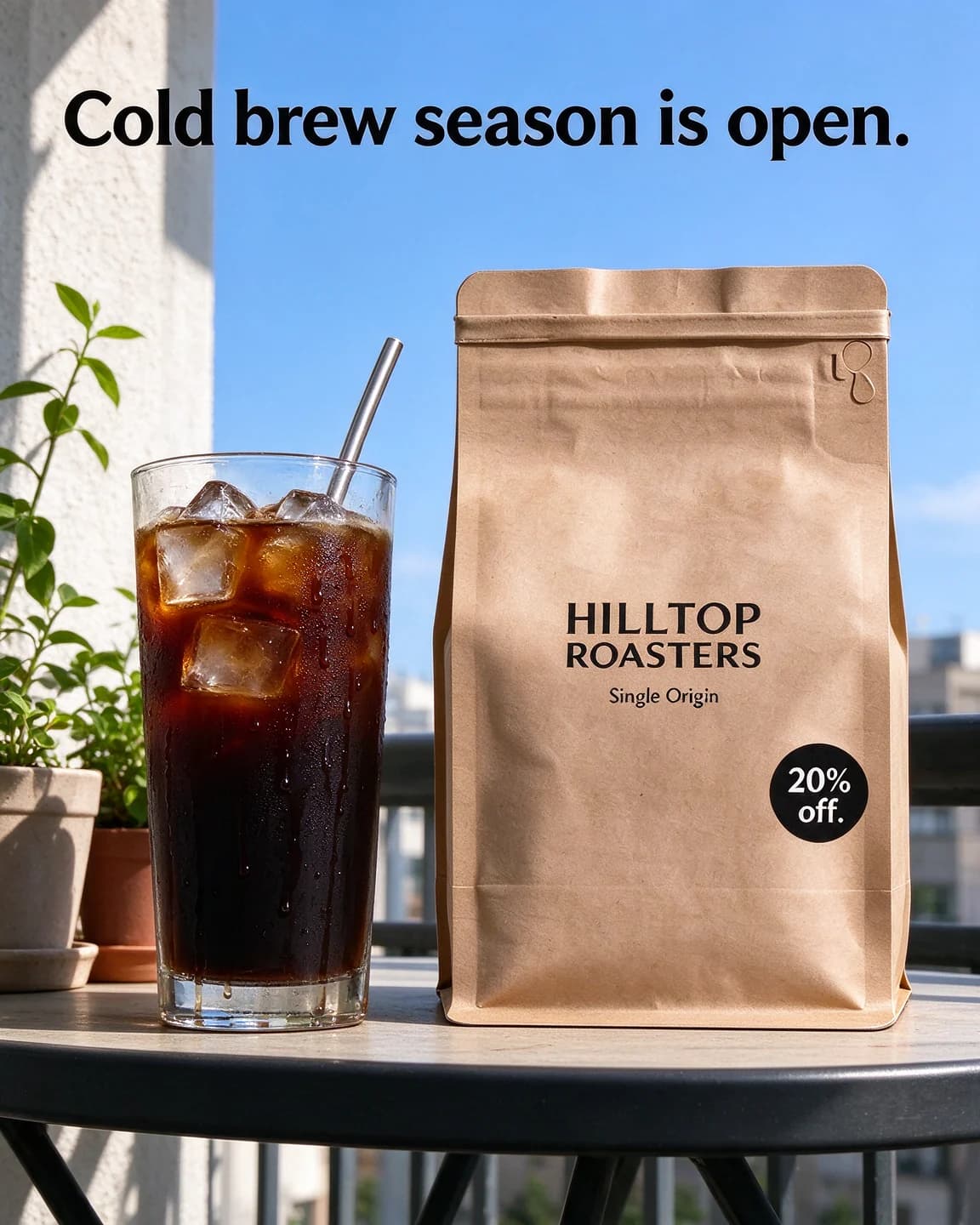
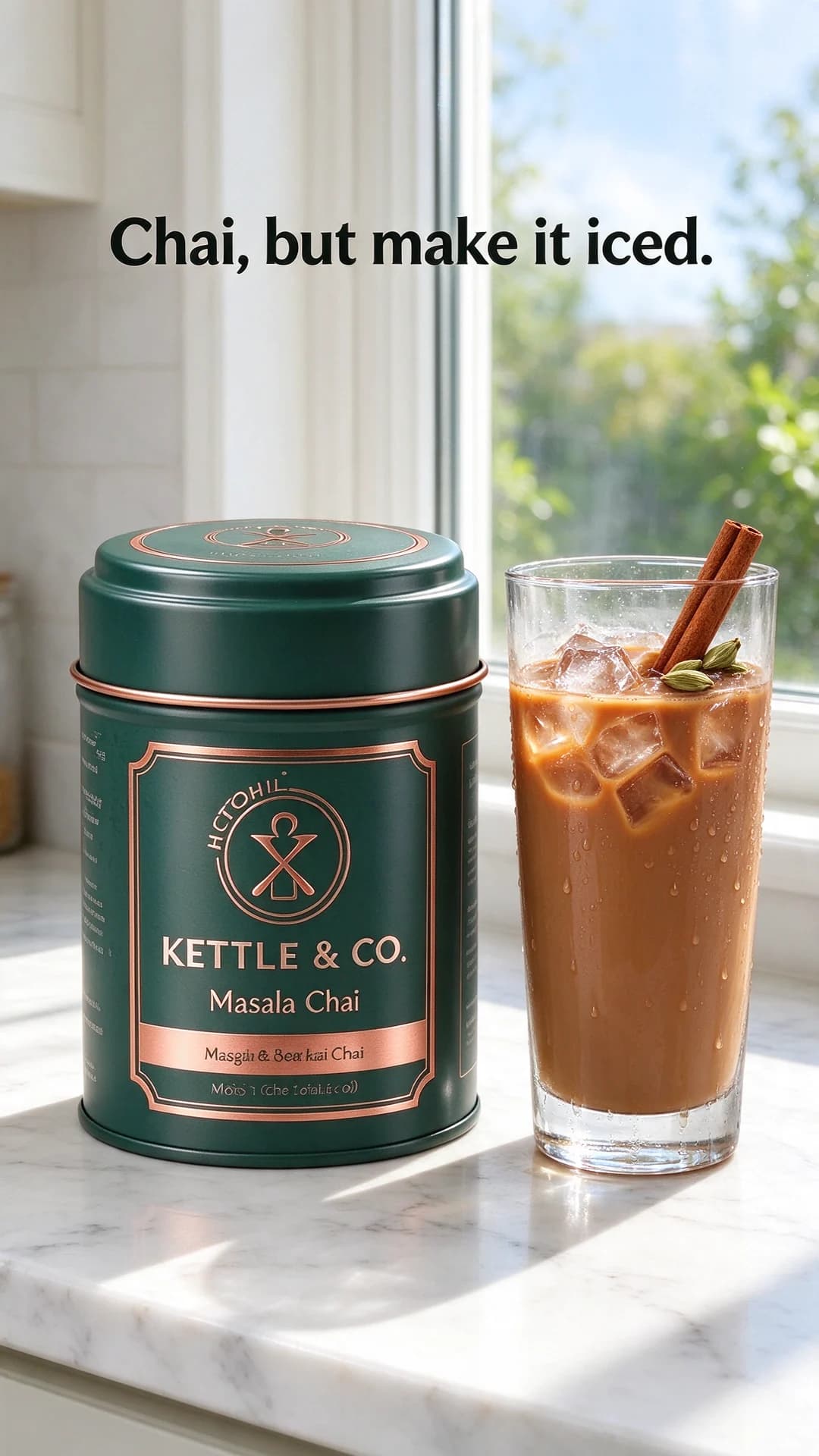
- A summer job for a product people know. Hilltop's cold brew, Kettle & Co.'s iced chai and Waggle's indoor training each give a familiar product a new reason to buy in June.
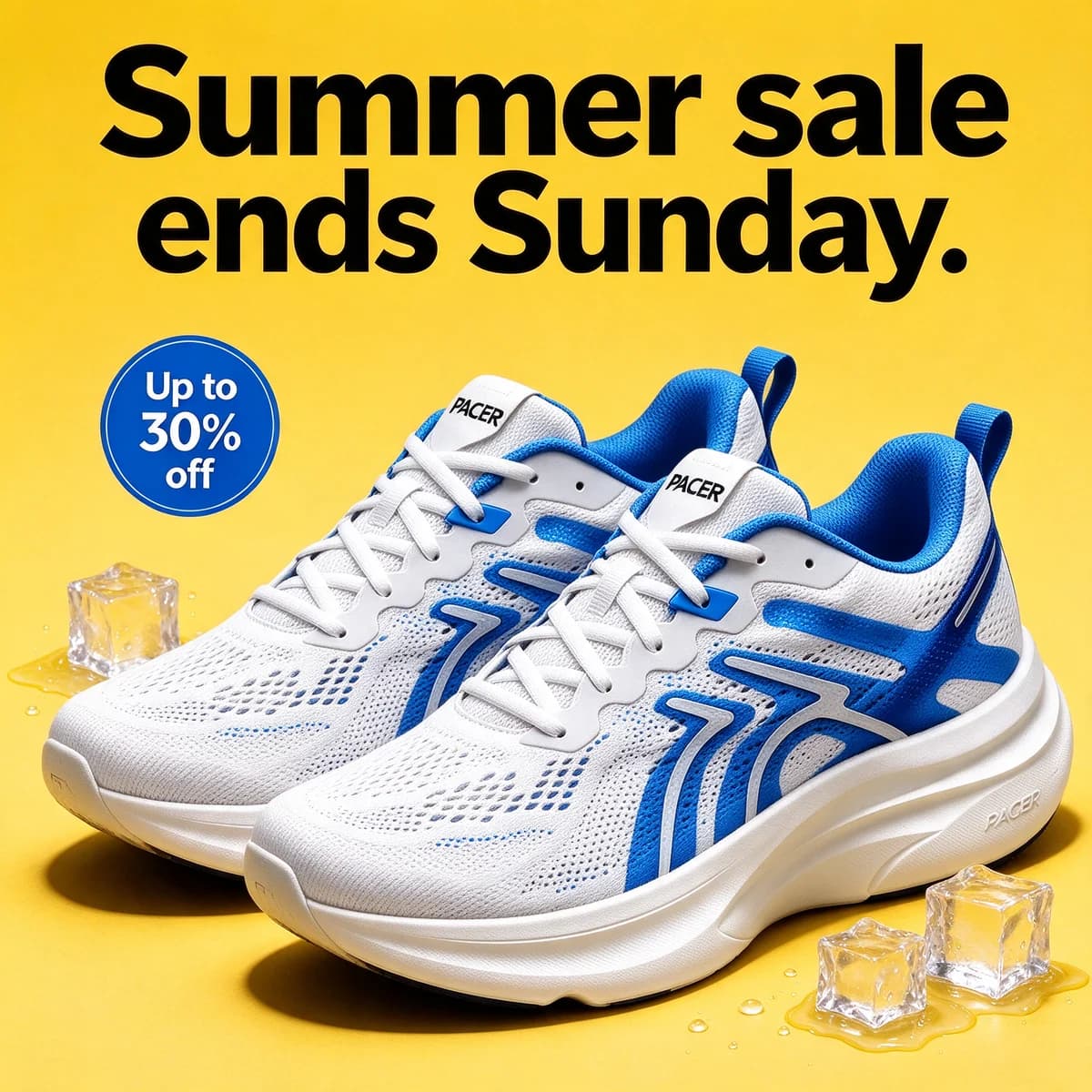
- The real deadline. The Pacer ad says the sale ends Sunday, and it runs only when that's true.
If every ad in the sale is a deadline on a coloured block, buyers get a reason to hurry and no reason to want the thing. Save the deadline for the final days, and use the price drop template when the discount itself is the news.
Discount numbers that hold up
Put a "was" price on the image only if it's the price the product really sold at before the sale. Say a linen kurta sold at $25 for the last three months. "Was $25, now $19" is a real 25% off. Raising the price to $31 for a week and then showing 40% off is the fictitious former price the FTC's pricing guides describe.
"Up to" stickers need the same care. If most of the range is 10% off and one colour is 30% off, "Up to 30% off" is literally true and still disappoints buyers who tap through. Name the 30% item in the ad, or lead with the typical discount.
Multi-buys are easier to keep honest. A 3-for-2 on a $5.15 sunscreen means three tubes for $10, a third off each tube, and the ad can show exactly where the three go.
Pacing a three-week sale
- The week before: tease the dates and offer early access to subscribers, with no discount on the image yet.
- Week one: heat and summer-use ads, each with the sale sticker.
- Week two: keep the sellers, add variants of them and a bundle or two. The guide to iterating on a winning ad covers what to change first.
- The final 72 hours: the deadline ad, with the real end date. The countdown template fits here.
- The day it ends: switch off everything that says "sale".
Making the batch in BulkAds
Write the season into the batch instructions, for example "Summer sale, hard midday sun, one cold cue in every scene such as ice, shade or water, discount on a round sticker, headline about the heat, not the price". BulkAds keeps the product from your real packshot (see product photo ads), and its pre-flight check reads the words on each image, so a garbled sticker gets flagged before you launch.
That check looks at spelling, not at your store. It can tell you a sticker says "25% off" cleanly, but not whether the checkout agrees, so that comparison stays a human job.
Twelve image ads use 24 credits. Let Autopilot launch them as its own paused test, do that price check while nothing is spending, then let it judge each ad on sales rather than clicks.
Questions people ask
When should I run a summer sale?
Follow your buyers' weather. In India that's the hot weeks from late April until the monsoon reaches them. In Europe and North America it's mid June to July, around the solstice. In Australia and New Zealand, summer runs from December to February.
What should a summer sale ad show?
A scene that looks hot, one cold cue such as ice or shade, the product as the hero and the discount on a small sticker. The headline should give the reason to buy now, and the sticker the price.
How do I show a summer discount honestly?
Use a 'was' price only if you charged it before the sale, make 'up to' claims true for real products in stock, and only say the sale is ending when it is. If you extend it, make new ads.
How is a summer sale different from an end-of-season sale?
A summer sale sells the season buyers are in, so the creative leans on heat and use. An end-of-season sale clears stock as the season ends, so its ads lead with range and discount. See the [end-of-season sale ideas](/ad-ideas/end-of-season-sale).
How many ads do I need for a summer sale?
Six to twelve is a sensible start: two or three each for heat, summer use and the deadline. The guide to [how many ads to make each week](/guides/how-many-ads-per-week) helps you plan the rest of the sale.
Keep going
- Features
AI ad generator
On-brand image ads in batches of up to 12
- Guides
Iterating on a winning ad: what to change first, and what to keep
Keep the idea that won and change the layers around it. How to find why an ad won, the order to change things in, eight worked iterations and how to launch them safely.
- Ad templates
Price drop ad template
A lower price for good, shown against the real old one
- Ad templates
Countdown ad template
A real deadline in giant type, with one version for each day left
- Ad templates
Bundle ad template
Every item in the set, counted out, with one reason to buy them together
- Prompt library
Background replacement prompts
Four background replacement prompts that move a white-background packshot into a kitchen, a balcony, a bedroom and a café, with the outputs and notes on each.
Every brand on this page is fictional and every ad was made with AI for illustration. Dates shift from year to year, so check this year’s date before you plan.
BulkAds AI is an independent product and is not affiliated with, endorsed or sponsored by Meta Platforms, Inc. Facebook and Instagram are trademarks of Meta Platforms, Inc.