
What makes a picture read as UGC
Left to itself, an image model makes the cleanest picture it can. A UGC-style prompt asks for a worse photo on purpose, and it works best when it describes camera facts rather than leaning on the label "UGC":
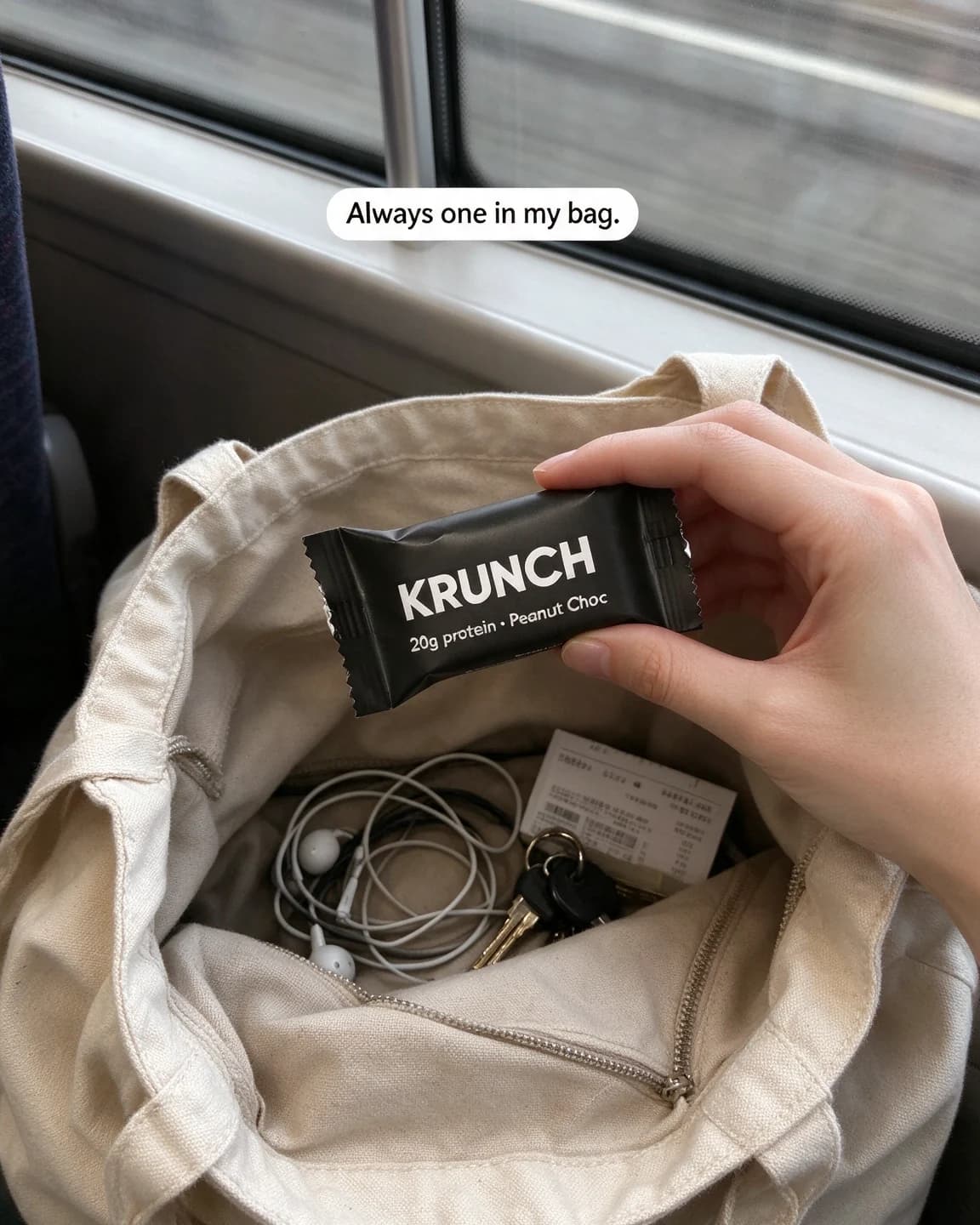
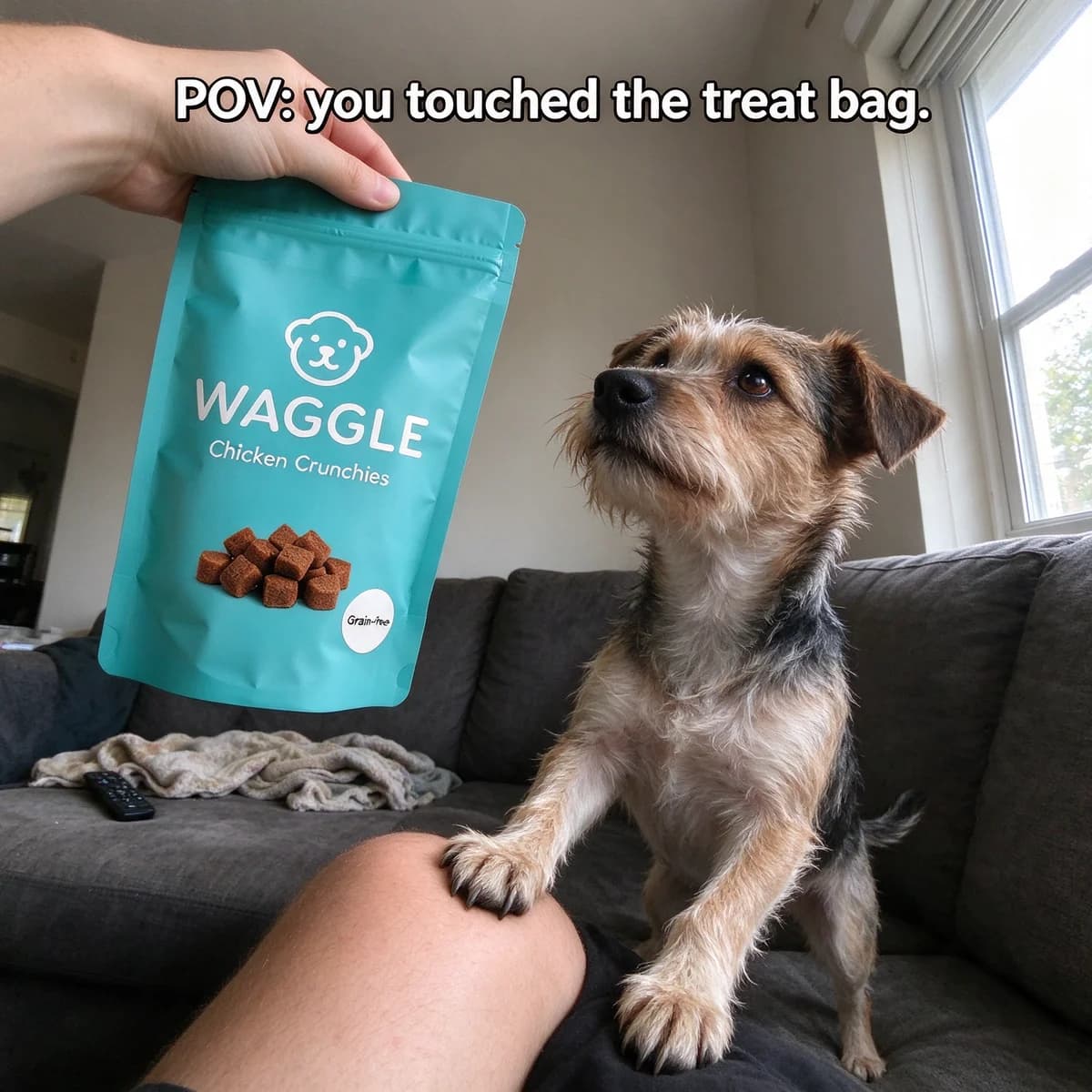
- Who holds the phone. The owner looking down, a friend standing behind, or a phone propped on a shelf. Point of view decides the framing.
- Imperfect framing. Slightly tilted, cut off at an edge, the table running out of the frame.
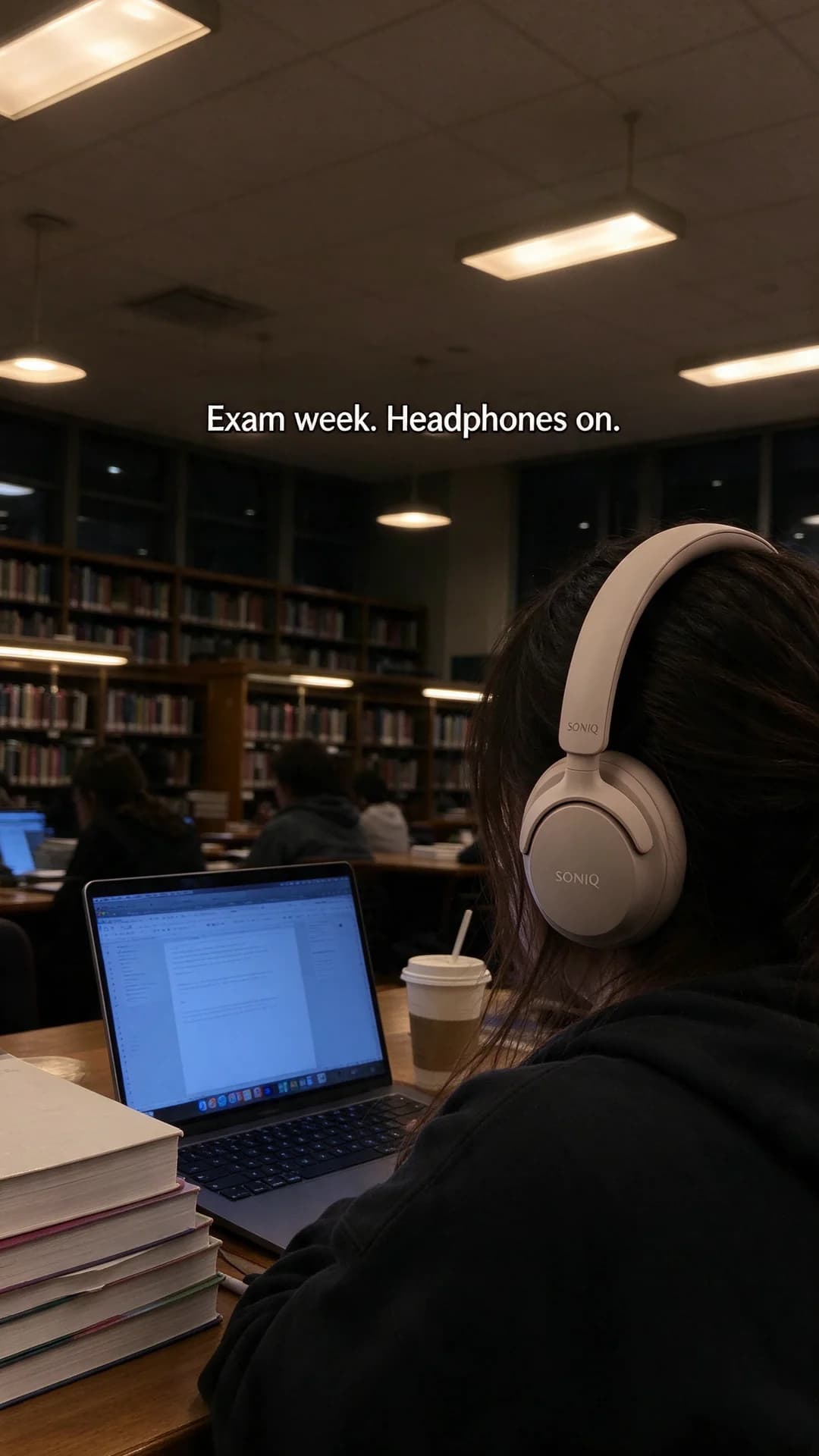
- Ordinary light. On-camera flash in a dark room, a desk lamp mixed with laptop glow, grey daylight through a train window.
- Texture. Mild grain or a little motion softness. One or two of these is plenty.
- Real clutter. A tangled charger, a remote, a paper ticket. Clutter is what separates a post from a shoot.
Then decide on text: a story-style caption box, a meme caption across the top, or nothing at all. An image with no overlay looks most like a real post, and the hook moves into the first line of primary text. The UGC ad template and the POV template show both layouts as live mock-ups.
People without faces
None of these prompts shows an identifiable face. Hands, a person seen from behind and a dog doing the acting carry each scene instead. There are two reasons. AI faces can look slightly wrong up close, and a realistic stranger quietly suggests a real customer who doesn't exist.
Give the face a reason to be out of frame, such as a point-of-view shot, a person from behind or a crop at the shoulders, and say "no face visible". Otherwise a model may fill the gap with a blurred or half-cropped face, which looks worse than none.
Where the honesty line sits
UGC-style is a look, not a customer. In the US, the FTC's rule on consumer reviews and testimonials, announced on 14 August 2024 and in effect since 21 October 2024, bans fake reviews and testimonials, and the FTC's announcement names AI-generated fake reviews among them. The FTC's questions-and-answers page on the rule says it has no blanket ban on AI-generated avatars in marketing, but an avatar's testimonial breaks the rule if the testimonial behind it is fake or false (both FTC pages, as of October 2026). Other markets have their own rules, so check yours.
For prompts, that comes down to four habits:
- Captions describe a moment, such as "Exam week. Headphones on.", rather than claim a result for a buyer who doesn't exist.
- A first-person caption still reads as a customer talking, so keep it to a habit anyone could have. "Always one in my bag" passes. "Blocked out every sound on my commute" is a performance claim in a stranger's voice.
- No star ratings, reviewer names, handles or "verified buyer" badges in the image.
- When you want a customer's words, use a real review you have permission to quote.
Our guide to AI UGC ads covers the wider rules on AI people in ads and what AI-made UGC can't fake.
The product stays exact, the scene stays loose
The UGC look depends on everything around the product being imperfect. The product itself can't be. Someone who buys after a phone-style photo expects the same wrapper in the box, so these prompts use an edit model with the product's packshot as the reference. The scene can be tilted, grainy and flash-lit while the label, shape and colours come from your photo.
Hands are the thing to watch. A hand gripping a bar or a pouch can bend or cover the label, so check every output for words that are half hidden or quietly redrawn.
UGC-style ads in BulkAds
A UGC-style shot is one of the angles a BulkAds batch can take, alongside bold claims, offers and moments of use. You don't write the prompt. Each ad's concept, scene and caption are written for you from your brand kit, your product photo goes in as the reference, and the copy for that ad matches its casual look. Copy only uses the reviews and proof points you've added, so it won't make up a testimonial, and the image prompt BulkAds builds rules out star ratings and fake reviews on the picture itself. A check before you see each ad compares the product with your photo, which is the step meant to flag a label that a gripping hand has bent or hidden. Each image ad uses 2 credits.
One limit worth knowing: BulkAds makes UGC-style images and short AI videos from a still, not talking videos with a person on camera, and its uploads take finished images only. If you work with real creators, the UGC script generator helps you brief them. Their finished videos run from Meta Ads Manager, and BulkAds can make the stills and AI video variations around them.
Questions people ask
What is a UGC-style ad prompt?
A prompt for an image that looks like a customer took it on a phone: casual framing, ordinary light, real clutter and often a caption. With a product photo as the reference, the product stays exact while the scene looks unplanned.
Is it allowed to make AI images that look like customer photos?
The style itself isn't the problem. A fake review or testimonial is. In the US, the FTC's rule on consumer reviews and testimonials has banned fake ones, including AI-generated fake reviews, since 21 October 2024 (FTC, as of October 2026). Keep ratings, names and invented results off the image, and check the rules in each market you sell in.
Why do my UGC prompts still look like a studio shoot?
The word UGC isn't enough on its own. Describe who holds the phone, one flaw such as a tilt or flash glare, ordinary mixed light and some everyday clutter. Those camera facts are what the model can actually copy.
Can BulkAds make UGC videos with a person talking?
No. BulkAds makes UGC-style images and short AI videos with gentle motion from a still. For talking videos, film real creators and run their videos from Meta Ads Manager, since BulkAds uploads take images only. You can still use BulkAds for the stills and AI video variations around them.
Are Krunch, Soniq, Nook & Wick and Waggle real brands?
No. All four are made up for our library, and every image here was made with AI from the prompt beside it.
Keep going
- Free tools
UGC script generator
A timed 15 to 30 second script with lines, shots and captions
- Guides
AI UGC ads: what they are, where they work and where the line is
The three kinds of AI UGC, the jobs each one does well, what AI can't fake, the published rules on made-up people in ads, a brief format and a checklist before launch.
- Ad templates
UGC ad template
A phone-camera moment and one honest, first-person line
- Ad templates
POV ad template
The camera where the viewer's eyes would be, the product mid-use
- Ad examples
UGC ad examples
Phone-shot, first-person ads made from your real product photo
- Glossary
AI UGC
AI UGC is ad content made with AI to look like user-generated content, such as a phone-shot photo or a selfie-style video of someone using a product, produced without a real customer or creator taking part.
Every image on this page was made with AI from the prompt beside it. Model names are the ones BulkAds used, and results vary from run to run.
BulkAds AI is an independent product and is not affiliated with, endorsed or sponsored by Meta Platforms, Inc. Facebook and Instagram are trademarks of Meta Platforms, Inc.